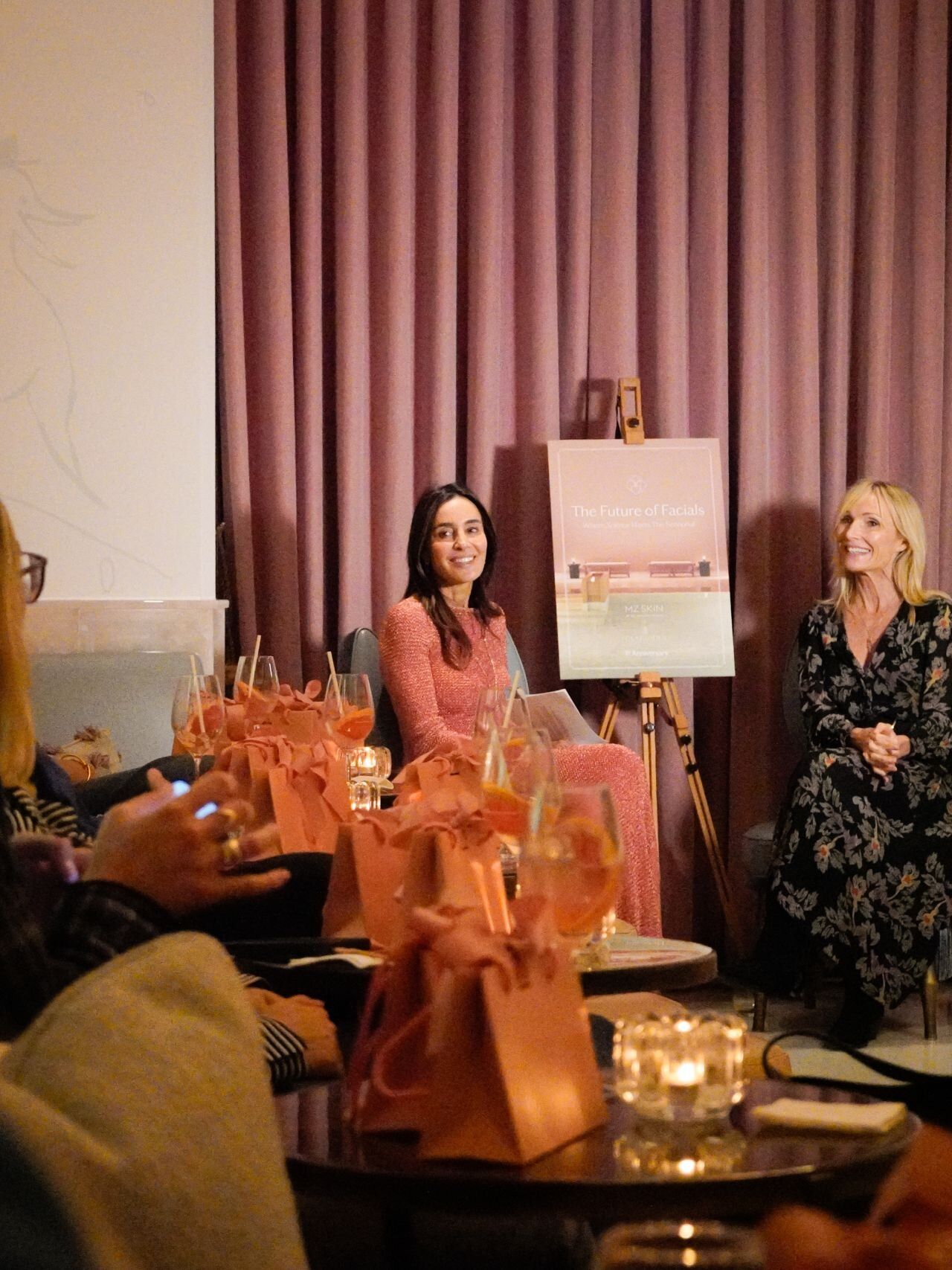
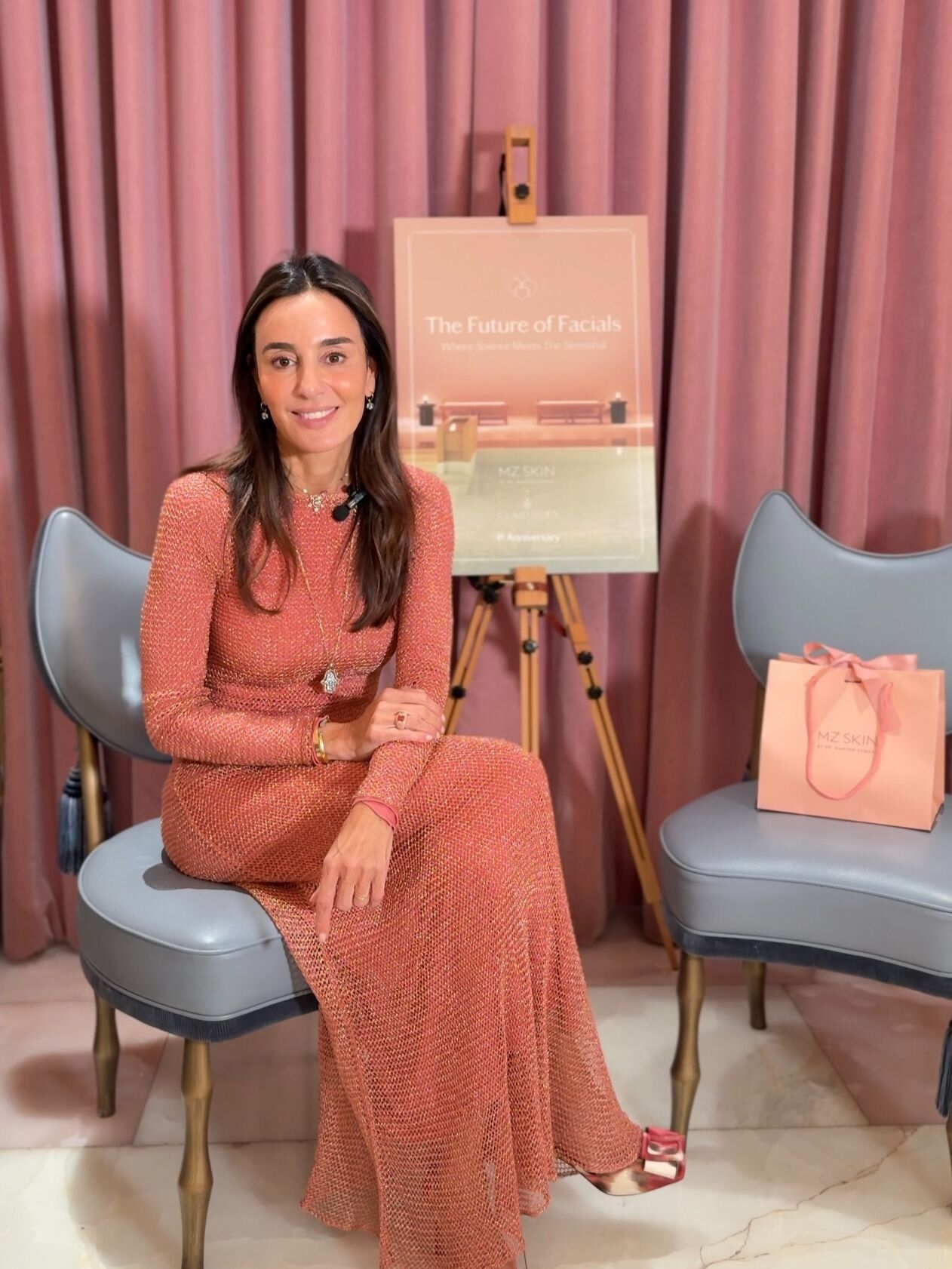
Most brand anniversaries follow a predictable script: champagne, carefully curated Instagram moments, perhaps a goodies bag if you’re lucky. Dr. Maryam Zamani had something different in mind for MZ SKIN’s first birthday at Claridge’s Spa.
On a September evening in the Painter’s Room at Claridge’s, industry insiders gathered for a panel on “The Future of Facials.” What unfolded was a thoughtful conversation that challenged much of what the beauty industry tells us about skincare. Rather than promoting the latest treatment or product launch, the discussion centred on something more fundamental: what we’re actually seeking when we invest in our skin.
Your Skin is Talking, Are You Listening?
Sarah Bradden said something early on that stopped everyone mid-canapé. “This is our emotional dashboard,” she said, pointing to her face. “If we’re feeling something, it usually is showing up on the skin.”
Right. Because we’ve all been there; stressed about a deadline and suddenly your skin is throwing a tantrum. Exhausted from travel and your face shows it before you even open your mouth.
“We all want a bit more now,” Bradden continued. “We want to not only look better, but we want to really feel better. And I think we now know that even if we look good, if we don’t feel it, it’s such a mismatch.”
This is what she means by a “spa with substance.” We’re done with facials that just feel nice. We want results. But here’s the thing, we also want that experience, that moment of feeling cared for. “Clients today want treatments that speak to mind, body, and skin. Ritual can no longer be an afterthought,” she explained. It’s both, not either/or.
Dr. Zamani gets this. Her entire brand was born from frustration; struggling with melasma after having her daughter and realizing nothing on the market was cutting it. “I started mixing things together, and my husband said, why don’t you just put them all together?”
That medical background means everything in her products has to earn its place. Each treatment is engineered to work with your skin biology, not against it. “For me, skincare has always been about doing something good for yourself,” she said. But make no mistake, her version of “good” comes with clinical receipts.

LED Lights And Human Hands
When it comes to integrating technology into treatments, both speakers advocate for balance rather than innovation for its own sake.
Bradden uses LED in ways most of us haven’t even considered. Not just for your face, but for your entire system. “Our organs really love LED,” she explained, describing how different wavelengths support your liver, your endocrine system, everything. “I always think of us, we’re like plants. We need good light, food, and a really good environment to thrive.”
Dr. Zamani’s LED enthusiasm comes from watching it heal burn victims during her work in UK hospitals. When you see technology actually repair damaged tissue, you tend to take it seriously. “That’s how we found out there’s all these regenerative properties,” she said.
What does the future hold? More personalisation. Technology that adapts to what your skin actually needs rather than one-size-fits-all protocols.
But, and this is crucial, Dr. Zamani drew a hard line. “I love tech. I’m always looking out for tech, but nothing replaces the fingers and the hands of a massage and releasing different tensions.”
Atmosphere matters. Texture matters. The feeling of someone’s skilled hands on your face matters. We can have our LED and our massage too. That’s the point. The best facials aren’t choosing between clinical efficacy and sensory pleasure, they’re delivering both.
Pro-Aging is The New Anti-Ageing
Perhaps the most interesting part of the discussion centred on ageing, specifically, the shift from “anti-ageing” to what both Dr Zamani and Bradden call “pro-ageing.”
“I think ageing is a privilege,” Bradden said. “Especially seeing so many people poorly over the last few years that actually maybe not even get to their 50th birthday.” She referenced traditional Chinese medicine, where menopause is called “the second spring” a reframing that views ageing as evolution rather than decline. “We have all of this wisdom. We have so much to offer and give the world.”
Dr. Zamani took this further. Success in skincare isn’t about erasing evidence of your life. It’s about resilience, health, radiance. Preventive care, not desperate correction.
“We’d all love to have our 20-year-old skin, but it doesn’t matter what you do and who you see, you could go to Kris Kardashian’s dermatologist, and her skin will still give it away that she is close to 70. And she looks amazing, but it’s not really about looking younger. It’s about feeling your best.”
Bradden added that this mindset shift is everything. Skincare becomes an investment in sustained vitality, not a fight against time. You’re choosing rituals to feel your best at every age, not chasing some impossible standard.
So when should you consider a treatment? Dr. Zamani’s answer: “When it bothers you more days than not.” Not when you turn 30. Not when some algorithm tells you. When it genuinely affects your wellbeing. Otherwise? Maybe you’re fine as you are.
Navigating The Current Landscape
Someone asked the question everyone’s been thinking: how do we know what’s actually legit anymore?
Dr. Zamani told us about her son confidently explaining eyelid anatomy to her, completely incorrectly, based on something he’d seen on TikTok. Some person in a white coat. “You get duped. You also want to believe sometimes the things that you read, because it gives you hope of something more.”
The problem? “As a doctor, there’s not a lot of policing that goes on around things that are over the counter. False advertisement is really rampant, and it really bothers me.”
And it’s not just random TikTokers. Even legitimate brands play games. “You have the big pharma people who pay doctors, dermatologists, plastic surgeons to give gravitas to their products. They might be great products, but there’s incentive behind all of them.”
So what do you do? Dr. Zamani suggests looking for actual clinical studies with real participant numbers. Check for transparency about what’s in products and at what concentration. Build relationships with practitioners you trust. But she’s not naive, even with all that, it’s tough out there.
Bradden’s take was simpler but just as important. “You have to find your thing. You may not be able to do everything, but you find a thing that gives you that energy, that makes you feel good, and you stick to it.”
Stop trying to integrate every trending treatment you see on your feed. Find what actually works for you. Do that. Ignore the rest.
Where Are You Right Now?
Dr. Zamani said something towards the end that summed up the entire evening: “The future of facials is about more than just outcomes, it’s about how you feel, during and after.”
Not just what you see in the mirror. How you feel sitting in that chair. How you feel walking out. How you feel a week later when you catch your reflection and think, yeah, I look good.
Dr. Zamani kept returning to presence throughout the evening. “If you can bring yourself back to the present, it’s always about the present. It’s like, where am I right now? Not where somebody else is that I’m watching. But where am I?”
Where are you right now? Because that’s the question, isn’t it. Not where you should be according to some Instagram filter or beauty trend. Just where you actually are, and what you actually need to feel good in your own skin.
“The differences between people is what makes them so beautiful,” Dr. Zamani said.
MZ SKIN is available at Claridge’s Spa. For more information about treatments and products, visit claridges.co.uk
By Raluca Tudose