Words Nadja Sayej
The role of a web developer has shifted from a technical job to one with deep social resonance. Rasim Bayramov, a Baku-born graphic designer, artist and university instructor, is at this transition, helping redefine how organizations communicate their missions in an increasingly crowded digital landscape. In short, they help communicate content with clarity.
Bayramov is the graphic designer for ForFreedoms.org, a renowned artist-led organization committed to creative civic engagement. The organization, founded by Hank Willis Thomas and Eric Gottesman in 2016, prepares to celebrate its 10th anniversary in 2026.
The resonance of their tenth anniversary is a paramount in itself. The group have given the responsibility of redesigning their website to Bayramov, who is currently redesigning the For Freedoms website, which will launch later this month.
For Freedoms is widely recognized for its “50 State Initiative,” which used creative projects to spark national conversations about civic participation. Since September 2025, Bayramov has served as the lead web designer and developer for the organization’s upcoming digital relaunch.
Bayramov approached the project not merely as an aesthetic refresh, but as a modular tool designed to grow with the organization, while honoring their legacy in art and activism.
“It was important to understand the organization’s needs in specific categories,” says Bayramov. “What it might look like on the public-facing end may be different from the back-end management. I approached the design with modularity in mind—a customizable homepage that can accommodate upcoming events, open calls, and exhibitions.”
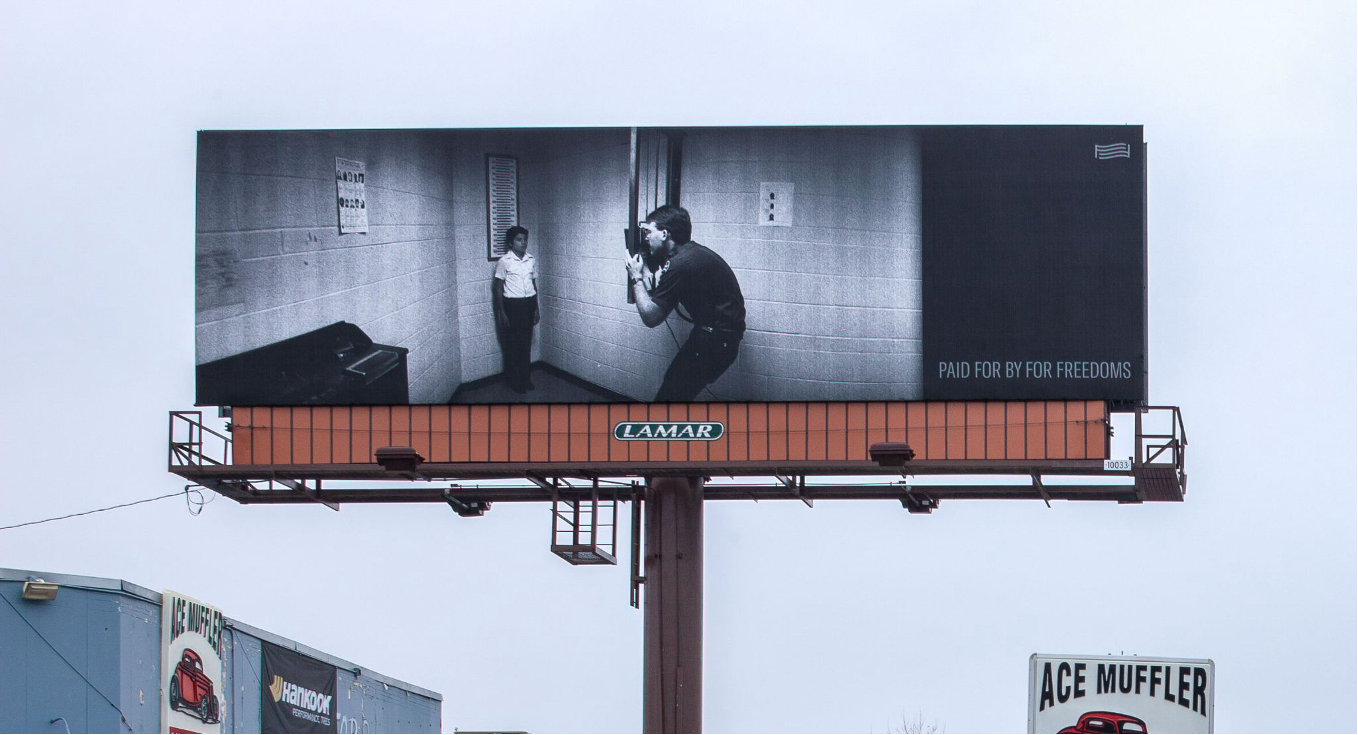
The upcoming website relaunch for For Freedoms looks back on a decade of the powerful organization’s navigation through the art world, from powerful civic projects to public art pieces, museum installations and beyond. By creating a flexible navigation framework for the website, Bayramov ensures that For Freedoms can continue to challenge, inspire, and mobilize audiences without being tethered to a static digital identity.
“I have independently architected and implemented a custom web presence that communicates the organization’s mission at the intersection of art, democracy, and activism,” Bayramov explains. The challenge was to create a platform that could cater to a diverse and high-profile audience, including national media, cultural institutions, and world-class artists.
Bayramov’s strategy for ForFreedoms.org was to balance “editorial depth with visual impact.” In the context of political advocacy, the website functions as more than a portfolio; it is a repository of record and a call to action. By delivering a performance-optimized, responsive site, Bayramov ensures that the organization’s message of creative civic engagement remains accessible and authoritative, reinforcing its reputation as a leading voice in socially engaged art.
This project ties into Bayramov’s work, which is playful, poetic and blurs the line between art and design. Their work also involves simplifying complex, high-stakes information for broad audiences. This expertise was recognized with a Bronze Horizon Interactive Award for their work on the Doktar website. As the lead UX/UI designer, Bayramov helped transition the agricultural technology company from its 2018 iteration to a platform reflecting its mission of sustainable, AI-driven farming.
The primary hurdle was accessibility. In an industry where tech-savvy users are not the only stakeholders, translating complex IoT algorithms and satellite imagery required a strategic shift. “Working with a target group that had a higher age-range meant defining key aspects of an interactive experience and transferring it through accessible visual forms,” Bayramov explains.
This philosophy culminated in the launch of “Arpa,” Doktar’s comprehensive design system. Spanning hundreds of pages of documentation, Arpa serves as a bridge between developers, marketing teams, and the end-user. It standardized everything from mobile interfaces to client-facing branding, ensuring that even as the company grew into a mid-sized technological force, its visual language remained inclusive and transparent.
Beyond graphic design, Bayramov is influencing the next generation of designers as a Teaching Fellow at VCUarts. Their course, “Install to Manifest,” represents a significant curriculum expansion, inviting students from across the university to explore the intersections of code, sculpture, and exhibition.
“In my elective class, I was trying to combine methods of engagement into a spatial and sculptural experience,” Bayramov says. The course encourages students to move beyond the screen, resulting in projects that range from handmade swing-chairs to public web performances.
By pushing students to consider graphic design as a “critically conceptual” pursuit, rather than a decorative one, Bayramov is preparing designers to think of their work as a fundamental piece of civic and artistic infrastructure.
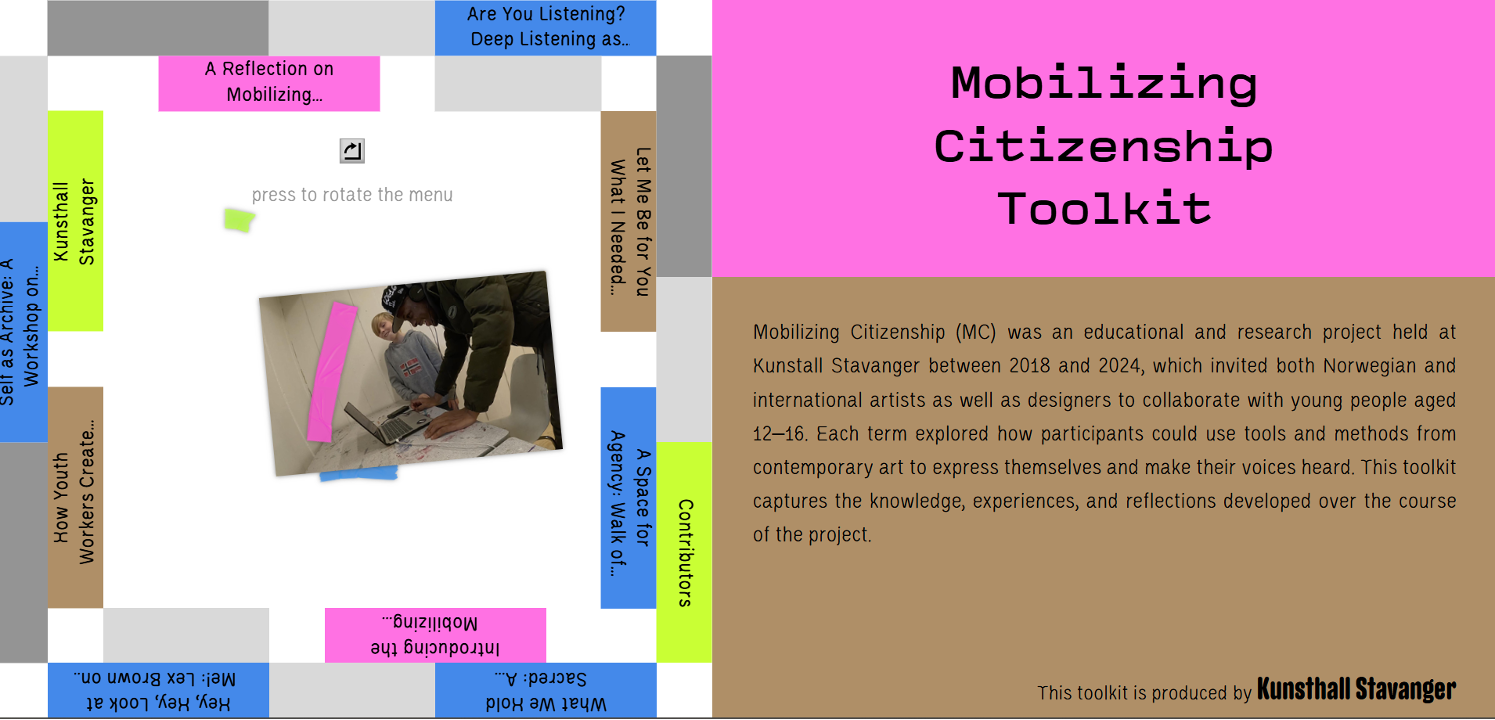
The most telling aspect of Bayramov’s design philosophy is their work on the archival website for the Kunsthall Stavanger in Norway. Rejecting the notion that an archive should be a stale repository of the past, Bayramov utilized a circular website structure. Each time a visitor refreshes the page, the content reshuffles.
This design choice serves a greater purpose: it signals that citizenship and historical research are not fixed, but are constantly evolving. By incorporating tactile elements like hand-highlighted passages and digital sticky notes, Bayramov turned a dense academic repository into a “collaborative workspace.”
From the sustainable tech goals at Doktar to the civic mobilizations at For Freedoms, Bayramov’s career is a testament to the power of systems-based design. Whether through 100-page style guides or ephemeral web installations, their work asserts a singular truth: when technology is designed with empathy and accessibility at its core, it becomes a powerful instrument for social progress.
Images courtesy of Rasim Bayramov and For Freedoms