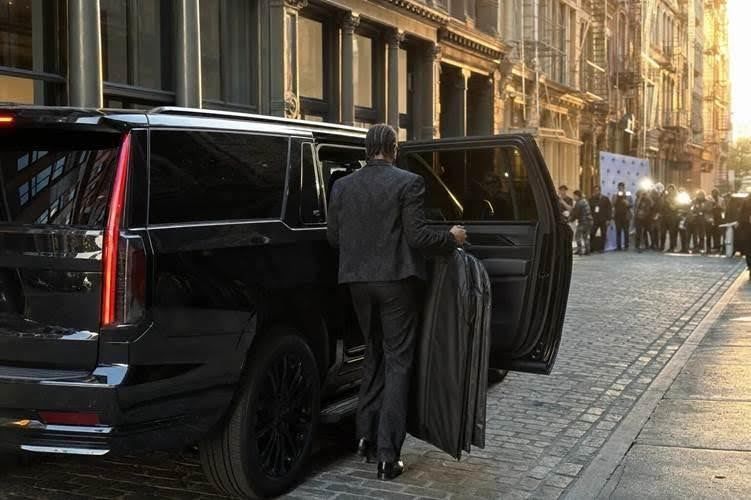
New York Fashion Week looks like clothes and runs on logistics. Across eight days each September, with roughly sixty to seventy shows and presentations on the official calendar, editors, buyers, stylists, and talent move between venues in SoHo, Chelsea, the Financial District, and Midtown on a schedule measured in minutes, with car changes that never appear on the official calendar. The transport is invisible when it works and the whole story when it does not. Miss one car and the day unravels; the show you were front row for happens without you.
A schedule measured in minutes
A show that starts twenty minutes late pushes every appointment after it. Attendees stack four or five shows a day, plus fittings, showroom appointments, and dinners, so the gaps between venues run tight and unforgiving. The distances look small on a map and behave nothing like it in practice: a two-mile hop from Spring Studios to a Chelsea gallery can take forty minutes when the avenues seize. Hunting for a car at each stop, in the rain, in heels, is how a packed day falls apart.
The people who work the week for a living learn this fast. Publicists build buffer into call sheets. Stylists send assistants ahead with the racks. And everyone who can afford to stops leaving the ride to chance, because a missed slot is not a minor inconvenience, it is a relationship with a designer that took a season to earn.
Why the subway is not an option for the front row
Public transit is fast in New York, and for a solo traveller with a MetroCard it is often the smart call. Fashion Week is not that trip. The subway does not carry garment bags, sample cases, or a client you are trying to impress, and it does not wait while you finish a call with a designer’s team. It also does not solve the last hundred yards, which at Fashion Week means arriving composed at a venue lined with photographers rather than flushed from a four-block sprint.
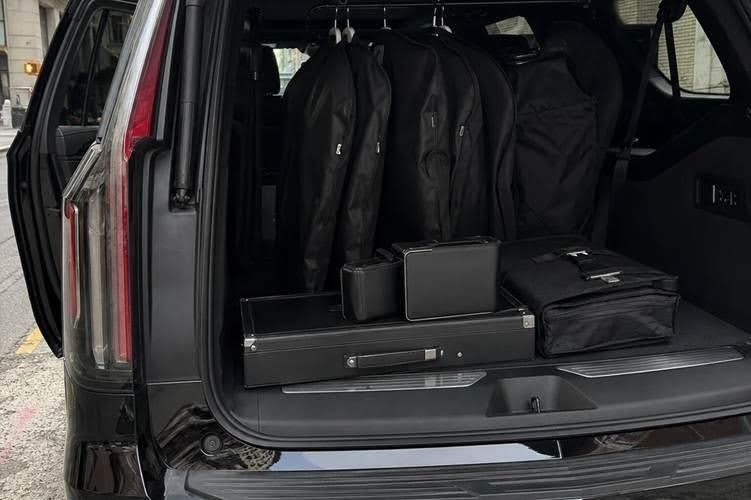
The pattern that works is a car and a driver who holds between stops. Bags stay in the trunk, the schedule stays intact, and the ten minutes between shows becomes a place to answer emails or change a look rather than a scramble for a curb. For the international contingent, the same operation handles the airport bookends of the week, since a large share of the front row flies in for it and lands tired into the exact congestion the shows create.
The economics of one car for the day
There is a cost argument here that finance teams and independent stylists both understand. Booking a new rideshare at every venue means paying surge at every venue, because demand around show locations spikes on the same schedule the shows run. Fixed-rate, by-the-day hire converts a string of unpredictable fares into one known number, and it removes the dead time spent waiting for a match. For a team of three moving together, the per-person math tilts further toward the private car.
Same car, all day
The efficient model is one vehicle and one chauffeur for the itinerary, not a fresh app request at each door. A dedicated NYC Fashion Week car service keeps the same car from the morning fitting through the final after-party, with the day-rate settled in advance so there is no meter anxiety at 1am. The driver learns the day’s rhythm, stages near the next venue before you walk out of the current one, and knows which service entrances and side streets keep you moving when the main approach is barricaded for a step-and-repeat.
That continuity is the quiet advantage. A driver who has your whole day does not need re-briefing at each stop; a stranger matched by an app starts from zero every time. Over eight days, that difference compounds into hours. The teams that run these itineraries season after season build the same buffers into every call sheet, because they have watched a single late show cascade through an entire afternoon of appointments.
What to look for in a Fashion Week operator
Three things separate a car service that survives the week from one that does not. First, real-time dispatch that tracks the itinerary and repositions the car, rather than waiting to be summoned. Second, licensed, insured, professional chauffeurs who present well at a photographed venue and handle a change of plan without drama. Third, fixed pricing that a client or a finance department can approve without a surge-charge argument later. Gotham Ride Chauffeur Service has run these itineraries through Fashion Weeks for years, which is the only way to move confidently through a city that does not slow down for a show.
The clothes get the attention. The cars are why anyone reaches the clothes on time.