Among the many options, the princess cut diamond ring has carved out a unique space as a design that merges tradition with individuality. It appeals not just to those who want brilliance and symmetry but also to those who view their ring as an expression of identity.
In today’s world, the princess cut means a choice to stand apart. While classic round diamonds and oval shapes continue to be popular among diamond shapes, the princess cut quietly speaks to those who want a modern yet timeless piece that reflects personal taste without being overly flashy.
The Shift in Engagement Ring Culture
Engagement rings used to follow a more rigid formula. White diamonds, round cut, yellow or white gold, single solitaire. Today, the rules are less defined. A growing number of people now see their engagement ring as an extension of their story.
The rise of minimalist fashion, architectural design influences, and digital-age aesthetics has all played into the popularity of this square-cut stone. The princess cut diamond rings reflect clean edges and bold symmetry, features that align with a more streamlined, intentional lifestyle.
About the Princess Cut
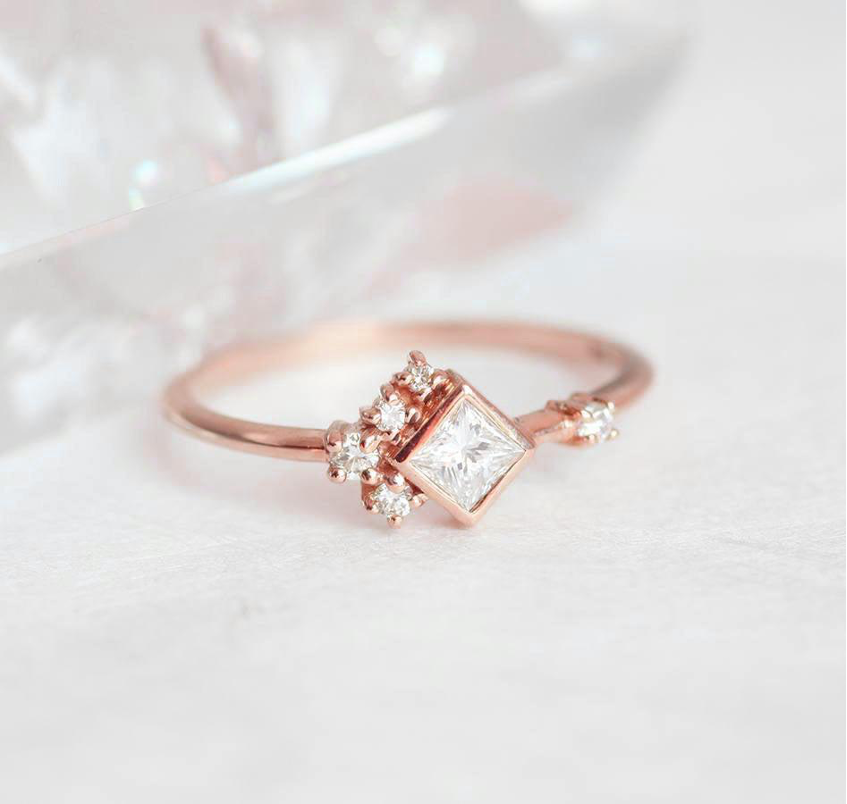
There’s something quietly expressive about the shape itself. The princess cut is sharp and structured, four corners, straight lines, no curves. It’s balanced and calculated, which may be exactly why it resonates with people who like things to be simple, direct, and grounded.
Source: Capucinne.com
Yet within that structure is light play and depth. Like a person, the stone can appear different depending on the angle. In natural light, the sparkle is sharp and vibrant, showing impressive fire and brilliance. In dim settings, it can look soft and subtle. This contrast between geometry and brilliance is part of its emotional appeal. It mirrors the balance many people try to find between logic and emotion, strength and sensitivity.
Capucinne’s Designs
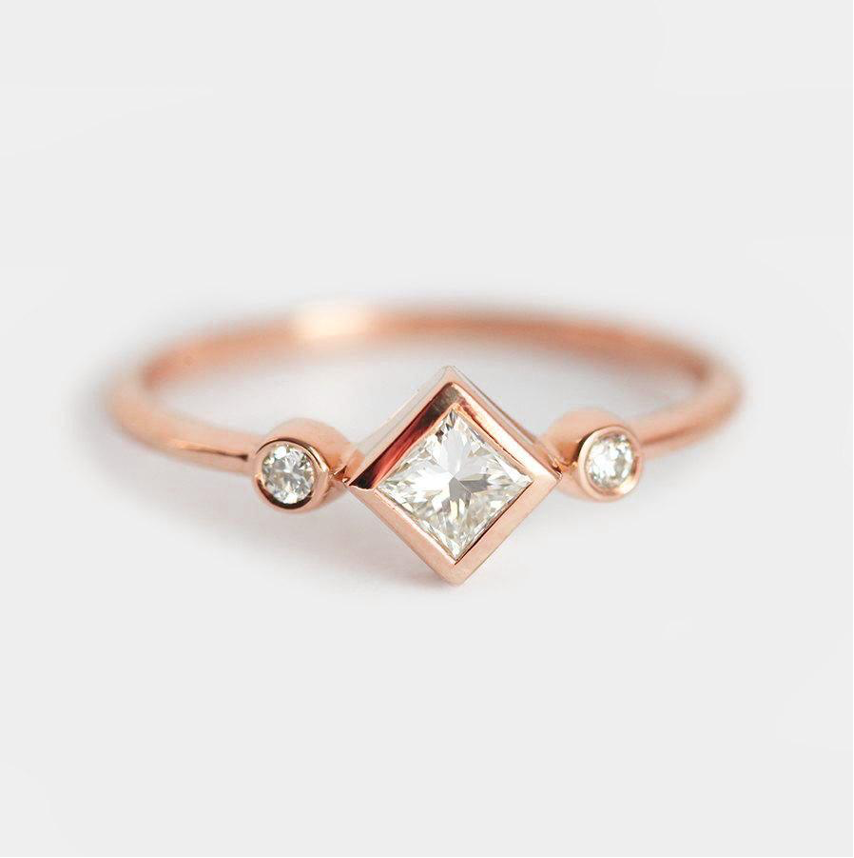
While there are many jewelers offering princess cut rings, a few studios focus more deeply on the balance between form and feeling. Capucinne, a jewelry brand, is known for handmade and custom-designed pieces. They create each ring to order and allow the client to influence the design process. Their princess cut rings often feature alternative settings, mixed metals, or unique stone pairings that help the cut stand out without overpowering the overall look. This approach, rooted in craftsmanship and flexibility, allows the wearer to create something that feels authentic to their personality, not just a reflection of convention.
Source: Capucinne.com
Princess Cut Diamonds in Non-Traditional Roles
Beyond engagements, the princess cut diamond is showing up in rings meant for anniversaries, milestones, and even self-gifting. As the meaning of jewelry evolves, people are no longer waiting for someone else to give them a ring; they’re choosing stones that align with where they are in life. The princess cut works especially well in this context because it doesn’t lean too heavily into vintage or ultra-modern styling. It sits comfortably in between, making it a flexible option for any occasion.
It’s also a popular choice for those seeking rings that challenge traditional gender roles. The shape’s sharp angles and symmetrical form give it a more unisex appeal than some softer or more embellished cuts.
Setting and Style
The design process for a princess cut diamond ring often begins with the stone itself. Because of its angular lines, the ring’s band and setting are typically chosen to complement rather than compete. For instance:
- Split shank designs add a layer of visual interest while maintaining balance.
- East-west settings, though less common for this shape, can create a striking and unconventional profile.
- Mixed metal bands can bring warmth or contrast, giving the ring a multi-dimensional feel without overwhelming the stone.
Even small design details, like the thickness of the band, the number of prongs, or the height of the setting, can completely change how a princess cut diamond is perceived.
Understanding Carat Weight and Color Grade
When selecting a princess cut diamond ring, it’s important to consider the carat weight, which measures the diamond’s weight and affects its size and price. Because princess cut diamonds retain more of the rough stone compared to round diamonds, they often offer a larger face-up appearance for the same carat weight, making them a great choice for those working within a budget.
Color grade is another crucial factor. The sharp corners and the table of princess cut table can slightly affect how color is perceived, so opting for a higher color grade can ensure the diamond looks bright and white. Paying attention to diamond grading reports from reputable labs like GIA or IGI helps buyers understand the stone’s characteristics and quality.
Personal Meaning in the Shape
While every stone can be symbolic, square shapes like the princess cut often convey ideas of stability, structure, and intention.
Unlike round or oval shapes that flow continuously, a square has defined boundaries. For some wearers, this represents strength or a grounding presence in their life. For others, it might reflect a love for order and symmetry.
There’s also the element of quiet defiance in choosing a princess cut. It’s not the most traditional shape, yet it isn’t radical. It lives in that space where personal meaning outweighs public opinion. In a way, choosing this cut is a small act of independence, choosing something because it feels right, not because it’s expected.
A Diamond That Changes With the Times
As styles continue to evolve, so does the role of the princess cut diamond ring. Once seen as a fresh alternative in the late 20th century, it now holds its place as a contemporary classic.
The cut works equally well in minimalist, maximalist, vintage-inspired, or modern settings. It allows for creativity without demanding it.
Maintenance and Long-Term Wear
One of the practical aspects of choosing a princess cut diamond is knowing how to care for it. The pointed corners are more vulnerable to chipping than rounded cuts, so protective settings are key. Prongs at each corner or partial bezels are common solutions.
Regular cleaning helps maintain sparkle, but because of its faceting, the stone can hide minor dust or smudges better than flatter cuts. With routine care and a secure setting, a princess cut diamond ring can easily last for decades and become an heirloom passed down with its own story.