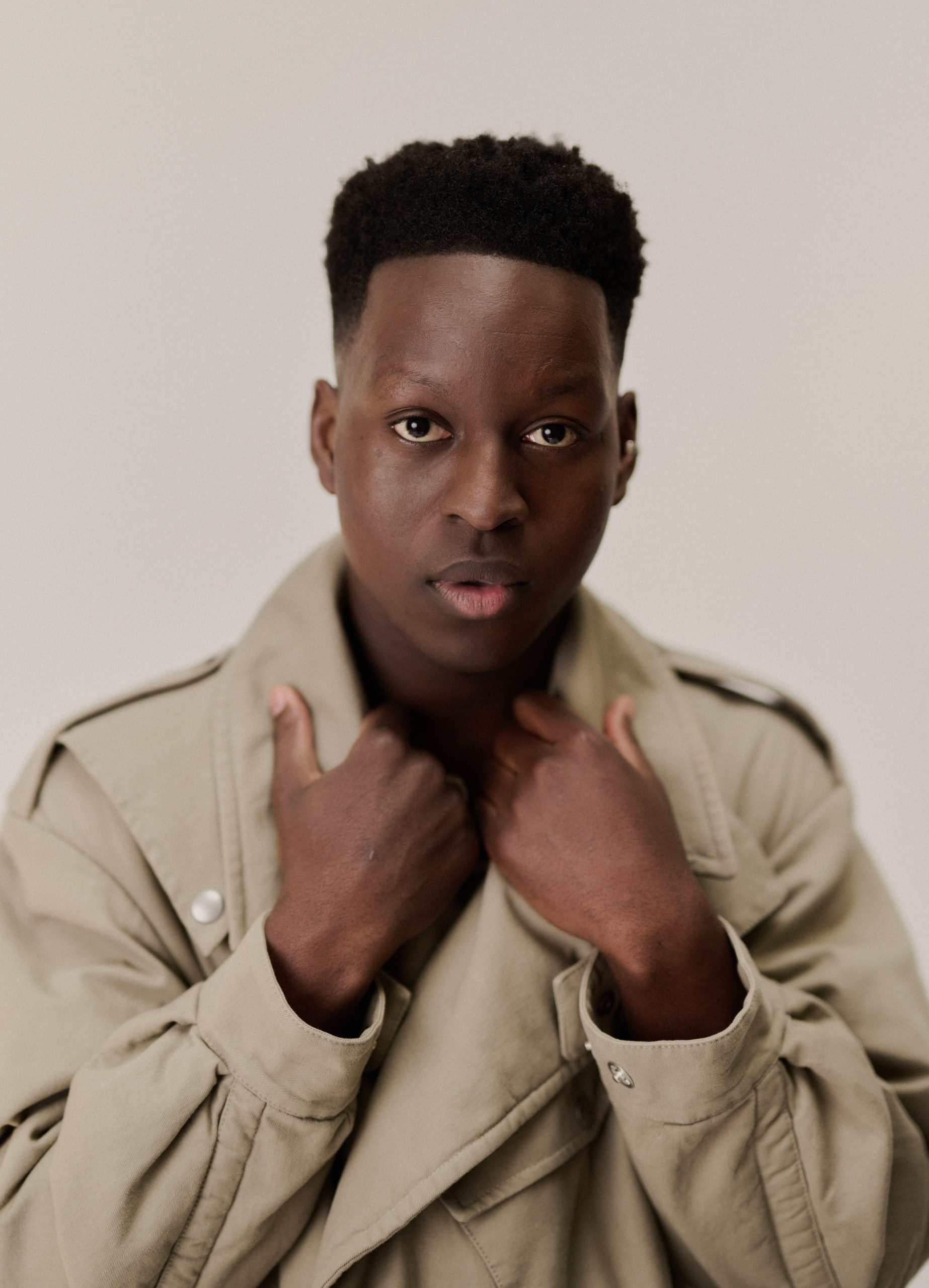
It is rare for an actor to be able to choose solely interesting, intelligent projects from the very start of their career. But that seems to be exactly what Toheeb Jimoh has done. Speaking to him, it quickly becomes clear why. Not only is he bright and perceptive, with a generous, down-to-earth attitude that is almost disarming, but he also surrounds himself with the right people. His face lights up whenever he speaks about his friends, family and mentors.
In 2018, Jimoh graduated from the Guildhall School of Music and Drama. Just two years later, he stole hearts worldwide when he landed a role in Apple TV’s then-new series Ted Lasso. His performance as Sam Obisanya earned him a Screen Actors Guild Award, a Critics’ Choice Award and an Emmy nomination. Since then, his career has moved steadily upward, defined by carefully chosen roles across both theatre, playing Romeo opposite Isis Hainsworth’s Juliet in Rebecca Frecknall’s adaptation, and television, including a turn in Prime’s The Power.
This year, he returns to screens in the BBC/HBO drama Industry as it enters its fourth season. Like Ted Lasso, Industry has been a launchpad of talent since it first aired in 2020. “It was really fun coming into a show that I had watched before. I knew all of these faces, even if I didn’t know a lot of these people,” Jimoh tells me when we sit down for this interview.
In conversation with 1883 Magazine, Toheeb Jimoh discusses Industry, his approach to new projects, the freedom of inhabiting characters unlike himself, the political dimensions of his work, his relationship to fashion, and more.
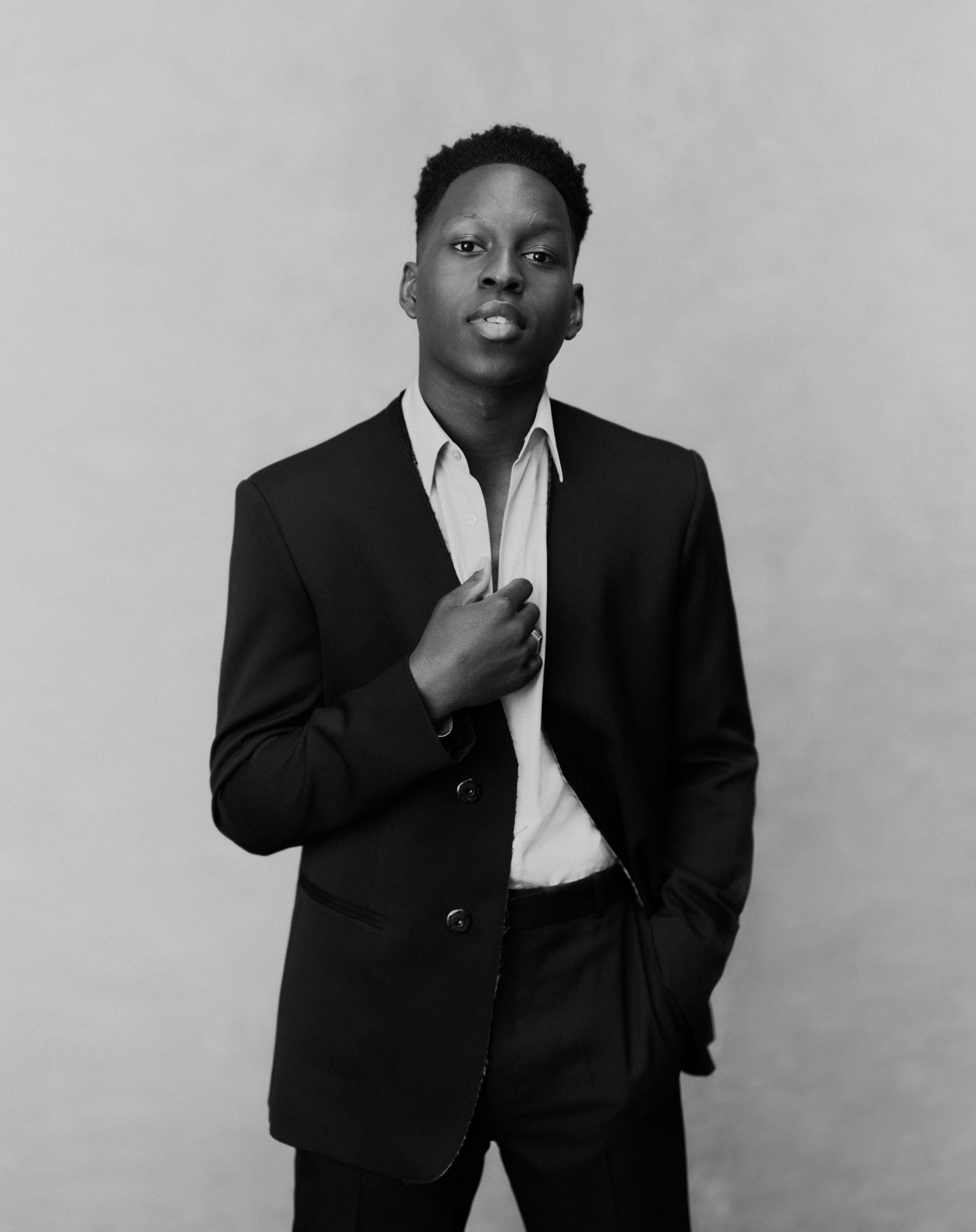
You once said it felt like sometimes it’s your responsibility as an actor to keep the dream of your characters alive for people that come up to you in the street, do you still feel like that? Like you have to be in a bubble of your character for others?
That’s a really interesting question. I guess in a sense, that answer felt very specific to playing Sam in Ted Lasso. I feel like because of how optimistic and uplifting that show was, I was very conscious of not being a dick to people in real life. If I’m honest, I do also feel like it’s very important when you’re in a public facing job to not feel a constant pressure to be on, or it’s impossible for you to set boundaries for yourself. But for the most part, in my experience, I found that interactions with people who’ve enjoyed my work or a show I’m on have always been really positive.
It’s never been burdensome for me to say hello to someone or to listen to someone tell me how much they enjoyed a piece of work that I was a part of. So I do feel like, if it’s possible, and if you have the bandwidth, then yeah, why not just keep that positivity in the air when you interact with people? Especially with a show like Ted Lasso. But now I’m doing Industry, and I don’t necessarily want to be an obnoxious banker to people that I meet. So I feel like there’s a fine line.
Yeah, that’s fair enough. And you’ve done two TV shows now that have moved needles in the TV industry, these two shows come with their own fandoms and their own world building. How did you approach moving from one to the other? Because they’re both pretty iconic shows now.
Well, with Ted Lasso we didn’t know what it was, so we didn’t know we’re making an iconic show. That’s the idea that I go into any project with, the popularity and the fandoms that shows come with feel secondary to the character that I’m playing. Once we’ve finished the bubble of making the thing, we get to engage with everybody else’s response to the thing that we made. And so it’s really fun, but again, it’s not something I feel like you necessarily prepare for.
I also think there’s a difference with Industry because you’re coming in on season four. You were coming into a world that’s already built. Was that slightly intimidating, or was it fun to get to play around in a world that you didn’t have a responsibility to build?
It was really fun, actually. I had more experience of the world I was coming into, and so I knew what the show was in a really fun way. Every other TV show I’ve done, I’ve been on from the ground up. And in the first season of making something, there is a bit of, “okay, well, what is this?” and figuring it out.
Here, I knew what the world was, but then there was also a bit of mystery, because I wasn’t coming into Pierpoint, and we all knew Industry through Pierpoint, so there was still a bit of figuring out what this new precinct was, which kept a bit of that spark alive for me. And it was nice for me to be welcomed in by Myha’la and Miriam [Petche] and Mickey [Down] and Konrad [Kay]. It was really exciting to come and play in this world.
I feel like you probably have lost the ability to be starstruck. You’ve worked with Cynthia Erivo, Tony Collette, Ian McKellen, directors like Rebecca Frecknall. All icons. Do you ever feel pressure that you have to learn something from them? And have you learned something from them?
Oh, big question. Yes. Definitely. So many of the actors I’ve worked with are having the career I’m trying to build for myself. And so I feel like it’d be stupid to not try and pick up stuff from them, even from how they navigate themselves at work.
I felt like I’ve learned so much, especially from Ian McKellen. Because if you prod enough and ask him questions, he won’t stop giving you answers, and so I’m not sure I’ll share all of the secrets I’ve learned from Ian, but…
I think you’re allowed to gatekeep Ian McKellen.
Yeah, if you want to steal these secrets you’re going to have to work with Ian. But no, he’s great, he’s definitely someone I consider a mentor and a friend. So I will keep pestering him with questions as long as he’ll have me.
Is there one director that you would love to work with? What’s the dream?
Oh, my God. Well, there are loads. I just rewatchedLove & Basketball. Gina Prince-Bythewood is someone that I’d definitely love to work with. She’s so extraordinary, she’s a brilliant mind. Love & Basketball feels like such an important film to me growing up.
But then even going to more recent ones like Woman King, her ideas are still so fresh and still really exciting, and I can’t wait to see what she does next. So, yeah, she’s definitely someone I feel like I’d geek out if I met and was lucky enough to work with.
Well she might see this and think…
She’ll think “Oh no, that wouldn’t work.” [Laughs]
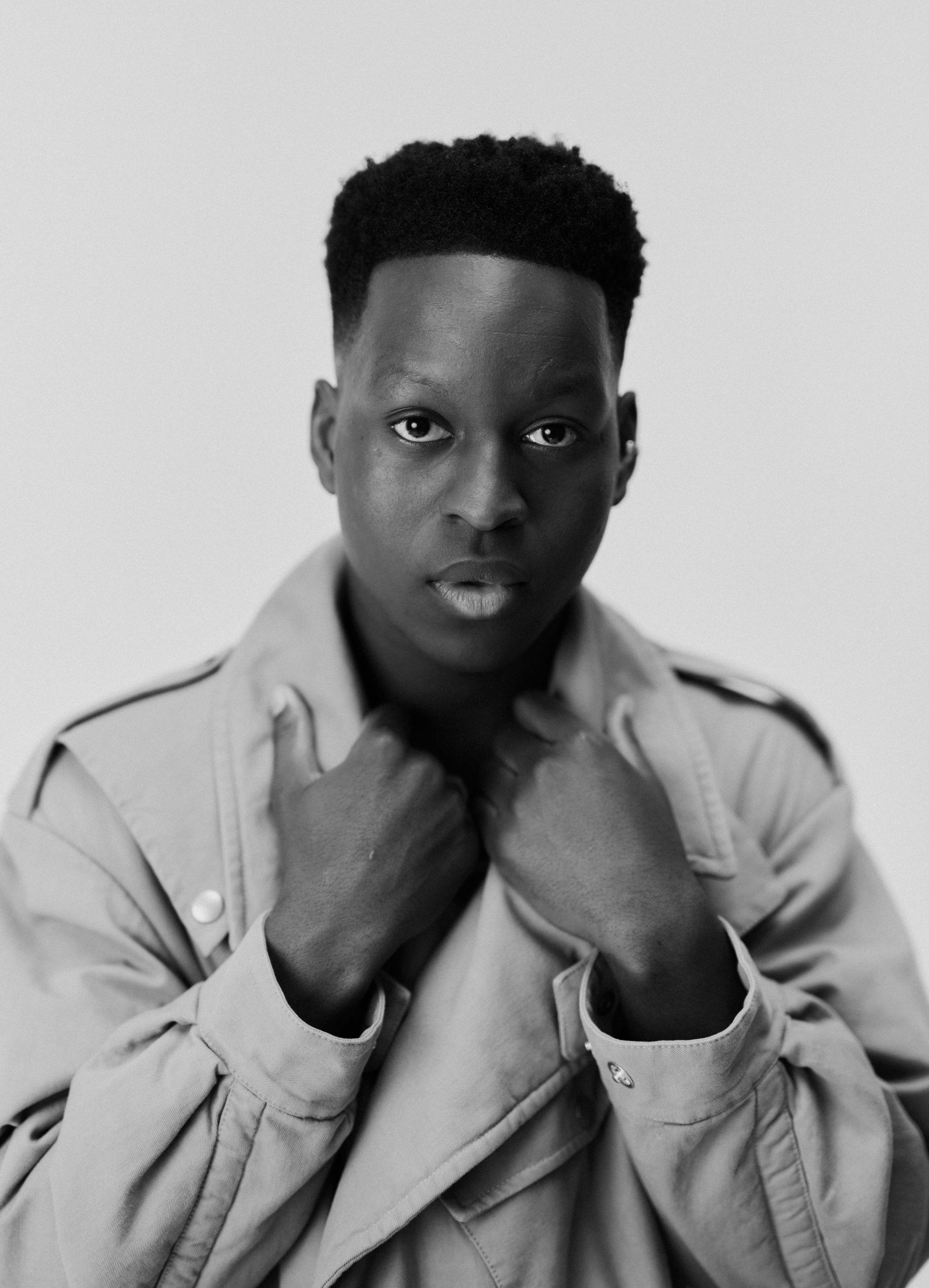
That would definitely not happen! But on being humble, who do you think has been a tether for you in the industry? A friend or mentor that brings you back to yourself.
If I’m honest, it’s more than one. Brett Goldstein. I can’t talk about Brett enough. For somebody who’s as talented and as successful as he is, for him to still be this humble is almost sacred. A part of me is kind of… how many people have you murdered for you to remain this nice still? [Laughs]. He’s a friend and he’s always somebody that I feel like I can rely on and lean on for advice.
He’s a friend that isn’t attached to Toheeb the actor, but to Toheeb the person. It’s really special. And also I’d add Paapa Essiedu to that as well. We haven’t worked together, but he’s always been like a big brother to me. When I graduated from the Guildhall School of Music and Drama, he was technically my mentor and he won’t let me live that down, so I guess I’ll give Paapa mentor status. He’s another big brother that I’m really lucky to have.
And outside the industry?
Definitely my mum. Even though she’s my biggest fan, she’s also kind of my biggest hater. We have pretend beef. She was really desperate for me to be a girl, because she’d already had a boy. When they told her I was going to be a boy, the first thing she said was “Another one?!” So that was day one for me, that’s how we met.
We’ve had pretend beef ever since. She’s my biggest fan, though. I wouldn’t be an actor if it wasn’t for her, because she was smart enough to send me to a performing and visual arts school, so I will always be indebted to her, because she gave me my passion.
She thought, if you’re not going to be a girl, you might as well be a theatre kid.
Yeah, I respect that. I’ll accept theater girly status.
You’ve played a few roles that are political in different ways, but Industry is an entirely different political role, you’re playing the other side of the spectrum. This is not a kid from Nigeria who’s an immigrant, this is quite a privileged man who has come into a world of very privileged people as well. How did you find the contrast of playing the other side of it?
It was really fun. I love playing characters that are really different for me. And again, in the start of my career, I was really lucky that I got to play characters I felt really close to. But playing a character who grew up in a completely different world to me gave me a different sense of freedom. And I feel like, as with anything, the mission is to come at it with empathy and without judging the character.
16-year-old me and 16-year-old Kwabena maybe wouldn’t have been boys, but it’s always interesting to work through how a completely different lived experience builds a completely different person, and I get to enjoy some of the freedoms that I don’t get in my real life through this character. So I found that really fun, and it was really exciting, and it gave me lots of work to do, which is a challenge I welcome. I definitely want to play more characters that are completely different to me.
It’s interesting that you say that, because that brings me to thinking about when you played Romeo in Romeo and Juliet – where he is also completely different, obviously, but I guess you are, you are constrained by the Shakespeare-ness of it all. So this is more freeing?
Yeah, definitely, yeah.
What’s your favourite episode of the season? Which ones should people keep an eye out for?
Episodes two, five and eight.
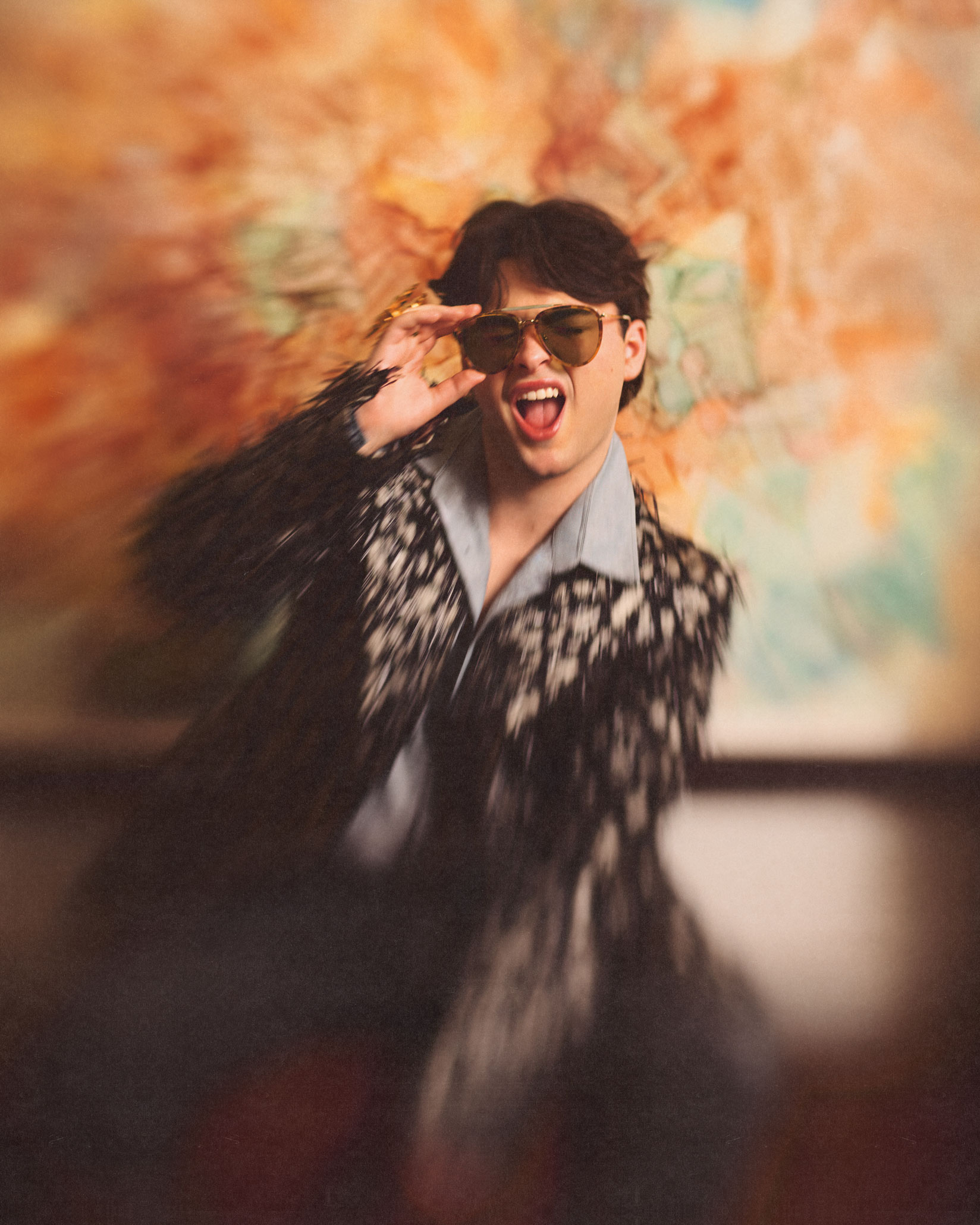
I gave you a little stalk and was looking at all your red carpet appearances. You have a very distinct sense of style, and you’ve been working with the same stylist for a while as well. What role does fashion play for you? What role does it play in your work?
That’s such a great question. Thank you so much, Natalia, because I don’t really ever get a chance to talk about my stylist. Her name is Yasmine Sabri, and she is incredible. I get so many compliments about the outfits that I wear and a lot of people attribute that style to me, but who I am in a fashion sense and in my red carpet looks – it’s impossible to even imagine who I would be in those situations without her. She’s a brilliant stylist, and really collaborative. Even calling her my stylist is strange, she’s my friend, my friend who has a brilliant mind and a brilliant eye for fashion and is always willing to take risks with me. We have so many conversations about what’s possible for me to wear, what moves the needle.
One time she had me in Paris wearing these boots with heels, and I was like “lowkey, I fuck with it”, do you know what I mean? It’s kind of cool. So pushing the dial in terms of what men wear, and I’m by no means super far off the spectrum, but it’s a conversation we’re starting to have that I think is really exciting. And Yasmine, I’ll say it on her behalf, she has no misses. She’s really cool. So I’m really proud of that, and I hope we have a long career working together. That’s my plan.
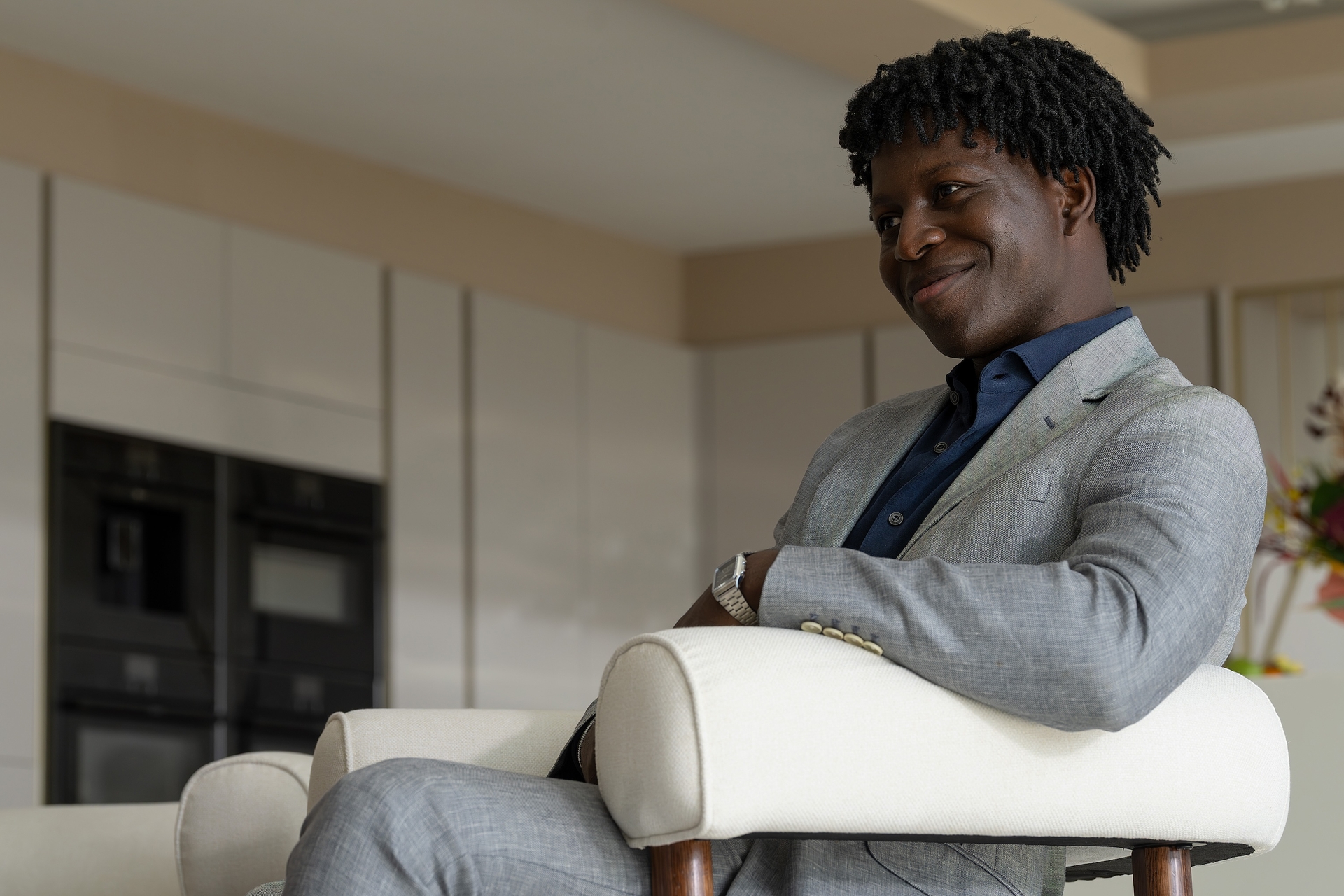
It’s really, really nice that she’s a friend. The way that you have talked during this chat, it feels like you’ve consciously surrounded yourself with friends within work. How important is that for you? How do you find your circle of people?
It’s definitely important for me to have good people around, it’s a non-negotiable. And I feel like, bringing up Ted Lasso again, I’m really lucky that that was one of the first jobs that I had, because it really gave me a no dickheads policy in my work life. The bar was set for me very early on. Even my teachers were telling me that when I was 14 or 15, the people who surround yourself with, the energy you surround yourself with, is really important. And I’m lucky that I have a lot of positive energy in my personal and my professional life.
And in terms of finding people, I just feel like there are so many good people who aren’t distracted by all of the negative things about our career, who just want to do cool work and be with cool people. And whenever I run into somebody that resonates with me in that way, I try to hold on to them, whether that’s pestering them on WhatsApp or sending them memes on Instagram. I’ve been lucky to have worked with great people. I know it’s not always like that, so I’m bracing myself to run into problematic people, but as of yet, I’ve not had that experience. Lucky.
I think that is good advice, especially in the world of film, where there’s a lot of ego involved. I think people are scared to message people they want to be friends with, so just reach out to the people that you want to be around.
Because nobody’s gonna be like, “oh, you love the work that I do? And you think I’m really interesting? Fuck you!” [laughs]. I find that a lot of people have time for people who enjoy the work that they’re doing and are on similar journeys.
Do you ever take any of your characters home with you? Not in a method acting kind of way, but just in the sense that you learn things from them?
Yeah that’s a huge part of why I do it, and I think a huge part of why we listen to stories anyway is to learn lessons from them. If you go back to the Greek plays, there’s always lessons to take from the art we make. With any of the characters in Ted Lasso, one of the big themes was to try and see the positive in people.
And with Kwabena in Industry… I’m trying to think about what I can say without spoiling stuff. So, I always find it really interesting when you’re a Black person in a very white dominated field, how that affects you and the vision of yourself it feels like you need to present in order to survive that arena. Kwabena is a private school boy, so I imagine he’s always been in situations where, outside of family, he’s one of the only non-white people in a space.
I’m interested in how that’s affected everything about him, and how inevitably, when you do so much of that work to adapt to the situation you’re in, you start to shed parts of yourself that are authentic to you. And that is an ongoing conversation in my life as someone who feels like, especially in our industry, there are many times where I’m one of, if not the only, non-white face in the room. And I’m very conscious about the parts of myself that I protect, and of having other Black people around me. That’s always been important to me, and it’s one of the messages from Industry I’ve thought about.
It’s interesting what you say about shedding, becoming more of a shell. Because in a show like Industry, there’s quite a lot of intimate scenes. How did that work for you as a performer? Did you feel like he could show parts of himself that maybe he’s hidden because of the intimate nature? Moments where maybe he’s not putting on a face. Did you play into that at all?
That’s interesting, because his romantic relationship with Harper is intimate, but not intimate, you know? At times it feels like they’re just fucking, but then there are other times where it feels really vulnerable, and I think what’s interesting about their dynamic is that at work, she’s his boss, but in the bedroom, there’s something almost equalising.
There’s something about liking someone, or wanting to go on dates with someone, that is equalising and there is not much of a front you can put on. And so I feel like it’s an interesting dynamic to put Harper in, especially where she has a relationship with someone where she is their superior. And he’s capable of hurting her feelings.
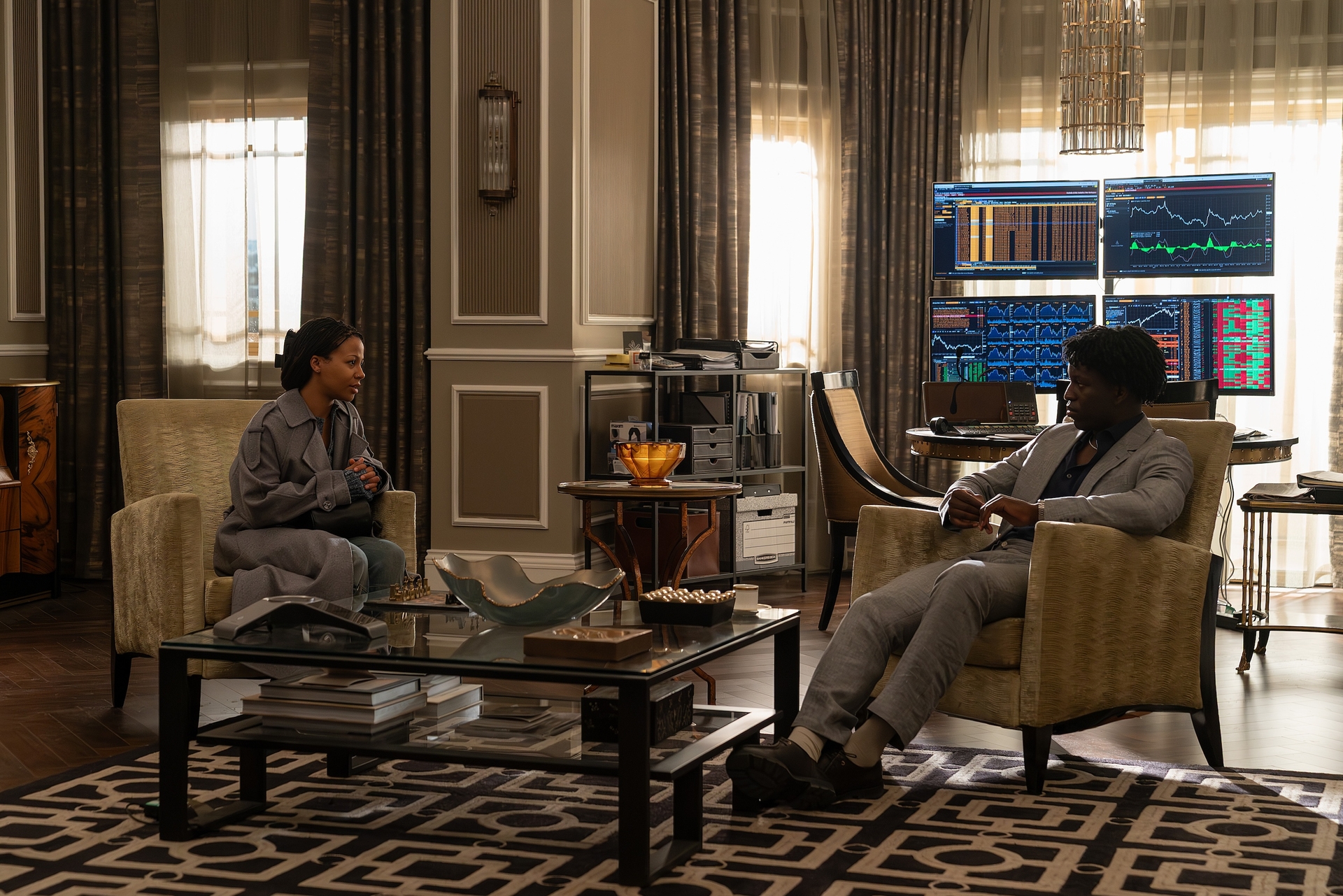

It works in what you were just saying, she’s also probably for a long time been the one of the only non-white people in the room.
Yeah, it’s not a coincidence that that’s who they’re with. Our relationship with Eric speaks to that as well, and I find that happens in my life where you see other Black people, or other non-white people, and you just want to find community. So you find other people and want to band together.
What are you listening to, watching and reading at the moment?
Reading at the moment is Octavia Butler’s Parable of the Sower, which is really great. And I’m listening to Viola Davis’s audiobook, and I just finished listening to Al Pacino’s audiobook.
I’m watching The Sopranos for the first time. The fact that somebody hasn’t sat me down and glued me to a chair and forced me to watch this before… it’s a masterpiece. I also just finished Pluribus, which was cool. And watched Hamnet, which was fucking incredible, Jessie Buckley is sensational. And because of Al Pacino’s book, I’ve gone back to watch The Godfather and all the films from that era.
I’m listening to Dave’s new album, The Boy Who Played the Harp. “Chapter 16” with him and Kano is just – you know how sometimes you listen to music and it feels like you’re floating? That’s what that song does to me.
What’s next for you? What are you excited to tell us about?
There’s a project this year that I’m really, really excited to film. I’m not allowed to say anything yet, but it’s going to be so cool. I’m very excited for this year. It’s based on a book, and the book is really cool.
Heard it here first. Kind of. Thank you so much for your time, Toheeb.
Thank you so much. That was such a wonderful interview. Genuinely.
Season four of Industry is currently airing on HBO Max, BBC iPlayer and BBC One, with new episodes every Monday.
You can follow Toheeb Jimoh at @toheeb.j
Interview Natalia Albin
Portrait photography By Pip
Candids and stills courtesy of HBO
Thanks to Tapestry