There are few stories that have held a tighter grip on cultural consciousness over the past century than Bram Stoker’s Dracula. The 1897 source material has been reimagined countless times, from stage to screen, each adaptation wrestling with its mix of horror, romance, and the eternal fascination with the dark and the unknown.
Luc Besson’s new Dracula pays homage to these earlier visions while charting its own course. Like Francis Ford Coppola before him, Besson opens in the 15th century, with Prince Vladimir and his beloved Elisabeta torn cruelly apart by fate in the wake of the Ottoman Empire’s invasion, but Besson switches up the narrative beats, patiently allowing centuries to pass before Vladimir’s reunion with his wife’s reincarnation, crafting a story that balances awe-inspiring epic scope with a surprisingly intimate emotional core.
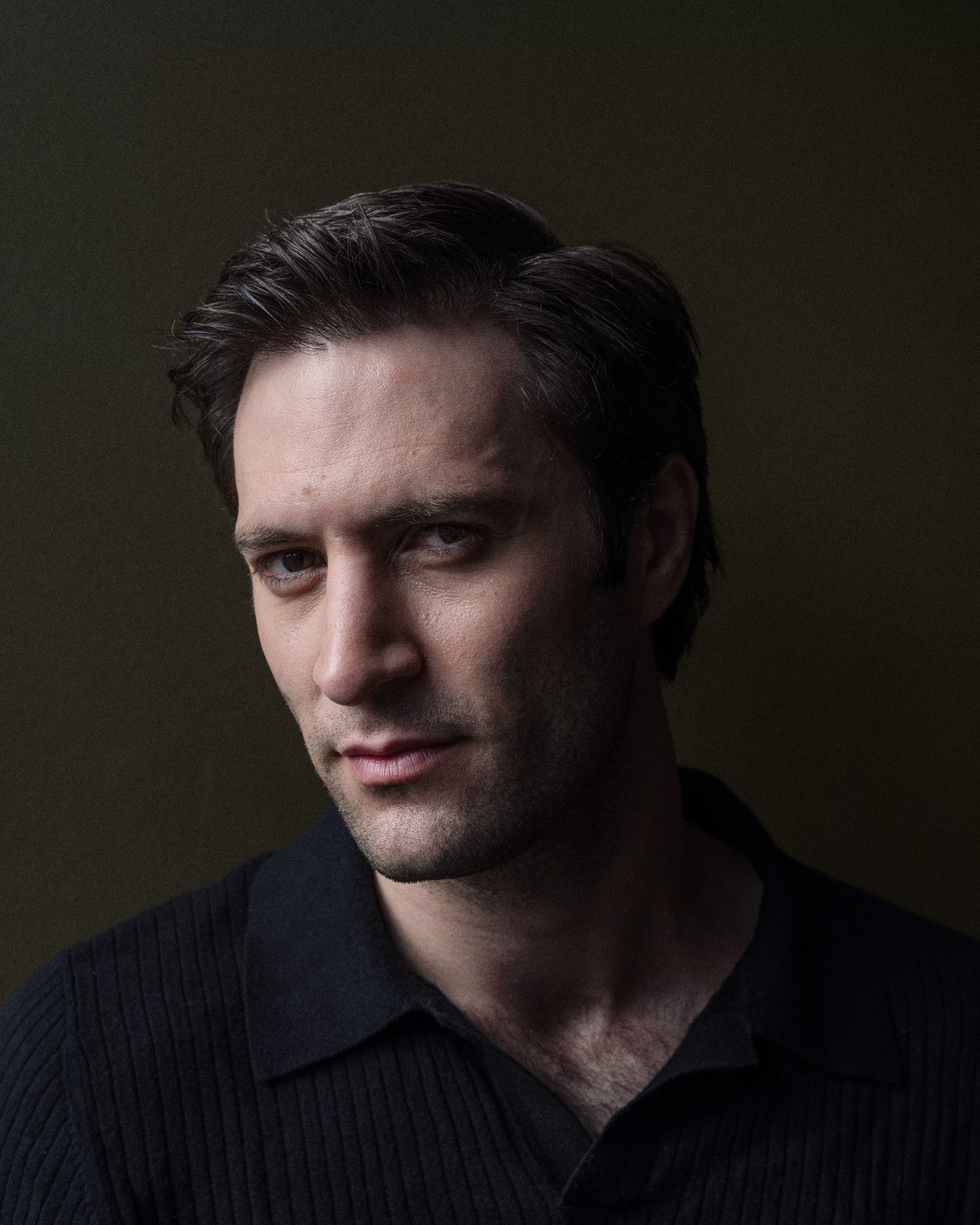
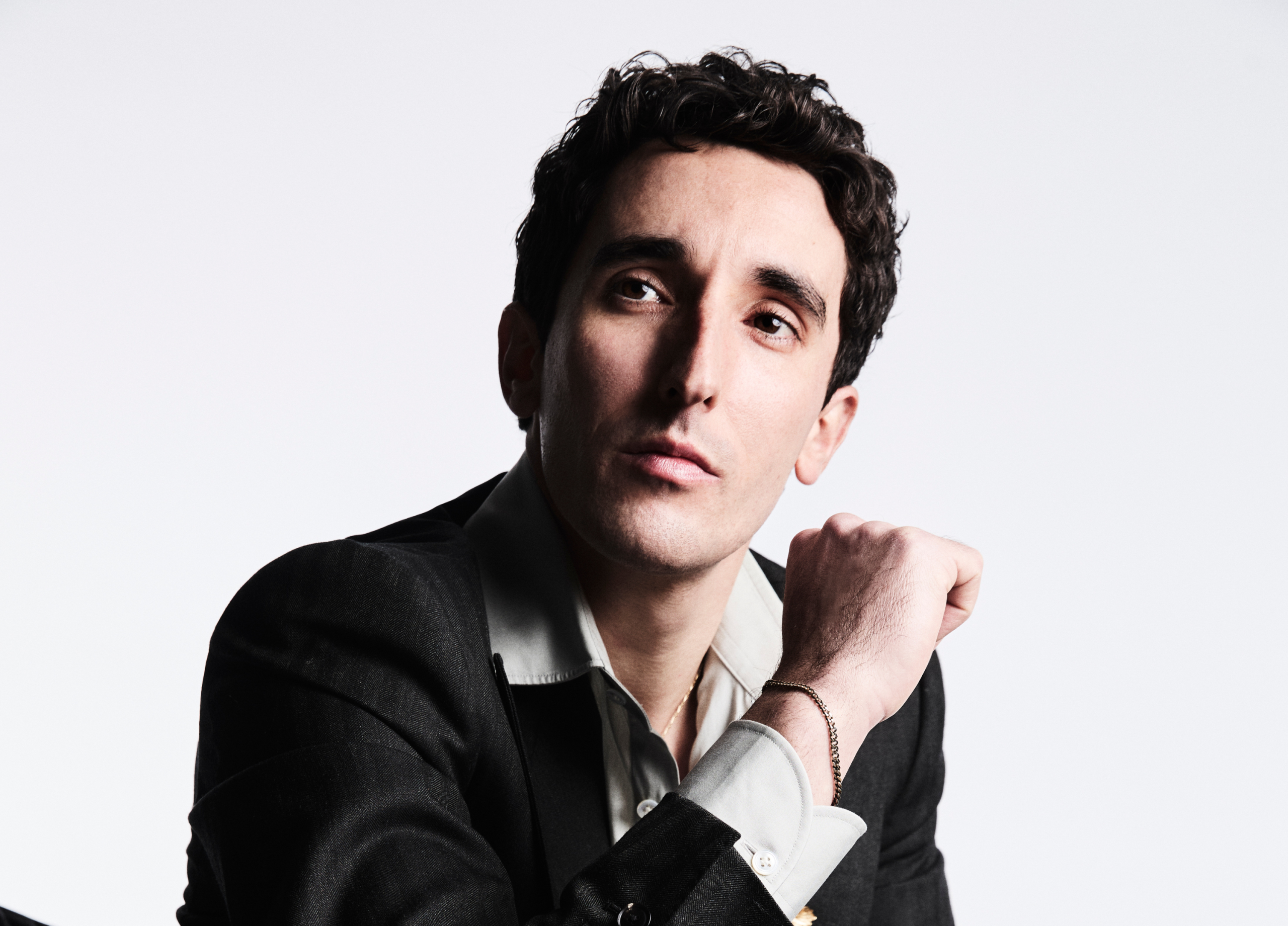
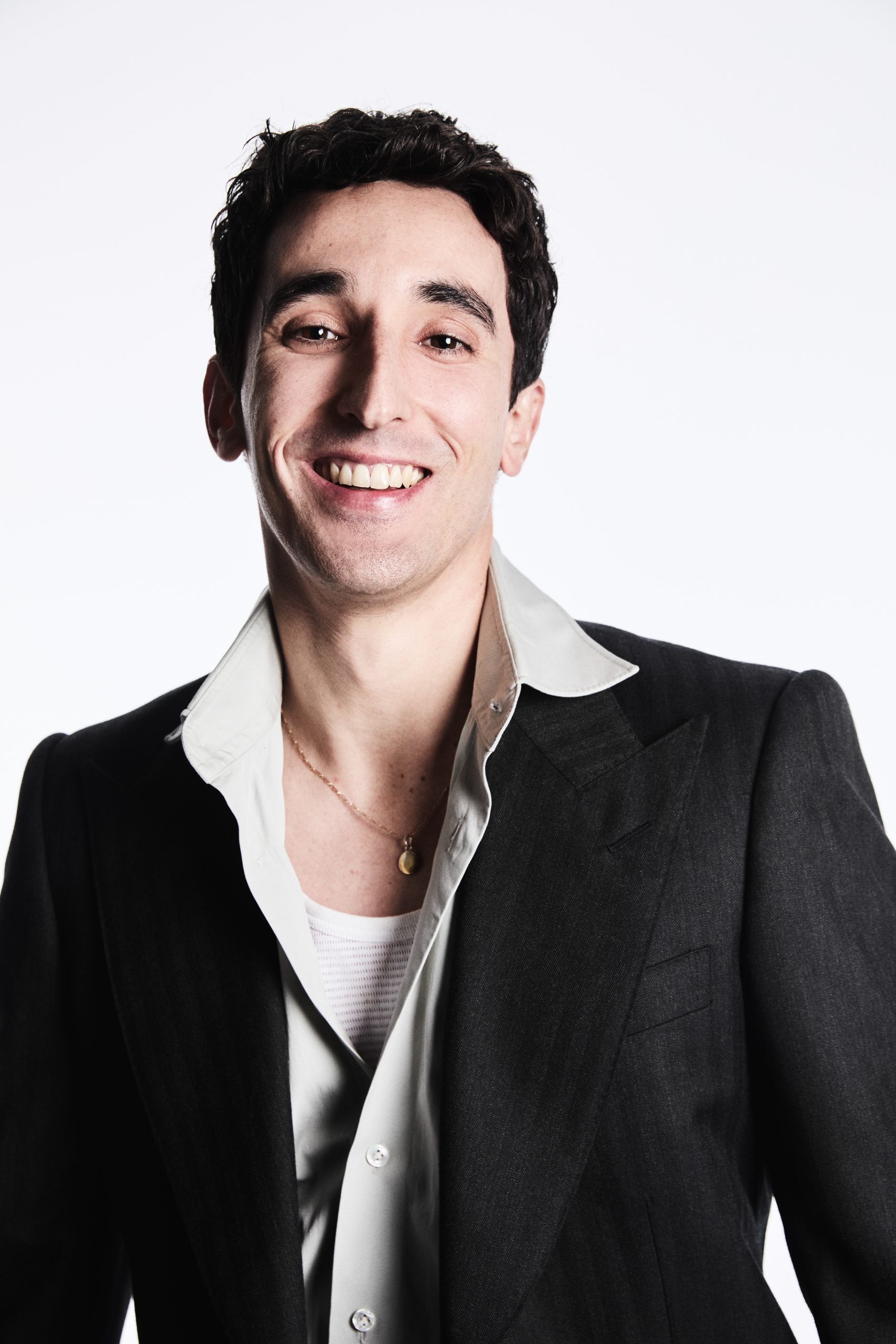
At the heart of the film’s emotional core is Ewens Abid as Jonathan Harker. From the moment the French actor appears on a Zoom call, his warm smile and easy charm filling the screen as he introduces himself, it is impossible not to sense the depth he brings to Harker, transforming the character’s journey into something immediate and intimate. In Abid’s hands, the character becomes a lens through which the audience experiences the story’s most haunting truth: that even the strongest love may not be enough, and that sometimes letting go is the truest act of love.
In conversation with 1883, Ewens Abid speaks thoughtfully about stepping into a role so deeply embedded in cultural imagination, about the camaraderie and learnings of working with his fellow actors, and about navigating the delicate line between suspense and humanity that Besson so deliberately cultivates.
Ewens, thank you so much for taking the time to talk to us today. Before we get into the Dracula itself, I wanted to go right back to the beginning. How much did you actually know about the project before you auditioned?
I knew some of the ensemble was attached, so I knew that Caleb Landry Jones and Christoph Waltz were part of it, and I knew it was Luc Besson. I knew the kind of work he does and his epic vision for his films. I mean, The Fifth Element and all – I know it’s a way back now, but he’s always had this grand vision and those really iconic, epic shots. So that was kind of what I knew going in.
And knowing Bessons’s work, like The Fifth Element or Léon, did that immediately shape how you imagined the world of Dracula might look and feel?
I was definitely expecting the epic scale of it, but I was still really surprised by how he managed to create this whole world and bring the entire cast together in a way that made everything gel naturally. There are so many different strings and storylines in the film, and I love the moment where it all comes together.
I watched it over the past few days and was really struck by how many narrative threads are running through it, and how seamlessly they all come together in the end. With something that complex, did anything about the process of making Dracula surprise you?
Luc shot the film almost entirely in chronological order. We were truly lucky to have this process because it doesn’t happen often, but for us as actors, it really helped.
That’s such an interesting way of working, do you know if that is his preferred way of working or was it something specific to the sprawling narrative of Dracula?
Yes, I asked him about it, and he said he likes to shoot chronologically because he wants the actors to go through the journey alongside the characters.
And your character, Jonathan Harker, quite literally, goes through one of the biggest journeys in the film.
Absolutely, he goes through all these ups and downs, it’s a huge arc. He starts out a bit naïve, a little awkward, trying to understand the culture around him. He’s a bit lost, and then he ends up going deep into the darkest parts of hell. He really hits rock bottom, especially when he realises this creature is now going after the person he loves.
I was going to ask you more about Harker, but now I am wondering how going through the story scene by scene, alongside your character affect you as an actor?
For me, having the film shot chronologically really helped because every day I could feel Harker’s fall, but also the fight back. I had to do that too, because I didn’t want to look at Caleb or interact with him. I essentially made sure to keep my distance from Dracula before we started shooting and so, one of the first things we shot together was the castle scene when Harker arrives. And honestly, because I hadn’t really looked at Caleb on set, the moment I looked up for the first time and he was right in front of me, I was truly scared.
I can only imagine. Watching Caleb’s transformation on screen feels incredibly intense, but focusing back on Jonathan for a moment, he’s such a central figure in the Dracula legacy. Did you look back at any previous versions, or was it important for you to approach him with a clean slate?
One of my favourite actors is Keanu Reeves, and I was just incredibly grateful in the sense of thinking, ‘wow, this amazing person and actor stepped into those shoes first, and now, more than 30 years later, I have the opportunity to do the same’. But I didn’t really look at other performances for guidance. I actually tried to block that out.
You’ve just mentioned Keanu Reeves and Francis Ford Coppola’s Dracula, which makes me think about how often this story gets retold. Why do you think we’re still so drawn to it, generation after generation – and what sets this version apart for you?
What really stood out to me is that this version focuses on love, true, eternal love and on humanity. There’s a moment where my character asks Dracula how he turned into the person, the monster, he is, and really listens. I don’t think we’ve really seen that before. It brings us closer to the human side of Dracula.
It’s less about the blood, the vampirism, and the monsters. There’s still a little of it, because let’s not forget, he is still a blood-drinking creature, but what really drew me to this version is how it shows the eternal love of a man for a woman, and all the ups and downs he’s gone through trying to find her again. It’s a real, true commitment that we don’t see that often these days. Maybe it’s old-school love, I’m not sure, but that’s why the project felt like it had a real sense of soul.
So, when you strip all of that away, the mythology, the expectations, what did you focus on in your approach to a character like Jonathan Harker?
I wanted to go in with the same sense of adventure I felt when I first read the script and I wanted to experience that for myself as well. So I really tried to approach it with openness and bring my own colours to it. It’s like painting. You and I could look at the same tree and we still wouldn’t paint it the same way, or use the same shades. That’s truly how I approached it.
And of course, working with the ensemble played a huge part in that. Bouncing off Christoph, sharing scenes with Caleb, being present with everyone on set. I tried to come in with a real sense of openness, just reacting to one another and letting myself fully go on that journey.
You keep describing the experience as a journey, which I love. What kind of journey would you want the audience to go on with you in this version of Dracula, and what do you hope they might notice about Jonathan Harker that they haven’t before?
There are a few things, but first and foremost, it’s the fact that he’s constantly trying to fight his own fears just to get back to the person he loves. He’s not this classic Prince Charming figure arriving to save the day. He wants to protect his beloved, but more than that, he simply wants to be with her again, and I think that’s really beautiful, because as you find out towards the end of the film, she doesn’t necessarily need saving.
I won’t lie, watching him fight for the love of his life in what is essentially a losing battle left me feeling conflicted.
It’s not easy, but Mina is the one who has to make the choice about who she truly loves, and Jonathan understands that. One of the biggest lessons in his journey is learning to let go, and accepting that sometimes someone’s heart goes in a different direction. Understanding that, and having the strength to step back, is incredibly difficult. And I think that’s what makes Jonathan’s journey so powerful.
Mhm, letting go for love is perhaps the hardest lesson to learn and watching it unfold on screen, especially in your final scene, did make my heart ache for Jonathan. It’s even worse now, knowing that it actually was your final take for the project?
Yes, absolutely, that was my last scene on set. That was my final moment, my wrap for all the work we’d put in and for this entire journey we’d been through. It was a truly heavy emotional moment, both for me and, I think, for the character, to have this journey end with a sense of acceptance.
Well, Harker is definitely a better person than I am, I don’t think I would have been as accepting. If you don’t mind, though, I’d like to steer the conversation in a slightly different direction, because there’s something else about the movie that really fascinates me, and it’s not about heartbreak at all, it’s about language. You’re a French native but you’ve worked extensively in English, how did that play out on set, especially with such a mix of languages around you?
We all spoke English on set. I mean, Christoph knows many, many different languages, so I would sometimes speak French with him. And then you have Caleb with this big, thick Eastern European accent, which he kept the entire time, both on and off set. I think the fact that we all have different accents actually makes the film even more beautiful. Obviously, the story is set in Paris, so you also have a French cast and French accents – and I mean, I’m French, obviously.
It’s not that obvious, accent-wise.
I mean, I’ve lived in the UK for about 14 years now, and while Harker comes from a good family, the story itself is still set in France, so we didn’t want to make him sound British or force another accent onto him. As I said, people come from very different walks of life, and nowadays it’s becoming more and more common to have films that aren’t just in American accents or RP British accents. I think that’s really beautiful, because the planet is full of accents.
Do you feel a shift in yourself in a different language?
For me as an actor, working in French and working in English feels pretty much the same. I’ve done a bit more work in English, so I might be slightly more comfortable with the lingo on set and how things run, but now I’m starting to work more and more in French, and I’m getting used to that as well. Although I would say my voice might be a little deeper in French. Who knows why?
Yes, I do think languages carry different emotional registers and tones of voice, god knows why. Speaking of which, You came to the UK quite young, originally to study, right? Was that always with acting in mind, or did that come later?
I arrived in the UK when I was around 16, and I came mainly to learn the language, but then I remember having an assignment in college – I studied business in France – where we had to write an essay about where we saw ourselves in ten years’ time. That was a turning point for me. I couldn’t quite pinpoint where I saw myself, so I talked to my parents about it. My father said something that really stuck with me. He told me, ‘you don’t want to live with regrets, so think about what you truly love and want to do’. That’s when it clicked.
So you made the switch from business to acting?
Yes, I realised I loved cinema. I ended up going through the audition process and landed a spot at East 15, where I did my three years of training. It was an incredible journey, probably some of the best three years of my life. I learned so much, and I failed a lot, which I actually loved. That’s really where it all started.
Looking back now, can you pinpoint where your love for cinema really began?
I used to go to the cinema a lot with my dad. We’d sometimes watch two films in the same afternoon, just finish one movie, walk straight back to the box office, and buy tickets for the next one starting in 20 minutes. I think that’s where it all began, just sharing those moments with my father and escaping into these fantasy worlds for a couple of hours.
Sometimes you’d walk out of the cinema and the outside world would feel unreal, because you’d just been so immersed in a film. If a movie is really good, it makes you feel like you’ve stepped away from reality for a while.
Does film still have that effect on you now that you work in the industry?
Absolutely. The Substance, for example, I watched that not too long ago, and I remember thinking, “Oh my God, what was that?” It was incredible, and it still had that same impact. Of course, sometimes your brain starts switching on and analysing things, but I try to shut that off.
That makes total sense and I suppose you can always go back later and think about the work side of things. You’ve done short films, TV, and features. Is there a medium you haven’t tried yet that you’re particularly drawn to, or one you’d like to explore differently?
I’d love to explore television more. I find the length really interesting, maintaining a character over a much longer period of time. A film like Dracula took about two to three months of work, including a week in Finland, but with a TV show, you can easily be on it for six months, especially if you’re playing one of the lead characters. I think it would be really interesting to experience that – stepping back into your own life and then returning to set over such a long period.
That, and French drama, in particular. It’s very close to my heart, and as I work more and more in France, it’s something I really want to do. I grew up watching films like La Haine, and I’ve always had this desire to explore French cinema more deeply. I’m also very drawn to period drama, I find it fascinating.
We touched upon it earlier, but Dracula, similarly to Frankenstein, is a story that has been revisited several times in recent film history. Is there any other iconic character that you think deserves the same treatment and have its story heard again?
There’s a story I really love called The Hunchback of Notre Dame. I grew up watching it, and I remember there was also a big musical adaptation. I love the song The Cathedral and the story itself has such depth. I’d love to see it brought back to life on screen. I can’t remember the last time that story was really explored, and it has such a strong soul to it.
I love that you just mentioned music, it’s such a subtle but important theme in this version of Dracula, and people often talk about it as a shortcut to memory. So, I’m curious: if there were one piece that could instantly take you back to yourself, what would it be?
That’s a really tough question, there are so many choices. As a kid, my mum used to sing me a lullaby, and that brings back a lot of memories. I don’t remember exactly which one it was. It wasn’t Frère Jacques, but something like a lullaby would definitely be one.
My dad loves salsa, so I have very fond memories of trying to dance salsa as a kid, so I’d say a good salsa song. And probably some Charles Aznavour as well. That mix of joy, dance, and love of life, alongside something very soft and nostalgic that reminds me of my early childhood.
Dracula releases in the US on February 6th 2026.
Interview Jule Scott
Photography David Reiss
Stylist Nathan Henry
Grooming Nadia Altinbas
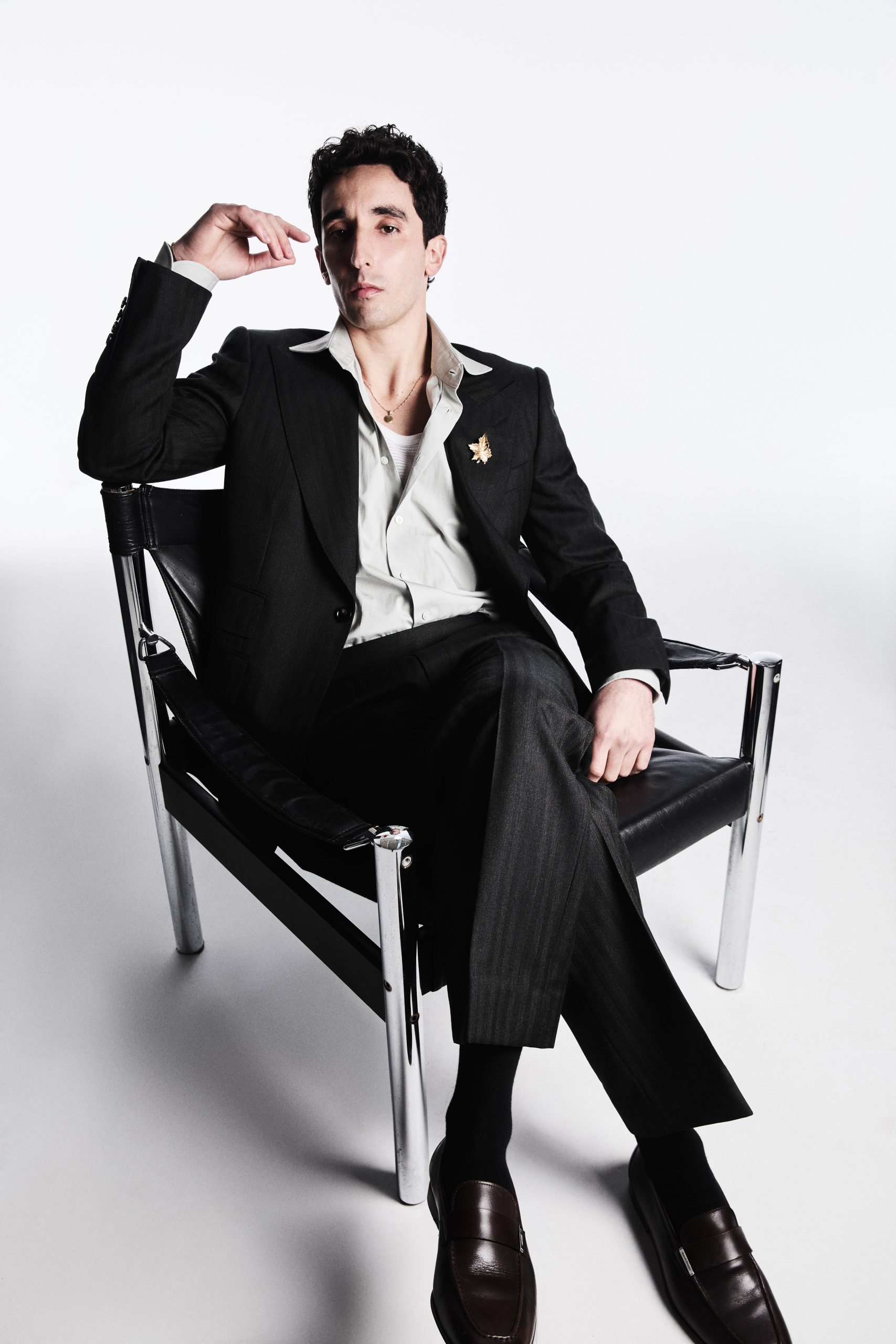
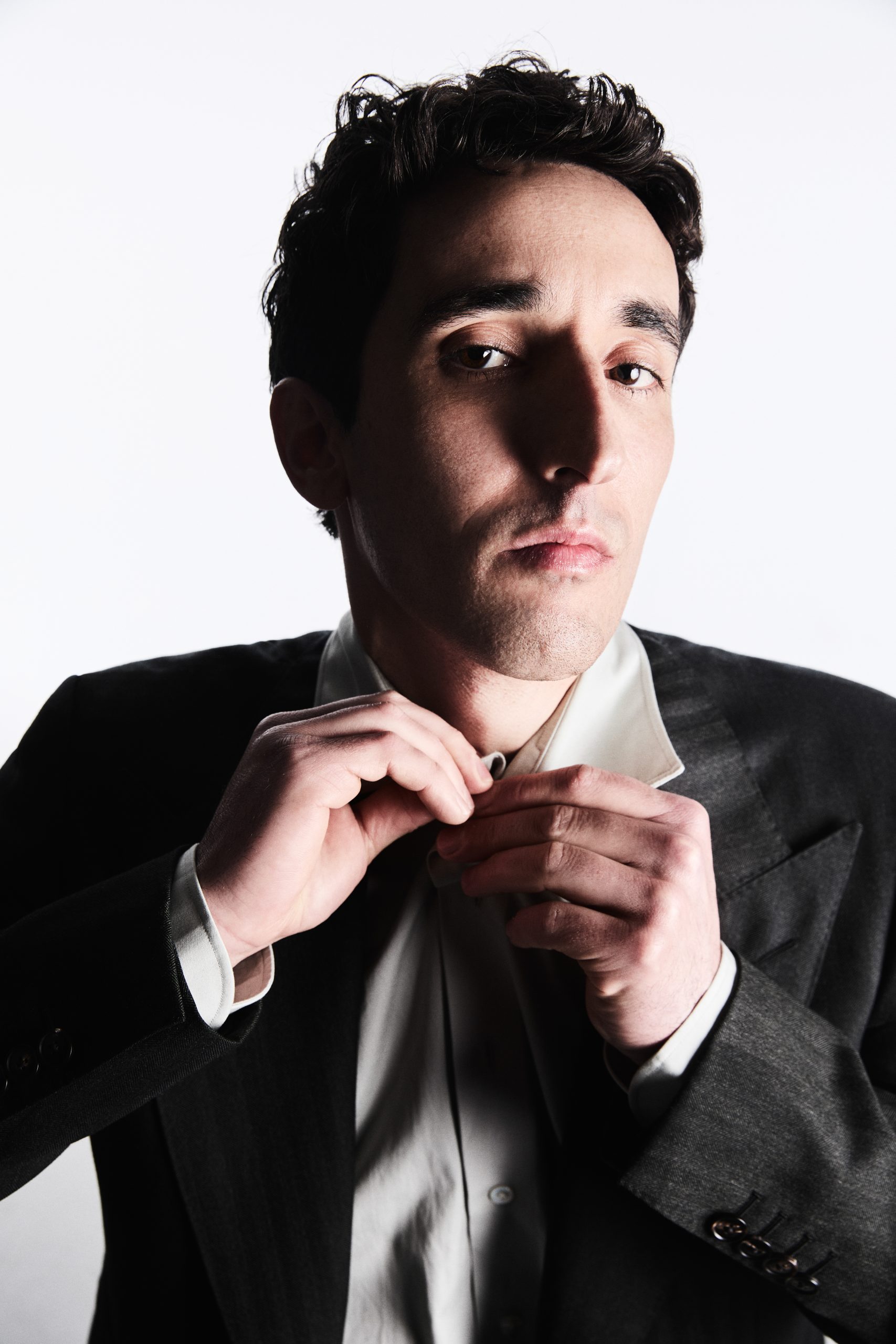
Ewens wears Suit & Shirt by Edward Sexton, Vest by Sunspel, and Shoes from Russell & Bromley.
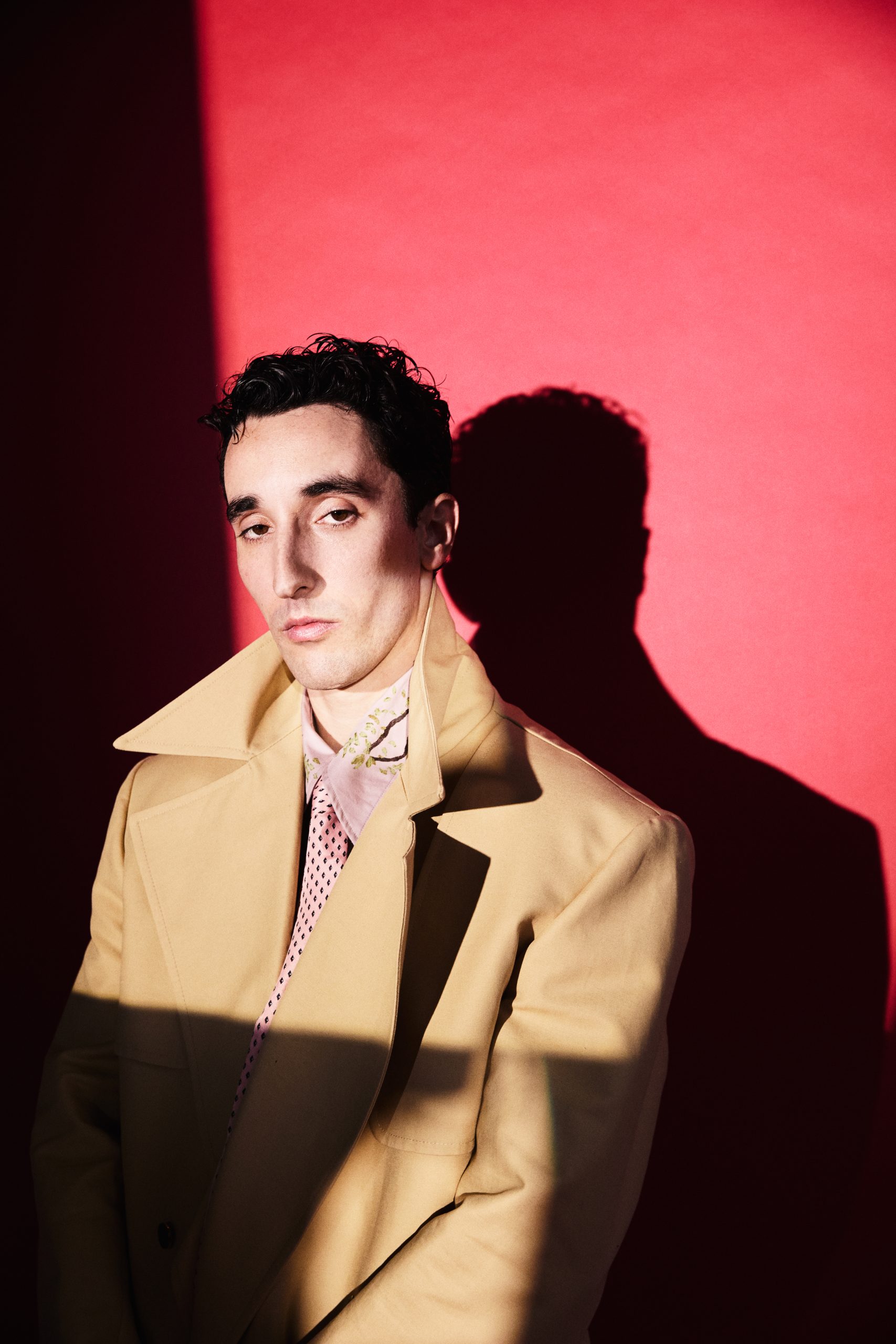
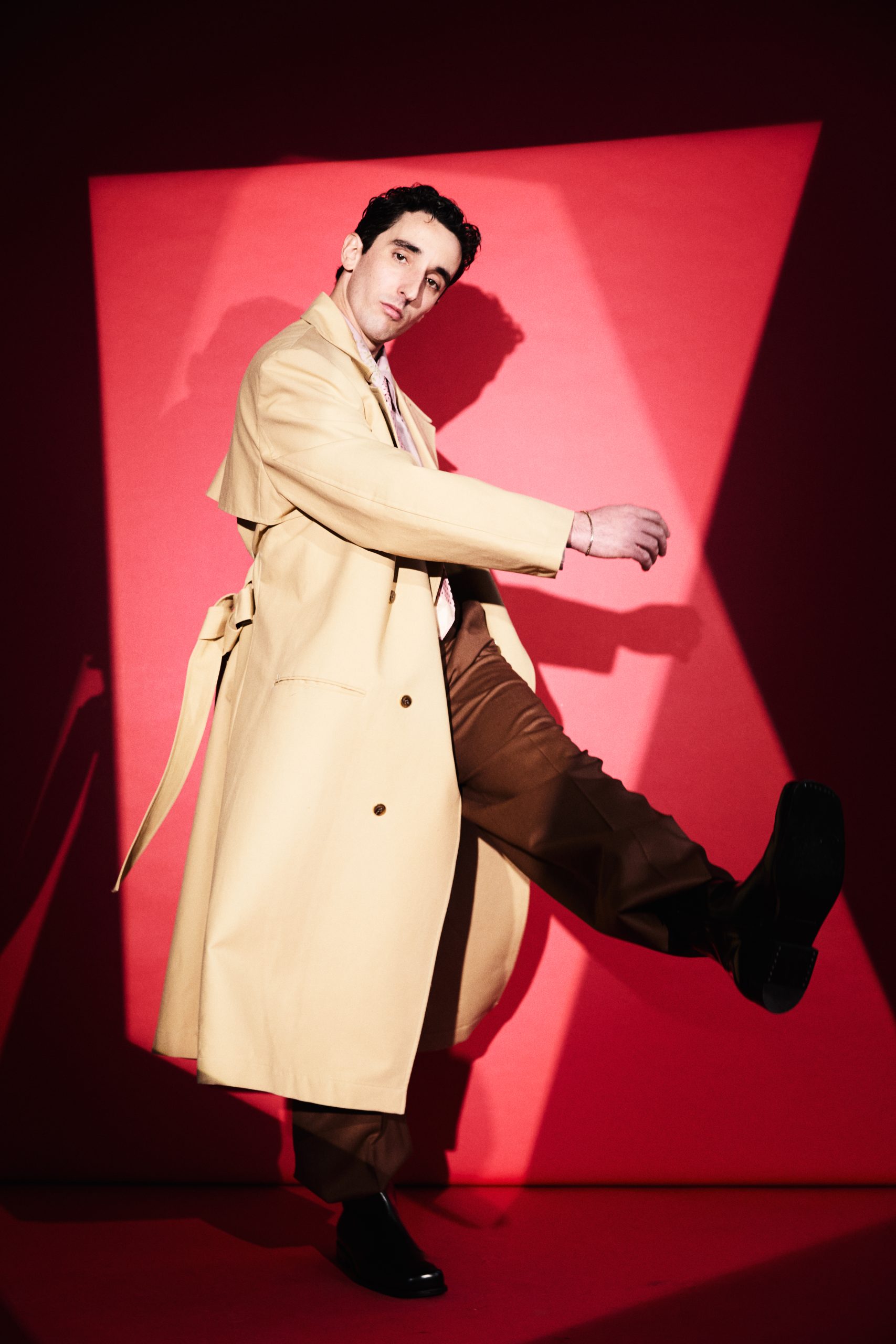
Jacket, Trousers, Shirt by Amiri, Tie by Cenci, and Shoes from Ami Paris.