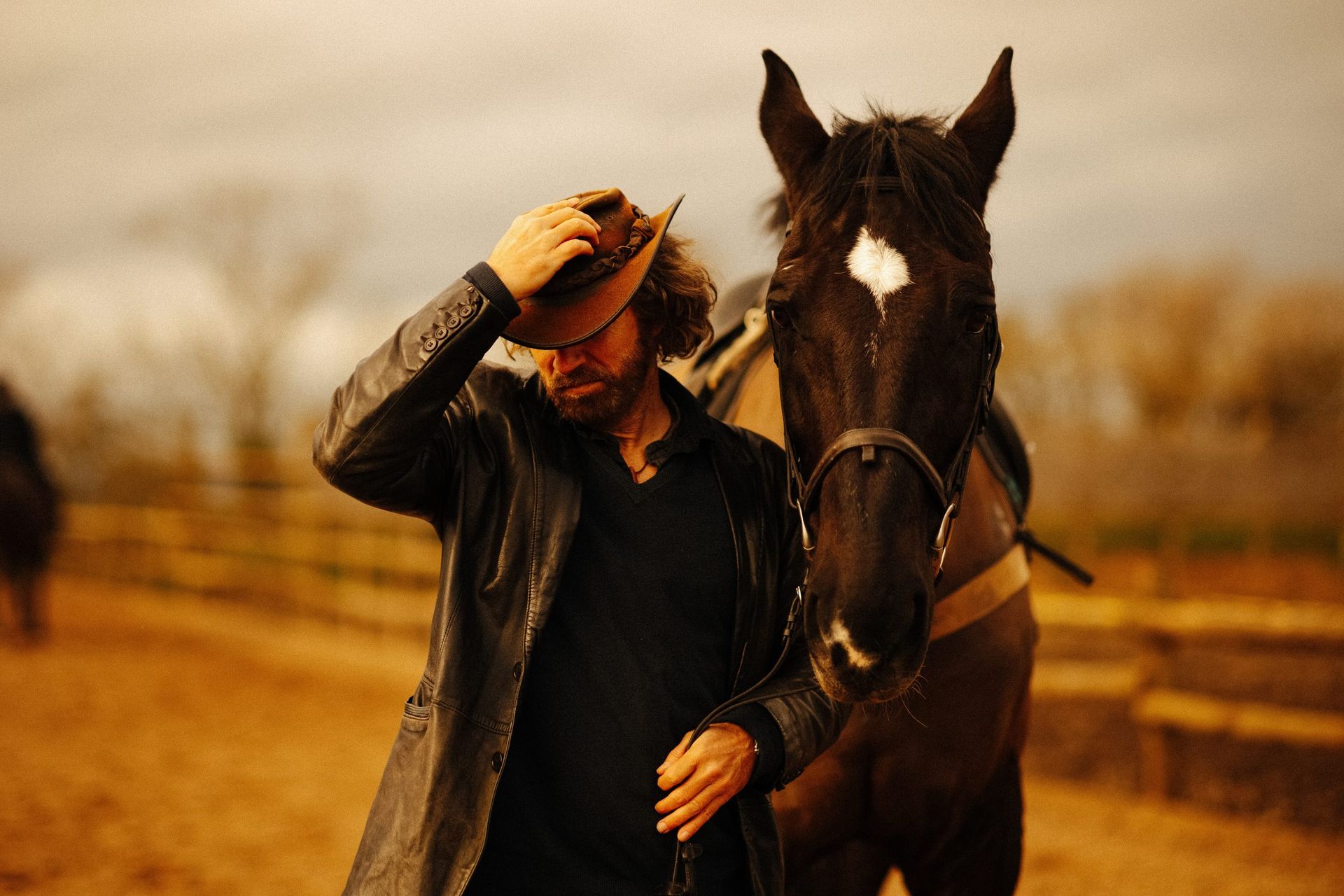
British singer-songwriter Tom Moriarty returns with Chapters, a richly textured fifth studio album that marks a bold new era for one of the UK’s most compelling roots-rock voices. Out now, the record sees Moriarty pushing beyond the acoustic folk foundations that first earned him acclaim, embracing electric guitar-driven arrangements and southern rock influences while retaining the introspective songwriting and soulful vocal delivery that have long defined his work.
Praised by Q Magazine for his “thoughtful roots rock” and described by the Press Association as “a performer of rare talent,” Moriarty has steadily built a reputation as a songwriter capable of balancing raw emotion with timeless musicianship. On Chapters, that emotional honesty remains front and centre, but the sonic palette feels broader and more ambitious than ever before.
Opening track “Enemy Inside” immediately signals the album’s shift in direction, pairing soaring electric guitar work with Moriarty’s weathered, whisky-soaked vocals to create a powerful statement of intent. Elsewhere, autobiographical songs like “On The Road Again” reflect on a life shaped by travel, hardship, and personal growth, while quieter moments such as “She’s Like The River” showcase the intimacy and vulnerability that sit at the heart of the record.
Written in the aftermath of a career-threatening accident and a serious injury to his left hand, Chapters emerges as both a personal reckoning and a triumphant creative evolution, capturing resilience, endurance, and the restless spirit of an artist still pushing himself forward.
To celebrate the release of the project, Tom Moriarty has penned a track-by-track article for 1883 on each song behind the album.
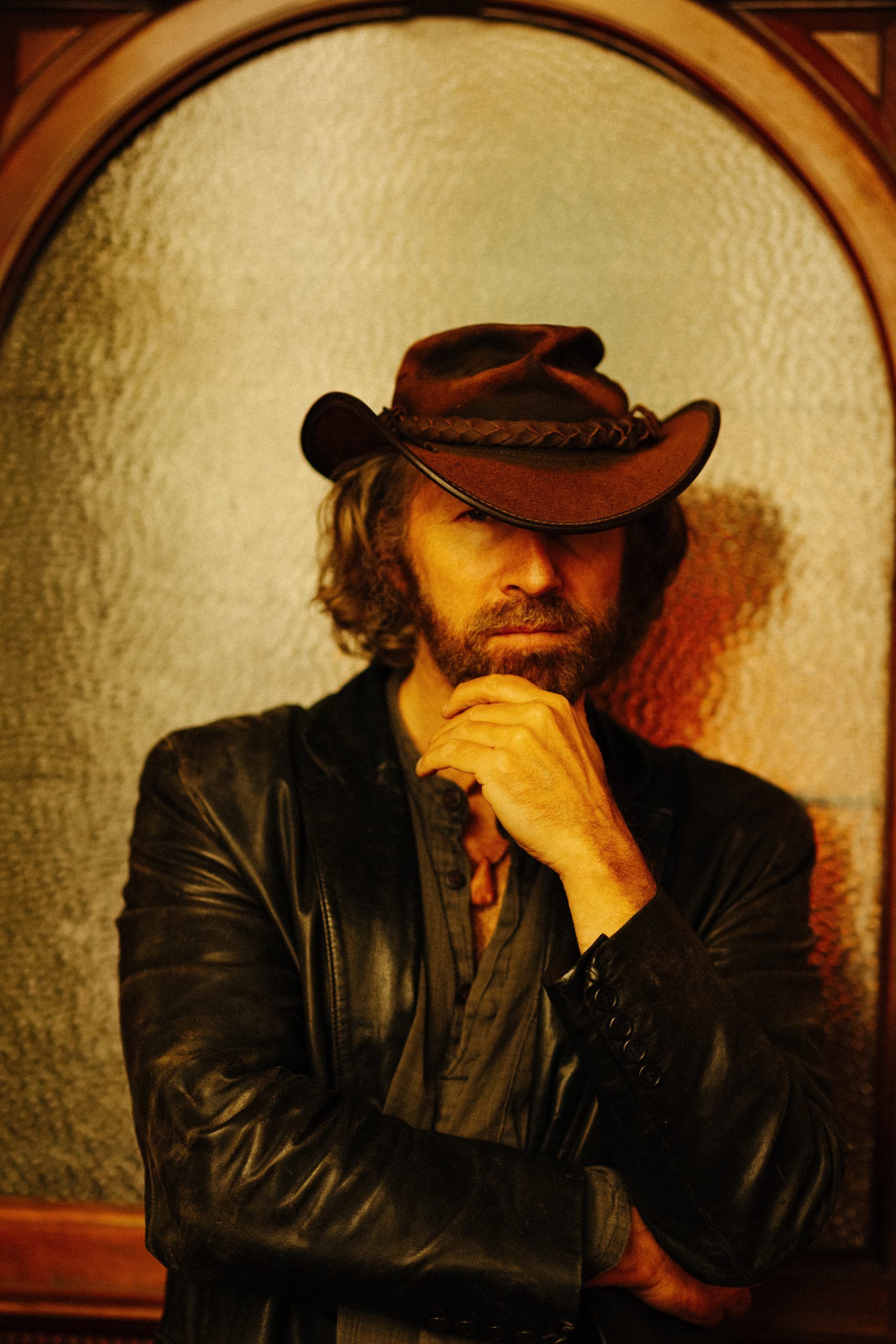
‘Enemy Inside’
I guess this was always going to be the opening track of the album. Musically this track tells the story of the transition to a more rock sound with the acoustic guitar opening and then the introduction of electric guitar for the first time compared with previous albums. Chapters in a way is a natural follow up to The Road which was an acoustic album. In Chapters I have added in electric guitar as a way of expressing different emotions. The world has changed and I needed to add that sound to the pallet to reflect the times in painting this picture. The opening acoustic riff is the kind of thing I’ve been playing for years. It started when I was learning classical guitar as a kid.
I would do my practice and then I’d come up with these funky rhythmic riffs using a percussive technique where you hammer on and pull off the strings with your fingers in the left hand to give it additional rhythms and patterns. You syncopate the left hand fingers with the right hand strumming. Truth is at school I spent more time coming up with this kind of pattern than practicing. My guitar teacher once asked me if I had practiced enough that week. I never did, but I loved playing guitar. So it starts with that riff and then the electric guitar introduces itself. I’m pleased to be bringing electric guitar to this album. We spent a long time working on that guitar sound to get that grit and anger. Throughout the album I play a ’74 Fender Telecaster, a ’73 Les Paul Custom and a hand-made guitar from a luthier I knew which is based on a Fender Stratocaster. When I found the Strat, it was one of those times when you pick up a guitar and it just feels great.
So talking about the meaning of Enemy Inside it’s really about the return of a type of hate in society that we thought was in the past. “They say that those days are dead and gone but now it seems there’s something going wrong”. We know that hatred has been used in the past to support people in power. We know where it leads. It seems we’re there again. There hasn’t been this much hatred on the streets for years. These are hard times economically so you always see a rise in nationalism at times like that. It’s not good. There are people taking advantage of that and there’s blood on the streets. I guess many of us thought we were beyond that, that we “live and learn, but now it seems that the darkness has returned”.
I guess the point is that a lot of people are trying to live peacefully however there’s a few who are bringing down the human race. They are the enemy to us all. They are the enemy inside. So they destroy all our efforts to live in a peaceful world. “What are we fighting for when the enemy’s inside”. If we don’t stand up against hate then the world will regress. It already has. We must continue the fight against the enemy inside and turn it around. If not “then all the progress that we’ve made in all these years will be undone”.
Musically there’s a lot happening in this track. You’ll hear in the verse there’s actually quite a bit of percussion, some shaker and some congas. They really help drive the verse along. We did have more electric in the verse but we wanted that acoustic riff to be heard. There are two acoustic parts happening at that point, the acoustic riff and an arpeggio part which has a similar vibe to one of the guitar parts in “A Long Train Running” by the Doobie Brothers. I reckon that track has been a big influence on me over the years, that guitar intro, I mean come on, how can you not be influenced by that.
When we get to the chorus there’s a few electrics coming back in. I reckon we used the Strat and the Tele for those parts, going through an old Mesa Boogie combo amp. A combo amp is the kind of amp you see at small gigs where the controls and the speaker are all in one box. Incredibly I won it in a raffle when I was at the Musician’s Institute in Los Angeles. It’s signed on the back by Randy Smith, the founder of Mesa Boogie and Allan Holdsworth, the great jazz guitarist. We used those guitars and that amp and then a few pedals and effects to get that sound and that sustain.
Another thing that you hear in the chorus is the introduction of two great singers, Melanie and Louise Marshall. I first heard Mel and Louise when they were singing on the Ray Lamontagne album “Gossip In The Grain”. I heard their vocals on the song “You Are The Best Thing” and ever since then I wanted to get them on a record, that was before I had started writing this album. I had tried to find them, find their agent, find people who knew them. Then I was talking with Tristan Longworth, my producer, one time who said, “Oh yeah, they were in here last week, I’ve known them for years”. Man, sometimes you’ve just got to talk about what you want and the universe delivers. Well sometimes.
For me one of the most important moments of this album is the guitar solo. It’s the first guitar solo on the record and the first solo I’ve played on record really. So I guess this is an introduction to me as a lead guitarist. In terms of influences on this solo I guess there’s some Lindsay Buckingham, some Clapton, some Santana, some Jimmy Page, Kossoff, Bonamassa. As a guitarist, it gets to a point where it’s just you. For me it’s got to communicate, it’s got to sing. A lot of the time in solos I pause, like I’m taking a breath.
In music, you call that “phrasing”. The great blues guitarists are masters at that, BB King, Freddie King, Albert King and of course Clapton. Solos should have a start and end point and tell a story. This solo has two halves, the lower part and then the higher part that builds on the first half, adds new observations and emotions and closes it out as we go back into the final chorus. I try not to overplay. I’m not a shredder. I don’t try to impress with speed. To me, it’s about complementing the song and expressing emotion in a musical way.
‘Leaving It All Behind’
This song is about freedom. I’ve written about freedom before and it’s a theme in my music. This time it’s about having to leave a place to find freedom, and peace. When I was writing this I was thinking about people having to leave a place where they grew up because it becomes too dangerous for whatever reason. It could be the threat of a certain kind of lifestyle or the threat of war as it is for refugees. There comes a time when just have to leave it all behind. “The days they have arrived that you thought would never come”. There does come a time where the ghosts of the past are just too much to deal with in your present. You can try and stay and fight them but sometimes you just have to leave, leave the ties that bind you.
Yes, there is some of my own experience in this song. I know what it’s like to grow up in a troubled household. I know what it’s like not to be able to leave because you’re too young. I know how the past can haunt you. I guess one of the points about this song is not just about physically moving on but emotionally and psychologically leaving things behind. It’s easy to move to a different place, it’s not so easy to leave the past behind. I know I’ve found it difficult sometimes. Truth is I’m always moving on.
Sometimes people are fearful of leaving a place and that stops them from being able to see beyond their current situation. “How do you look beyond the walls inside your mind. Tell me how you know the answers you might find”. Sometimes people need help to look over the horizon. Sometimes people need help to forget the past. There are of course other ways of forgetting the past, drugs, alcohol, cigarettes but that doesn’t really mean you forget the past, you just dull the pain for a while. It’s more difficult to actually let go. “Many fools have paid the price for never letting go.” I know, I’ve been there.
In the middle 8 of this song I am talking to someone about my experience hence it starts with “If I could go to way back when, when I was young and the world was not pretend.” So I guess I’m talking about my childhood. When I talk about pretend, I’m talking about a world that wasn’t built around lies the way it is now. There were no mobile phones and social media then. It just felt more real because you were present in the moment. It wasn’t pretend. My advice to that person is to leave their difficult situation and not pay the price for staying. “Take it from a man that’s been there too, wouldn’t want the same to come to you.”
When I wrote some of these lyrics there were some characters I was thinking about. One was a young kid leaving a tough life in an urban situation in England. Another was a refugee leaving war zones in places like the Ukraine. There’s a line there that talks about the iron curtain falling. The iron curtain falling here is not the destruction of the iron curtain, it is the falling of the curtains at the end of the play in a theatre. Once the curtains fall that is the line between the actors and the audience, or in times of oppression the line between you and your family. “You don’t want to hear your children’s call when the iron curtains fall.”
Musically, the opening guitars were really important here. Tristan and I spent a long time getting that sound. I wanted it to be the sound of freedom, a cry of freedom, a rallying call. At some point I called it “mountain guitar.” In the studio you achieve that by adding effects like reverb and echo. That gives it that space, that power. We tried many combinations. When you’re thinking of the sound you want you think of musical references. The starting reference point for this guitar sound was the reverb on Keith Richard’s guitar on Start Me Up. There’s a whole story about how they got that sound in the studio. It’s an iconic sound. So we looked up some reverbs that were close to that and in the mixing of the album it become known as the Start Me Up (SMU) reverb. So we used that here with some overdrive on the guitars to give it the edge I wanted.
When we get to the second verse we hear a new introduction to the album, the strings. I’ve had strings on previous tracks but this is more about adding orchestration. The string parts are actually all played by one person, Georgie Leach, a brilliant violin and viola player who played on my previous album The Road. She now plays regularly with Seasick Steve. So she layered up the parts with real violin and viola and we added some depth and body with sample strings. I’m particularly proud of the soaring violin line after the lyric “Take it from a man that’s been there too”. It’s very orchestral and lifts the song. We spent hours on that one string line getting the level right so you could hear it.
When we were planning the recording of the string parts Georgie mentioned she wouldn’t be able to bring her viola with her on the flight. So I had to find one. We were recording in Southern France so I did some research and, incredibly, found a violin luthier in Nice where they made beautiful violins and hired out old ones. The viola that Georgie plays on the record is in fact 250 years old which is why the strings have that warm tone on the record. It was really important in providing the mid range power for this track which I felt was important for this story.
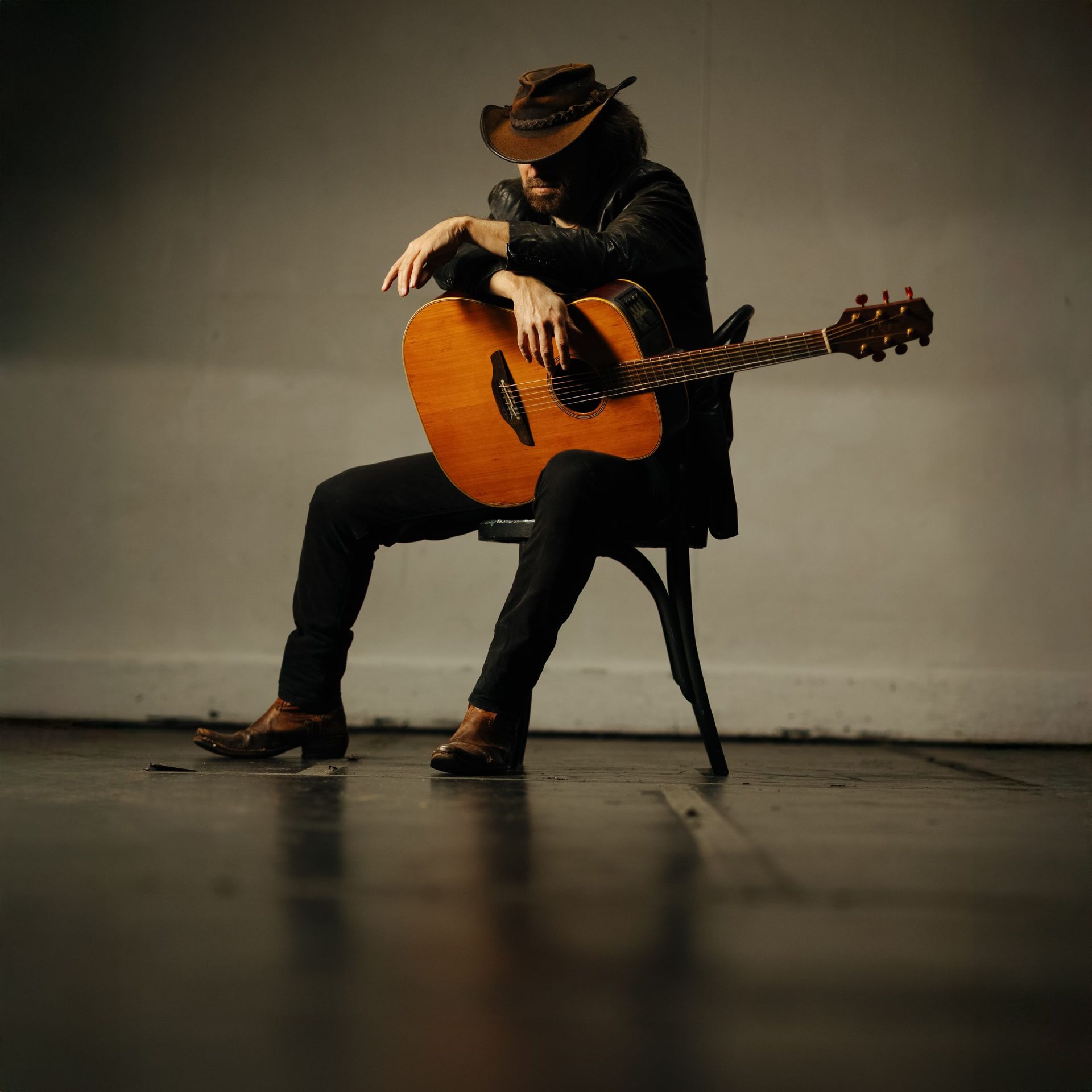
‘She’s Like The River’
I started writing this song a while back. It’s difficult to know exactly when songs start. There are years of recordings on my phone, and lyrics in notebooks, and somewhere there will be a recording of the first time I played these chords and started singing a melody over it. The song is inspired by someone from years ago. There’s a place I used to go when I was living in France. It was a place by a nearby river. In the mornings I would go there for a walk and in the evenings I’d go there with some beers and cigarettes and sit and watch the river go by. In the Winter the water would run high with the snow melting on the mountains. Sometimes it was raging, like a pride of lions on the hunt chasing prey down the mountain side, incessant, unwavering, unbridled, sweeping away everything in its path. In the Summer it was tranquil and calm as it whispered by. There are some places on the river where it would talk, like the murmur of a crowd in one place or the laughter of children in another. It was warm and comforting, a place of solace, a sanctuary, a place of joy and of love. That is what it meant to me. And that is what she meant to me. She was like the river.
I spent time down there with my guitar writing those lyrics. The river and she were a place where I could “rest my weary head”. I thought about what the river means to me. It’s a place of mindfulness. It was a place where I could deal with difficulty, with sadness or memories. “When there’s words that can’t be spoken I bring them here to drown”. The river always listens. I knew she would always listen. She always did.
It’s a song about love. It’s a song about love for a person and love for nature.
Musically, I guess one of the most important things about this song is the tempo. It has to reflect a warm summer’s day and at the same time the movement of the river. With that tempo I think it catches the character and the movement of that place by the river. I think for a long time I saw this song as a single release. It naturally had a short bridge to the chorus and the chorus is of course based around repetition. It is not a song that was written as a the river that inspired She’s Like The River single.
Some songs just naturally are. As on the previous track the strings come in at the chorus however it was important with this track to leave room for the vocal and not add too much instrumentation. That was particularly important in the middle 8 where the vocal has more room to express itself. The arrangement of the strings is meant to represent the flat surface of the river in Summer.
You will notice that there is even a little mandolin towards the end. It’s actually a Mandola. It’s like a mandoline but a little bigger and the one I have is simple in design. It’s a beautiful instrument that I bought in London a few years ago. I think that’s some of my Irish roots coming through. Moriarty is a Kerry name and I used to visit my grandparents as a kid who lived in Dingle Bay. That is when Dingle Bay was a small fishing village, really small, and there wasn’t many people there. These days it isn’t like that. I’ve been there a few times since.
I visited a bar there one time called Moriarty’s and mentioned to the barman that I was a Moriarty to which he replied “Oh yeah? Well you’re still paying for your pint”. So that heritage played a part in my music and that’s why there’s a mandola playing on this song. I love the Irish history of melody and storytelling. It’s part of the culture. My grandfather would stand up at Christmas every year and recite Dickens for hours and we would all sit and listen in awe. That was the old way of passing down stories and culture. I think I’m being true to that in my songwriting.
‘One Day’
This is one of the best songs I have ever written. It started with a guitar part that became the chorus, that 6/8 rhythm. For those of you that aren’t musicians the 6/8 time signature is a swinging 1,2,3…4,5,6 with the accent on the 1 and the 4. I’ve always liked it and I’ve written songs with that time signature before. It has a folky lilting story telling sound to it. This is another one of those guitar parts that I had for years. Sometimes you just have to be patient. Eventually the lyrics arrived. It is a woman who goes through hardship and finds happiness and redemption.
I used to go down to the lake most days to write and think. I’d take my guitar sometimes. Other times I took some beer and some cigarettes. I wrote the lyrics for One Day here.
When I first saw her she was in the 19th Century. It was a Bronte scene, those clothes, those dresses. She was doing hard physical work. She was carrying wooden buckets and she was by a pond or a lake. So the song starts with “She looks into the water, sees the pain in her eyes”. She knew that the hard times she had been through were showing. She had children, I think a daughter. She would do anything for her as any mother would. So she worked hard.
The more I wrote the song the more the era shifted in the song. Sometimes it was a more modern setting like the 50s and sometimes it was now. The clothes changed but she didn’t. It’s a story that happens throughout history and continues now. I am the invisible observer in this song as I often am in my songs. There are similarities here with a song called “They Sing For You” on the album “The Road” about a woman going through painful times where I was once again the invisible observer.
In this song, I am the only one who sees the moments she goes through, the only one who saw her look at her reflection in the water, the only one to watch her wipe the tears away. She was alone then. I saw her find strength, peace and solace. I was so happy for her and I could feel her happiness and freedom. “And I knew in that moment she’d escaped from her forest of fears, and the time will arrive when there’s nothing but joy in those tears.”
When she was happy I was not the only one there. She was surrounded by family and friends and that is when I knew she had a daughter because she was there dancing in the sun with her and she was smiling and watching her. “One day there’ll be laughter and dance in the sun and your war will be won. And the hope of your innocence will be as before and your heart will be fighting no more.”
I used to go down to the lake most days to write and think. I’d take my guitar sometimes. Other times I took some beer and cigarettes. I wrote the lyrics for One Day here.
‘Until the Levee breaks’
I’d been writing this song for a while. It started with the opening guitar part. It’s a finger picking pattern that goes back to my classical training and folk guitar playing. You’ll hear that kind of pattern on previous tracks. It sounded beautiful to me. Gradually some lines arrived and it became a song about expression, making your voice heard in this society. The more I wrote about it the more it became a song about revolution, about overturning oppression. I tend to live and breathe songs when I am writing so it is often that I wake up with lyrics. One morning I woke up with a way of expressing the drive for change, stating your case until change happens, fighting for change “until the levee breaks.”
When I woke up with those words I thought that it was a great way of expressing the way a flood of opinion could change the path of humanity for the better, I was thinking about a river breaking its banks. I wasn’t thinking about Led Zeppelin.
And then I did because even though you think you’ve had an original thought I think subconsciously the Led Zep song “When The Levee Breaks” was there somewhere in the background, even if at the time I wasn’t hearing Robert Plant. Maybe we both just felt it was a good line. I Dunno but it is a song about revolution, it is a song about calling out for change until it happens.
I said hello to Robert Plant once. We were neighbours in London and we talked about the brilliant album “Raising Sand” that he had made with Alison Kraus. Then we would see each other now and then in the coffee shop or the pub, and we’d do that nod of acknowledgement. The coffee shop closed down. It was called Troika, it was a Russian coffee shop, dark furniture, scrambled eggs on dark bread, great coffee.
The voice of the people is like a river. With its power it changes the landscape. This is a river I crossed when I was hiking in the Italian Alps. Then it was replaced by something light and airy in shades of yellow and green and that era was over and it was time for me to move on. The neighbourhood had changed and it wasn’t my kind of place anymore.
I was about to move to the Lake District. Before I could leave I fell over and hit my head. I had concussion. Whilst I had concussion something else happened. That night I woke up with tinnitus. I’ve had it ever since. I didn’t go to the lakes. I ended up staying in London. The concussion lasted 6 months. With concussion and tinnitus it was a kind of hell. It was a hell for me. I walked in the park every day with double vision, dizzy and unsteady with the sound of tinnitus. I walked 70 miles a week. I did that for a year. I started taking photos. At the end of the year I had enough good photos to do an exhibition in the café in the park. Some people bought framed copies of the photos. Anyway, that is how I got into photography. I don’t remember much else from that time or I guess I don’t want to remember.
Musically with Until The Levee Breaks I wanted to reflect the time of people gathering together to speak their mind, people coming together and speaking as one, the building of revolution. So this songs builds slowly with the solo acoustic guitar and bass drum and then with the addition of what I call “cathedral guitar”. It has an ethereal quality which is achieved by using some effects and delay. It’s the same guitar sound I used on the song “Me And The Sun” which is on the album “The Road”. So this is another musical reference to that album. The sound of the people rising starts with the quiet vocals over the instrumental. For me, the bass drum and the tempo is about marching.
The acoustic guitar and two verses lead to that moment of freedom, where the electric guitars come in along with the voices of the people, and that is the sound of revolution, strength and victory. I love the sound of the drums here. We spent a lot of time deciding on the reverb to give the drums that power. You really hear it on the snare and the rest of the kit. For the guitars we used a number of effects to give it that guitar shouting from the mountains sound. There is software that can reproduce the sound of certain amps and for this one we used the sound of a cranked up VOX AC30. It’s the amp used by Brian May. I bought a guitar of his once at an auction. It’s the spare guitar he had with him when he played on the roof of Buckingham Palace for the Queen’s Golden Jubilee in 2002.
Lyrically the message here is for change. We live in a time of lies where people do not know the truth anymore and it is time to fight against this “pretence”. It is time to “rise up for all our sakes, until the levee breaks.”
‘On The Road Again’
This is an autobiographical song. I’ve always been on the road. I guess it starts with childhood where home doesn’t feel like home. You get used to the idea. You don’t have one, and I never have one. I’ve just moved on from place to place, different towns, different countries, Germany, Los Angeles, France, Italy.
One of the important realisations I have found in life is to accept who you are. This song is about that. It is about accepting that you are what you are, that you are born that way. I’m a natural born musician and a natural born nomad. “Not a life of choosing, coz you don’t decide. Couldn’t change it even if I tried.” I guess this song is an affirmation of that.
I am at my most comfortable when I’m on the road, it’s about the adventure. It’s not about the destination. There have been many times when I’ve been on the road, particularly when I was living the camper life where I had no plans about where I would go next, hence the line, “Ask me where I’m going I say I don’t know.” As I sit here now I don’t know where I’ll be going next. I just know it’s best for me. “The better part of me is just a rolling stone and I’ve always known the journey is my home.” For me, the journey IS the destination.
Musically, the song is based around another one of my rhythmic guitar riffs in a major key so it has an uplifting vibe to it. This is one of those songs that took a while to find a bridge to the chorus. I was thinking about chord progressions but I thought that it would be more important to have a change in timing so we go to the syncopated chords a couple of times round that take us to the chorus. It’s one of the choruses with similar chords to the verse. You do that sometimes. A lot of pop songs do that these days.
This is home
It’s different from the verse with the addition of the Hammond. Great playing here by Rich Milner. He always says you don’t play a Hammond, you drive a Hammond. Great singing here as well by Louise and Melanie, such great singers and just singing the same as me to give the line some extra texture. With the arrival of the middle 8 you hear the addition of the electric guitar and the strings to add more depth and they continue playing in the chorus. I love the strings in the chorus here, those notes really give the song some mid range power and I asked Georgie to play with some attack, which comes from the classical influences of Beethoven or Mahler. You’ll notice the handclaps at the end. It just felt right.
So it’s a song about my life and my love of the road. I should say that this is the first song of the second half of the album. I still create an album as if there was an A and B side. The A side has a journey and so does the B side, and then there is the journey of the whole album. There is an old adage about where single releases go on an album. On the A side it’s often the third track. And on the B side it’s often the first track. For me this opens up the second act of the album well. It is an opening statement about myself and musically it’s a welcome, a welcome to the B side.
‘Born Again’
So after the up tempo opening track to the B side we have a change of pace. Born Again is another 6/8 track but slower than earlier. It’s a time signature and tempo that you might find in country songs. The arrangement is fairly sparse, just the guitar and piano allowing space for the vocal. I think this is one of the first songs we mixed. In the early songs we spent a long time on the vocal and in particular on the reverb and echo. You can really hear it on this track. What you are hearing is something called tape delay. It’s how they used to make that sound and this is the same tape delay that is used on Beetles tracks. You hear it on tracks like Don’t Let Me Down. I guess it was around the time of the Let It Be album. It’s not just the Beetles, it’s been used everywhere. They used it a lot on 50s rock n roll tracks, think Summertime Blues. For me it was about giving the vocal some space. I think it sounds really good.
The strings come in on the second verse. This is the “quartet” string arrangement. There is another arrangement with full strings but we decided that this smaller group worked better with the song. It’s more fragile, more delicate.
Born Again is a song about finding love and strength, finding someone or something that saves you, that brings you knew life, brings you hope. I think that’s what many of us hope for. Some of us have found it or found that person and there will be those that will say that before them they were lost. Sometimes people say that it’s the hope that kills you but I always say that it’s the hope that keeps us alive. I was fortunate to find my love, my strength. Before that I was “a kite in a storm”.
Like many of these songs I remember where I was when I wrote the lyrics. There was a place down by the lake. I was walking along a path through the trees in the sun singing, “Waiting for the day when you came and I was born again.”
I really like the transition into the middle 8 on this song. It’s just a simple change of chord that means it flows. Middle 8s are important. It’s a time where you take a moment to consider the theme, to further develop the ideas, to reflect on the lines you’ve written. In this song it’s about the importance of love. “Somehow you gave me faith to love again, and I was born again.”
I remember being in the studio doing that vocal take and when we got to the last chorus I wanted to give it more energy so I told Tristan I would go for it and that’s when I hit that note on the word “Here” in the line “Here in the wilderness”. Sometimes you just do something good. I’m proud of that note.
‘Hard Times’
Well, we’re coming toward the end of the album with the last three tracks. So I decided to lift the tempo with Hard Times. In a way this is the track order for the live performance of the album although it might change slightly. You Are My Island has a big solo at the end and it’s important to me so it seems that should be towards the end of the album.
Hard Times is a reflection of my blues rock influences like Hendrix and Stevie Ray Vaughn. There’s even a reference to SRV in the break before the second verse. He used to have this technique for playing funky rhythm patters where he would hit the base note before hitting the rest of the strings a little like a bass drum and a snare. I learned that from him and that’s what you’ll hear in the break. I’m playing a chord that us guitarists all know as the Hendrix chord. It’s the one Jimi used all the time in tracks like Foxy Lady and Crosstown Traffic. It’s that sound.
This song has an interesting origin story that tells you something about the life of a musician. I had been asked to play at a local bar. I went there now and then for a coffee or a beer and the owner asked me if I’d play. When I got there to play it turned out that what I had in mind was not what he had had in mind. I was thinking a quiet acoustic gig with a few people around a few tables. It wasn’t that. People were there to chat with music in the background. So I just played a few songs and then started making up new ones. At one point, I started playing a bluesy funky riff and that’s what became the basis for this song.
Ther fact is we live in hard times. There’s a few reasons for that however a lot of it is by design, and that has to change. Look around, we’re seeing it on the streets. We’re seeing it in our communities. And that doesn’t look good for the future, “Where we’re going, no-one knows. Fear and anger, feelings grow. Burned out hearts and burned out souls”. However it is a song about resilience, that “We are strong, getting stronger”, and that we can change things for the better. “Time for us to put a stop to hard times.”
‘You Are My Island’
I started writing this song quite a few years ago. There was a time when I was visiting the Lake District around 2015 and I remember playing it then. I’m pretty sure it was written by then. Over the years I played it sometimes. It was always going to be part of an album in the future. It was a song waiting for a home and this album is its home. I had a pretty good idea of the sound of the track. I wanted it to be an old school rock track.
The fact is there are some people who are an island, they are your island. As you read this you might be thinking of them. They are that person that helps you through life, that stands with you and is the person that helps you stand. This song is the about the search for that person. It is about finding that person. In some ways I think this song is about having faith that they are there. “All this time you were right there, waiting for me.” Sometimes it’s not a person.
Once again Louise and Melanie bring so much to this song, the power and commitment when they sing those lines, “You are my island, you are my land.”
For me the guitar solo in this song is the best solo I have ever played. There was something about this song where I felt that it needed a big outro. It wasn’t finished. It wasn’t ready to finish. So I had an idea for a chord progression and we kept on playing through it with Louise and Mel singing backing. It seemed to me that it was a natural time for a guitar solo. There were no more words to say but I wanted to say more through my guitar, there was more emotion to convey. There are two parts to the solo. The first part is the clean tone.
It’s a classic Strat sound with the influences of BB King and SRV. It’s about communicating warmth and love, happiness. There’s a few techniques in there, the classic Hendrix double stop riffs and the bends a little like BB. I Dunno, you listen, you learn, you incorporate techniques into your own playing. The second half of the solo is about communicating the fight, the pain, the yearning, the searching, elation, love, joy, comfort, warmth and happiness. It is about celebration and being grateful. In terms of influences, man well you can hear them I’m sure. There’s some Clapton I guess, there’s some Gary Moore and there’s some David Gilmour. Like I said, ultimately, it’s just you.
I’m pleased with that solo. I’m proud of that solo. I put so much into it. It is the best of me. It is my best playing. I hope you feel the same.
‘Bella’s Garden’
I was visiting a friend of mine who lived in Shepherds Bush not far from the Shepherds Bush Empire. She is a musician and her name is Bella. So I was visiting one time and she was busy doing something in her studio so I took one of her guitars and sat out in the garden. It was a patio garden and there was a bench or something to sit on and this song just came to me, that chord progression. The sun was shining. I think I knew it was always going to be an instrumental. So I just played it through a few times.
I think it was in the next few weeks I was sitting at home just jamming away, and I decided to record it in my home studio. So I played it through, had some idea at some point about a middle eight and that was it. It was a stream of consciousness thing. I then tracked a couple of other guitar parts over what I’d just recorded and that is what you’re hearing. It’s a live-in-the-moment jam at my place, sitting in front of an old computer and a mic. It’s a good song for the end of the album. It’s a time to think, a time to contemplate. And then the album is over.