It’s 11pm on a Sunday night, and I’m on TikTok. I’m doomscrolling, but it’s ok; it’s research. I’m in the middle of writing a play, Two Little Pigs, about a lonely, angry man and his talking pet pig: an opinionated, Simone de Beauvoir-obsessed nightmare. In an effort to get under the skin of Mark, the play’s protagonist, I’ve performed a handbrake turn on my algorithm and now, rather than Glaswegian women eating spicy chicken burgers, I’m being served something altogether more masculine.
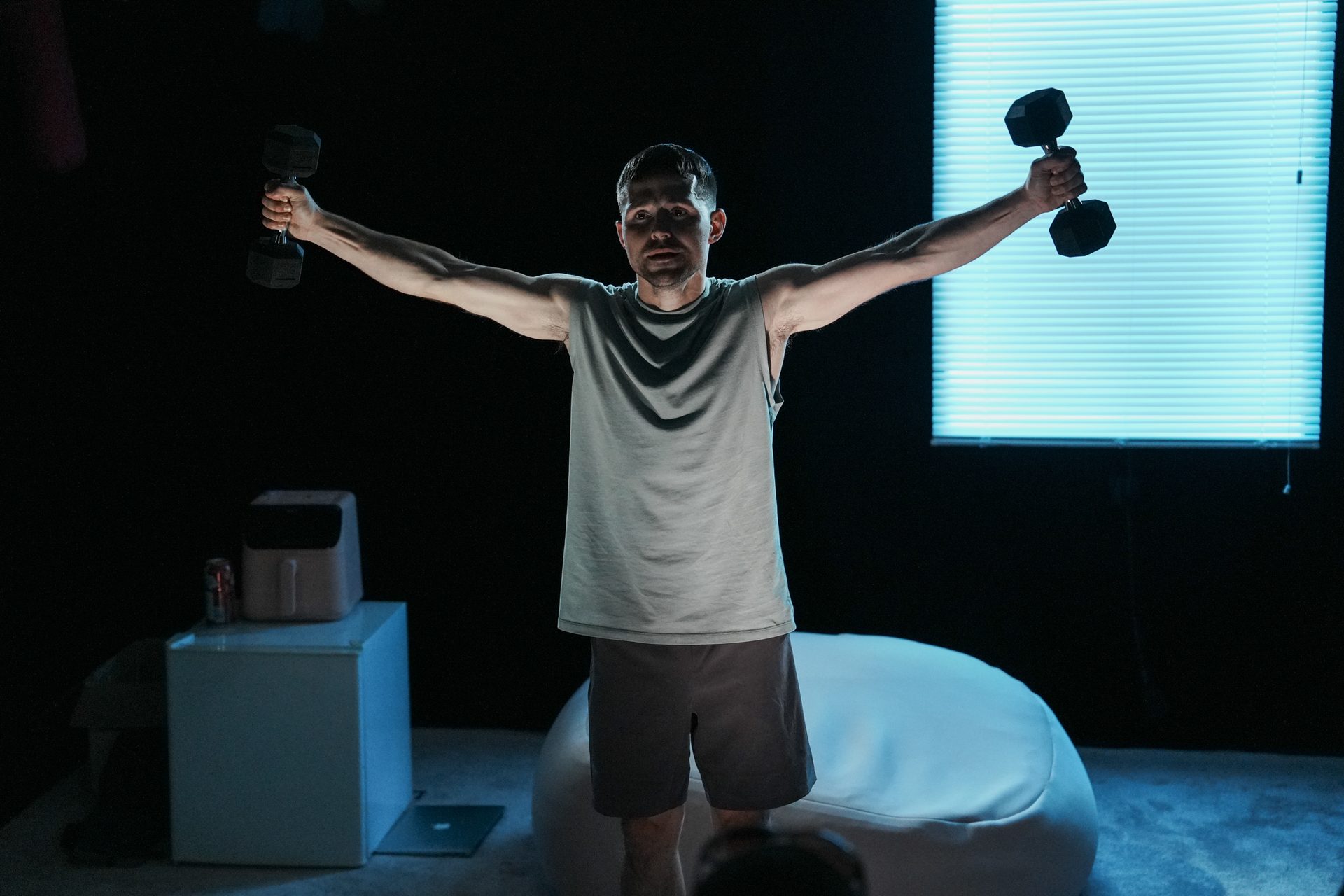
They say you should write what you know, but not only is Mark nothing like me, he’s also the kind of man I’d probably avoid at a party, on the street, or in basically any other situation. At the beginning of the play, his sullen demeanour and misogynistic views lead his girlfriend, Martha, to dump him. He’s left alone in his flat, lifting weights and pretending he’s never been better. Rather than confront his true feelings, he buys a pet pig, replete with technology that will allow him to harvest its cells for meat (as a vegetarian gym obsessive, he’s always looking for easier ways to hit his protein target). Put it this way: I wouldn’t be swiping right.
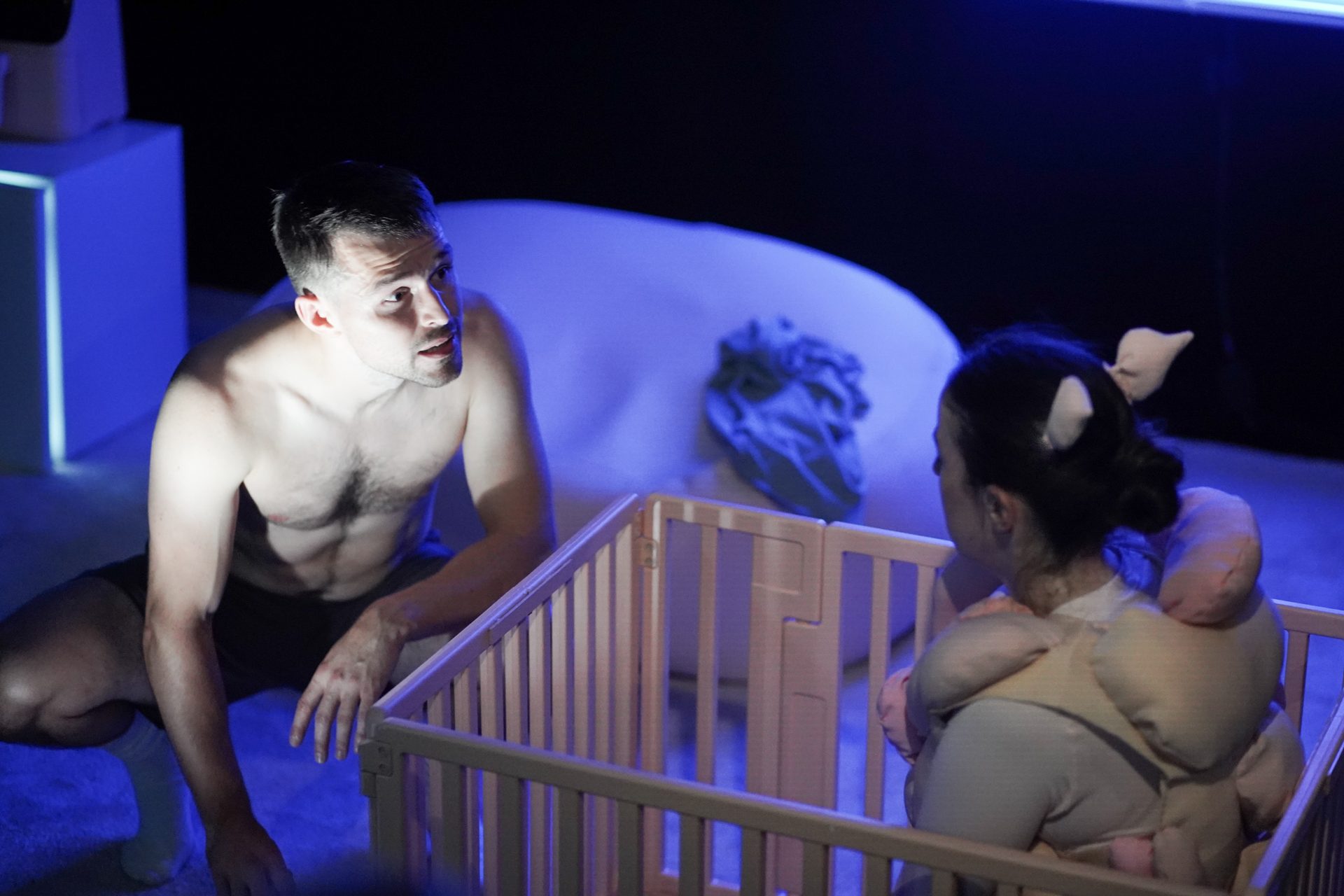
At times, Mark is a hard character to root for, but I felt it was important for him to be the anti-hero of the play. I think compassion can be a really powerful tool, and theatre is the best space in which to deploy it. During a play, an audience is forced to spend time with someone they might dismiss in real life and to see the complexity in them; hopefully, their preconceptions start to shift.
As a woman, I understand it’s difficult to have empathy for the kind of men who believe that you are fundamentally inferior to them. But Mark is not a cartoon villain. Throughout the writing process, I have felt deep sympathy for him, and I think that he and I are actually not too dissimilar. We’ve both experienced hurt, rejection, and a dissatisfaction with where we are in life; I’ve perhaps not externalised those feelings as much as he has, but then again, I don’t have men screaming at me from my phone telling me that I’m a victim.
Our beliefs and values are shaped by the things that have happened to us, the people around us, and what we choose to spend our time doing. Increasingly, this includes the relationship we have with our phone and social media. For Mark, an interest in self-improvement and fitness videos has unwittingly steered him into something much more insidious. Likewise, in my adventures into my Mark-ified algorithm, harmless prank videos sit side by side with men hurling misogynistic abuse at women on the street. When you’re numbed out and scrolling, it’s harder to engage critically with what you’re watching, especially when it veers so sharply in tone; it washes over you, day after day, and it’s all too easy to internalise the messages you’re being repeatedly served.
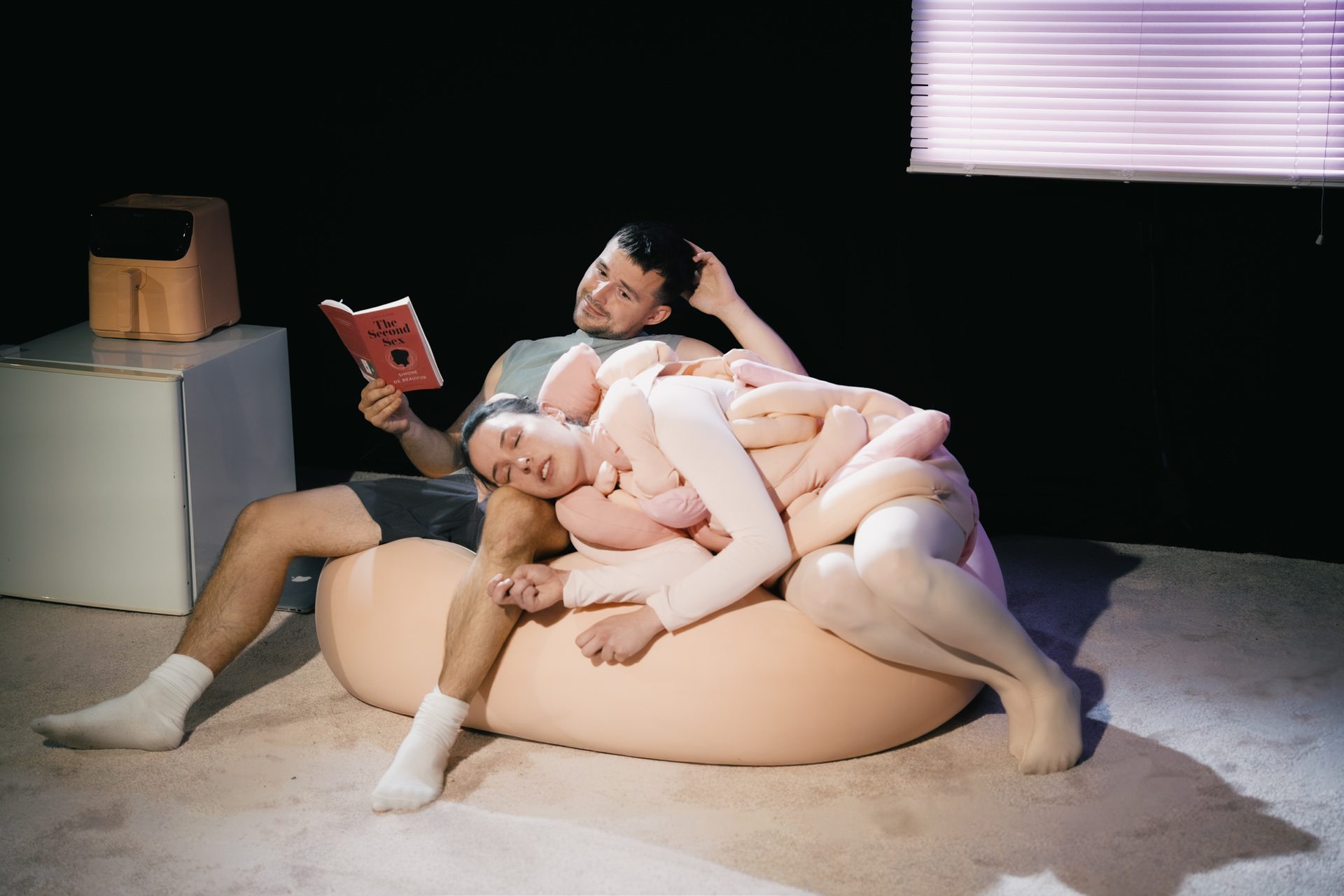
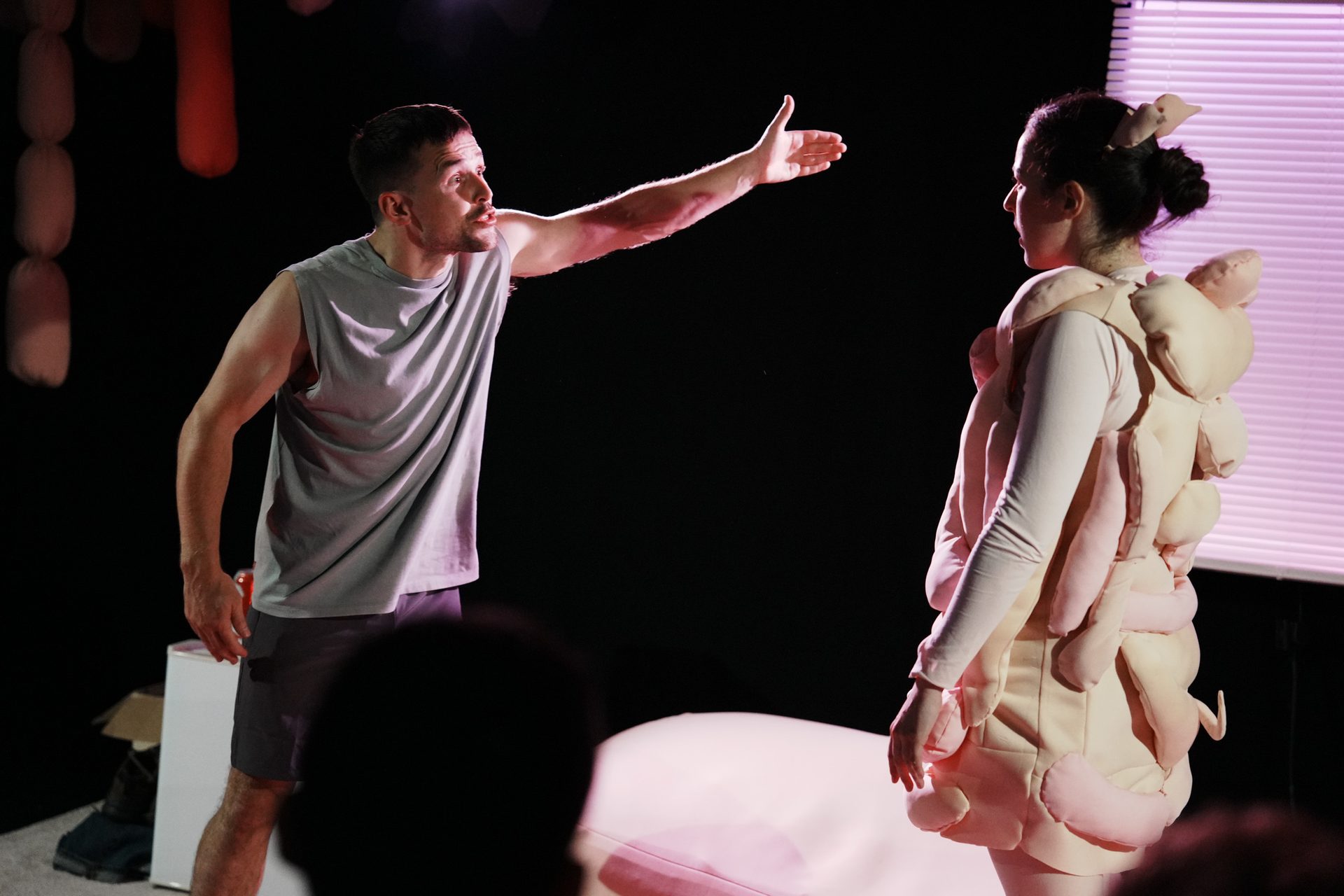
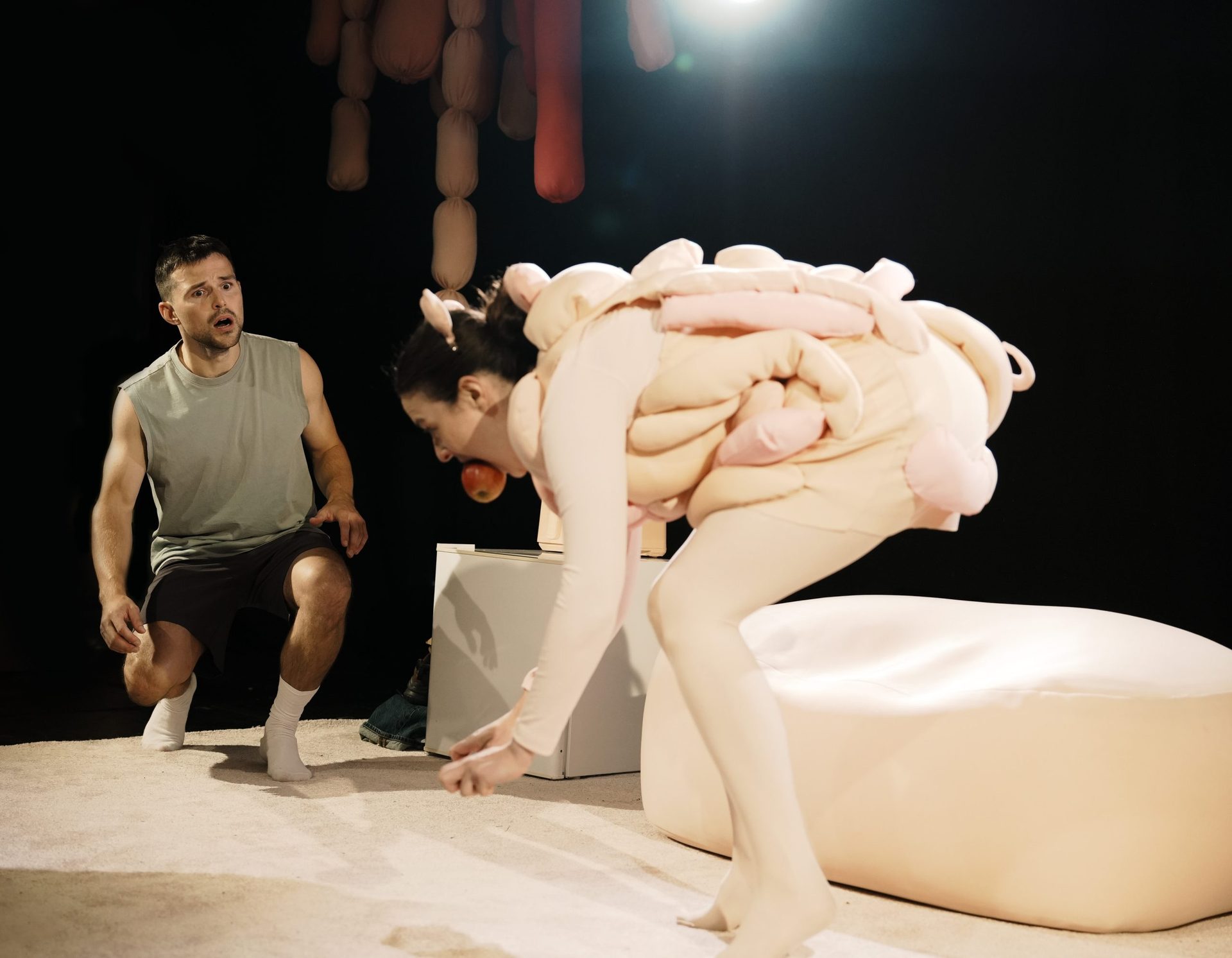
I am aware that I’ve had a protective layer of fiction in my forays into this debate. I’ve not encountered extreme misogyny in my male friends and family, so I don’t know how I would handle it in real life. But I wrote Two Little Pigs because I believe that castigating or dismissing men like Mark is not an effective way of making them see the damage that ultra-misogynistic views cause. Compassion is a longer, slower, more hopeful road, but one that could encourage us to put people’s views in context, shift the tone of discussion and, ultimately, understand each other better.
At the time of writing, Two Little Pigs is days away from being performed at the Edinburgh Fringe, and I am gearing up to play the role of a lifetime: the Pig. I haven’t had to do an algorithm shift in preparation for this part: the feminist farmhands who raised the Pig, who she learned English by eavesdropping on, are probably consuming the same mix of silly and righteous content as me. The Pig has an obvious level of remove from the human world, so she is able to be objective about the dynamics and debates that I can’t help but take personally. She’s also able to get through to Mark in a way that the women in his life cannot. As she understands more about his psyche and draws on what she’s learnt about male/female dynamics from the women at the farm, she tries her best to help him see an alternative future beyond the one that exists in his phone.
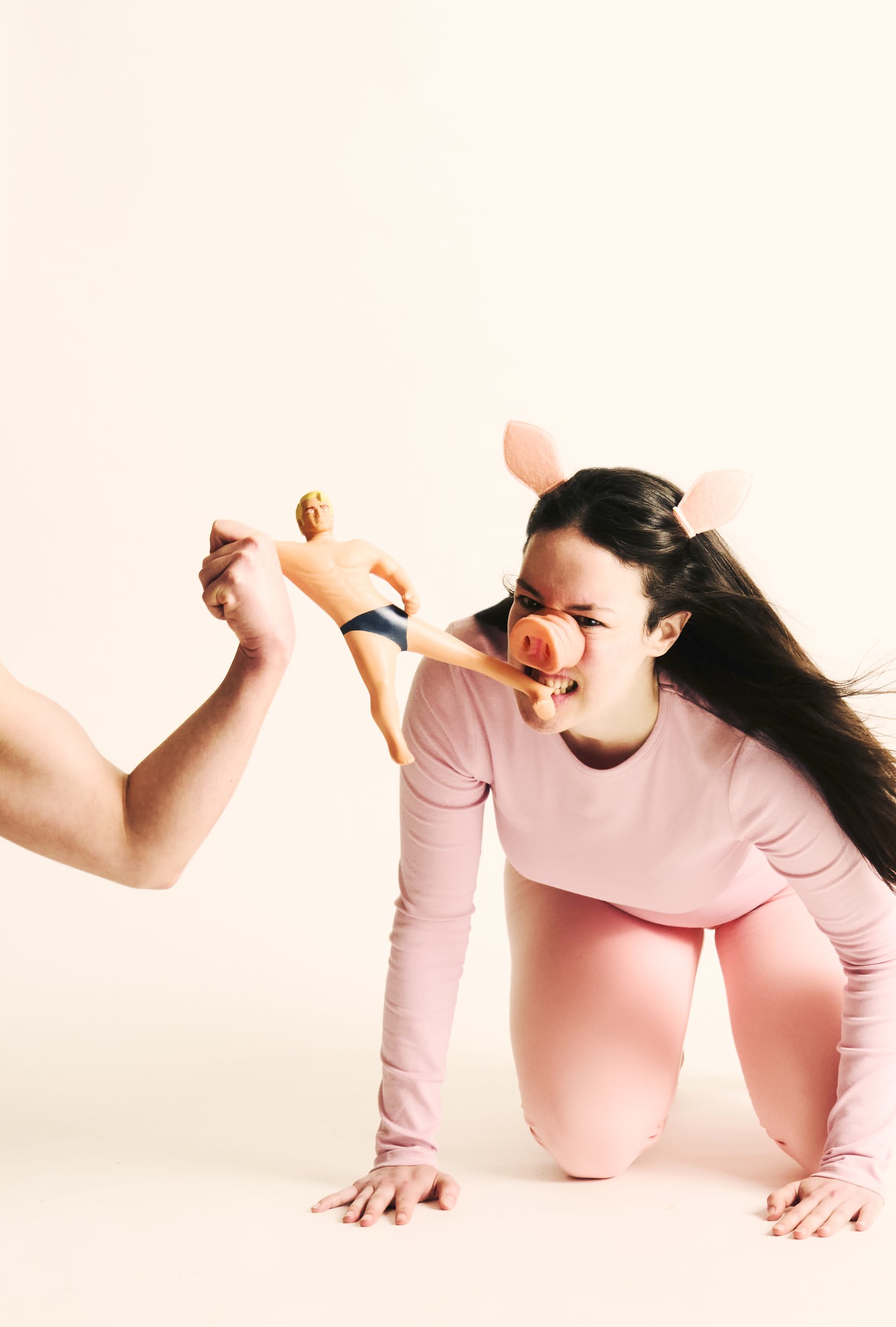
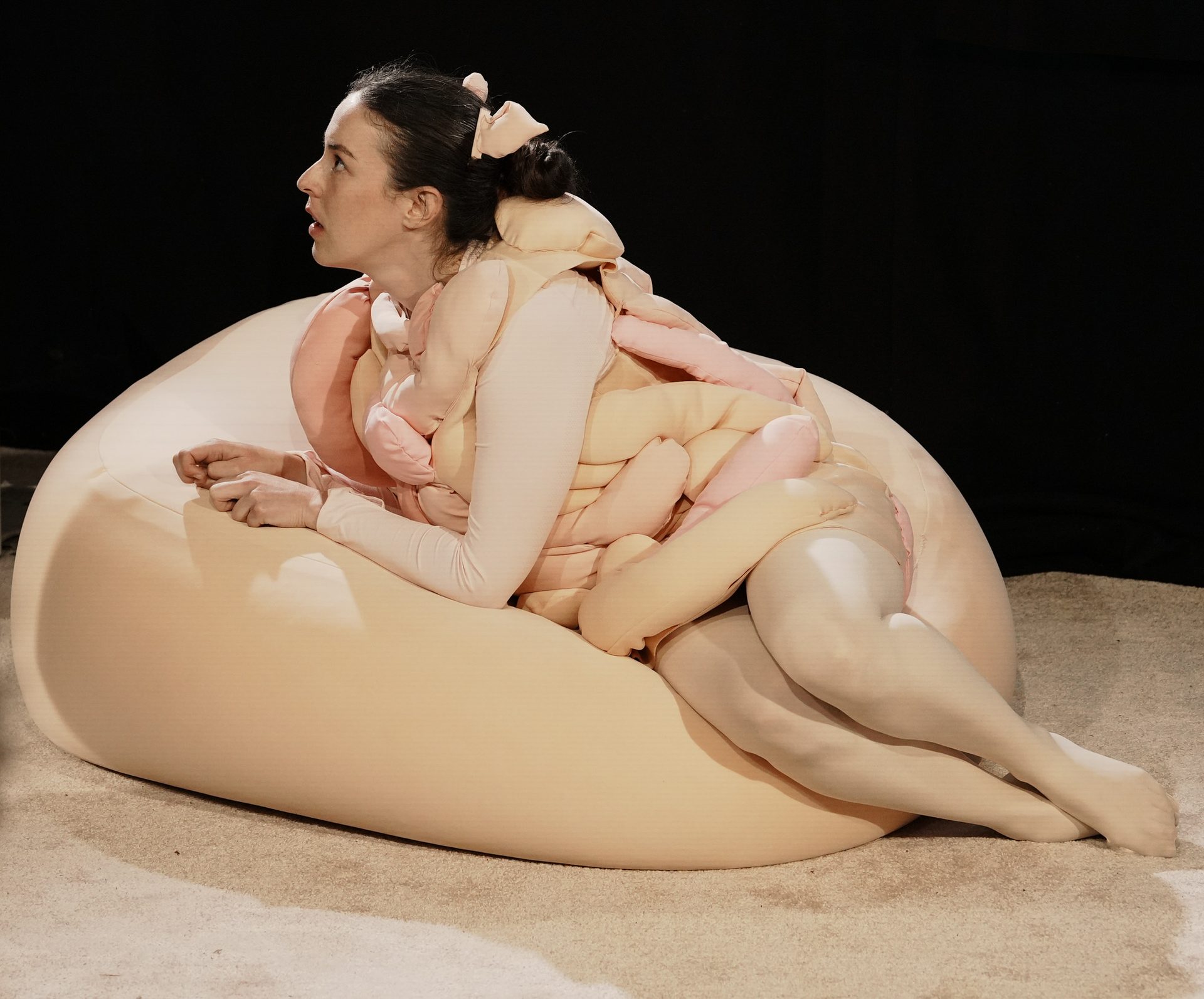
Of course, as far as the audience are concerned, they’re not watching an animal onstage; they’ll see a woman dressed as a pig. Hopefully, this will do a few things. It will literalise the way many men like Mark view women, but it’ll also be funny, albeit in an absurd way. This reflects the tone of the show as a whole. It’s a dark comedy that happens to discuss serious themes, in a landscape that treats our cultural interest in masculinity with gravity and often fear. My main goal was to make a piece of theatre that would be engaging and entertaining for audiences. And hopefully, while they’re laughing, they might find their preconceptions shift just a little bit.
Two Little Pigs is playing at Pleasance Courtyard until 30 August 2026.
Book tickets at pleasance.co.uk
Words by Caitlin McEwan, writer and performer in Two Little Pigs
Featured image by James Frederick Barrett
Production photography by Giulia Ferrando