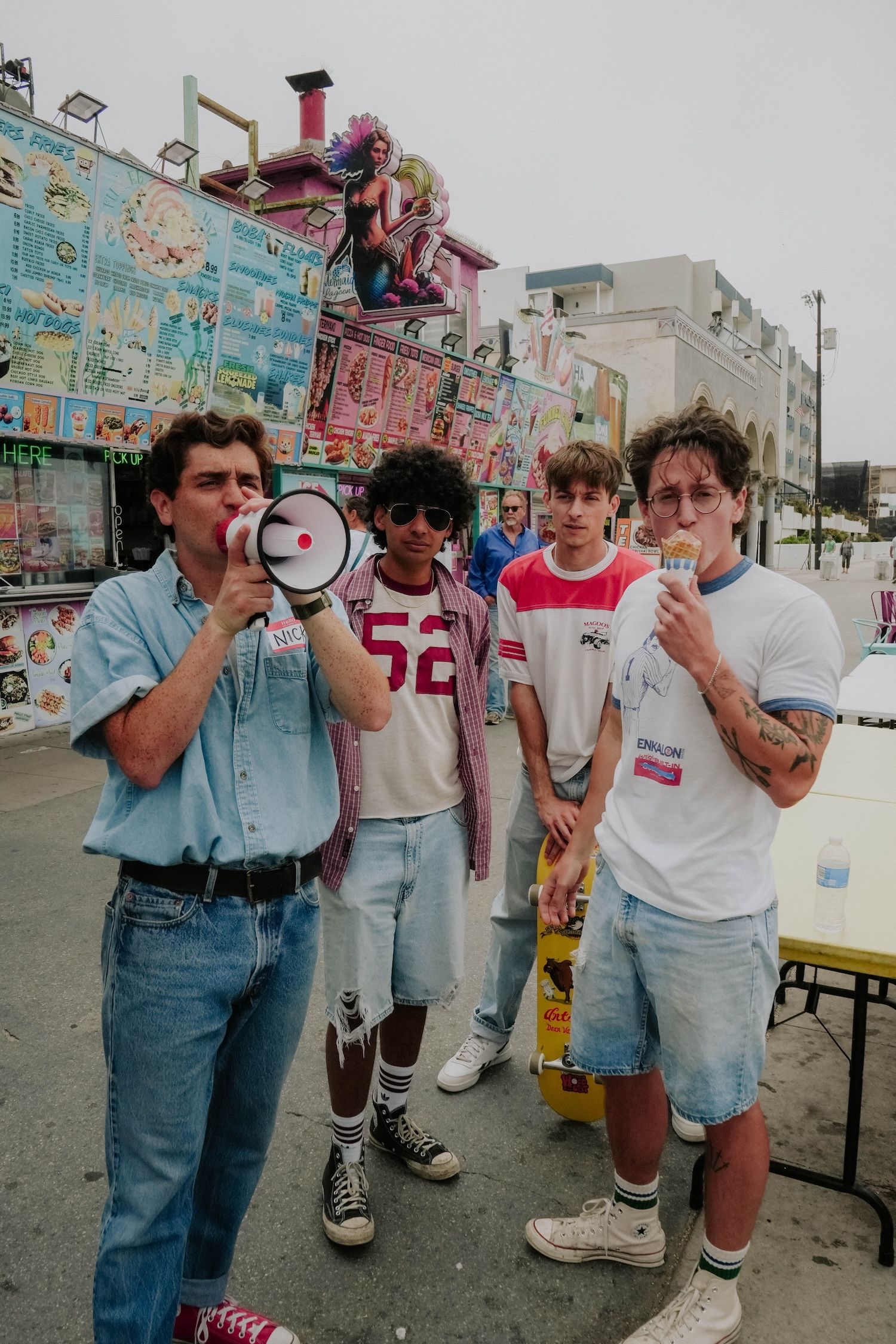
From the songs we stream to the communities we join, algorithms quietly cluster us into “groups”; patterns in data that shape what we see, who we meet, and how markets move.
How machines find “groups” in the wild
Behind the scenes, community-detection and clustering algorithms map dense webs of connections and behaviors, then carve them into meaningful clusters. In networks (like social graphs or citation maps), methods such as modularity maximization and Girvan-Newman look for subgraphs (communities whose members interact more with each other than with outsiders). These methods don’t merely label; they infer structure, where none is explicitly declared, revealing emergent tribes in social media, research fields, and markets.
This new capacity now underpins everyday products. Music platforms blend collaborative filtering (who listens to what) with graph-based signals (who’s connected to whom) to surface not just tracks but scenes (micro-genres and fan communities that listeners would rarely find alone). This technology comes from other fields, such as slot games platforms, where the algorithms learn the buyer persona behind the account and can recommend thematic games they would enjoy.
Expanding on the music streaming platforms, recent works are arguing the existence of “social music discovery.” According to them, recommendations consider the tastes of your closet contacts to feel more human and less opaque. Thus, algorithms don’t just find songs; they propose communities you might belong to, even if you are not aware of it.
On the business side, clustering has become a staple of customer segmentation. Retailers compare algorithms to decide what separates casual browsers from loyalists or “superfans,” and they tune segments by stability, not just accuracy. Even in emerging markets, studies often find k-means a strong baseline because it scales and produces actionable groups for pricing, promotions, and product mix.
The upside, the traps, and how to steer
The upside is obvious: relevance. Group-aware feeds cut noise; niche interests gain visibility; small creators can find their people faster. But the same math can also narrow horizons. Systematic reviews across the last decade highlight how algorithmic curation can create filter bubbles and echo chambers. Large field experiments on Facebook during the 2020 U.S. election suggest that feeds are indeed more ideologically homogeneous than the posts from our networks, yet simply diversifying the feed algorithm did not, by itself, reduce users’ polarization.
Design choices matter. Research links bubble formation to personalization that overweights short-term engagement and to biased or incomplete training data. That’s why newer approaches layer in diversity constraints, “exploration” to periodically break ruts, and social-context signals that can boost acceptance of unfamiliar content. For consumers, practical steps help too: follow lists that cross communities; opt into discovery modes, and reset or audit watch/listen histories. Organizations could publish segmentation logic in plain language, test segments for fairness and drift, and measure longer-term outcomes alongside click-through.
If algorithms are our new cartographers, groups are the maps they draw. Used thoughtfully, they reveal terrain we’d never traverse alone; used carelessly, they wall off the landscape. The difference lies less in the math than in the incentives, and in whether we build for discovery as a journey, not a loop.