
Key Takeaways
- Air duct cleaning is not a routine need for every home.
- Visible mold-like growth, pests, heavy debris, water damage, and renovation dust are reasons to investigate further.
- Filters, moisture control, source removal, and HVAC maintenance often matter more than duct cleaning alone.
- A worthwhile service addresses the full HVAC system, not only a few visible vent covers.
- Ask for documented evidence, a written scope of work, and transparent pricing before hiring.
Table Of Contents
- Why Duct Cleaning Gets Attention
- When Cleaning May Help
- Signs That Call for a Closer Look
- What a Thorough Cleaning Includes
- Cleaning Versus Other Indoor Air Solutions
- Questions to Ask Before Hiring a Provider
- Simple Homeowner Care Between Visits
- Common Mistakes to Avoid
- A Simple Decision Checklist
Air duct cleaning can sound like an obvious part of home maintenance, especially when dust collects around vents or a room feels stale. In reality, the right decision depends on what is happening inside the system, how the home is used, and whether there is evidence of a problem. Homeowners who need professional help may consider Air duct installation & replacement in Manasquan, NJ when there is a documented ductwork or HVAC-system concern.
A forced-air heating and cooling system moves air through return ducts, an air handler or furnace, filters, and supply ducts before sending conditioned air back into rooms. Dust on a register does not automatically mean the entire system is contaminated. It is normal for return grilles to gather dust because they pull household air through the system.
Why Duct Cleaning Gets Attention
Indoor particles come from many places, including cooking, pets, shoes, cleaning products, outdoor pollen, smoke, and normal household activity. Because ducts are hidden, they often become the first suspect when a home seems dusty or has an odor. However, the U.S. Environmental Protection Agency advises an as-needed approach rather than automatic routine duct cleaning. Its guidance on home air duct cleaning explains that light household dust inside ducts is not, by itself, proof of a health concern.
That does not mean duct conditions should be ignored. A system that has taken on water, collected construction debris, or developed pest activity deserves closer attention. The important distinction is between a visible, documented condition and a vague promise that cleaning will solve every indoor air complaint.
When Cleaning May Help
Cleaning may be reasonable when there is a specific condition to correct. It should not be marketed as a cure for allergies, asthma, or every dusty room. Situations that may justify a professional inspection include:
- Substantial visible mold-like growth on hard duct surfaces or HVAC components.
- Rodents, insects, droppings, nesting material, or other signs of pests in the system.
- Heavy dust and debris are visibly released from supply registers during normal operation.
- Drywall dust, sanding residue, flooring debris, or other contamination after a major renovation.
- Water damage, a leaking coil, condensation problems, or a persistently wet crawl space affecting ductwork.
- An older home purchase with unknown maintenance history and clear evidence of buildup.
Cleaning is only one part of the solution. If moisture, a duct leak, a pest entry point, or a filtration problem remains, the same contamination can return.
Signs That Call for a Closer Look
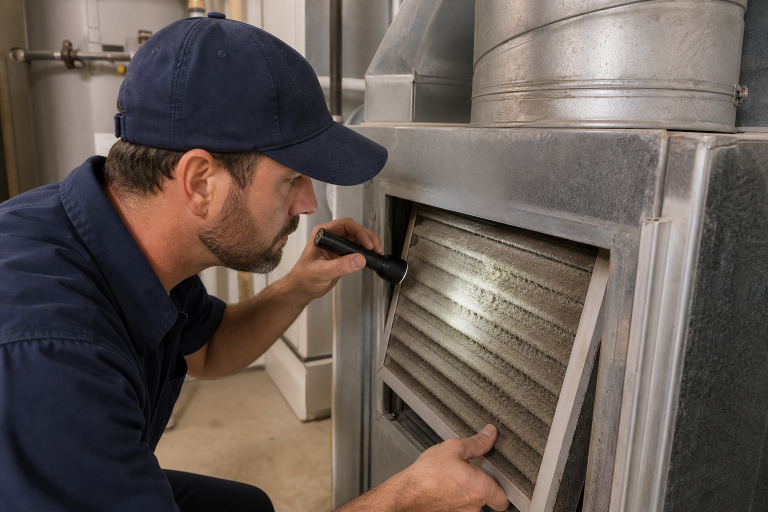
Homeowners can inspect accessible areas without dismantling the HVAC system. Remove a register cover if it can be done safely, use a flashlight, and look for loose debris, staining, moisture, or obvious damage. A musty odor that starts when the system runs, debris falling from vents, or pest signs near returns, and the air handler are also useful clues.
Be cautious with conclusions. Dark marks are not always mold, and allergy symptoms alone do not identify dirty ducts as the cause. Bedding, carpeting, pets, humidity, outdoor pollen, and cleaning products can all affect indoor comfort. If symptoms are persistent or severe, medical guidance and a broader indoor air assessment may be more useful than assuming the ducts are responsible.
What a Thorough Cleaning Includes
A complete service should focus on the air distribution system, not just the registers visible in each room. The process commonly includes the following steps:
- System review: The provider examines accessible supply ducts, return ducts, blower areas, coils, drain pans, registers, and the air handler or furnace cabinet.
- Documentation: Photos or other evidence should show the debris, moisture issue, pest activity, or suspected growth that supports the recommendation.
- Protection and containment: Nearby surfaces and registers are protected to reduce dust movement during work.
- Source removal: Specialized brushes, air tools, and vacuum equipment loosen and capture debris from duct surfaces.
- Component attention: Included HVAC components are cleaned when appropriate, because an untreated contaminated component can reintroduce debris to the system.
- Final review: The provider explains what was found, what was completed, and whether repairs or moisture corrections are still needed.
Cleaning Versus Other Indoor Air Solutions
Many air-quality and comfort issues have simpler first steps. Consider the problem before committing to a service:
- Dusty rooms: Replace the filter, vacuum return grilles, clean high-dust surfaces, and check for obvious duct gaps.
- High humidity: Investigate plumbing leaks, inadequate bath ventilation, crawl-space moisture, or the need for dehumidification.
- Lingering odors: Find and remove the odor source instead of covering it with fragrances or chemical treatments.
- Seasonal allergy concerns: Review filtration, bedroom cleaning habits, pet exposure, and outdoor air entry points.
- Weak airflow: Check filters, blocked registers, dampers, blower performance, and damaged or disconnected ducts.
For most homes, the broad priorities are source control, ventilation, and filtration. The EPA’s indoor air quality recommendations offer practical ways to reduce pollutants before they circulate through the home.
Questions to Ask Before Hiring a Provider
What specific condition makes cleaning necessary?
- Can you show photos or accessible evidence before work begins?
- Does the estimate include supply ducts, return ducts, registers, and relevant HVAC components?
- What tools and dust-control methods will be used?
- Are sanitizers, sealants, or other chemicals proposed, and why?
- What is the total price, including potential add-ons?
- Will I receive a written scope of work and final findings?
Be wary of extremely low offers that cover only a few vents and lead to unexpected upgrades. Compare written estimates, confirm exactly what is included, and avoid providers making sweeping health claims.
Simple Homeowner Care Between Visits
- Replace filters according to the equipment manufacturer’s guidance and household conditions.
- Keep return grilles clear of furniture, curtains, rugs, and storage.
- Vacuum register covers and nearby floors regularly.
- Use kitchen and bathroom exhaust fans to limit moisture and airborne particles.
- Repair water leaks promptly and keep damp areas dry.
- Protect open returns during sanding, demolition, and other dusty renovation work.
Common Mistakes to Avoid
- Booking a cleaning based only on a phone call or a coupon.
- Assuming every dark mark is mold.
- Expecting duct cleaning to cure allergies or asthma.
- Ignoring the moisture or pest problem that caused contamination.
- Approving chemical treatments without understanding their purpose.
- Skipping filter changes and HVAC maintenance after cleaning.
A Simple Decision Checklist
Before scheduling service, ask: Is there visible growth, pest evidence, water damage, heavy renovation dust, or debris entering rooms through vents? Can a qualified provider document the condition? If the answer is no, start with filters, cleaning, moisture control, and routine HVAC maintenance. If one or more answers are yes, a documented inspection can help determine whether duct cleaning, repair, replacement, or another solution is the best next step.



