If you sit with someone who manages OR scheduling for a hospital, the conversation usually circles back to one thing pretty quickly. It is not equipment. It is not space. It is coverage.
The difficulty is not just filling positions anymore. It is keeping the right number of anesthesia providers available as demand shifts throughout the week.
Some days run smoothly. Others feel stretched from the first case. That inconsistency is exactly why more hospitals are moving toward flexible workforce models instead of relying only on fixed, full-time staffing.
And in that shift, many are rethinking how they approach anesthesia staffing overall. Instead of treating it as a hiring problem, they are treating it as an ongoing operational function, something that needs to be adjusted in real time, not just once a quarter.
Fixed Staffing Looks Good Until It Doesn’t
Traditional staffing models are built around stability. You hire for expected volume, assign providers to rooms, and run the schedule.
That works when demand behaves the way it is supposed to. The problem is, it often doesn’t. A few longer cases, an unexpected add-on, or even one unavailable provider can throw off the entire day. When staffing is tight, there is very little room to recover.
Hospitals using rigid staffing models tend to face the same pattern:
- Early delays that carry into the afternoon
- Teams shifting assignments mid-day
- Surgeons waiting between cases
- End-of-day backlogs
None of these issues comes from poor planning. They come from a lack of flexibility built into the system.
What Flexible Workforce Models Actually Look Like
Flexible staffing does not mean replacing full-time teams. It means building around them. Most hospitals moving in this direction still have a core group of anesthesiologists and CRNAs. The difference is what they add on top of that.
Instead of assuming the schedule will go exactly as planned, they prepare for variation by including:
- Additional coverage during known high-volume days
- Backup providers available for short-notice gaps
- Short-term support during seasonal demand spikes
This is where a more dynamic approach to anesthesia staffing comes into play. It allows facilities to scale coverage without overcommitting to permanent hires.
The Real Problem Is Variability, Not Just Shortage
There is still a shortage of anesthesia providers in many areas, but that is only part of the issue.
Even hospitals that are relatively well-staffed run into problems when demand shifts faster than staffing can adjust.
One week might feel manageable. The next feels overloaded. Hiring more full-time staff does not always solve that because demand does not stay consistent enough to justify it. Flexible workforce models address that imbalance.
By combining internal teams with external support, hospitals can adjust coverage based on what is actually happening, not what was expected weeks ago.
Avoiding the “Stretch the Team” Approach
When staffing gets tight, most teams try to absorb the pressure internally first. They cover extra rooms. They move faster between cases. They extend their hours.
It works in the short term, but it is not a sustainable way to operate.
Over time, it leads to:
- Slower turnovers
- Communication breakdowns
- Increased fatigue
- Higher risk of mistakes
Hospitals that have shifted to flexible anesthesia staffing models tend to avoid this cycle. They bring in support earlier, before the pressure builds to a point where it affects performance.
Speed of Adjustment Matters More Than Perfect Planning
One thing that stands out in facilities using flexible models is how quickly they adjust when something changes.
They do not spend hours trying to rework the schedule internally. They already have options available.
That usually comes from having an established relationship with external staffing support. Not as a backup plan, but as part of the normal workflow.
When coverage can be adjusted quickly, delays stay contained. When it cannot, they spread.
1MAC’s Role
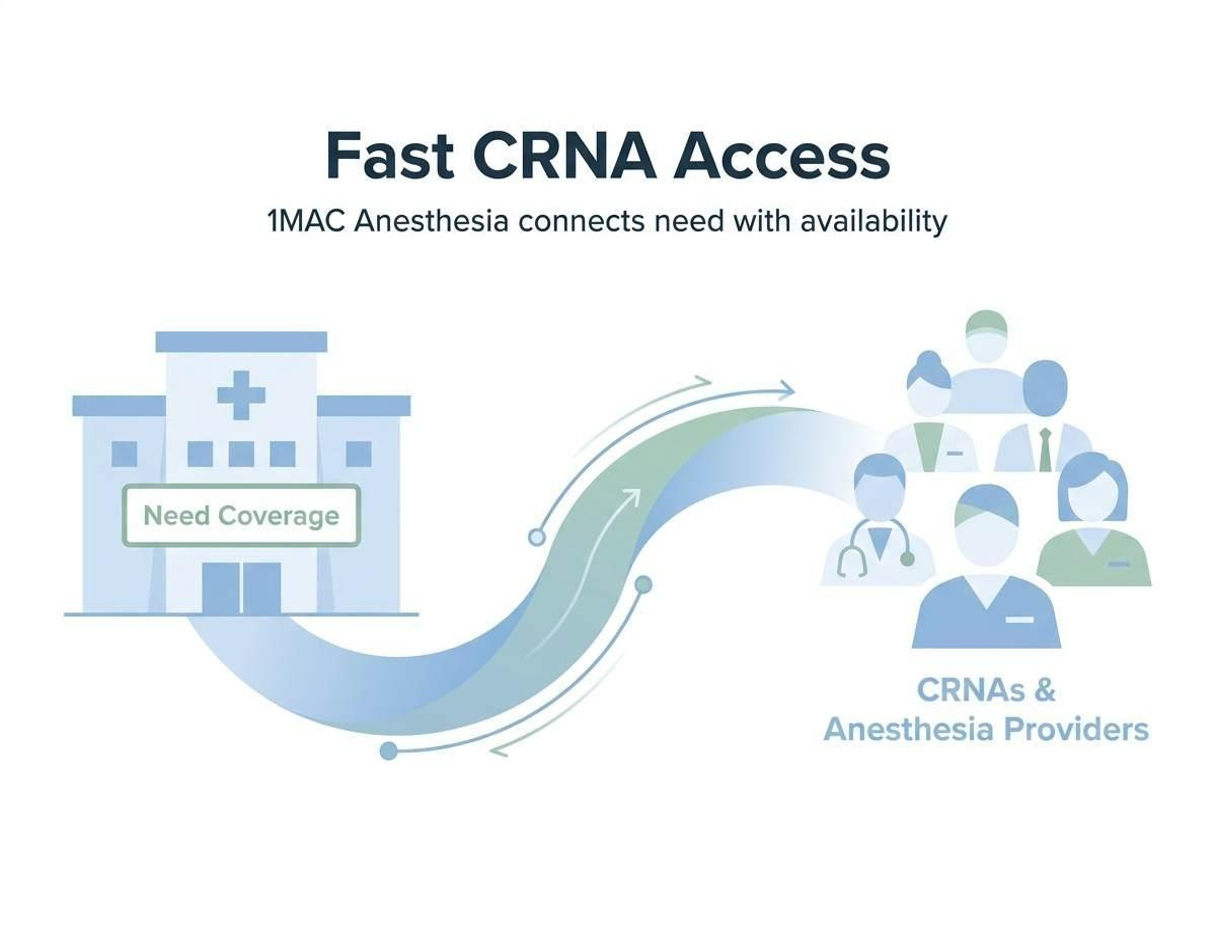
As hospitals move toward more flexible staffing approaches, the way they connect with providers is also changing.
Platforms like 1MAC Anesthesia are part of that shift. Instead of waiting through long processes, facilities can access available anesthesia professionals and secure coverage based on immediate needs.
That kind of access supports the flexibility hospitals are aiming for. It allows them to respond to real-time demand without unnecessary delays.
Financial Stability Comes From Consistency
Flexible staffing is often seen as a cost decision, but it is more about stability than saving money.
When staffing is inconsistent, costs become unpredictable. Delays lead to overtime. Cancellations reduce revenue. Hospitals that stabilize coverage tend to see fewer of these swings.
A well-managed anesthesia staffing approach helps maintain consistent throughput, which is where the real financial benefit shows up over time.
It Changes How Hospitals Plan, Not Just How They Staff
Once a hospital adopts a flexible workforce model, it affects more than daily scheduling.
Planning becomes more realistic. Instead of assuming everything will go according to plan, administrators build in room to adjust.
That changes how they approach:
- Case scheduling
- Resource allocation
- Provider workload
- Long-term hiring decisions
Flexible staffing becomes part of how the department operates, not just how it reacts.
Our Final Take
The demand for surgical services is not becoming easier to predict. If anything, it is becoming more uneven. Hospitals that rely only on fixed staffing models will continue to face the same challenges when demand shifts.
Those who build flexibility into their anesthesia staffing strategy are better positioned to keep operations steady, even when the schedule changes.
It is not about replacing traditional staffing. It is about making sure the system can handle real-world conditions, not just ideal ones.
FAQs
1. What is a flexible workforce model in anesthesia departments?
It is a staffing approach that combines full-time providers with additional support to adjust coverage based on changing demand.
2. Why are hospitals moving away from fixed staffing models?
Because surgical demand is less predictable, fixed models do not provide enough flexibility to handle daily variations.
3. Does flexible anesthesia staffing reduce delays?
Yes, it helps maintain consistent coverage, which prevents scheduling disruptions and keeps ORs running on time.
4. How do hospitals add flexibility to their staffing?
They build relationships with external staffing partners and include backup coverage in their planning.
5. Is flexible staffing more expensive?
Not necessarily. It often helps avoid larger costs related to delays, cancellations, and inefficient OR use.