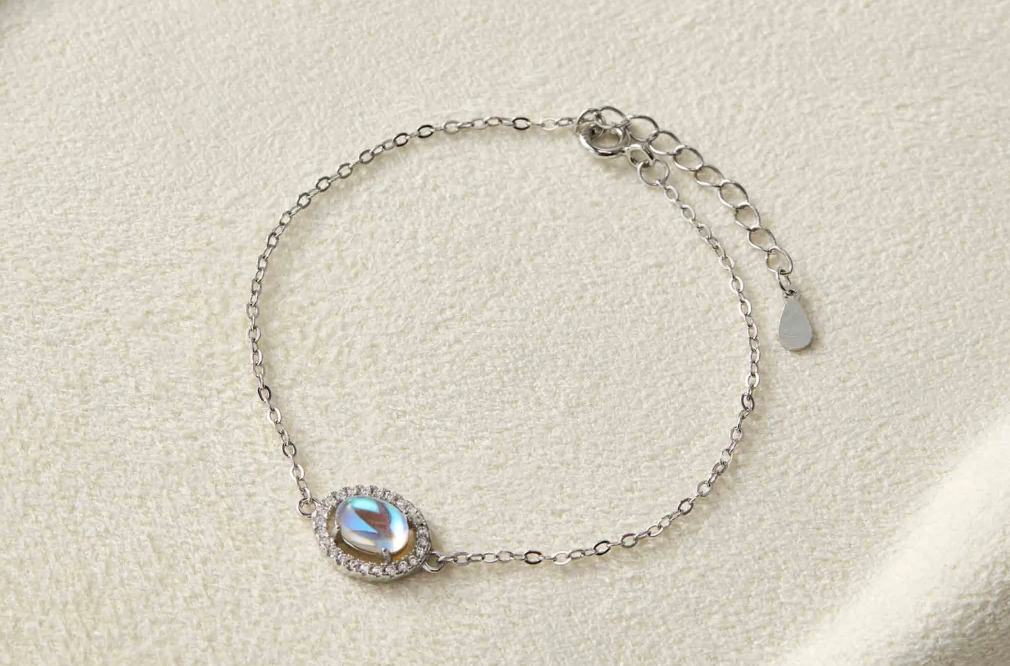
A piece of natural stone jewelry rarely asks for attention in the way a diamond necklace or high-shine gold cuff might. Its appeal is quieter. It may be a flash of blue in moonstone, a soft green in jade, the dark polish of obsidian, or the fine golden threads running through rutilated quartz.
Look closely, and the surface is never completely uniform. One stone may carry a cloud, another a line, another a shift in tone that only appears when the light changes. That small irregularity is part of the point. In a wardrobe increasingly shaped by clean silhouettes, lower-key luxury, and pieces worn across many parts of the day, natural stones offer something fashion has been circling back to: texture, craftsmanship, and material character.
The language around quiet luxury may feel recent, but the desire behind it is not. People have always returned to objects that feel personal rather than disposable. What feels new is the way natural stones are being styled now. They are no longer confined to spiritual boutiques, heirloom boxes, or overly decorative statement pieces. In cleaner settings and lighter silhouettes, jade, moonstone, obsidian, pyrite, and rutilated quartz can feel surprisingly current.
Modern natural stone jewelry sits between fashion and personal expression. It can be worn with tailoring, denim, silk, knitwear, and everyday workwear, while still reflecting a private memory, preference, or style language for the person wearing it.
The Move Toward Quieter Jewelry
The most worn jewelry in a wardrobe is not always the most dramatic. Often, it is the piece that moves easily through the day without needing to be changed.
A jade bracelet can work with a white shirt. A moonstone chain bracelet can soften black tailoring. Rutilated quartz can warm up a neutral knit. Obsidian can add structure to an otherwise minimal look.
These are not pieces designed only for special occasions. They are meant to live in rotation.
That is one reason natural stones feel newly relevant. They add depth without excess. Their colors are often complex but not overpowering. Their surfaces feel tactile rather than synthetic. They give even simple outfits a point of interest without making the jewelry feel separate from the person wearing it.
This also explains why many contemporary natural stone designs are becoming more minimal. The stone is allowed to carry the visual story. Instead of heavy settings or ornate decoration, designers are using slimmer chains, smaller beads, refined silhouettes, and clean metalwork to make natural materials feel current.
Why Jade Still Holds Attention
Among natural stones, jade has a particularly strong visual and symbolic presence.
Jade has been valued in East Asian ornament and material culture for thousands of years, often appreciated for its refined appearance, craftsmanship, and its historical cultural symbolism of wisdom, dignity, and good character. Yet modern jade jewelry does not have to feel traditional in a narrow sense. When shaped into cleaner forms, it can become surprisingly contemporary.
Green jade works beautifully because it introduces color in a controlled way. It is not as expected as a simple metal chain, not as formal as diamonds, and not as loud as many bright gemstones. It adds a composed green tone to an outfit, especially when paired with black, ivory, denim, soft neutrals, and warm metals.
The appeal is not only visual. Jade has a quietness that many people respond to. It suggests composure rather than display. It can look calm without feeling fragile, and personal without becoming overly sentimental.
That visual balance makes it especially suited to modern dressing. A jade piece can be worn with a crisp shirt during the day, a silk blouse in the evening, or a relaxed sweater on the weekend. It does not ask the rest of the outfit to become formal. It simply adds a small point of focus.
Natural Variation as a Design Feature
One of the strongest arguments for natural stone jewelry is that variation is part of the material.
In a culture used to identical products and polished surfaces, the small differences in natural stone feel refreshing. A piece of jade may carry internal clouds, slight shifts in green, or subtle changes in translucency. Moonstone may show its soft optical glow, known in gemology as adularescence, depending on the angle of light. Rutilated quartz may contain fine golden threads that look almost drawn through the stone.
These details are not imperfections. They are part of what makes the piece feel alive.
For the wearer, that individuality matters. Jewelry becomes more personal when it does not feel completely interchangeable. A natural stone piece can carry the sense that it belongs to a specific person, a specific day, or a specific chapter of life.
This is also why natural stones work so well in understated designs. When the setting is simple, the material has room to speak. The beauty is not only in the shape of the jewelry, but in the small differences that appear when someone looks closely.
Styling Natural Stone Jewelry Without Making It Feel Bohemian
One of the challenges with natural stone jewelry is that it can easily be styled in a way that feels too bohemian, too spiritual, or too decorative for a modern wardrobe.
The key is restraint.
A single jade bracelet can look sharper when worn with a white button-down and tailored trousers. Moonstone can feel polished with a black dress or clean knit top. Obsidian beads can add structure to an otherwise soft outfit. Rutilated quartz can warm up beige, cream, camel, or ivory without adding too much color.
The goal is not to over-layer every stone at once. Natural stone jewelry often works best when one material is allowed to set the tone.
For minimal wardrobes, choose one piece with a clear shape and a limited color palette. For more expressive wardrobes, natural stones can be layered, but the pieces should still share a sense of proportion. A slim bracelet can pair with a delicate ring. A small pendant can work with understated earrings. The styling should feel intentional, not crowded.
This is where modern natural gemstone jewelry differs from older ideas of crystal or gemstone styling. The pieces are less about costume and more about everyday texture, style, and material detail.
The Return of Meaningful Accessories
Part of the renewed interest in natural stones comes from a desire for objects that feel personal.
People are not only asking whether a piece looks good. They are also asking what it represents, how it feels to wear, and whether it connects to a personal routine or memory.
This does not mean jewelry needs to make exaggerated claims. A bracelet cannot change a life by itself, and a stone does not need to promise transformation. A piece of jewelry can simply become a personal reminder, chosen for its color, texture, memory, or design.
A moonstone piece may be chosen for its soft glow. Jade may appeal to someone who likes a steady green accent. Obsidian may suit those drawn to darker, cleaner contrast. Rutilated quartz may be appreciated for its fine golden threads. These are aesthetic and personal associations rather than claims about what a stone can do, and they only need to feel meaningful to the person wearing the piece.
That is what can separate personal jewelry from purely decorative jewelry. It does not just complete an outfit; it can become part of a person’s style language.
A Contemporary Example: Jade in a Cleaner Form
The strongest modern natural stone pieces tend to respect the material without over-designing it.
CHOODO is a jewelry studio focused on presenting natural stones in modern, everyday settings. Its StillWater Jade Chain Bracelet is a good example of this direction. Rather than treating jade as something heavy or ceremonial, the design presents it in a cleaner, lighter way. Ten small jade inlays create a quiet line of green, while the gold chain keeps the piece wearable for daily styling.
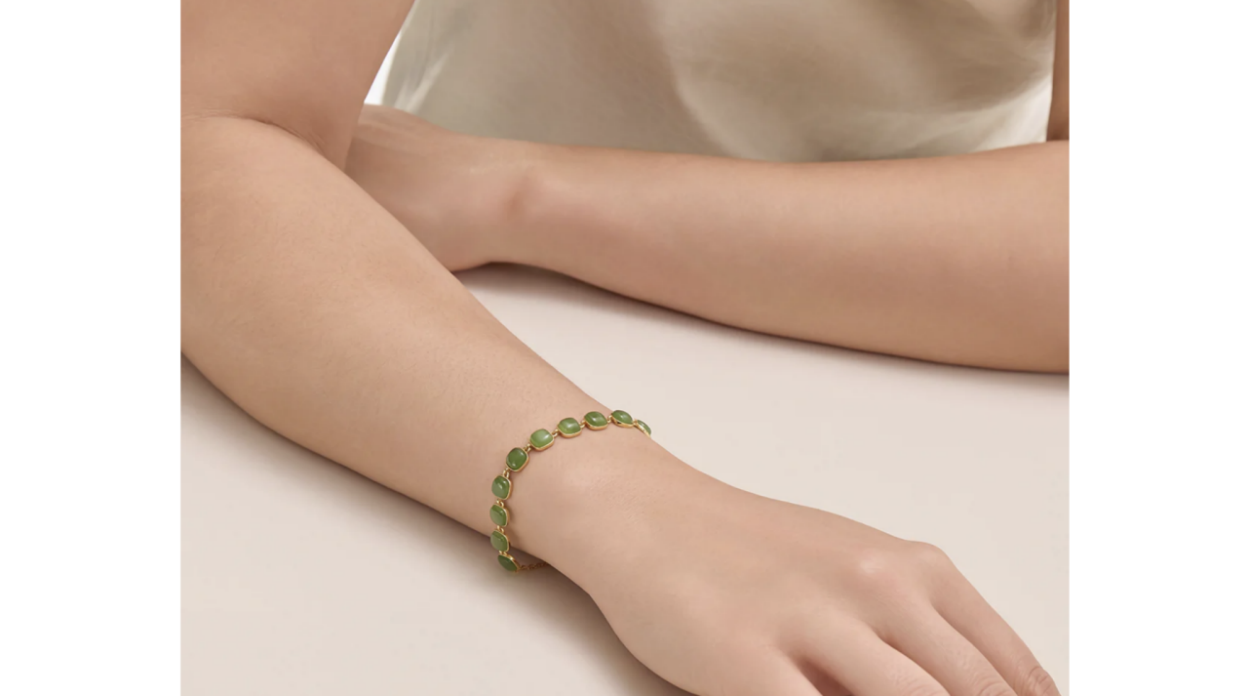
The result is not a statement bracelet in the traditional sense. It is more understated than that. It can sit beside a watch, pair with simple gold jewelry or other warm-toned pieces, or stand alone as a small line of color at the wrist.
This kind of design reflects where natural stone jewelry is heading: less about excess, more about presence. The piece does not need to explain itself loudly. It becomes more interesting the longer it is worn.
How to Choose Natural Stone Jewelry for a Modern Wardrobe
When choosing natural stone jewelry, the first question should not be only which stone is popular. It should be how the piece will actually fit into your life.
Consider the colors you wear most. Green jade may work well if your wardrobe includes white, black, denim, cream, gray, navy, or earth tones. Moonstone is easier to style if you prefer soft, light-reflective pieces. Obsidian suits those who like contrast, structure, or darker minimalism. Rutilated quartz pairs beautifully with warm neutrals and gold-toned styling.
Next, consider scale. A large stone can be beautiful, but it may not be the piece you reach for daily. Smaller stones, slim bracelets, clean studs, and simple pendants are often more versatile.
Material also matters. Look for clear descriptions of the metal, stone, setting, and care instructions. Natural variation should be explained, not hidden. If a stone has slight differences in color or internal markings, that should be treated as part of the material’s character.
Finally, choose a piece that feels personally comfortable to wear. The best everyday jewelry is not only comfortable on the body. It also feels comfortable as part of the wearer’s identity.
Natural Stones and the Future of Everyday Jewelry
The renewed interest in natural stone jewelry is not about nostalgia. It is about bringing material richness back into everyday style.
In a fashion landscape where many accessories can feel overly similar, natural stones offer variation. They introduce color without relying on short trend cycles. They can reference culture, craft, memory, or personal taste without needing to become overly formal. They can be minimal, expressive, polished, or intimate depending on how they are designed.
That flexibility is what makes them feel modern again.
The most compelling pieces are not trying to turn natural stones into something they are not. They let the material remain visible. They make room for texture, color variation, and small imperfections. They understand that jewelry can be both stylish and personal.
A natural stone piece does not need to dominate an outfit to matter. Sometimes the most lasting accessories are the ones that stay close, gather memories slowly, and become part of the way someone dresses day after day.