
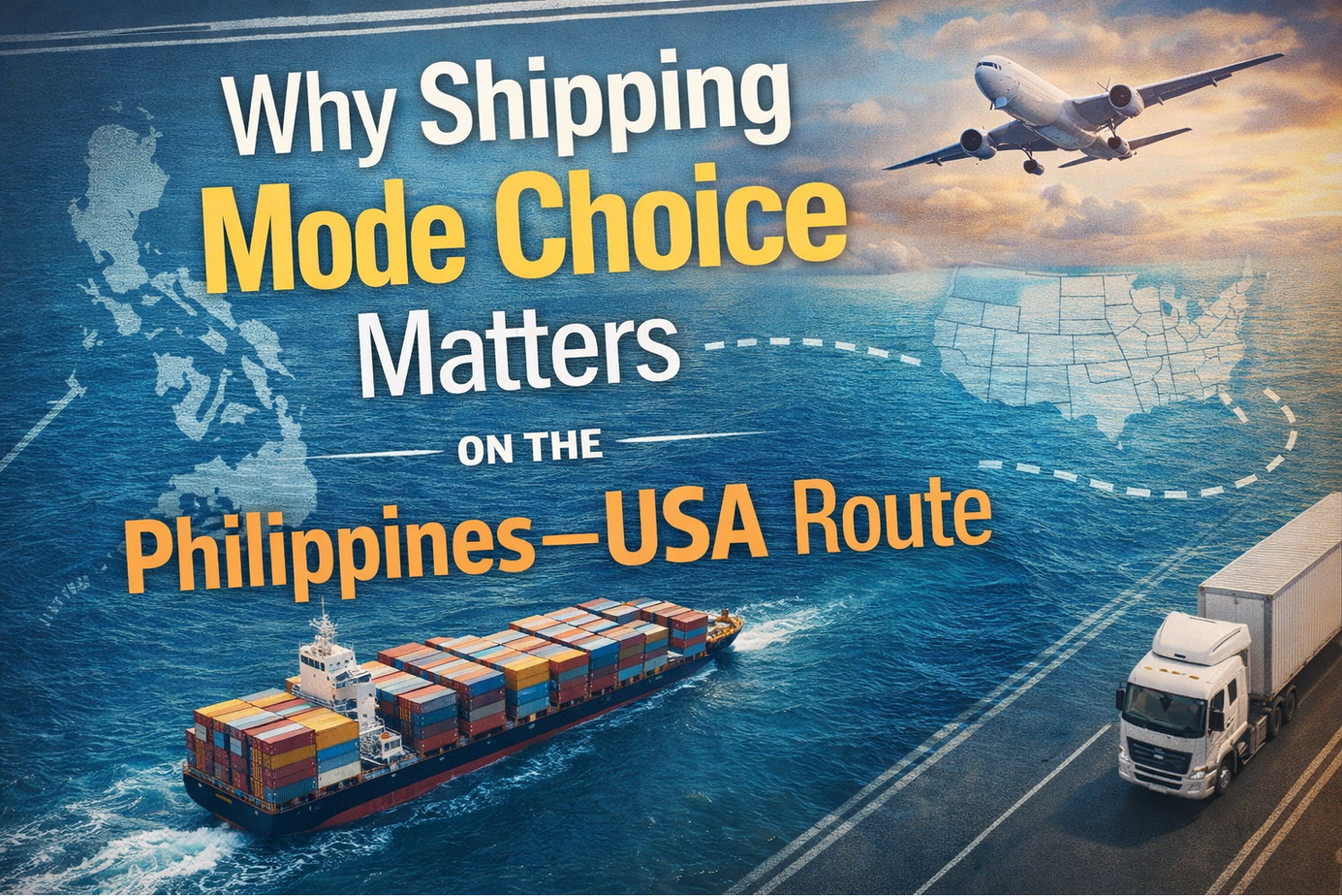
A shipment can arrive safely and still be the wrong logistics decision.
That happens more often than many businesses realize. A company chooses ocean freight to save money, only to miss a key restocking window. Another pays for air freight to move goods faster, then discovers that the shipping bill has cut too deeply into the margin. A small urgent parcel gets pushed into a freight process that is too slow and too complicated, while a larger commercial shipment ends up in a service model that was never designed for that scale.
In many cases, the real problem is not international shipping itself. It is choosing the wrong transport mode for the shipment.
That is exactly why this matters on routes such as shipping from Philippines to USA. Gorto Freight’s route page frames the subject around the questions shippers actually ask first: how much it costs, what routes are available, and how to understand importing goods from the Philippines into the United States. That framing is useful because it reflects how real shipping decisions are made. Businesses are not just buying transport. They are balancing cost, timing, and execution.
One Route Can Involve Very Different Shipping Problems
The Philippines–USA trade lane may look like one route on paper, but in practice it can involve very different logistics problems.
A business importing regular inventory is solving a different problem from one sending urgent samples. A company moving bulky, lower-margin goods is making a different decision from one shipping lightweight, high-value products. A replenishment order does not need the same handling as a parcel tied to a delayed customer delivery or a time-sensitive document.
That distinction matters because the “best” shipping method is never universal. It depends less on the route name and more on the business role of the shipment. If the cargo supports routine inventory planning, one choice may make sense. If it protects a narrow deadline, another does. If it is small, urgent, and needs direct handling, the logic changes again.
That is why businesses often make weak shipping decisions when they ask only which method is cheapest or which one is fastest. A better question is: which method actually fits the job this shipment needs to do?
Ocean Freight Is Right When the Shipment Can Afford Time
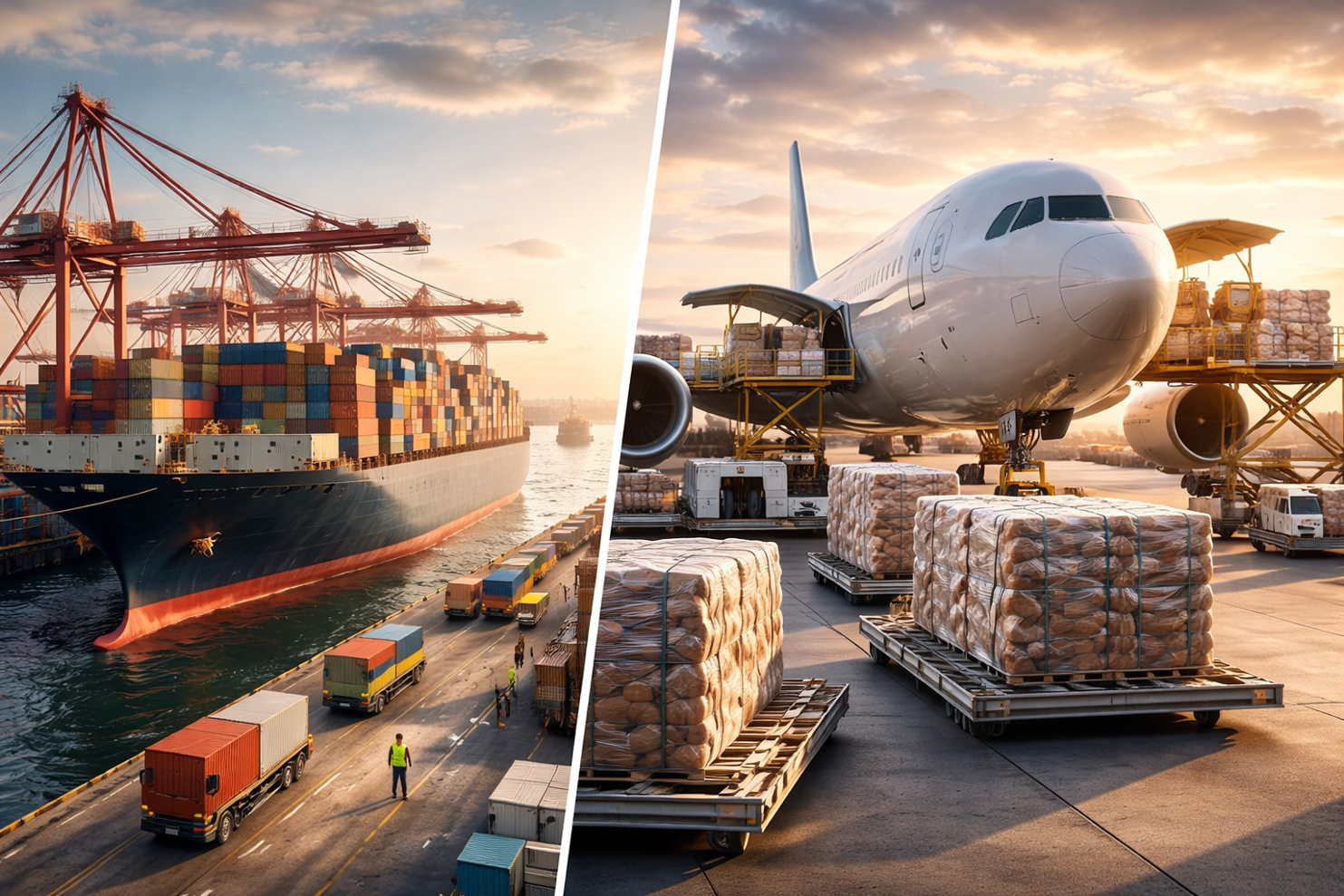
On the route page, Gorto Freight presents Ocean Freight as the cost-effective solution for larger shipments, including both FCL and LCL. That is a sensible starting point because sea freight remains the most practical option when cost efficiency matters more than speed.
For larger or heavier shipments, ocean freight usually spreads cost more effectively than other methods. It is often the best fit for routine replenishment, planned commercial movements, and cargo that can move within a longer scheduling window.
But lower freight cost does not automatically make it the right answer. Ocean freight only works well when the shipment can afford the time. If the cargo arrives too late to support inventory flow, seasonal demand, or customer commitments, the apparent saving on freight may create a larger loss elsewhere.
That is where businesses often misjudge the trade-off. The right question is not whether ocean freight is economical. It usually is. The real question is whether this shipment can wait without creating a bigger business problem.
Air Freight Makes Sense When Delay Is More Expensive Than Freight
The route page presents Air Freight as the option for urgent shipments, with emphasis on minimizing transit times and maximizing supply chain speed. That is the right way to think about it. Businesses do not choose air freight simply because they prefer faster movement. They choose it when delay costs more than the freight premium.
That can happen when stock levels are already tight, when a launch window is fixed, when replacement goods are needed quickly, or when the cargo is compact and valuable enough for the economics to hold. In those situations, air freight is not just a faster method. It is a way to protect continuity.
At the same time, air freight is easy to misuse. Many shipments are labeled “urgent” without a realistic test of whether that urgency is commercially real. If the pressure is overstated, or if the cargo is too large and too margin-sensitive, the speed advantage may not justify the cost.
So air freight should be treated as a strategic tool rather than a default setting. It makes sense when the business needs time back more than it needs the lowest transport bill.
Express Shipping Solves a Smaller, More Immediate Problem
Gorto Freight’s route page describes Express as door-to-door delivery with expedited handling, especially for small packages and time-sensitive documents. That distinction is important because express is not simply “small air freight.” It solves a different kind of problem.
Express works best when the shipment is too small for a broader freight process but too urgent to wait for a slower method. The value is not only speed. It is speed with simplicity.
This makes express especially useful for sample dispatches, urgent paperwork, small replacement items, and lightweight e-commerce parcels where direct execution matters as much as transit time. So while both air freight and express can move quickly, they do not play the same role. Air freight supports urgent cargo movement. Express supports urgent small-shipment execution.
Multimodal Thinking Is What Makes the Route More Flexible
This is where the route page becomes especially useful. Instead of stopping at ocean, air, and express, it gives Multimodal Shipping from the Philippines to the USA its own section and describes those services as flexible solutions tailored to cargo and budget. That language matters because it reflects a more realistic logistics mindset.
The strongest shipping strategy is often not about choosing one mode and using it every time. It is about knowing when different modes should serve different purposes.
A business may move regular inventory by ocean freight, use air freight for urgent replenishment, and rely on express for small critical deliveries. That is not inconsistency. It is better logistics planning. Multimodal thinking turns the decision away from “Which shipping method is best?” and toward “Which shipping method is best for this shipment, right now, for this business goal?”
That is often what separates basic shipping from stronger supply chain management.
Cost, Timing, and Execution Risk Must Be Evaluated Together
One of the most common mistakes in international logistics is evaluating shipping options through only one lens.
A cheaper method may create delays that harm inventory stability. A faster method may protect service levels but damage margin. A simpler method may work well for small urgent cargo but fail when shipment size, customs complexity, or delivery coordination become more demanding.
The better approach is to evaluate each decision across three factors at once:
cost,
timing,
and execution risk.
Looking at only one usually leads to the wrong mode.
This is also why route-level shipping decisions quickly become more complex than they first appear. Once documentation, customs handling, destination requirements, and final delivery expectations are added to the equation, the issue is no longer just transport. It becomes execution.
Why Freight Forwarders Matter Once the Choice Stops Being Simple
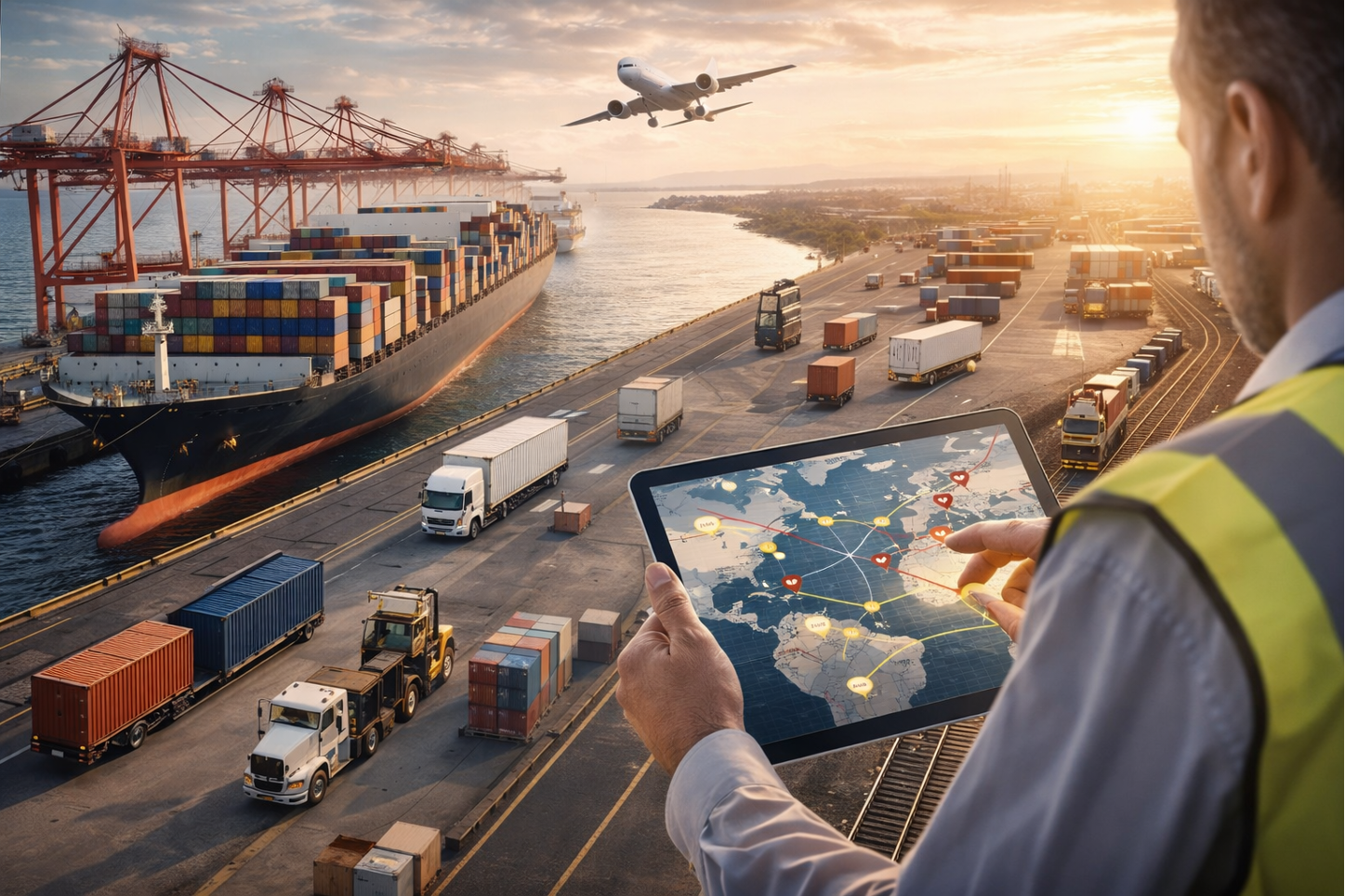
Once shipping becomes a trade-off problem rather than a booking problem, businesses often need more than a carrier. They need coordination.
That is where working with an international logistics company becomes useful. A capable freight forwarder does more than arrange movement. It helps determine which mode fits the cargo, supports documentation and customs procedures, and reduces friction between origin, transit, and destination.
This is also the most practical way to understand providers operating in this space, including companies such as Gorto Freight. On its homepage, Gorto positions itself around freight forwarding, pickup, customs clearance, and door-to-door handling, while also organizing route pages around practical transport choices. Even though the homepage is clearly China-forwarder-led in its branding, the broader site structure shows that its logistics value lies in helping businesses execute complicated shipping decisions across different routes and service models.
In real terms, that means helping shippers avoid the most expensive mistake of all: using the wrong shipping method for the wrong shipment.
Conclusion
On the Philippines–USA route, the biggest shipping mistake is often not delay, damage, or even price. It is choosing the wrong transport mode in the first place.
Ocean freight works when the shipment can afford time. Air freight works when delay costs more than freight. Express works when the cargo is small, urgent, and better served by direct handling. And stronger logistics strategies usually come from knowing how to combine those options rather than treating them as rigid alternatives.
The real advantage is not simply having more shipping methods available. It is knowing when each one should be used — and executing that decision well.