There is something almost cinematic in the way William Catlett talks about his own life. He speaks in sweeping statements and vivid anecdotes, moving effortlessly between the political and the personal. One moment, he’s reflecting on the emotional demands of playing Police Chief Levon Brooks in Crystal Lake, the prequel to the iconic Friday the 13th franchise, and the next he’s negotiating breakfast with his children, briefly interrupted mid-conversation about horror, grief and the art of falling in love on screen.
There’s no denying that Catlett relishes Levon’s authority and the confidence with which he commands a room. Yet what seems to draw him to the character goes beyond the appeal of playing the man in charge. Both he and Levon want a better America, and he believes he can play a small part in making it happen. It’s a conviction that gives the role a resonance beyond its 1970s setting.
That desire to find something of himself in the people he plays has taken him across rather different corners of the industry, from intimate dramas to horror, and into writing, directing and producing. But, for all the different hats he wears, his approach remains rooted in a curiosity about people and the experiences that shape them.
In conversation with 1883, he reflects on the difficulty of leaving certain characters behind, the lessons he hopes to pass on to emerging performers, and the next big-screen role he’s setting his sights on.
I was raised to believe that honesty is the best policy, and I have to say I never watched the original Friday the 13th. I’m terrified of anything horror, and Crystal Lake put me through it. So, very simple question first: were you a fan of the original?
I remember going to the movie theatre as a young man and watching the films, but at the end, everybody I went with thought they1883 kinda sucked. If you look on Rotten Tomatoes, I think none of the films scored above 52 per cent. So, watching them was my introduction to them, but I didn’t think that many moons later I would be starring in Crystal Lake, the prequel to the iconic Friday the 13th franchise.
So it clearly wasn’t on the bucket list…
No, I don’t even think horror was on the bucket list. It wasn’t the trajectory where I thought my career would dip, but I’ve done three horror projects now. It’s also why I originally passed on Crystal Lake.
I understand not wanting to be typecast in horror, but your character in Crystal Lake, Police Chief Levon Brooks, feels so incredibly human. Plus, you get to go back to the aesthetically coolest time period ever, the ’70s… is that what made you reconsider?
Yeah, I signed with my new management and they said, “Why’d you pass on Crystal Lake?” I said, “Well, nobody gave context.” Then I read the sides and thought, “Oh, it’s 1972.”
My dad was born in 1942. My mom was born in 1944. So I’m an old soul anyway. I always thought my skill level and my being would exist in that time period. When I found out it was 1972, I was like, “That’s me all day. I’m in the ’70s, baby.”
You get to revisit a fascinating era of costumes, music and movies, but it was also an incredibly difficult time to be in your character’s shoes. Being an African American police officer, let alone a police chief, must have been especially challenging. Was that added layer part of what intrigued you?
Absolutely, the world is progressing, the music is jumping, but then you have the texture of racism. I really looked at Sidney Poitier in In the Heat of the Night, because I wanted to make sure I got the haircut right, and the stature right, and the police officers of that time who were becoming chief of police, who were African American.
They were getting it from both sides: from inside, and from their own kind at the same time. Those things didn’t really get spoken about much in the script, but that man exists and that man carried that, so I wanted to make sure I had that texture.
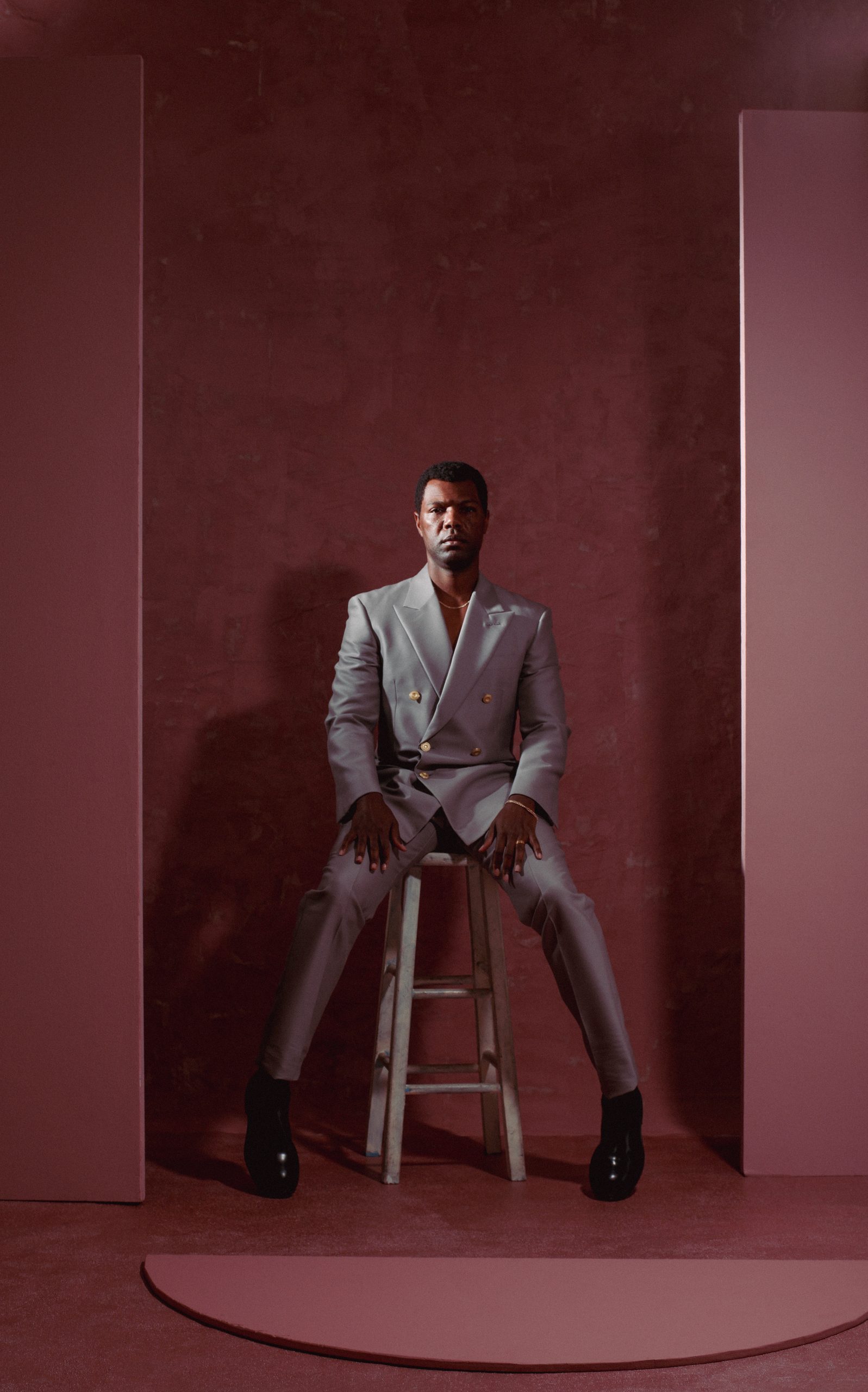
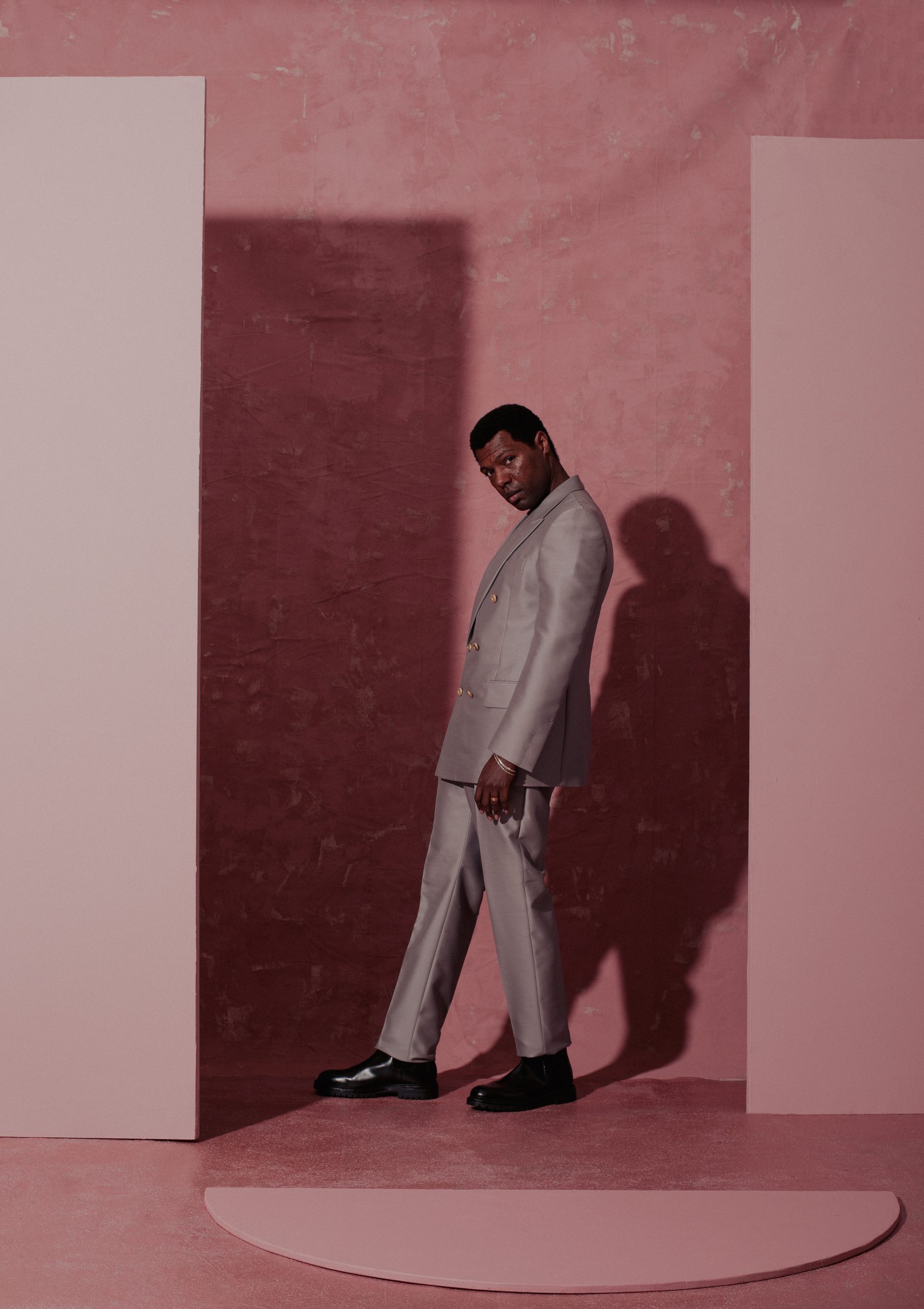
Were there other influences, maybe even from your own life? You just referenced your parents a minute ago…
Acting is very spiritual for me. A lot of times I’ll pick things up from the police officers who are present on set. I’ll shake their hand, and notice how they shake my hand. I watch how a person who puts on that uniform every single day, no matter what era they’re in, shows up. I’ve played a police officer before, and I did a ride-along when I was doing a movie called Charm City Kings, so I already knew how it works. It was a mindset of having to make sure you come home that day when you go out.
This time around, you just get to do it in cooler clothes with better cars.
Exactly.
One thing I wondered about was the freedom you had with the character. With others in this universe, we already know where their stories lead because we’ve seen future versions of them. But Levon is a character we haven’t met before. Did that give you more freedom to play and have fun with the role, without feeling too bound by expectations?
When you were speaking, I thought about Nick, who plays Ralph, and Cameron, who I interact with a lot. They’re both legacy characters, so they’d often ask Brad questions to make sure they were getting things right. With Levon, I didn’t have that pressure. I knew I was stepping into an iconic franchise, but I never really think about it that way.
I felt there was already so much richness there that I didn’t need to look for anything else. The character was telling me what he wanted. I can identify with the small things Levon wants and desires. He wants a better America and feels he can make a small contribution. But he’s also carrying things from his time in Newark that he’s not proud of, things he had to do to save someone. That’s why he tries to save Pam. It’s just part of his mentality, his moral compass.
So you identified with Levon, in a way?
Yes, when I walk into a room, I know that my presence matters. I’m not walking into a space where the space itself doesn’t recognise my presence.
Where do you think that confidence comes from in your own life?
As a leading man, you have to be likeable and charismatic, but you also have to know who you are. I think that naturally comes through. A lot of it came from different life experiences. For example, not making the basketball team and then having to show up at school when everybody knew you hadn’t made it. It happened to me a couple of times.
You feel like Michael Jordan getting cut. But eventually, you become Michael Jordan. Those experiences mould you and prepare you for how you’re meant to show up in your next chapter.
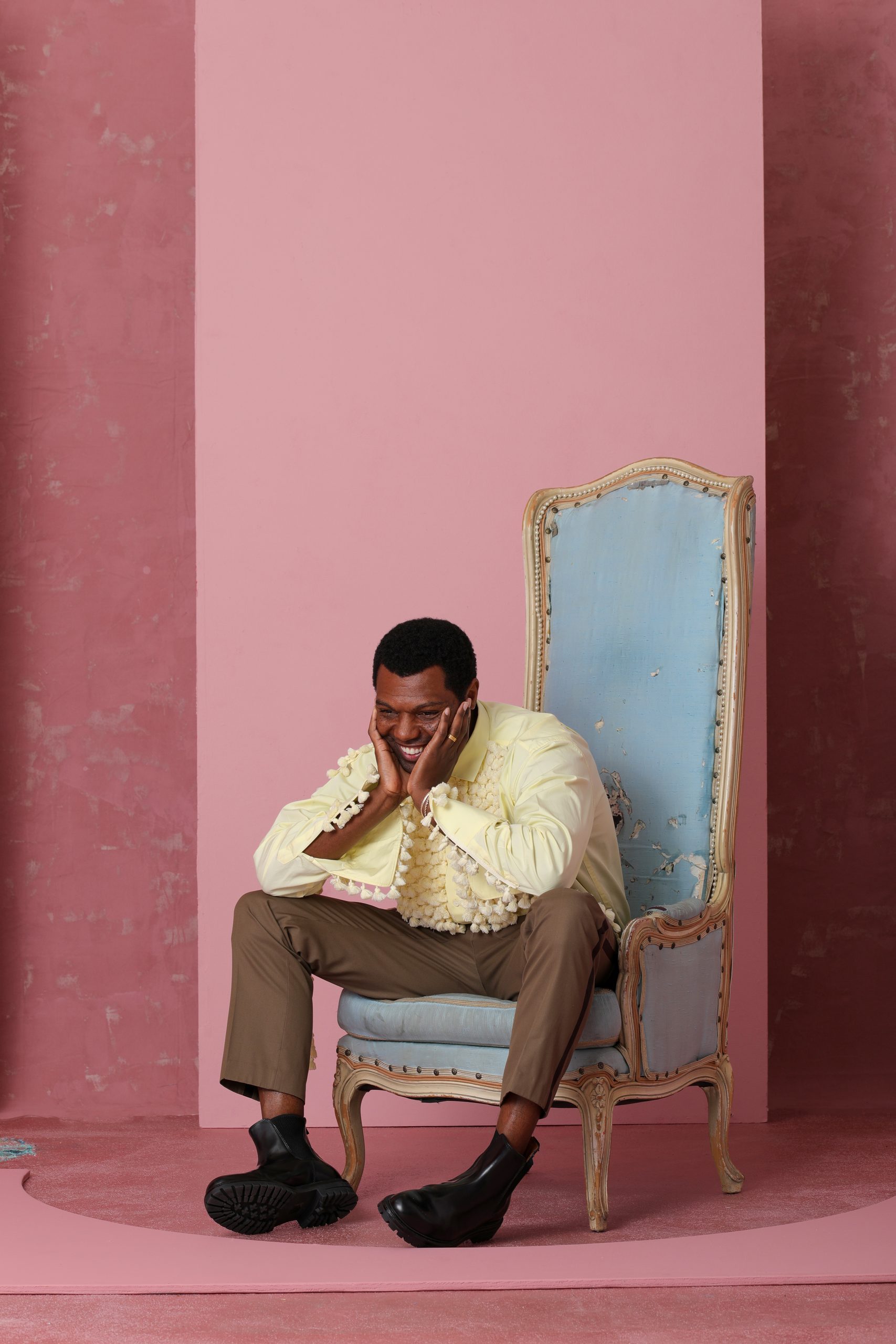
Does that belief help with acting too?
A hundred per cent. I think that’s what separates me from a lot of actors. To me, acting is no different from having this conversation. The only difference is that on set, I may know my lines beforehand, but we’re still existing in that moment together. No matter how many takes you do, no two moments are ever the same. I never see my characters as pretend. I become them.
Does that ever make it difficult to separate yourself from your character once a project is over?
It can take me a minute to come out of certain roles, especially when I’ve spent months playing characters falling in love. I’ve had moments where I’m walking a woman to her car, wondering why, but then I remember we’ve spent six months playing a couple in love. It’s an adjustment, especially when you have a wife and kids. You understand why actors sometimes fall in love on set, only to break up six months after the show ends. They’ve merged with those characters and developed real feelings, so I understand how that happens.
While we’re on the subject of love, let’s talk about the relationship between Levon and Pam. We know parts of Pam’s story and where she ends up in the franchise. Without giving too much away, were you able to put that knowledge of her future aside and focus on their relationship as it unfolds?
Well, when it came to the great Linda Cardellini playing Pam, who is brilliant, I just looked at a picture. I didn’t look too much at her work. I looked at a picture online and I said, “I can fall in love with that woman.” The reason we had to get the hair right on set was that I didn’t feel like she fell in love with a big-fro person. I didn’t feel that.
You didn’t think that was the vibe?
I didn’t think that was the vibe for her. I think it was a little bit cleaner, and she could grow to love the fro. She’d just lost her son, and I’d lost my wife two years prior in the show, so they’re bonding over grief. She’s more in denial and he’s more in acceptance of grief. Love doesn’t care about the past; it just wants to evolve. I think he sees himself in her, and he’s wondering why he’s feeling this for the first time in a while. He lost his wife to cancer and Pam feels like home, and new, and fresh, and it’s risky.
Risky because they are an interracial couple in 1972?
Yes, we’re talking about interracial dating in 1972, in a small town where there’s racism in the backwoods and Levon’s like, “Well, I don’t care.” I think that’s a part of him that gets him in trouble a little bit: he cares, but he doesn’t care. That’s why his sister reminds him, “Don’t forget that you’re Black in a small little town.”
As viewers, we almost forget that context at times, perhaps because so many people have thankfully moved beyond that kind of racial thinking. But then something reminds us of the reality, and we realise that it adds yet another layer of risk to an already high-stakes show.
That speaks to how human the show is, despite all the horror. I think that was Brad’s intention from the beginning. He described it as a family show, wanting the characters to feel rich and human so that the kills would have a real payoff. Sometimes you see someone get killed and think, “Well, they deserved it.”
I’m drawn to art that gives people something to take away. I want audiences to look at themselves and think, “I can make a change. I can take a risk. I can do that.” I don’t want my art to exist in its own little box. I want it to connect with people’s real lives.
Is that also part of how you choose your roles? You’ve moved between very intimate projects and large-scale horror productions, sometimes almost simultaneously.
I think it’s all streamlined. Some projects of mine, Colorbook for example, are slower-paced, but they breathe. That’s why I don’t really do procedurals: they’ve got to get to act breaks. I like limited series because they breathe. Anything that allows the character to exist, I’m usually attracted to.
Colorbook is such a beautiful, emotionally layered project and, at times, a difficult one to watch. It explores grief, but also the experience of a father raising a son with Down syndrome. I imagine that required a great deal of preparation, particularly as a father yourself. How did you approach that project?
Once again, I say it’s spiritual for me. I don’t do a thousand pages of research. When I was doing Colorbook, we had two kids under consideration to play Mason, and they were both awesome. Jeremiah Daniels, who ended up playing Mason, was potentially a recast. The director was on the fence, because he had previously worked with another actor who had Down syndrome and was really great, and I read with both of them.
The director pulled me into the back room and said, “You read with both of the guys, what do you think?” I said, “Listen, I’m here for you, whatever decision you want to make. But that’s my son.” He even looked like me. That’s all I needed to know, and I knew I could relate to him.
Did that relationship influence your approach to the role?
For sure, a lot of my research comes from watching real life. Jeremiah’s parents would say, “Oh, this is my little boy, this is my little Jeremiah,” but there were also moments they’d never highlight themselves, when they got upset with him. When he wasn’t listening, they’d hold him a certain way, and that’s when I thought, “Okay, I can play it like that.” In one scene he really pissed me off. He just wasn’t listening, so when I slapped my hand down and said, “Because you’re not listening, and you’re doing it deliberately,” it was a real moment. Afterwards we hung out and went to eat together. Like with any kid, sometimes they don’t listen.
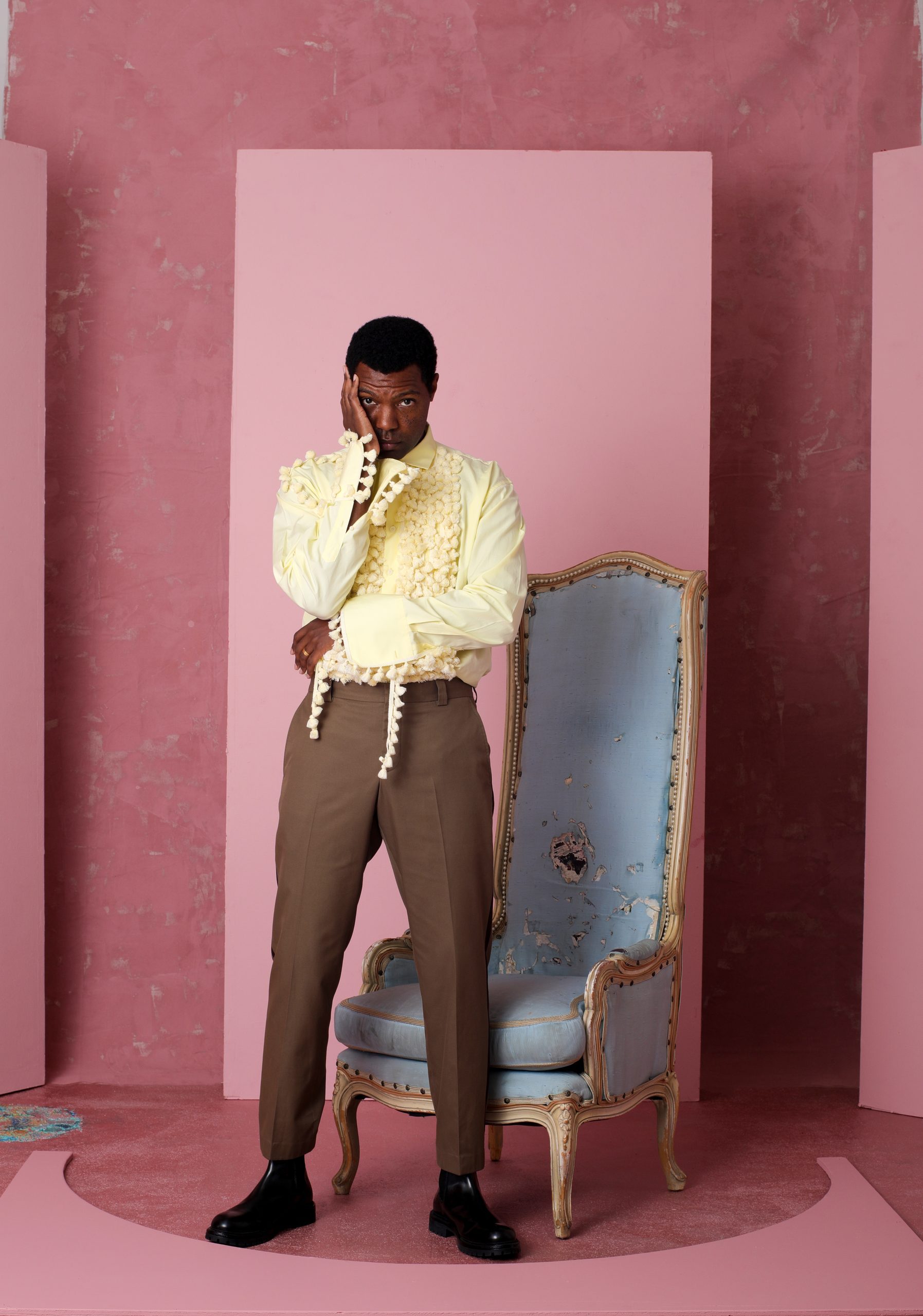
So, at the end of the day, you’re collecting from what you see in the world around you?
Yes, an example would be having this conversation. You’re making me a better actor: the way you listen, the way your thought process works when your eyes go up and you’re thinking about what you want to ask next. I’ll store that somewhere. I’m just recording all of it. I’m going to have to use some of it, or just enjoy it.
Have those little habits you picked up for a role ever stuck?
I would say when I did Constellations and played Paul Lancaster, that was probably one of the most challenging, because all his injuries showed up on me physically. That was kind of odd. But sometimes it takes time to come out of the role, so you’ve got to have different things, whether it’s getting a haircut, or making love to your wife, or something that pulls you back into that reality, especially if you’ve been playing something for quite a long time.
I can imagine. As we were saying earlier, when you become so immersed in a world or a character, it must be difficult to step away from it once the project comes to an end. That sense of commitment, however, seems to extend well beyond acting, too. You write, direct and produce, and you’ve also founded an academy to support emerging talent. At what point did you realise that this was something you wanted to pursue and, perhaps just as importantly, that it was something the industry really needed?
Well, I wasn’t keen on doing it, because I didn’t feel I was at the Denzel level, where people would pay attention to what I had to say, but my wife got tired of me coming home and complaining about all the things I was learning on set and all the obstacles I was facing. A lot of times it wasn’t me; it was other actors. They’d show up on set and they didn’t have what they needed on time, and it was their first job, and I’d wonder why it was this way, so I started mentoring them.
Plus, I was a youth pastor at my previous church, and I met so many child actors who were the breadwinners for their families. Then they reached that stage where they couldn’t play 14 any more but weren’t old enough to play 32, so they ended up in purgatory, so to speak. On top of that, their identity was so tied to acting, not to who they were as people. I thought, okay, this academy can address all these aspects of human behaviour and teach them how to show up in their own identity, rather than Hollywood’s. Because if Hollywood is suddenly taken away, you think, “Where do I go?” You still have to eat and show up in life.
What are some of the things you’re keen to teach young mentees?
I realised that many of the principles I was learning and teaching could apply here. For example, I have everyone make a forgiveness list of ten people they need to forgive, and I tell them to put themselves at number one. There’s something within yourself you haven’t let go of, and you can’t move forward while holding on to the past. Whatever it is, you have to go through that process. It will make you a better human being, but also a better artist, because you won’t be carrying that extra weight.
Did you have someone who mentored you?
I’ve had really great mentors in passing too. Sometimes a mentor is not a person you talk to every single day. I remember this one casting director. She said, “Will, don’t wait on this game to live your life. I’ve got over 25 years in this game; I’ve helped so many careers, but I’ve never had children. Live your life, this will be here.” I was a young man at that time, probably in my early-to-mid twenties, thinking, “Man, I’m going to be a star,” which I am. Those things are happening, and they’re happening now. But the conviction of what she said to me was like, “Live your life. It goes by so fast. The things you’re worried about, the things you’re scared of, run towards those things, because you’re going to look up and you’ll be 80. You don’t know the time or the hour when your time will be up. Don’t live in fear. That should give you great joy to express, and to live out loud, and to be bold.” I think that’s the principle of the academy: how to make a living from your givings.
You’ve made a living in many different ways and it sounds like you’ve lived, and are still living, about a million different lives. You’re an actor, you used to be a youth pastor, and we’ve talked about basketball, but we haven’t mentioned that you almost never became an actor at all, thanks to a coincidence.
Oh, yes, almost didn’t happen.
I heard it all came down to a guy at a Foot Locker who sold you a pair of sneakers and set you up with acting lessons?
I always say I am an actor because of 50 Cents. He came out with these shoes called G-Units, and he was the hottest rapper at the time. So I went to Foot Locker to buy a pair, and the guy helping me had the whitest teeth I’d ever seen. I said, “Man, how did you get your teeth so white? You can’t just sell me these shoes with teeth like that! Where are you from?” He said Maryland, and I told him I was from Virginia, the DMV. I asked what he did outside of Foot Locker, and he said he was an actor. He invited me to an acting class and said all I needed was 25 Dollars. I told him I’d meet him Saturday, and he picked me up. We drove an hour to Studio City for Bobby Chance’s Expression Unlimited Emotional Workshop.
And you were instantly hooked?
Absolutely, people were crying, laughing. It was a madhouse, and I thought, “Oh, I belong here. These are my people.” It reminded me of how I’d put on my auntie’s wigs at home, make people laugh and do different characters. I suddenly realised, “This is what I’m supposed to do.”
I called my dad and told him I wanted to leave pre-med and pursue acting. He went quiet, then said, “Son, this is what I always wanted to do.” He gave me a list of old-school actors to watch: James Cagney, Clark Gable and Edward G. Robinson. He told me how, as a child, he’d fall asleep in movie theatres and his parents would have to come find him.
I thought, “Oh, it’s in the genes!” Now, every time he sees me, he tells me I’m doing well and getting better, though he knows I’ll still watch and critique myself. In a way, he’s living through me. I always tell him, “I’m using your gift, because this is what you wanted to do.” And that’s really how the story began.
I was going to ask you if you ever think about what would have happened if you hadn’t stepped into that Foot Locker, or if it was inevitable that you were someday going to end up in front of a camera. But I think the answer’s obvious now.
I think everything is already rigged, and I’m just trying to line it up. I think every role I’m going to play is already set in stone for me to do. I just have to stay on the beaten path.
Is there one you really hope is set in stone somewhere?
I have two. The first was my original North Star: I even had a picture drawn of me as the first Black Wolverine. Then, more recently, Blade came to mind. When I get obsessed with something, suddenly it’s everywhere. Wait, I’ll show you something… [He holds up a Blade comic.]
I’m looking at the book thinking, “He looks like me.” So if that’s the path, I’d definitely love to step into that role someday. But what dawned on me is that it doesn’t do anyone any good if the franchise doesn’t happen at all. So if the great Mahershala Ali isn’t going to do it, I’d love to take a crack at it. [Ali was previously attached to the role but is no longer involved in the project.]
It would also be great fun for your kids to watch you as Blade one day when they’re older.
Hell yeah, imagine: Dad is Blade.
Stream Crystal Lake now.
Interview Jule Scott
Photography Trokon George