
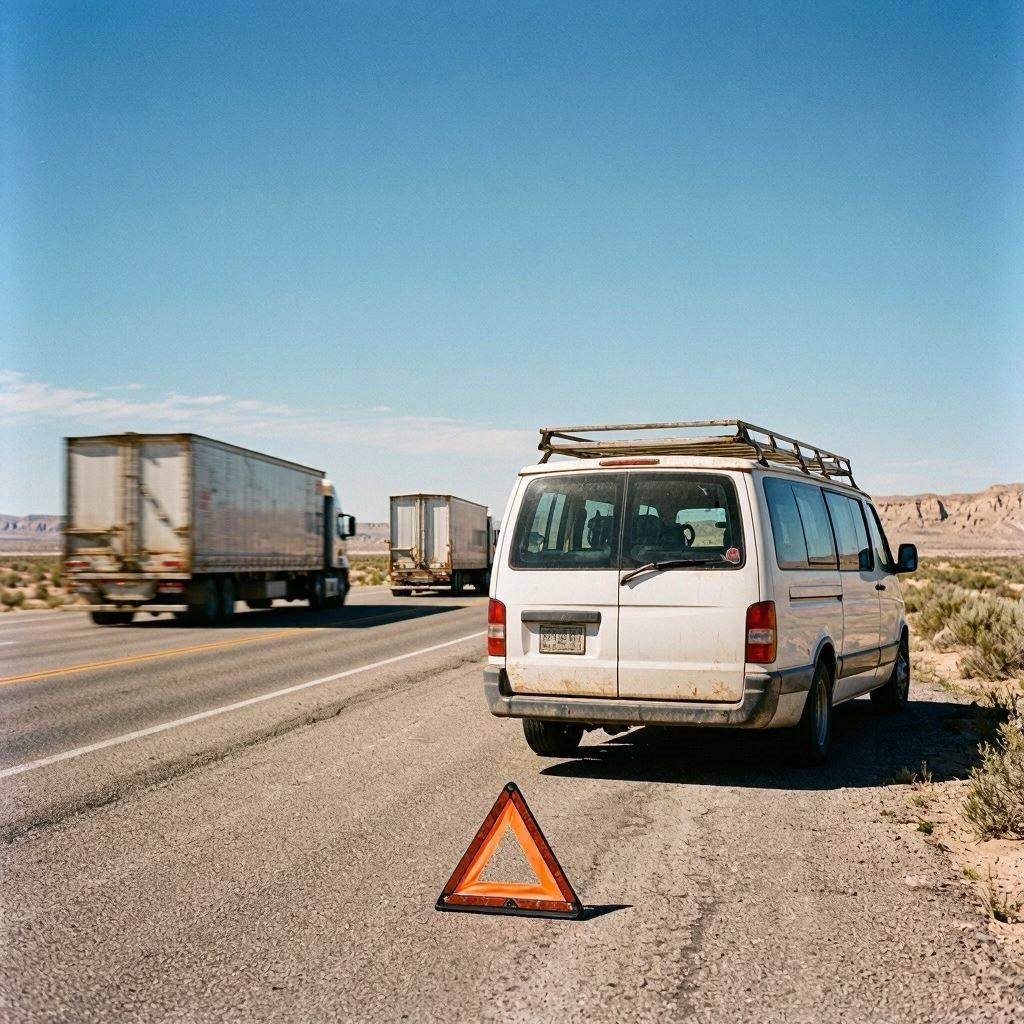
Touring looks glamorous under stage lights. It feels different at 2 a.m. on I-10 with a trailer full of gear and a tight load-in window.
If artists treat road safety like part of the show, then fewer tours end in chaos. Here are seven habits seasoned tour managers push hard once the miles start stacking up.
1 Pre-Trip Vehicle Checks Are-Non Negotiable
A van is not just transportation. It is the backbone of the entire run.
Before rolling out, crews should check tire pressure, brakes, lights, fluid levels, hitch security, and trailer connections. If something feels off, then it gets fixed before departure.
According to the Arizona Department of Transportation Crash Facts report, thousands of crashes each year involve commercial vehicles, including truck tractors and combination vehicles. High speeds plus heavy loads create narrow margins for error.
A five-minute walkaround beats a five-hour roadside delay.
2 Plan Routes Around Heavy Truck Corridors
Interstates like I-10 through Phoenix move massive freight volumes. However, they also carry serious risk.
An investigation by AZ Law Now found that 2,042 people were killed in fatal crashes on Arizona’s I-10 between 2000 and 2024, nearly 8 percent of statewide traffic deaths during that period.
Tour managers often build schedules around venue access and budgets. Smart ones also factor in truck density, construction, and peak freight hours. If a route runs through heavy truck corridors, then drivers need wider following distances and disciplined lane changes.
And if something does happen involving a semi, crews should understand what follows. Knowing what a truck accident lawyer in Phoenix handles after a commercial vehicle crash helps artists grasp documentation requirements, timelines, and rights without panic.
Preparedness reduces stress. Stress reduction protects the tour.
3 Load-In And Load-Out Protocols Prevent Road Hazards
Load-ins feel rushed. Load-outs feel worse.
Unsecured gear turns into highway debris fast. Touring crews across the Southwest have seen ladders, straps, and cases scattered across lanes after sloppy packing.
Make it standard practice to:
- Double-check ratchet straps before departure
- Separate heavy cases from lighter soft goods
- Confirm trailer doors are latched and locked
Neither fatigue nor impatience should override safety. If the crew is tired, then a second person verifies the load. Either the strap is tight, or it is not.
4 Fatigue Management Is A Safety Tool
Late shows plus early call times create risky driving conditions.
In an October 1, 2024 report, the National Transportation Safety Board concluded that a fatal Arizona crash was likely linked to diminished alertness due to fatigue, according to coverage by the Associated Press.
Research published in the Journal of Sleep Research notes that sleepiness contributes to roughly 20 percent of motor vehicle accidents worldwide. If drivers misjudge their alertness, then self-monitoring fails.
Tour policy should be clear: if someone shows drifting focus, blurred vision, or memory gaps, then the vehicle pulls over. Not later. Immediately.
Caffeine helps. Music helps. However, neither replaces real sleep.
5 Dashcams Protect Drivers And Crews
Dashcams are no longer optional for serious touring operations.
Fleet safety reporting cited by Fleet Maintenance references more than 36,000 large truck crashes in the first quarter of 2024 alone, based on federal data. In dense freight regions, documentation matters.
Dashcams not only clarify fault but also encourage better in-vehicle behavior. If drivers know incidents are recorded, then accountability rises.
If an accident occurs, then video can protect both reputation and insurance claims. Either the footage confirms your account, or it exposes weak points in the system.
6 Build A Real Emergency Kit
An emergency kit is not a random bag of leftover supplies.
It should include reflective triangles, high-visibility vests, a flashlight, bottled water, first-aid materials, backup chargers, and printed insurance information. Additionally, every crew member should know where it is stored.
On highways like I-10, shoulders can be narrow and traffic unforgiving. If a breakdown happens at night, then visibility becomes critical.
Professional touring means planning for what you hope never happens.
7 Document Everything After An Incident
After a collision, adrenaline spikes and memory fades.
Therefore, documentation must be immediate and methodical. Photograph vehicle positions, damage, road conditions, and signage. Exchange information with all drivers and collect witness contacts if possible.
If a commercial truck is involved, then procedures may differ from standard passenger crashes. Not only are insurance structures more complex, but liability can extend to drivers, companies, and contractors.
Calm documentation protects everyone.
Touring Smart Is Part Of The Craft
Great tours move with rhythm, yet they’re built on careful preparation. Road safety isn’t about fear; it’s about professionalism. When artists treat vans and trailers with the same care as their instruments, the road feels controlled instead of chaotic.
Start with one upgrade this week and build from there. The show matters, but arriving safely matters more.



