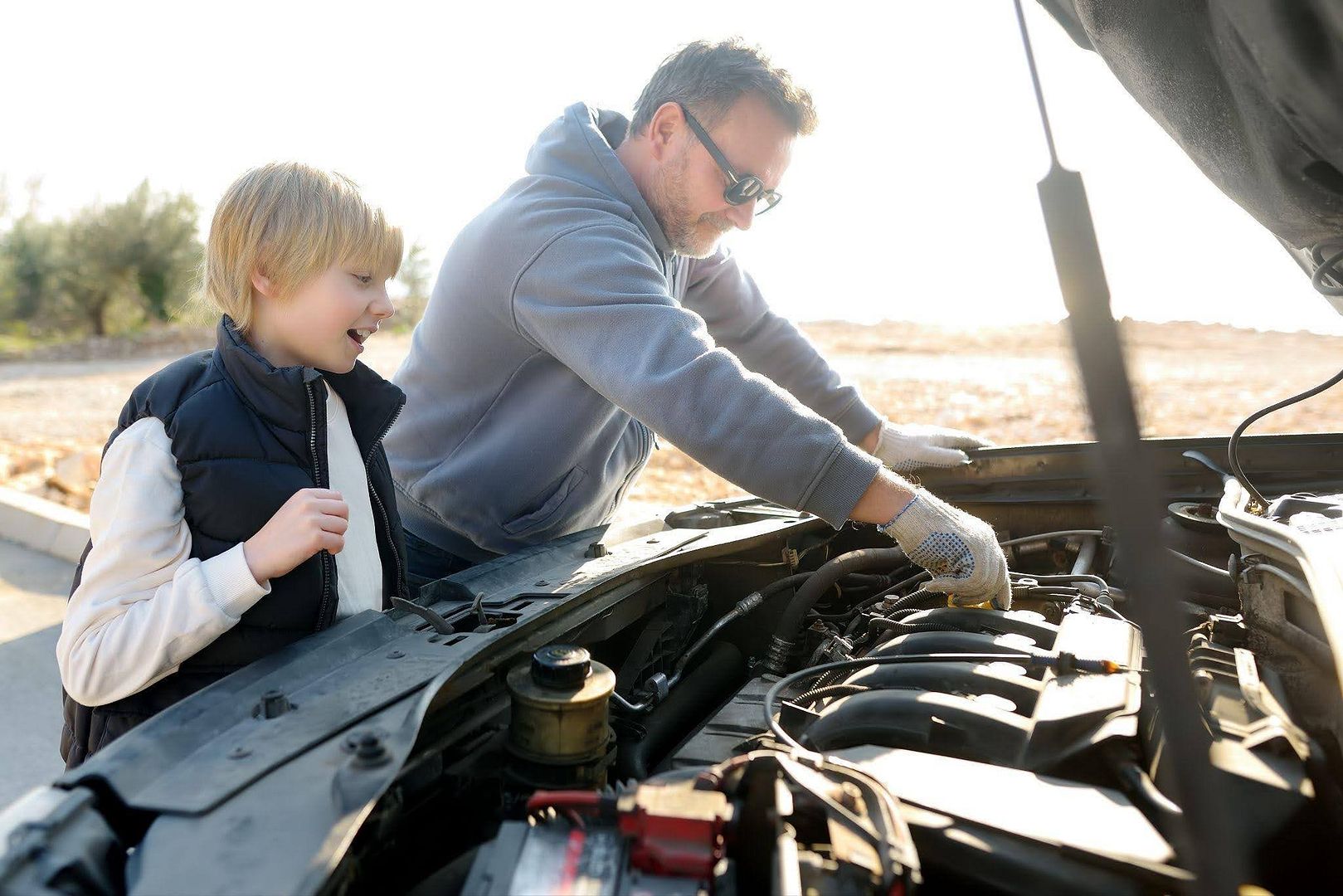
If you’re a father or grandfather, you’ve probably spent a lot of time thinking about what words of wisdom, cautionary tales, or lessons you can pass down to your children or their children. When it comes to keeping their vehicles in tip-top shape, there are some key car care habits definitely worth teaching the younger generations. In addition to making sure they have good auto insurance, here are nine lessons you can share with your teen driver — or even that 40-year-old — so they can make the most out of their mileage and stay safe while doing so.
1. Don’t Ignore Dashboard Warning Lights
Warning lights can be annoying, but they’re there for a reason. A good rule of thumb is that green or blue lights on the dashboard signify that a system is working properly or it’s in use — i.e., a blue light when you turn on your high beams. A yellow or red light is an indicator that something needs to be addressed. It could be an alert to check the pressure in one of your tires, a warning that there’s a technical glitch in your automatic braking system (ABS), or just a notification that you’re past due for an oil change. Early attention to any unfamiliar lights helps a driver prevent breakdowns later on. If unattended, these seemingly small alerts often become expensive problems down the road.
2. Check Tire Pressure Regularly
When the temps plummet and your teen’s dashboard indicates that a tire is low, they may just ignore the warning, chalking it up to the weather. Even if it’s just a temporary dip in the weather, properly inflated tires maintain better contact with the road, improving handling, braking, and overall safety while also helping a vehicle use fuel more efficiently. Staying ahead of these fluctuations will keep their tires performing as intended and will help extend tire lifespan.
3. Keep Up With Oil Changes
Regular oil changes are also essential to maintaining engine performance and longevity. Clean oil lubricates moving parts, reduces friction, and helps prevent overheating, allowing the engine to operate more efficiently. When oil becomes dirty or breaks down over time, it can’t adequately protect critical components, which then leads to increased wear and potential damage. Delaying routine oil changes can gradually shorten the life of the engine, resulting in repairs and reduced reliability.
4. Listen to the Car
Remind them to occasionally turn down the music and listen to what their vehicle is trying to tell them. If they’re not driving a 1989 Chevy Caprice, then any strange sounds, vibrations, or even smells may be indicative of an issue somewhere. For instance, squealing brakes indicate worn brake pads or dust built up on the rotor. A burning smell could be a slipping belt or overheating component, and a musty odor coming from the vents might mean it’s time to change HVAC filters. Getting the car looked at early on can likely prevent pricier repairs down the road too.
5. Never Let the Gas Tank Run Too Low
Sure, gas prices are high, but keeping their tank topped off — or at least not driving around town with the gas light on regularly — can help protect the fuel system. Experts recommend keeping at least a quarter of a tank in the vehicle. That’s because the fuel pump relies on gas to stay cool and properly lubricated, so running their tank near empty can increase wear and lead to issues. Low fuel levels can also allow sediment from the bottom of the tank to enter the fuel system, potentially clogging filters or affecting engine performance. This is particularly important during road trips or in extreme weather conditions.
6. Wash the Car More Than You Think
If they can write their name on their back windshield, it’s time for a car wash. Over time, dirt, road salt, and debris can gradually wear down paint and corrode the vehicle’s undercarriage. Washing the car more often helps prevent long-term damage, maintains the integrity of exterior surfaces, and preserves the vehicle’s overall value.
7. Keep an Emergency Kit in the Car
Being prepared is one of the most important things the drivers in your life can do, and an emergency kit is one simple way to prep a vehicle and enhance overall safety. Stocking essentials like jumper cables, a flashlight, water, and a basic first aid kit can make all the difference if they’re stranded or dealing with a minor emergency. It becomes even more important during road trips or in colder months, when weather conditions and longer distances between stops can increase risk.
8. Learn Basic DIY Checks
Regularly inspecting tire tread, monitoring fluid levels, and keeping an eye on battery condition will help any driver catch small issues before they turn into larger problems. These basic habits are simple ones to teach even young drivers, and they not only improve safety and reliability but also give your kids or grandkids greater confidence and control over their vehicle’s upkeep.
9. Read the Fine Print
Whether they have basic, cheap car insurance or a more comprehensive policy, make sure they understand what their auto insurance covers — and what it leaves out. For instance, if they don’t have extra roadside insurance coverage, they’ll need to make other plans if they get stranded on the interstate without fuel. If they have comprehensive insurance, how much does it cover, and what will their out-of-pocket costs be if they’re in an accident? Understanding their policy upfront will reduce stressors if they are in a crash or their car fails while driving.
Offering them invaluable advice — whether they asked for it or not — will stick with them throughout their time on the road. This Father’s Day, kick back, relax, and rest easy knowing the future generations of drivers are in good hands.