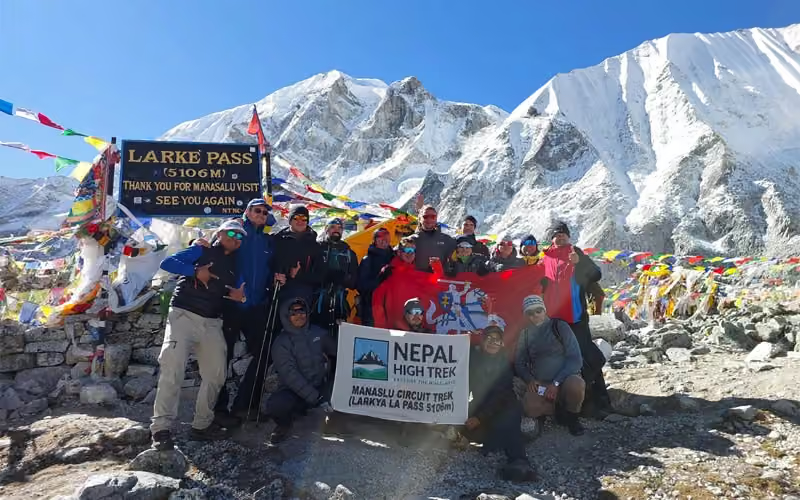
If you’ve spent any time on Nepal trekking forums, you’ve probably run into this exact dilemma: someone can’t decide between the Manaslu Circuit Trek and a shorter Annapurna option like the 7-Day Annapurna Base Camp Trek. It comes up constantly, and honestly, it’s a fair question because these two treks solve completely different problems.
Manaslu is the long game — a remote, restricted-area route that circles one of the world’s eighth-highest peaks and tops out at a genuinely tough high pass. The 7-day ABC trek is the opposite kind of trip. It’s built for people who have a week, not three, and still want to stand somewhere with proper Himalayan views. Neither is “better” in some universal sense. They’re just answering different questions about time, fitness, and how remote you want to feel.
This guide walks through both routes side by side — the itineraries, the difficulty, permits, costs, seasons, and what you’ll actually need to pack — so you can figure out which one actually fits your trip instead of picking based on whichever trek showed up first in your search results.
Manaslu Circuit Trek vs 7-Day Annapurna Base Camp Trek at a Glance
| Factor | Manaslu Circuit Trek | 7-Day Annapurna Base Camp Trek |
| Main attraction | Manaslu massif and Larkya La | Annapurna Sanctuary and ABC |
| Highest point | Larkya La Pass, around 5,106m | Annapurna Base Camp, around 4,130m |
| Duration | Roughly 14–18 days depending on itinerary | 7 days |
| Difficulty | Challenging | Moderate to challenging |
| Remote feeling | High | Moderate |
| Permit requirements | More complex | Simpler |
| Best for | Experienced or well-prepared trekkers | Travelers with limited time |
| Accommodation | Teahouses/lodges | Teahouses/lodges |
| Major concern | Altitude, long days, high pass | Rapid pace and altitude gain |
Both routes fall under the broader umbrella of teahouse trekking in Nepal, but the feel on the ground is quite different — one puts you in traditional mountain settlements along the Budhi Gandaki Valley, the other keeps you in the more familiar Annapurna Sanctuary trail system.
Manaslu Circuit Trek: Practical Guide
What Is the Manaslu Circuit Trek?
The Manaslu Circuit loops around Mount Manaslu, working its way up through the Budhi Gandaki Valley before crossing into high alpine terrain near Samagaon and Samdo. Early on, the trail feels almost pastoral — terraced fields, suspension bridges, small teahouses run by the same families for generations. Then, somewhere past the halfway point, the valley narrows, trees thin out, and you’re suddenly looking at glaciers instead of rice paddies.
Compared to the well-trodden Everest or Annapurna trails, Manaslu still feels genuinely remote. Fewer lodges, fewer trekkers, and a real sense that you’re passing through communities that haven’t been shaped entirely around tourism. That’s part of the draw, and also part of why it demands more planning than a lot of other Nepal treks.
Manaslu Circuit Trek Itinerary: Typical Route
There’s no single “correct” itinerary here — road access changes, weather closes passes, and different operators structure the days differently. But a fairly standard framework looks something like this:
- Kathmandu to Machha Khola
- Machha Khola to the Jagat/Deng area
- Deng to Namrung
- Namrung to Samagaon
- Acclimatization day around Samagaon
- Samagaon to Samdo
- Samdo to Dharamsala
- Dharamsala over Larkya La to Bimthang
- Bimthang down toward the lower Manang/Marsyangdi Valley
- Onward to the roadhead and return transport
Actual trekking days vary quite a bit depending on permits, road conditions that season, and how much buffer time you build in for acclimatization. Don’t treat that rest day around Samagaon as dead time either — it’s doing real work for your body, and skipping it to “save a day” is one of the more common mistakes people make on this route.
Manaslu Trek Difficulty and Altitude
This is not a casual walk. Expect long days, some brutal ascents and descents, and thinner air the higher you climb. Larkya La itself, sitting around 5,106 meters, is the physical centerpiece of the whole trek — a long, cold, high-altitude crossing that tests both legs and lungs.
Altitude sickness is the real concern, more than fitness alone. Watch for headaches, nausea, dizziness, or unusual fatigue that doesn’t ease up with rest. The advice here isn’t complicated, just easy to ignore when you’re excited to keep moving: walk at a pace where you can hold a conversation, drink water regularly, eat enough even when you don’t feel hungry, and if symptoms get worse rather than better, descend. No summit view is worth pushing through serious altitude symptoms.
7-Day Annapurna Base Camp Trek: Practical Guide
Is 7 Days Enough for Annapurna Base Camp?
Short answer: yes, but it’s a tight schedule, not a relaxed one. A seven-day itinerary works if your starting and ending points are chosen efficiently, and if you’re reasonably fit going in. It’s not the trek to attempt if you’re hoping to wing it on fitness you haven’t tested.
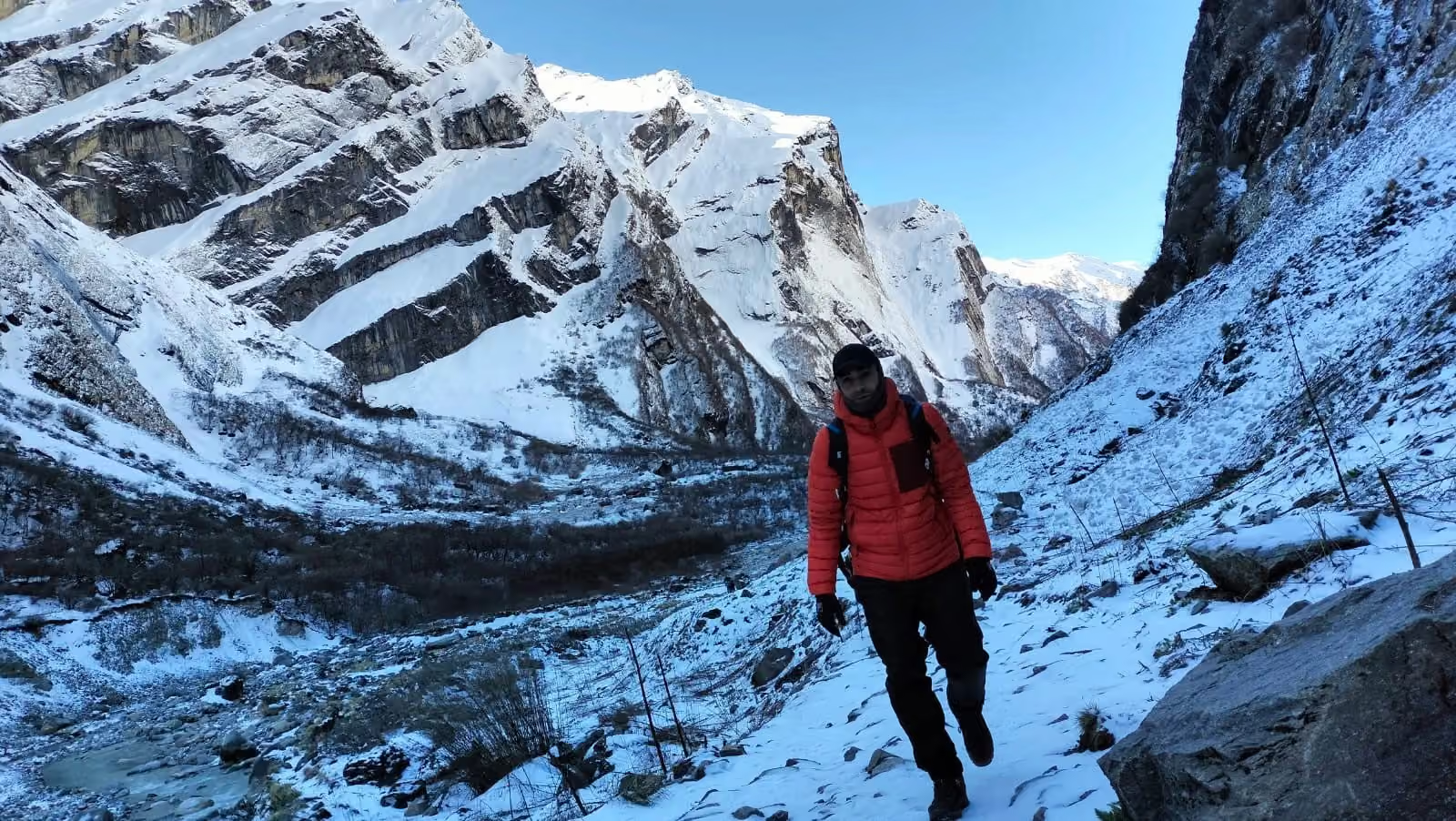
The trail runs up through the Modi Khola valley, past Gurung villages, with Machapuchare — Fishtail Mountain — dominating the skyline for most of the walk. Eventually the valley opens into the Annapurna Sanctuary itself, and Annapurna Base Camp sits right in the middle of that amphitheater of peaks.
7-Day Annapurna Base Camp Trek Itinerary
A workable structure for the shorter version looks like this:
Day 1: Drive to the trailhead, trek to the first overnight village
Day 2: Continue deeper into the Modi Khola valley
Day 3: Push on toward the edge of the Annapurna Sanctuary
Day 4: Reach Annapurna Base Camp
Day 5: Begin the descent to a lower settlement
Day 6: Keep heading downhill toward the road-access point
Day 7: Return to Pokhara or Kathmandu, depending on your transport plan
Villages and exact distances shift a bit depending on current road access and trail conditions, so treat this as a framework rather than something fixed in stone. Local guides adjust it constantly based on what’s actually happening on the ground that season.
7-Day ABC Trek Difficulty
People sometimes assume “shorter” automatically means “easier.” It doesn’t. You’ll spend a good chunk of this trek on stone staircases — some going up for what feels like forever, then straight back down the other side. Add altitude into the mix and those stairs get noticeably harder by day three or four.
The compressed schedule is really the main trade-off. On a longer trek, you’ve got some cushion if you need an extra rest day. On a seven-day itinerary, there’s very little slack built in, so if you’re feeling off, you either push through carefully or adjust the plan on the fly with your guide.
Preparation-wise, stair training genuinely helps — more than flat treadmill walking ever will. Regular walking in the weeks before, a bit of light strength work for your legs, and shoes you’ve already broken in will save you a lot of grief.
Manaslu Circuit Trek Cost vs 7-Day ABC Cost
What Does the Trek Cost Include?
Whichever trek you choose, the same basic categories make up the total: permits, guide fees, a porter if you want one, transportation to and from the trailhead, teahouse accommodation, meals, drinking water, travel insurance, gear, personal spending money, and some kind of emergency evacuation contingency.
Manaslu Circuit Trek Cost
Manaslu generally runs more expensive than the7-Day Annapurna Base Camp Trek, and that’s mostly down to duration, the mandatory guide requirement, and the more complex permit structure for restricted areas. Rather than quoting one fixed package price — which honestly doesn’t mean much given how differently operators bundle their inclusions — it’s more useful to compare quotes line by line. Ask exactly what’s covered: is the porter included or extra? Does the price cover all meals, or just breakfast? Those details move the final number more than people expect.
7-Day Annapurna Base Camp Trek Cost
The shorter timeframe naturally brings costs down across accommodation, food, and guide fees simply because there are fewer days on the trail. That said, private transport instead of shared jeeps, hiring a porter, or upgrading to nicer lodges can push the price back up quickly, so the “budget-friendly” label only holds if you keep those choices modest.
Permits and Guide Requirements
Manaslu Trek Permits
Manaslu requires a restricted-area permit, plus the Manaslu Conservation Area Permit, and depending on your exact route, an Annapurna Conservation Area Permit as well since some itineraries cross into that zone. A licensed guide and specific group arrangements are typically mandatory for the restricted section. Permit rules and fees in Nepal do shift from time to time, so check current regulations close to your travel dates rather than relying on older information.
Annapurna Base Camp Permits
ABC is more straightforward — you’ll need the Annapurna Conservation Area Permit, along with whatever trekker registration is currently required. Guide requirements depend on the regulations in place at the time you travel, so it’s worth confirming before you book. If you’re researching organized trekking services in Nepal, you’ll come across companies like Nepal High Trek among many others — worth a look if you’d rather have logistics handled rather than arranging permits and transport yourself.
Best Time to Trek
Best Seasons for Manaslu
Spring, from March through May, and autumn, September through November, are the two windows most trekkers aim for. Both offer more stable weather and clearer mountain views. Winter brings serious cold and snow that can complicate the pass crossing considerably, and monsoon season turns the lower valleys muddy, leech-prone, and occasionally landslide-affected.
Best Time for 7-Day ABC
The same general pattern applies — spring and autumn are the safer bets. Even then, don’t expect guaranteed clear skies the whole way; lower-altitude cloud and rain can roll in and block views even during the “good” months. Weather at Base Camp itself can flip from sunny to socked-in within an hour, so pack for that unpredictability regardless of season.
Accommodation, Food and Drinking Water
Teahouse trekking on both routes looks fairly similar. Rooms are basic — think twin beds, a shared bathroom down the hall, thinner walls than you’d like at higher elevations. The dining room is really where the trek happens socially; it’s warm, it’s where everyone gathers after a long day, and it’s usually where you’ll swap stories with other trekkers.
Food is simple and repetitive by design: dal bhat, noodles, fried rice, soups, potatoes cooked a dozen different ways, and eggs at breakfast. Hot drinks are everywhere and worth ordering often, both for warmth and hydration. Bring purification tablets or a filter rather than relying entirely on bottled water — it’s better for your wallet and for the mountains. A stash of your own snacks also helps on the longer, harder days when teahouse food is still an hour away.
Packing List and Preparation
Essential Trekking Gear
Keep it practical rather than exhaustive: layered clothing, a proper waterproof jacket, a warm insulating layer, decent trekking trousers, gloves and a warm hat, boots that are already broken in, a sleeping bag rated for the temperatures you’ll actually face, a headlamp, water bottles or a hydration system, sunscreen and sunglasses, basic first-aid supplies, a power bank, any personal medication, and trekking poles if your knees appreciate the support on descents.
Fitness Preparation
Build up walking endurance in the weeks before you fly out — not just distance, but time on your feet. Stairs and uphill walking translate directly to trail conditions in a way flat walking doesn’t. Practice carrying roughly the daypack weight you’ll actually hike with. And don’t make your first long hike of the year the first day of your trek — that’s setting yourself up for a rough start.
Manaslu or 7-Day ABC: Which Trek Should You Choose?
Choose Manaslu if you want a longer Himalayan journey, a genuinely remote trekking environment, the challenge of Larkya La, more physical demand overall, and extended time immersed in mountain villages that see fewer outside visitors.
Choose 7-Day ABC if you want a shorter Nepal trekking holiday, classic Annapurna mountain views, a tighter and more manageable itinerary, simpler logistics from a permit standpoint, and a trek that fits around limited vacation days.
Here’s the practical point worth remembering: shorter doesn’t automatically mean easy, and longer doesn’t automatically mean better. What matters is matching the trek to your actual time, fitness level, trekking experience, and how comfortable you are with remoteness.
Safety, Altitude and Responsible Trekking
Altitude sickness happens when your body hasn’t had enough time to adjust to lower oxygen levels — it’s not about fitness, and even strong athletes get hit by it. Never brush off a persistent headache, severe nausea, unusual weakness, confusion, or trouble breathing. Listen to your guide, and descend without hesitation if symptoms escalate.
Travel insurance that specifically covers high-altitude trekking and emergency evacuation isn’t optional — it’s the one thing you genuinely don’t want to skip to save money. Beyond your own safety, be mindful of the communities, monasteries, and wildlife along the trail. Carry your waste out where needed, use the disposal systems already in place, and try to minimize plastic wherever you can.
Final Thought: Choose the Trek That Fits Your Trip
If you’ve got the time and you’re after a demanding, remote Himalayan experience, Manaslu is absolutely worth serious consideration — it rewards the extra planning. If your vacation days are limited and the goal is simply to stand at a famous Himalayan base camp within a week, the 7-day ABC route gets you there without requiring three weeks off work.
Before booking either one, take the time to actually compare itineraries, what’s included in the price, permit requirements, the acclimatization plan, guide arrangements, and emergency support options. Plan your route around your real fitness level, the days you actually have available, and what you’re hoping to get out of the trip — not just whichever itinerary is shortest or whichever price tag looks lowest o
FAQs: Manaslu Circuit Trek & 7-Day ABC
1. Is the Manaslu Circuit Trek harder than Annapurna Base Camp?
Generally yes — Manaslu involves greater altitude exposure, a longer overall duration, more remote terrain, and the demanding Larkya La crossing, all of which add up to a tougher trek than the compact ABC route.
2. Can I complete the Annapurna Base Camp Trek in 7 days?
Yes, it’s a well-established option, but it’s a fast-paced schedule that leaves little room for extra rest days, so decent fitness and steady pacing matter more here than on a longer itinerary.
3. How much does the Manaslu Circuit Trek cost?
It depends heavily on permits, guide and porter arrangements, transportation, and accommodation choices — rather than one fixed number, it’s worth comparing what’s actually included across a few different operator quotes.
4. What is the highest point of the Manaslu Circuit Trek?
Larkya La Pass, at approximately 5,106 meters. That altitude exposure is a core part of what makes the trek challenging, not just an incidental high point.
5. What permits do I need for the Manaslu and ABC treks?
Manaslu requires a restricted-area permit plus the Manaslu Conservation Area Permit, and sometimes an Annapurna Conservation Area Permit depending on the route. ABC only requires the Annapurna Conservation Area Permit and current trekker registration. Regulations change, so verify details before you travel.
6. Which is better for a first-time trekker: Manaslu or 7-day ABC?
ABC is generally the more practical entry point for a first Himalayan trek — shorter, simpler logistics, and less demanding overall. Manaslu is better suited to trekkers who’ve already got some high-altitude experience and want a bigger commitment.