Cinema is all about the image, but the audio of a film quietly determines how deeply an audience feels a story, viscerally.
Minjia Du, a Los Angeles-based sound engineer covers the complete audio workflow (from location recording and wireless coordination to dialogue editing, sound design and final re-recording mix).
Her audio work was recently showcased in two selected films which screened at the 30th LA Shorts International Film Festival, which ran from July 30 through August 12.
For The Last Coin—which was also officially selected by the Glendale International Film Festival—Du served as director, writer, and Supervising Sound Editor.
For Fortune House, an AFI short film starring Forest Lin, she served as the Production Sound Mixer. Whether capturing dynamic dialogue on a noisy set or sculpting an immersive sonic landscape in post-production, Du approaches audio as an essential extension of visual storytelling.
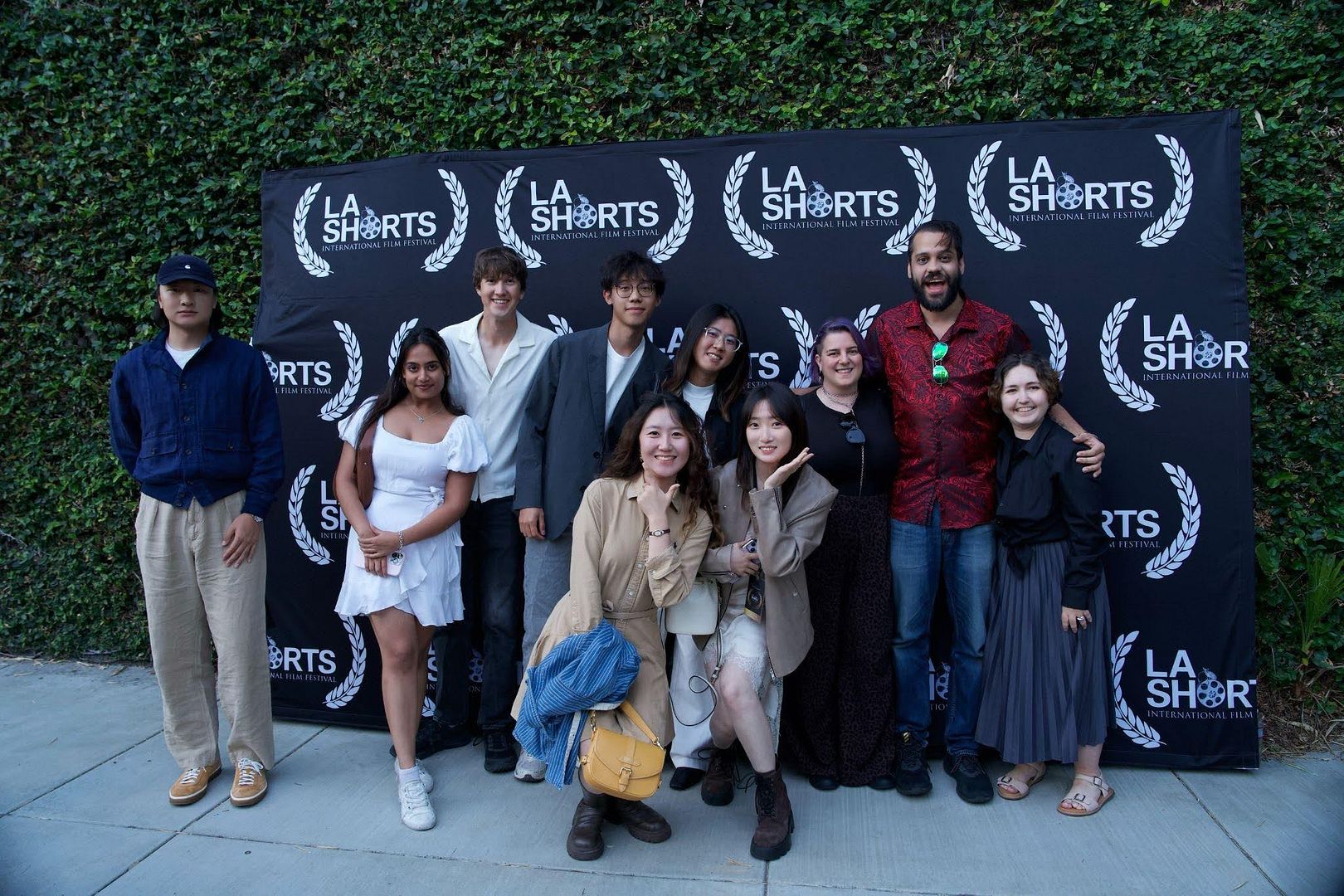
Having two distinct films selected for the 30th LA Shorts International Film Festival marks a major milestone for any filmmaker. For Minjia Du, seeing both The Last Coin and Fortune House reach festival audiences was an iconic moment within the industry.
“Honestly, it feels both deeply personal and slightly surreal,” says Du. “LA Shorts has such a long history of introducing audiences to emerging filmmakers, so having two very different projects included in its landmark 30th edition means a great deal to me.”
The two films presented entirely different creative and technical demands. The Last Coin, starring Jose Degracia and Josiah Hand, is a drama centered on pride, desperation and human perspective. “Watching it leave the private environment of the editing room and meet an audience in a theater is emotional,” Du reflects. “You spend so much time making microscopic decisions—sometimes adjusting a pause by a fraction of a second—that it is easy to forget the film will eventually belong to an audience.”
By contrast, Fortune House presents a magical-realist story following an immigrant delivery driver who enters a high-stakes mahjong game with three demons for a chance to obtain a green card.
“My relationship with Fortune House is different,” Du explains. “I joined as Production Sound Mixer, working within a larger creative team to protect the performances and capture the material the filmmakers would later need. As an international filmmaker myself, I found that premise particularly meaningful.”
Reflecting on the dual recognition of each film, Du notes that festival selections highlight the collective effort of an entire crew while validating the two sides of her practice. “One represents authorship and the construction of a film’s complete sonic world in post production,” she said. “The other represents collaboration, preparation, and the responsibility of capturing truthful sound in real time. Having both sides of my work reach the same festival audience makes this milestone especially meaningful.”
During the post-screening Q&A for The Last Coin, which screened on August 3, Du shared insights into the personal themes beneath the story’s surface. “The moderator complimented the cinematography and sound design and asked why the story was important to me,” Du recalls. “I explained that while both characters are fictional, they represent two sides of me as I entered professional life: the young person who believes they must accomplish something impressive, and knows that happiness alone is enough to give life meaning. After the screening, several filmmakers approached me about potential future collaborations.”
Operating across both production sound and supervising sound editorial requires a holistic approach, blending on-set technical precision with post-production creative storytelling.
For Du, the fundamental difference comes down to managing possibilities versus making final narrative choices.
“On Fortune House, every decision had to be made while the scene was unfolding,” Du explains. “The film moves between the grounded reality of an immigrant delivery driver and the heightened world of a mahjong parlor controlled by three demons.”
She adds: “My responsibility was not to impose supernatural sound design on set, but to capture performances that were clean, emotionally detailed, and flexible enough for the post-production team to transform later.”
Capturing audio in a mahjong parlor setting presented distinct technical challenges on set. “Mahjong tiles produce very sharp transients that can mask quieter consonants and breaths,” Du notes. “I built the recording strategy around both a shared acoustic perspective and individual lavalier protection. Whenever framing allowed, the boom mic provided the natural perspective of the room. Isolated wireless microphones provided separate coverage when actors turned away or moved dynamic scenes.”
On The Last Coin, Du managed the post-production pipeline, where decisions shifted to constructing the film’s final acoustic world. “Since the story is largely based within a laundromat, the soundscape could not just have a generic hum of washing machines,” says Du. “It had to follow the changing psychology of the characters. I worked across dialogue editing, ambience, Foley, and final mixing so those elements felt like one continuous dramatic language. On Fortune House, I was preserving the truth of what happened in front of the microphones. On The Last Coin, I was deciding how that truth should be experienced.”
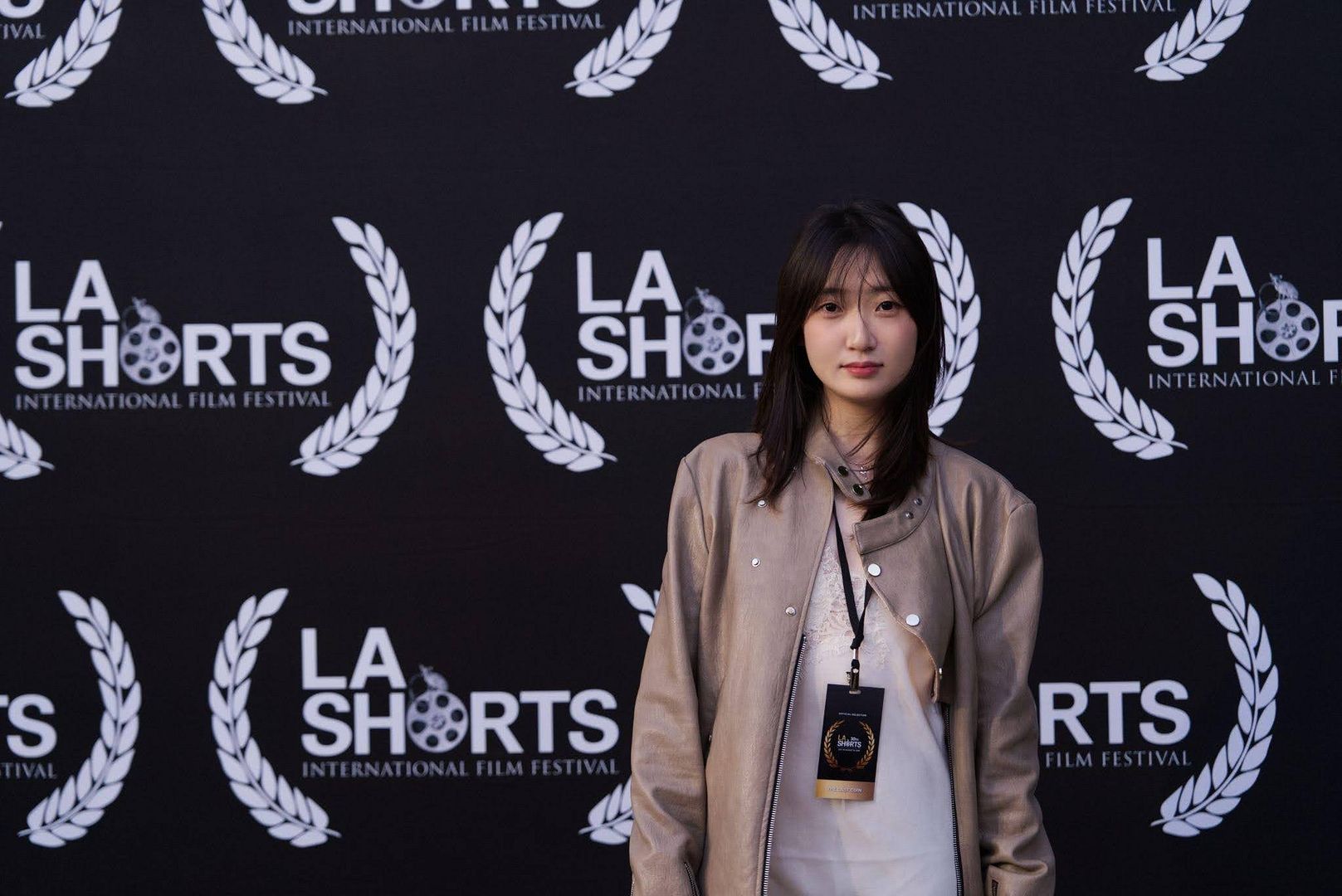
To build tension within The Last Coin, Du treated the laundromat’s environment almost like a central character. Rather than allowing background machinery to blur into static noise, she organized practical sounds to function as an emotional clock.
“A laundromat is never truly quiet,” Du explains. “There are rotating drums, dryer thumps, relay clicks, ventilation and the metallic sounds of coins moving through machines. At calmer moments, the machine ambience establishes an ordinary space. As the confrontation becomes uncomfortable, selected mechanical details move closer in perspective. A dryer rotation or a metal click can suddenly feel intrusive without turning into an obvious horror effect.”
The central object of the film (a single coin) required careful acoustic treatment. “It is physically tiny, but psychologically it represents far more than its monetary value,” says Du. “Its sound changes according to the moment. Sometimes it is realistic; at other times it is isolated from surrounding ambience so the audience experiences it almost as a sonic close-up.” To Du, creating a brief pocket of silence before a coin impact can give that small object more weight, than simply making it louder. This interplay between silence and sound is part of audio pacing in film, something Du is very familiar with.
In short-form cinema, where narrative momentum must be established at a rhythmic pace, Du relies on precise dialogue editing and intentional spatial restraint. “In a short film, emotional depth comes from making each piece of information precise,” she notes. “Dialogue in The Last Coin is sparse, so pauses, breaths, and environmental sounds carry the story. During dialogue editing, preserving breaths or vocal hesitations reveals uncertainty and vulnerability. A perfectly cleaned line can feel emotionally empty if all evidence of the actor’s physical presence has been removed.”
Du’s expertise spans traditional narrative shorts, commercial branding, and serialized vertical dramas. On fast-paced vertical series for DramaBox and DramaWave, where individual projects have achieved tens of millions of views, her end-to-end knowledge ensures cinematic audio quality under compressed production schedules. Similarly, her commercial mixing and sound design for brands like Hennessy, EcoFlow, Birdfy, Elite Solar, and iClever highlight her ability to deliver polished, high-impact audio tailored to diverse visual formats.
Whether engineering complex location setups or shaping multi-track post-production mixes, Minjia Du maintains that effective sound should ultimately serve the story and the performers. “A festival theater is unforgiving—it reveals lavalier rustle, wireless interference, and inconsistent perspective,” Du observes. “But the goal is not to make every voice clinically perfect. Successful sound should allow the audience to forget the microphone was ever there and stay completely present with the character.”
Words: Nadja Sayej
Image Courtesy of Minjia Du