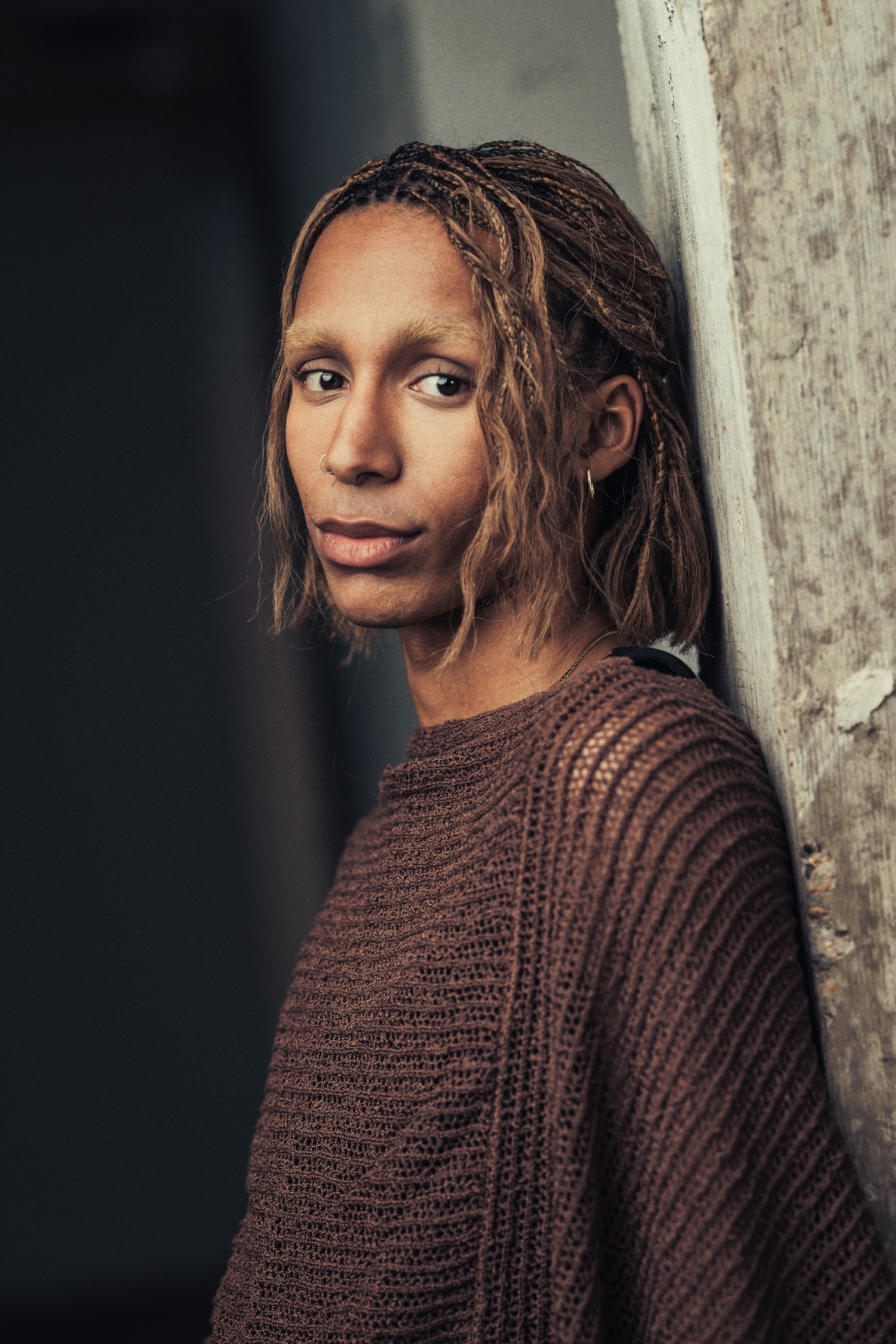
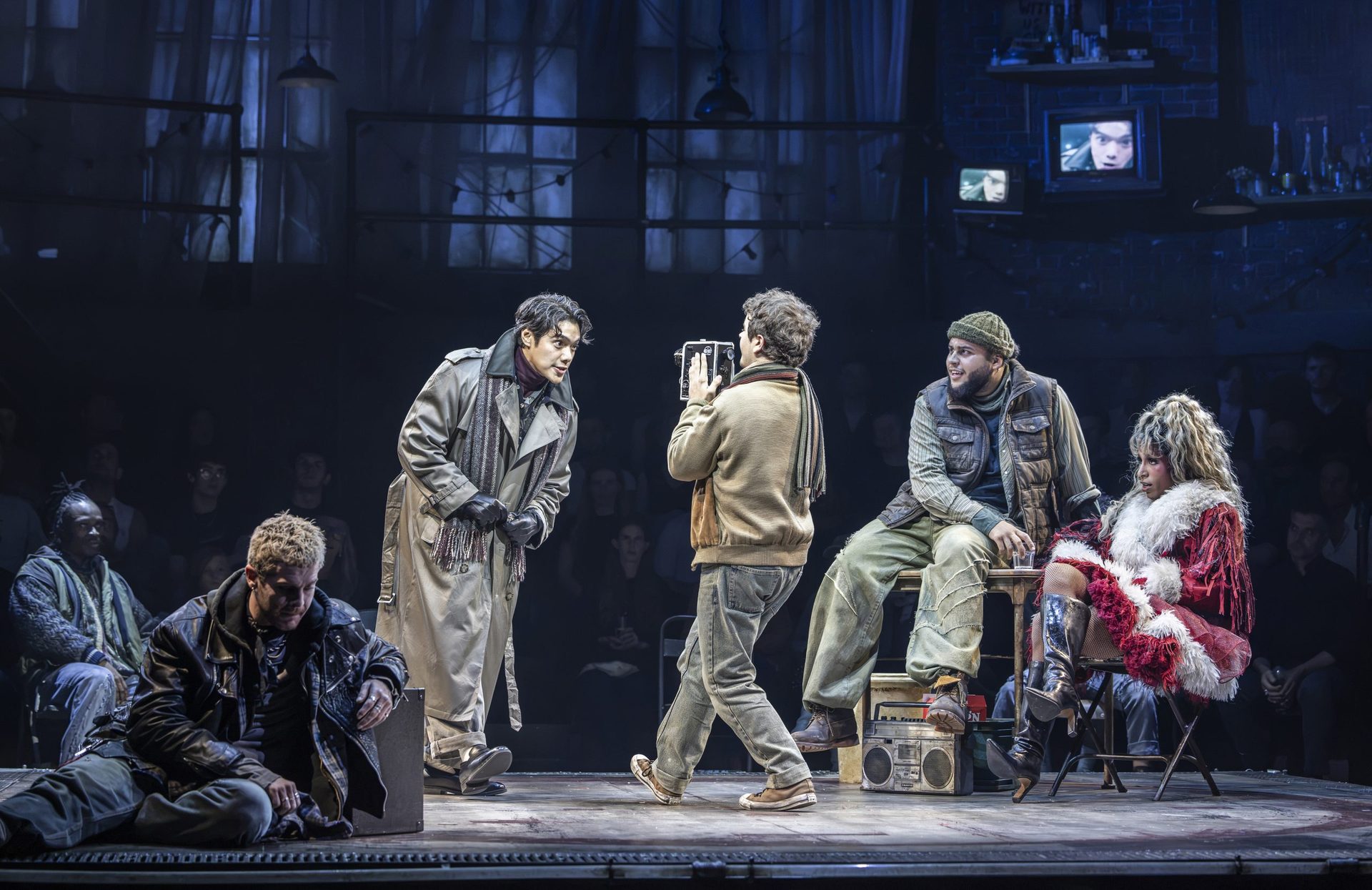
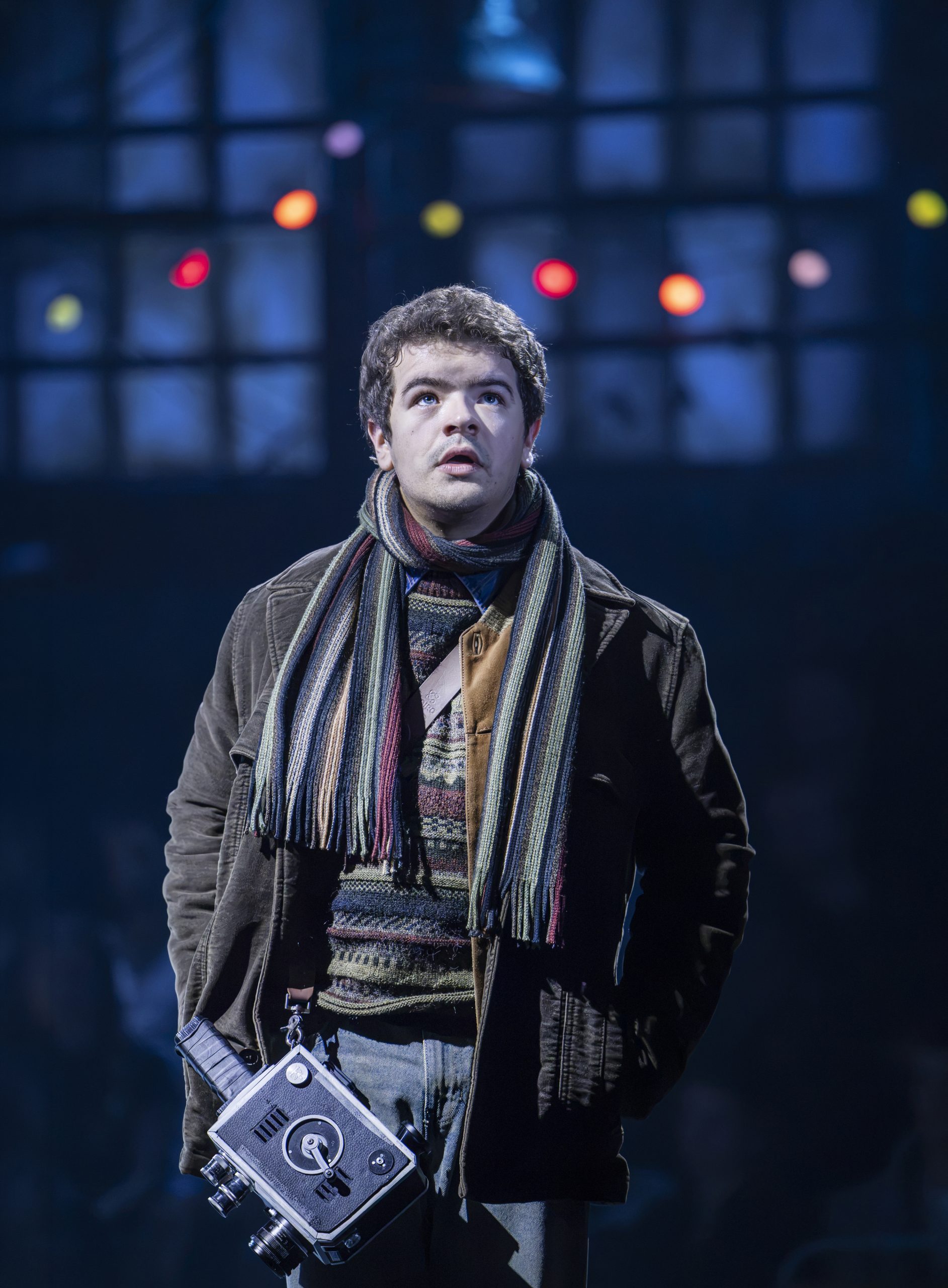
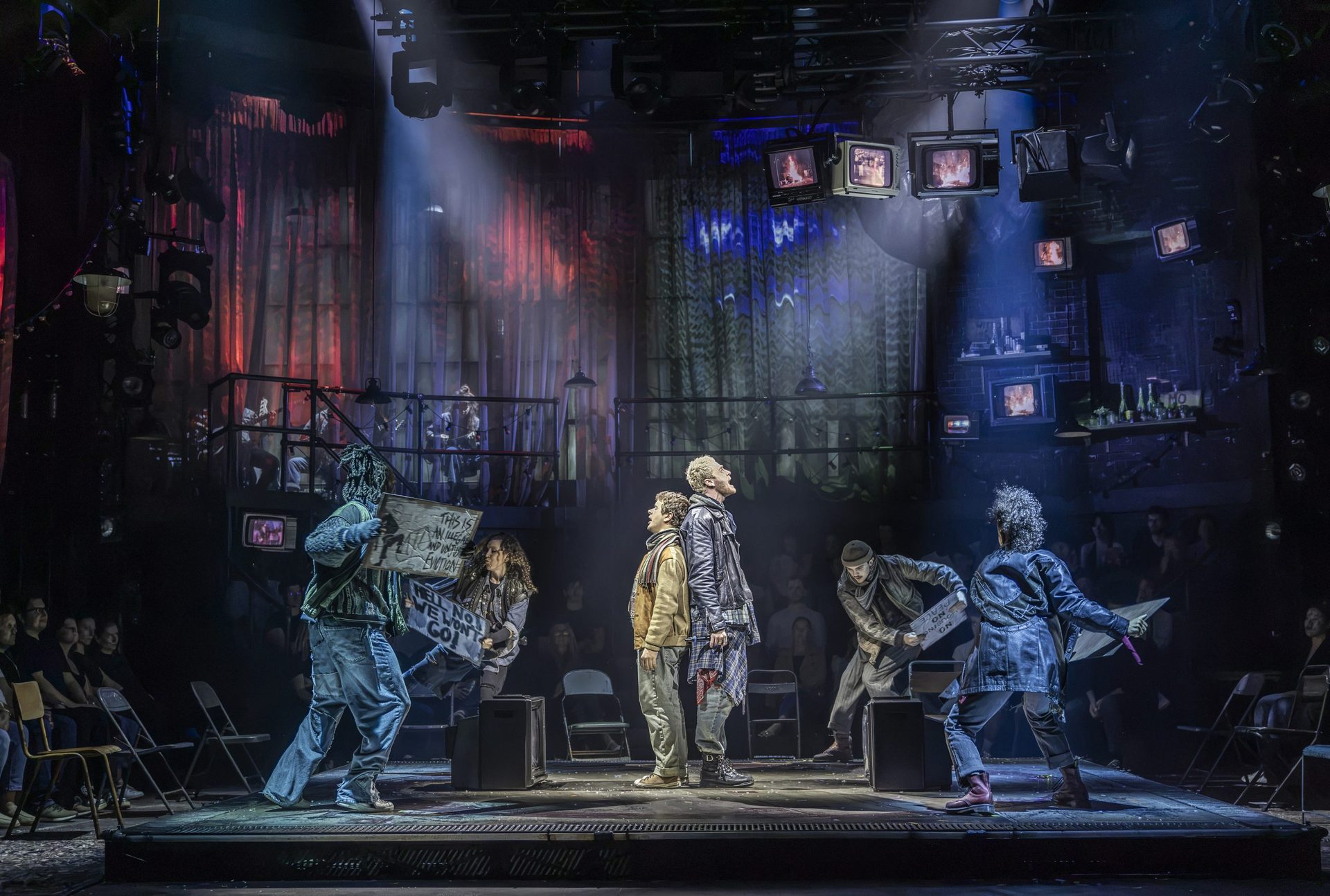
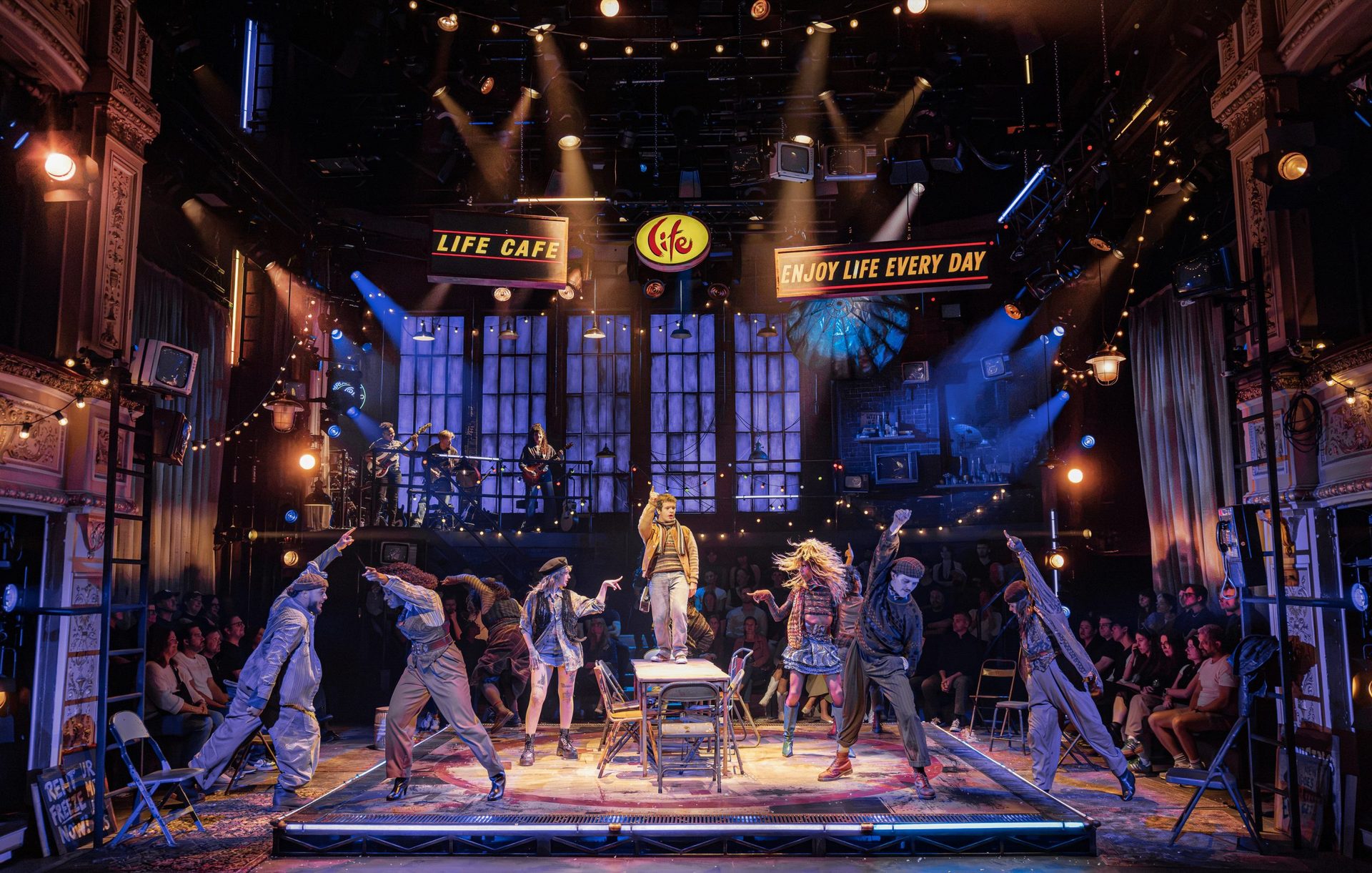
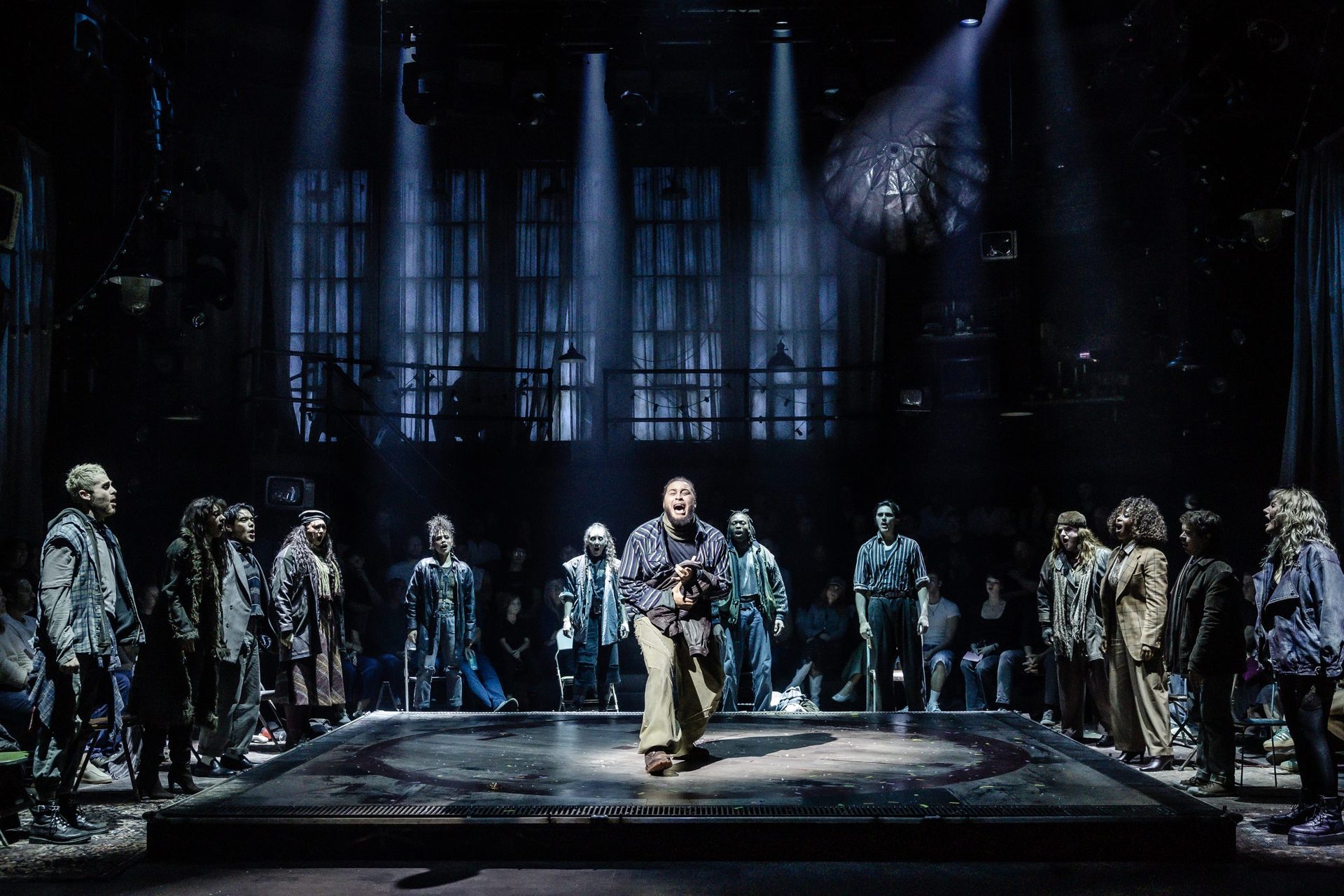
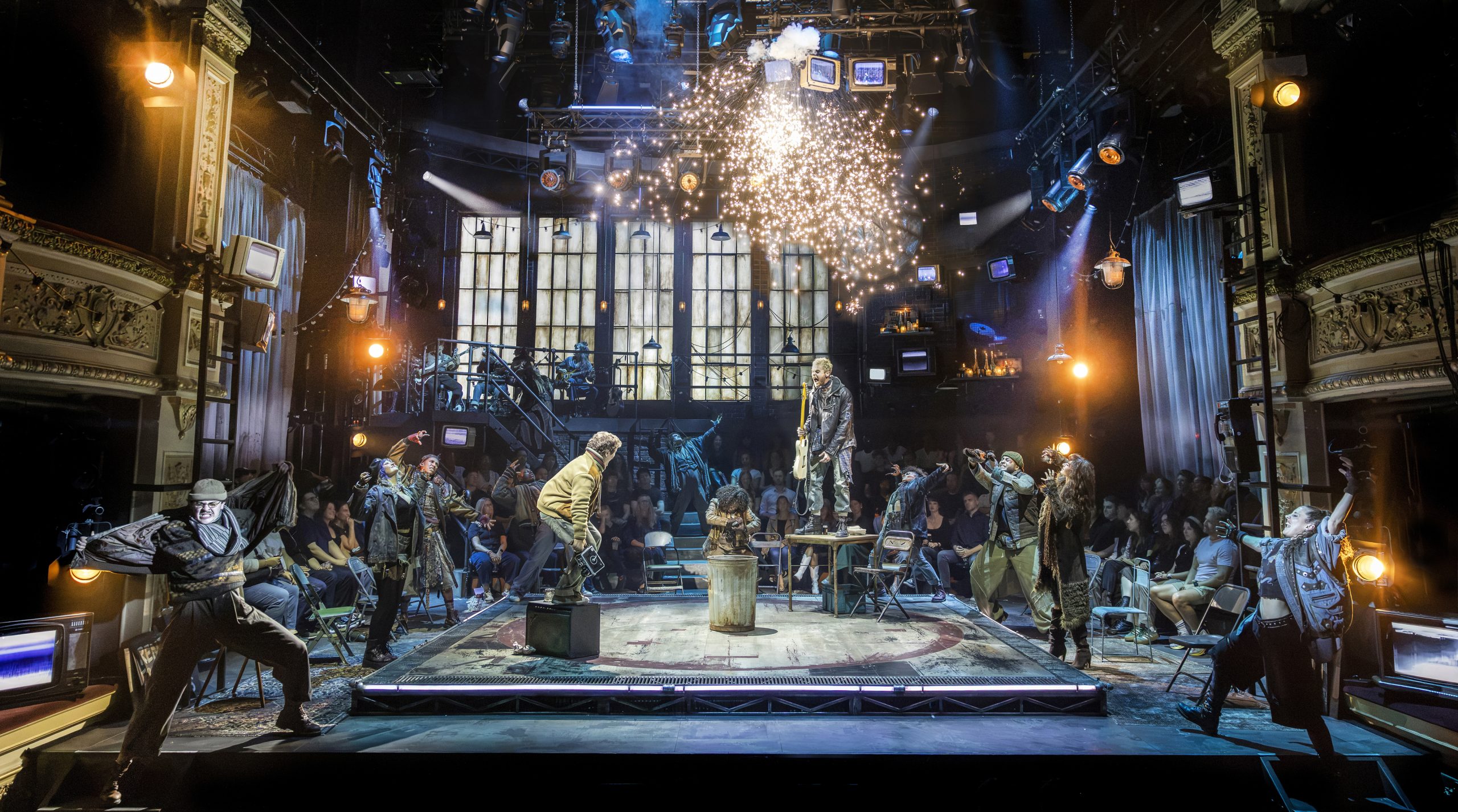
I first saw Rent on my 17th birthday in 1998, with Adam Pascal and Anthony Rapp in the original London production. It was exciting, it was queer, it was full of banging music from start to finish, and it has been my favourite musical ever since. So, when I heard that Rent was finally returning to the West End, with Stranger Things‘ Gaten Matarazzo as Mark and a talented cast of co-stars, I was beyond excited. When the full cast was announced, including WhatsOnStage award winner Jeevan Braich as Angel, the passionate, music loving diva, I reached out to their press team to organise an interview with him asap.
Having seen Jeevan twice as Rusty in Starlight Express, his stage debut – not that you could tell – I knew that he would be perfect for the role of Angel.
Having just turned 20, Jeevan is reuniting with director Luke Sheppard for Jonathan Larson’s musical about artists and friends navigating love, creativity, and AIDS in New York’s East Village. He actually began campaigning for the role of Angel before the production was even announced!
But there is another project he is equally excited to discuss. Drawing on his own experience of fostering and adoption, Jeevan is planning the Open Seat Project, an initiative to bring children in care and their families into theatres.
When I finally got to sit down with Jeevan, we talked about the TikTok video that changed his life, finding his own Angel, and building the relationship with Billy Nevers’ Collins. Along the way, we explored what Rent means to his generation, and why giving other young people the chance to discover theatre matters so much to him.

Music was a huge part of your childhood. When did it become something you wanted to build your life around?
When everyone around me at school was telling me the norm was the academic route. I started making decisions for my future and thought, I don’t want to do this. Sorry, I don’t care about Pythagoras’ theorem. I want to do jazz hands!
Musical theatre wasn’t originally my starting point, though. It was classical opera and choral music. So yeah, pretty much as soon as everyone started going down the academic route, I went down the creative route.
You’re in previews for Rent now. How have those first performances been going?
Terrifically! Previews are probably one of my favourite bits when it comes to shows. We still get to show the magic in front of an audience, but we’re allowing ourselves room for it not to be a totally completed, perfect piece. The audience are coming on that journey with us until we get our finalised product. That’s the magic of it.
You’ve spoken openly about fostering and adoption. What made you decide to share that part of your life publicly?
I remember telling myself when I was younger that if I could get to any position where speaking out might help someone going through what I was going through, that would be a job well done.
When I saw my first show, I turned to my mum and said, ‘I didn’t even know this was an option.’ Especially in the fostering world, the creative arts aren’t as accessible. Libraries are free, you can always kick a ball around, but theatre is different. I said to myself that as soon as I made that dream come true and got into the industry, the least I could do was speak out and try to help other kids.
Your work helped inspire Norwich Theatre to give hundreds of pantomime tickets to children in care and their families. What did that mean to you?
I can honestly say it’s one of the biggest achievements of my life. And it wasn’t even me that achieved it: it was the fact that we got to do it. We tried it in Norwich, and it went so brilliantly. We were able to give kids in East Anglia access to theatre, and it made me think, ‘this is more than doable’.
A little exclusive for you: I’m starting a charity soon where we get foster kids access to theatre throughout the West End and regionally. It’s called the Open Seat Project. The idea is that every foster kid deserves a seat. My first theatre ticket was a gift from someone, and it opened my eyes.
Foster and adoptive families are paying out of their own pockets for things like therapy and rehabilitation, for things that kids don’t deserve to have gone through. A day out to the theatre is expensive for anyone, but it’s something we could give foster kids access to. It might be someone like me whose eyes are opened, who thinks, ‘this is what I want to do’. Or it might be a kid who doesn’t even like theatre, but it’s still a day out for them.
It’s not just for the kids. It’s helping the foster families, the parents, and the carers as well. Everyone deserves that little break away, and hopefully we can give access to the creative arts on top of that. I’m really, really, really excited about it.
I’m not surprised, it’s such a wonderful idea.
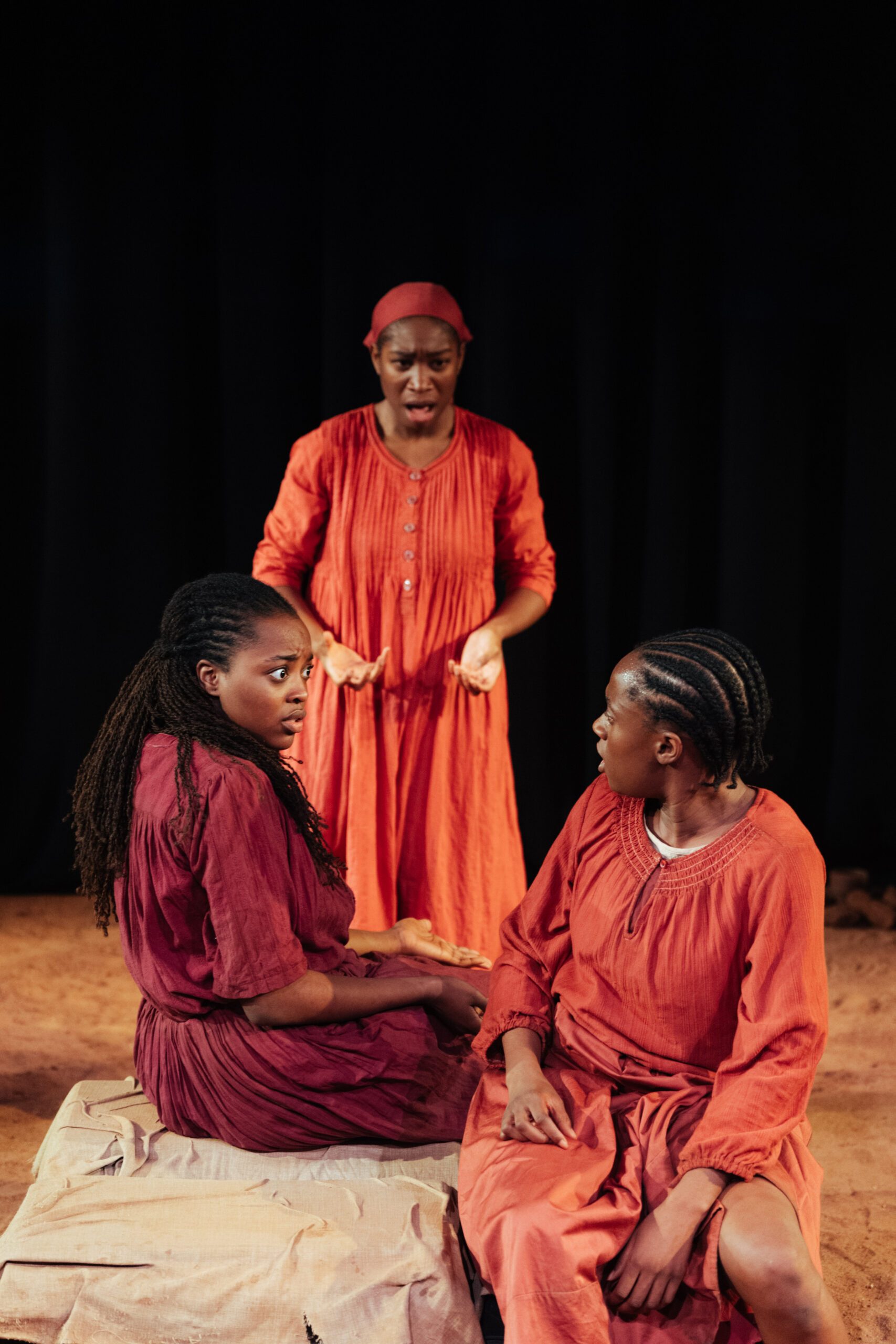
So, a casting director seeing you on TikTok led to Starlight Express. Take me back to getting that message.
It was a 12-second Hamilton TikTok. I think the casting directors saw that video, went onto my page, and saw that I was doing covers on the piano. Then they invited me to audition.
I said to my mum, ‘Right, what’s Starlight Express?’ She said, ‘Oh my gosh, I saw the original. That’s the only show I’ve taken your dad to that he’s not fallen asleep in.’ I thought, okay, this is a strong start! Then I said they wanted me to audition for someone called Rusty. I was expecting that maybe they just needed another body. She said, ‘What? That’s the lead!’
I was 17 and hadn’t really done auditions. We all got in the car from Birmingham to London, and every time there was a callback, we all got back in the car. We were so excited. Eventually, I got invited to Andrew Lloyd Webber’s music office. He was playing the piano, and I was singing Starlight Express. It was incredible.
Before the final audition, I’d said to myself out loud, ‘I’m just going to go in there and smash it. If they don’t like it, that’s tough.’ My director apparently heard me talking to myself and later said, ‘When we heard that, you got the job straight away.’ That was exactly what they were looking for: a young, scrappy underdog. I feel very different now, but it was the perfect role for that part of my life.
You were making your debut, leading a huge show, and learning to skate. What felt most daunting?
Leading the show didn’t feel daunting because it was such a massive cast and such a community show. It felt like I was leaning on everyone, and they were leaning on me.
The most daunting thing was probably the comparisons between the German and London versions. The German version was very similar to the original London version, and this London version was very different. There were comparisons to me straight away, and being 17, that was probably the daunting part. But you learn to get on with it.
I loved the queerness of that production. Those relationships truly mattered and the modern update was so much fun.
People said that seeing a singing train helped them discover parts of themselves, or things about other people and how relationships could be. When you’re dressed in crazy train suits and people still take the relationships seriously, that’s a testament to how heartfelt the story is.
Since then, you’ve performed in cabaret shows, worked on musical workshops, and made your pantomime debut. What have those experiences given you that you can bring to Angel?
I’ve used it as my education. I dropped out of school to do Starlight, and I didn’t go to drama school, so I’ve used this time to learn in the real world.
Angel is a grown-up role, and by that I mean it takes a grown-up to approach Angel. Angel is more than a fabulous character. Angel is the hope, the guiding light, the heart of that group. The education I’ve had has made me approach Angel through more mature eyes. I really feel I’ve matured a lot this year, and that’s what Angel needs: a mature head.
What was your first encounter with Rent, and how did Angel come into your life?
My first encounter was singing it in musical classes, but my first actual watch was when I was researching for the audition. I like to say my audition started a long time before Rent was announced, because I heard on the grapevine that it was coming back and literally put out a campaign.
I said to Luke Sheppard, ‘Come hell or high water, I will be playing Angel when you direct Rent.’ He was like, ‘How do you even know it’s coming?’ I said, ‘Don’t ask me how I know, but I know.’ I proved it to him for a very long time by doing every bit of research I could about the role.
Angel is such a beloved character. How did you give yourself the freedom to find your own version?
For me, it was finding what I didn’t want Angel to be first. Angel is more than a fabulous, flashy queer character. So often, openly queer characters are the comic relief, or written in a certain way.
Jonathan Larson had the courage to write a queer character so honestly, beautifully, and powerfully, rather than a side character no one really cares about or someone who’s just there to add a little quip. It would be an injustice if I didn’t play that to its strengths. I approached everything I didn’t want Angel to be, and found what I did want from there.
You’re working with Luke again. What does that relationship give you, and how has he challenged you differently?
We literally had to reintroduce ourselves. This is a whole new beast of a show. I’m no longer the very green 17-year-old skipping into the room asking, ‘What does upstage mean? What does downstage mean?’ I didn’t know a thing.
Luke challenges me on both a professional and a personal level. I respect him so much while also wanting to nag him and annoy him. That balance, and his trust in me with this role, shows the relationship is going strong. If anyone else had nagged him as much as I did about a role, I think he would have blocked them. The producers said, ‘Jeevan, I think you sent almost 100 emails!’
One of the first things we see Angel do is stop to help Collins. How central is that instinct to care for others?
That scene, with Angel not in drag and still going out of their way to help a stranger, is one of the most important. It pretty much sums up everything Angel is. Helping a stranger in need without any sort of gain: it’s probably one of my favourite scenes because of how vital it is.
The way people understand and talk about gender has changed since Rent was written. How has that influenced your approach to Angel?
Everyone is going to have their own opinion on how Angel identifies, and I say good. I love that, because it means everyone identifies with a certain part of Angel. Some people say Angel is a drag queen, some say Angel is trans, and some say Angel is gender fluid.
My understanding is that Angel is very comfortable. If Rent were set in 2026, maybe Angel would have started out as something different. There were things back then that weren’t really talked about. But every time I step onto that stage, I have to play the character in the present, exactly when the show is set. Otherwise, I’d be rewriting or further writing a story that isn’t mine to write.
The character may be mine to play right now, but if that can make queer people think about what their own journey might be in the present, that’s what we want. Being comfortable with that spectrum of gender identity is something I find endearing about Angel: someone who can show themselves to Collins the way they do at first, and then show themselves in drag. I really admire that.
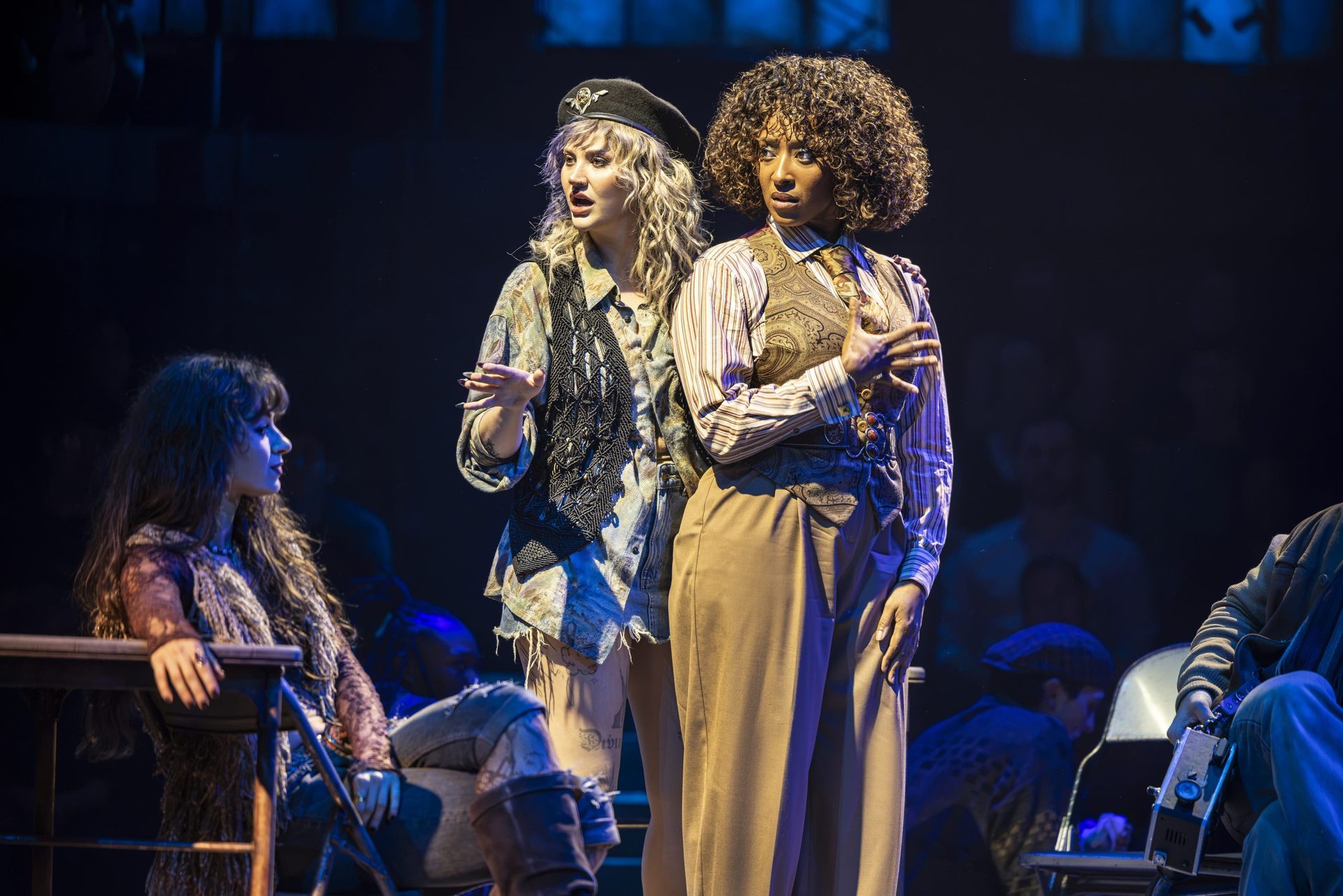
Angel and Collins are absolute relationship goals. How have you and Billy Nevers built the intimacy, humour, and everyday affection that make their love feel real?
It helps that we’re almost literally the same person! The first time we sang I’ll Cover You together, just with the piano, we turned it into a whole R&B number. Then we went, ‘Whoa, wait. We actually have to make this sound like the song.’
We’re both chatty, funny, R&B and jazz singers. Our humour and day-to-day lives overlap, and that’s allowed us to have conversations about the characters that we wouldn’t be able to have unless we were that close.
We get to play a queer relationship that doesn’t have to be the sympathy story or the comedy story. We don’t have to be the antagonists. We can be the lovely story people look to for hope. The fact that Jonathan wrote this couple as people you can look to for light is inspiring. Billy is the perfect partner.
We see Angel become seriously ill. What research did you do into people’s experiences of living with HIV and AIDS at that time?
The biggest and most honest research was asking people who actually lived through it. My dad told me about a friend who passed away because of AIDS, how much it changed someone’s life, and how scary it was when families were hiding the disease because of the stigma.
I sat him down and asked about his experience and what he knew, because he was the same age then as these characters. Watching Pose and Paris Is Burning, the documentary about the underground ballroom world, was also vital. They’re brutally honest in the best way, and were the best form of research I could ask for.
Which parts of Rent feel most relevant to your generation?
We were talking about this yesterday: the line Mark says at the end of La Vie Bohème, about the opposite of war being creation. In a world where AI and virtual life are taking over even creative roles, being able to authentically create something new is so relevant.
These conglomerates are so powerful, rich, and able to make artificial intelligence, but that doesn’t mean they can take away our ability to create something ourselves. That’s where the magic lies. Making mistakes, learning, fighting, and creating something raw is a thousand times better than anything they can come up with. That ability, that privilege to create, is what feels so relevant.
For someone seeing Rent for the first time, what do you hope Angel helps them understand or feel? And for those of us who already love it, what would you like us to see afresh?
For someone seeing it for the first time, I’d love Angel to show that there’s absolutely nothing wrong with being whoever you want to be, even if that person doesn’t fit the stereotype of what you think is right. Angel is the most lovely, helpful, loving character, while being completely different to anyone else in that group.
For those who’ve seen it before, I’d love to reaffirm the power of community and friendship. You can walk down the street and see groups of friends, and each person is going through their own things separately. But when they come together, that’s when they’re strongest.
In a world where we can easily be stuck to our phones or shut everyone out, it’s a reminder that being together with the people you love, and who love you, is the most powerful thing.
Rent is playing at the Tom Stoppard Theatre (formerly Duke of York’s Theatre) until 29 May 2027.
Book your tickets at rentthemusical.com
Interview by Nick Barr
Photography by Pamela Raith and Danny Kaan