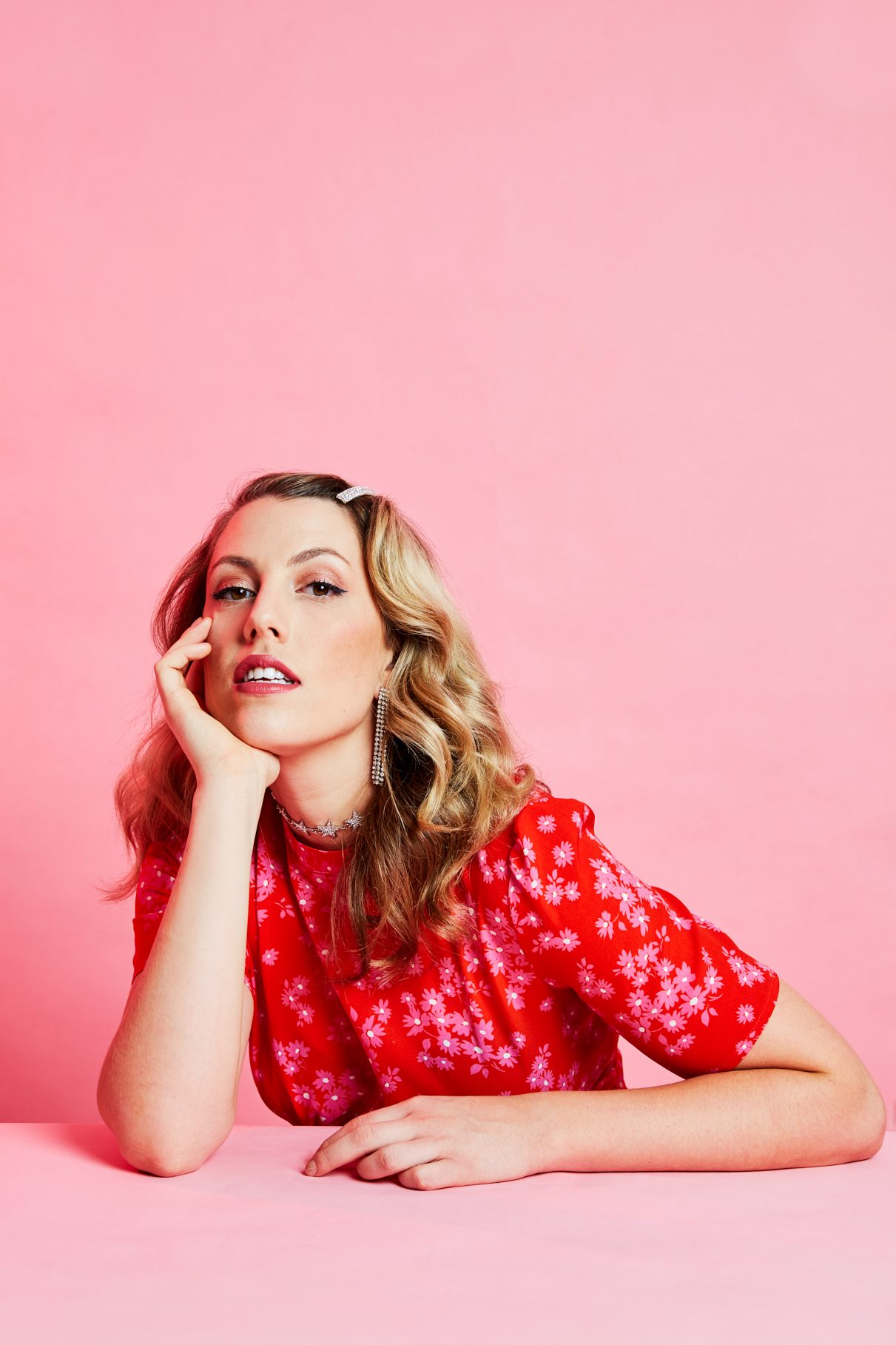
Hannah Reilly has no particular problem with walking onto a stage topless. Being emotionally exposed is another matter.
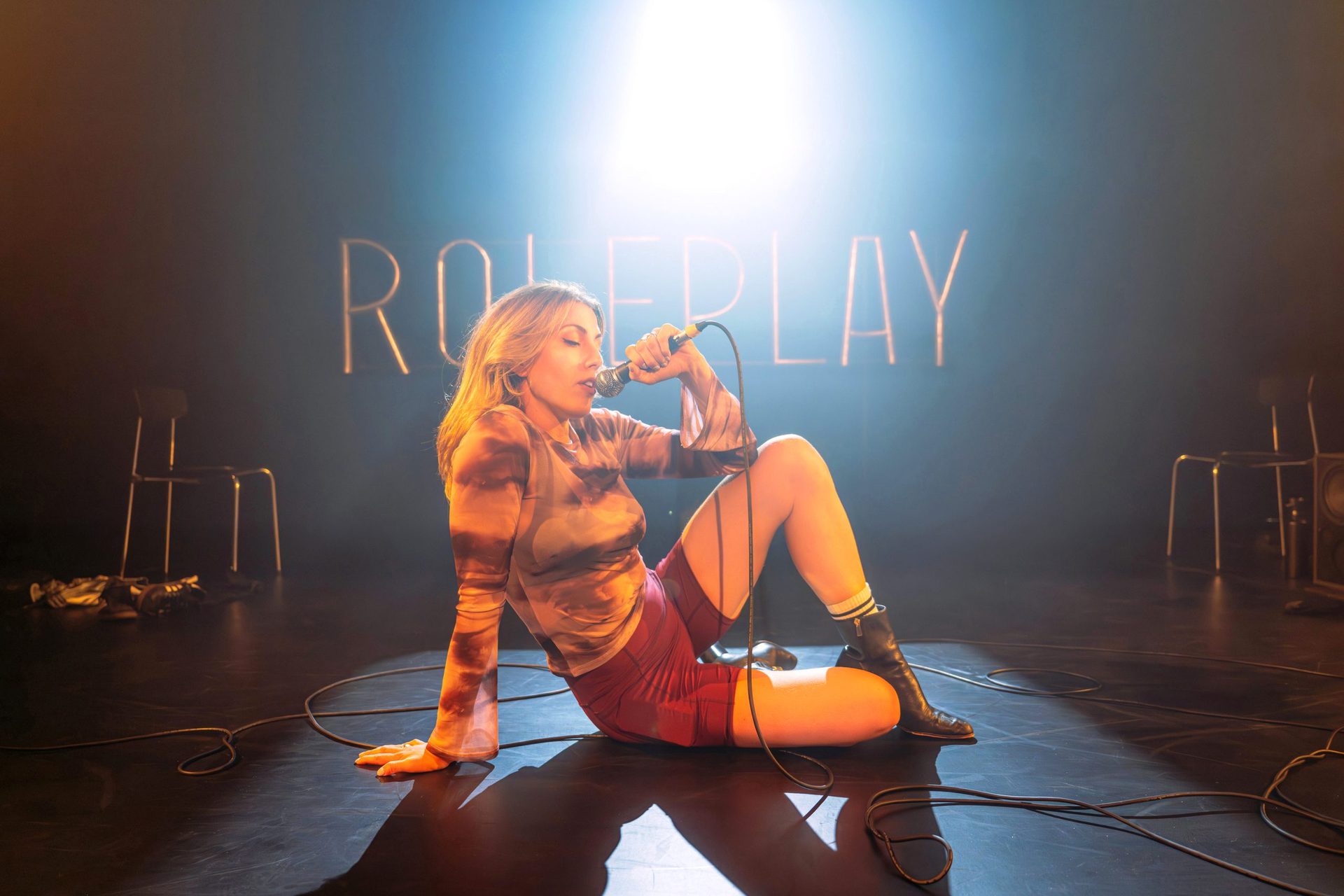
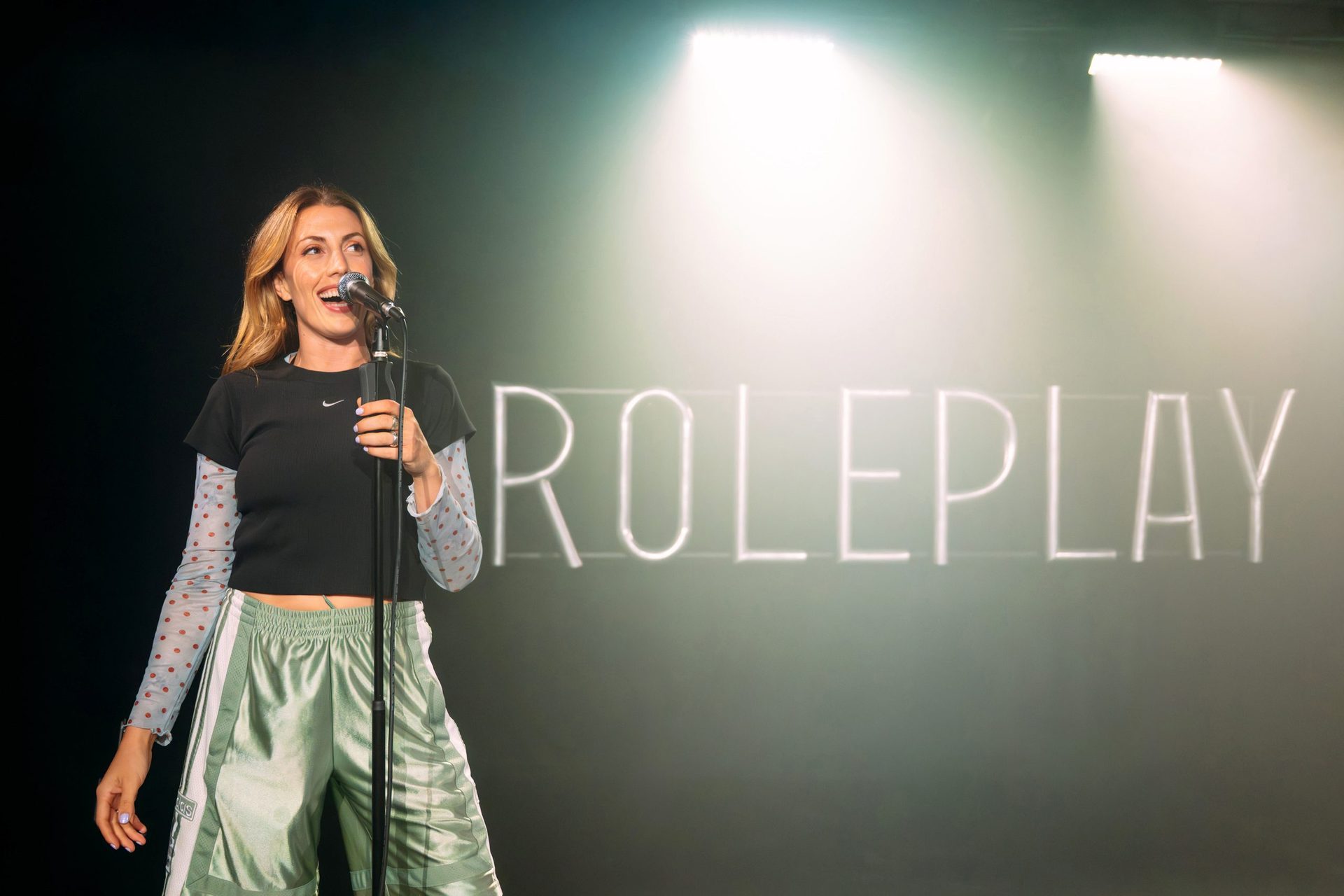
The Australian writer and performer has spent years finding comedy in the expectations placed on women, from the etiquette experiments of Growing Up Gracefully, made with her sister Eliza, to the musical The Deb. Following a sold-out run at the Edinburgh Festival Fringe, her one-woman show Roleplay is now at Soho Theatre, Dean Street. It follows Danni, a struggling feminist podcaster who discovers how much attention she can attract by becoming a more provocative version of herself. What begins as a funny, apparently confident performance becomes increasingly uncomfortable.
I watched it with a friend. Sometimes we were laughing together; sometimes one of us was laughing while the other sat very still. It is a show about wanting to be seen, but also about losing touch with the person doing the looking back.
For Reilly, whose experience hosting sex and relationships programme The Hook Up provided a starting point, the challenge has been moving beyond the protection of a punchline. We spoke about her imaginative childhood, the complicated promise of fame, and why a story she wishes would become less relevant keeps finding new resonance.

Your dad was a comedy writer and your mum was a performer. What was your household like growing up, and when did you start wanting to make things yourself?
We grew up in semi-rural Australia in the early ’90s, so we barely had TV reception. We only occasionally got The Simpsons in colour. I remember being like, ‘Remember the colours!’
It was a gorgeous place, surrounded by animals and nature. My mum was particularly into old MGM musicals, and we watched those on VHS on repeat and made up our own musicals.
There was also the gift of boredom. There weren’t any other kids around, so it was just me and my sister making up stories and doing improvised plays on the lawn for our parents.
It was the family trade, although my parents begged me: ‘If you have any other passion for any other path, take that, because the creative life is full of heartbreak and struggle.’
But there wasn’t another path for me. Put me in front of a spreadsheet and I will burst into tears.
Was there a particular old film that inspired you more than others?
Some Like It Hot. The final scene is absolute perfection, and so radical for the time. I watched it at about 12, and it hit me like a train. It made me want to be a writer.
You’ve worked across radio, television, and musical theatre, including taking The Deb, a musical comedy about a debutante ball, from stage to screen. What draws you towards those different ways of telling stories?
I love learning new skills. Learning a new medium or genre teaches you something about storytelling, and you can apply that to the next thing you make.
I also love being challenged, which is why I’m enjoying learning how to be an actor with Roleplay. It’s so new for me.
What feels new about the acting in this show?
I’ve done stand-up, but I’ve never been required to do dramatic acting. I’ve also had some judgements and prejudices around the craft, probably from a place of fear: being vulnerable, exposing yourself.
The whole reason people get into comedy is to mask that, keep it at a distance, or gain a sense of power and control over the foibles and tragedies in your life by turning them into comedy. Embracing sincerity is the new challenge.
Talking about vulnerability, when you first come onstage topless, I found it interesting how matter-of-fact it felt. Almost like, ‘Hi, I’m topless, now let’s begin.’ What do you want that to establish with the audience?
That isn’t vulnerable for me, I love a nude beach! That part feels pretty liberating. It was very low on my list of fears.
From seeing other people nude onstage, I know it can immediately put the audience at ease. There’s this collective unclenching. It also serves the story. I wouldn’t be comfortable with it if it didn’t have a purpose.
I’ve tried the opening so many different ways, without the nudity and with it, and every time the nudity happens, the show is tenfold better at the start. Everyone relaxes, but they also go, ‘Oh my God, what is this going to be?’
Rather than sitting back, they lean forward, engage, and connect.
That particular version was all my director, Paige. I fought her on it for a while, but as soon as I did it, I was like, ‘This is perfect.’
You and your sister Eliza have made several projects together, including Growing Up Gracefully and Sheilas. How did working together shape you?
It made me love collaborating and understand how important it is in comedy to have a sounding board: someone you trust to throw ideas around with and bring them to life.
Comedy really comes to life when it’s spoken, and between more than one person. Even with this, Paige has been such an amazing collaborator.
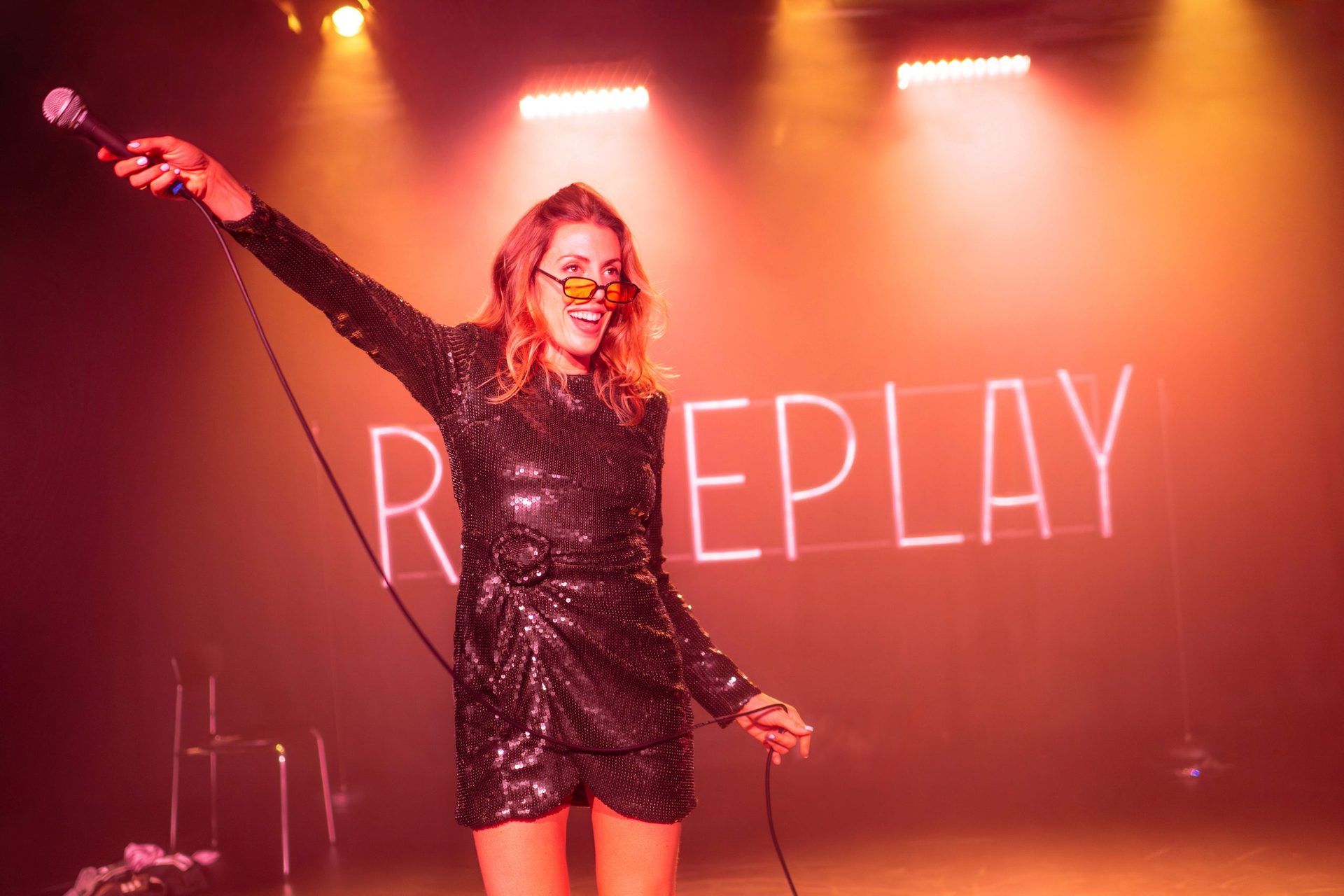
Your work keeps returning to the expectations placed on women. Has your understanding of what you want to challenge changed?
Definitely. In my early career, perhaps until quite recently, I was more interested in judgement, polemic, and being right than investigating something from different angles.
Now I’m more interested in challenging my own presumptions, ideology, and place in the world. That comes from realising you’re a flawed person, like everyone else, with your own misconceptions and false narratives.
The humility in that makes you a better artist because it allows you to have empathy for different perspectives.
You’ve spoken about hosting The Hook Up, and how the persona you adopted began spilling into your private life. What made you want to return to that experience through Roleplay?
What I experienced feels like a heightened version of something so many young women go through: trying to walk this insane and terrifying gauntlet of what the world demands we should be. We’re encouraged to be so many different things, and when you are one thing, it’s wrong.
I felt anger and frustration about the ways we’ve progressed and regressed: the overturning of Roe v. Wade, Trump’s second presidency, femicide, the manosphere conversation.
I wanted to hold a mirror up to where we actually are, rather than where we aspire to be. During Me Too, it felt like a radical and hopeful time, when ‘the future was going to be female’. Now it’s like, ‘Look where we are.’
You’ve said the Gisèle Pelicot case helped push Roleplay towards something darker. With The Pelicot Trial also coming to London in November, what can theatre make us confront that we might keep at a distance through the news?
When you see a statistic or news story, it’s easy to flatten it into something you can keep at arm’s length. In a theatre, sitting in the dark with an audience and someone telling you a story, that’s how we metabolise the truth about something. It’s not in black-and-white facts. It’s in feeling it in our bodies.
Sexual violence is such a heavy, horrifying subject that it would be easy to sweep it away. In theatre you connect with a character and go through the journey with them. It becomes a much more personalised experience.
With the Gisèle Pelicot case, I was inspired by conversations with my girlfriends about what it revealed, the range and number of men involved, and how we continue to trust men and let them into our lives and beds.
We want to believe in men, trust men, and love men. It becomes increasingly difficult when these cases are revealed. The burden is constantly on us to protect ourselves, solve the problem, or come up with answers. It’s existential and exhausting.
The question I had was around pretending as survival: having to make the choice that everything’s fine in order to continue.
There’s something so awful about Danni looking at porn after her encounter with Leo and wondering whether her own discomfort is the problem. What interested you about that moment when someone starts distrusting what they feel?
So much of this story is about the cost of inauthenticity, not listening to your intuition, or trusting yourself.
Particularly when you’re younger, it’s easy to undermine yourself to gain approval. It’s hard to stand in the integrity of what you want and don’t want, your preferences and boundaries, when they’re being eroded by other people and the culture at large.
Pop music is a great indicator of where we’re at. It feels like we’ve gone back to this early-2000s, highly raunchy, porn-influenced image of women. Where are all the angry women in pop that were there in the ’90s? I miss that. It feels like this ‘sexy baby’ thing is back.
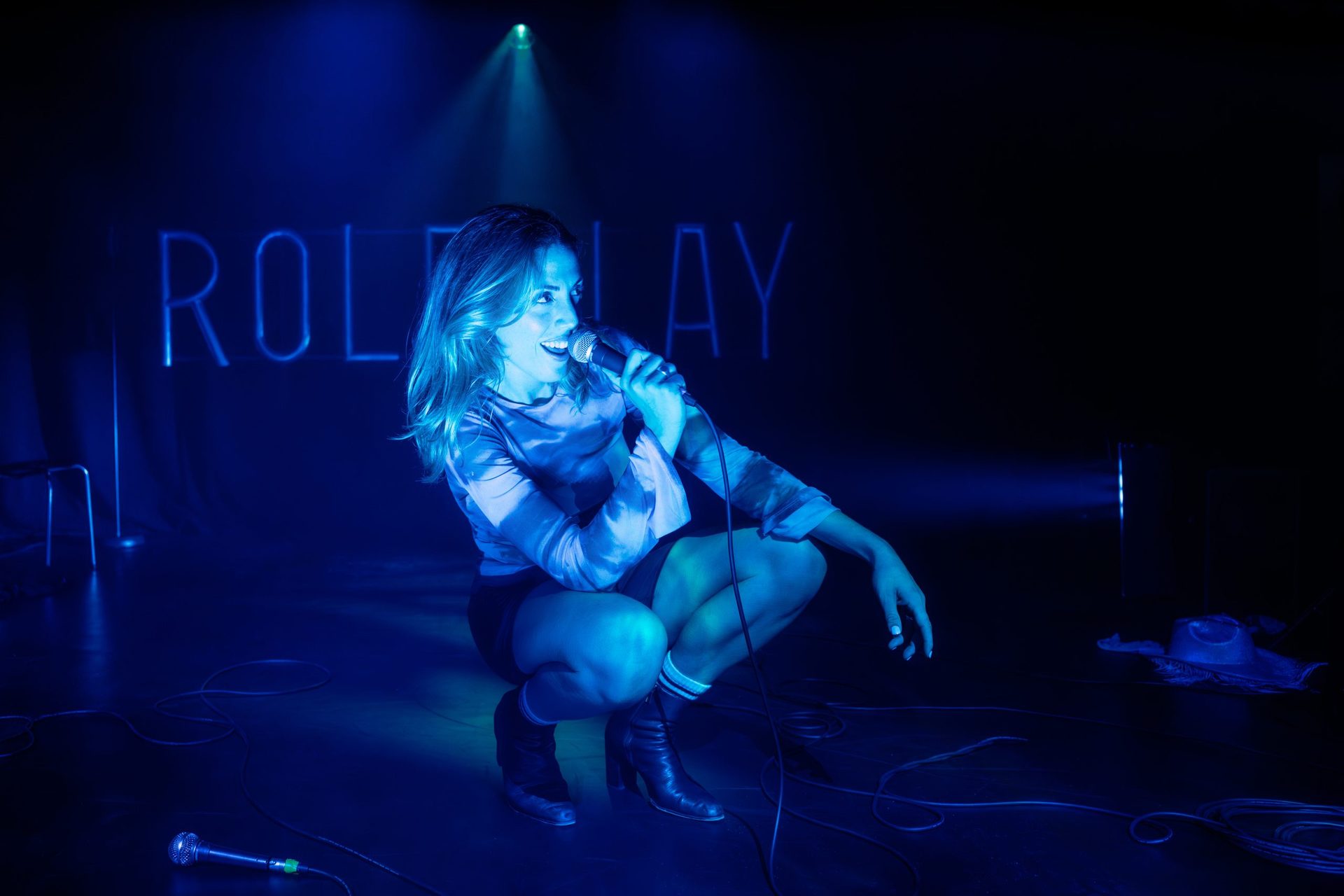
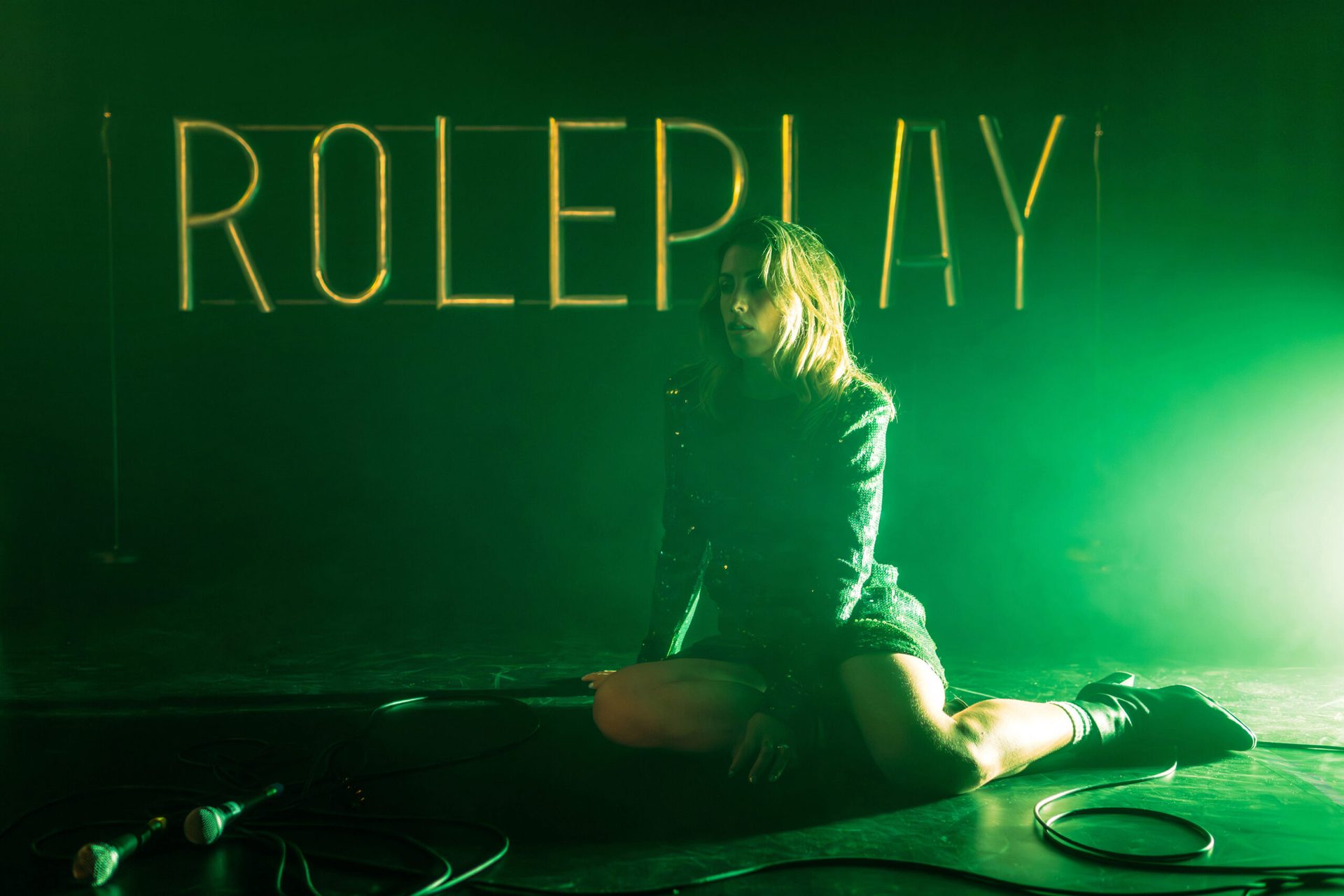
Sabrina Carpenter comes to mind. Did the response to her album cover feed into that?
I was heavily influenced by that album cover. I thought she was going to have a nuanced take on what it meant.
When I saw her interviewed, I remember her saying something about how, as a young woman, you know when you’re in control in those situations. I thought, ‘That’s not the case for me at all.’
It’s this confusing tightrope young women walk with sex, sexuality, and desire, between power and powerlessness. We’re given the keys to a Ferrari and no idea how to drive it.
There was a horrifying case in Australia recently where I think it was a 16-year-old girl who died in a choking sex gone wrong incident. [The death was reported as involving suspected sexual choking and was under police investigation.]
The way that choking, an act of violence, is becoming so normalised in sex, I’ve found really, really disturbing.
Between two consenting adults, do whatever you want. The issue here is consent. I think it says much more about masculinity, this desperate need to gain a sense of dominance and power. If these men were genuinely interested in what women wanted, I think a large majority would say a sense of safety in a sexual experience.
I loved the exchange where Danni calls sex work easy money and Zari immediately challenges her. What interested you in that moment?
There’s a high level of prejudice against sex workers. That moment was more about exposing Zari’s insecurity, how she might be feeling about her work, and the prejudices she might be receiving: that it’s lazy or easy.
I was thinking about the emotional labour, having to pretend and perform for someone in such an intimate way. God, it must be exhausting.
Danni puts so much hope into how success will change her life. What does she believe being famous will finally prove about her?
That she’s lovable, that she isn’t an object of pity, that it will finally give her the sense of completeness the outcome promises.
I’m fascinated by fame as a poisoned chalice. Human beings’ fundamental need is connection and love. Fame promises those things, and they’re exactly what it strips away. It’s such an isolating and dehumanising experience.
Connection only really happens peer to peer. When it’s above or below, that’s idolatry or judgement. When you’re no longer an equal, you’re no longer connected.
The arguments with Danni’s mother made me uncomfortable because there’s love, cruelty, and truth tangled together. How much did you want us to agree with each of them?
I didn’t have a desired outcome. As in real life, I wanted each character to be both right and wrong. I didn’t want a single character everyone could identify as the moral centre.
The mother has been a lightning rod, as all good mothers are.
For the record, my relationship with my own mother is very different. I love my mum. She’s my biggest fan, and I’m hers.
A lot of the inspiration came from looking back at things my mum said that I dismissed wholesale, thinking I knew better. She was right about a lot of that advice and wisdom.
Danni’s friendship with Renee offers a different kind of intimacy from the attention she’s chasing. What did you want it to show us?
That she’s a real person. The love and connection with her friend is the grounding force in her life.
It’s inspired by the long-term friendships with women in my life. If you’re lucky, that’s a love that will be with you your whole life. They know the real her, the version that’s not pretending.
Where do you think the biggest danger lies in turning yourself into a brand?
Losing the real thread of who you are. Once your persona becomes commodified and you lose that boundary between the personal and public space, it can be easy to lose yourself and outsource your sense of self-worth.
There’s an amazing Jia Tolentino quote from Trick Mirror that I used to have at the top of the script: ‘The only land left for capitalism to cultivate is the self.’ I love that quote. It came out five or six years ago, and it’s even more prescient now.
Has anything happening since you wrote the show changed how you see it?
What’s so fucking sad is that people keep saying, ‘It’s very timely,’ and I go, ‘Unfortunately, this is evergreen.’
Every time a new story comes out, it’s, ‘This is so timely.’ Isn’t that depressing?
I’m glad and grateful the work is giving people a space to metabolise what’s happening and creating space for conversations around it.
The show has changed since Edinburgh. What drove you to keep reworking it with Paige?
Paige is brilliant and has helped shape the show in so many ways.
I thought I was being brave in the first version, then I did it and thought, ‘Wait, I’ve got to keep pushing this further.’
Throughout the process, I’d said I was writing it for the 23-year-old version of myself. Paige encouraged me to embrace that to its furthest degree.
Ultimately, what drove me was asking, ‘What version of the show would my 23-year-old self want to see?’ It’s this version.
I was laughing at Danni’s choices before realising how uncomfortable it was watching her. How did you and Paige work out when the laughter should stop?
We didn’t really have that conversation. That’s entirely up to the audience, and each audience is different.
In the scene where she accidentally takes ketamine and has to do the dance, Australian audiences were crying with laughter as she crawled around trying to get onto the stage.
In the UK, everyone’s really worried for her: ‘Oh my God, is she going to be okay?’
Each response is valid. Some nights the laughter continues into the darker places, and sometimes it doesn’t.
Danni turns private experiences into material, and you’re drawing on personal experience yourself. How do you decide what belongs in the work?
That’s the whole reason it’s fiction. I’ve taken seeds of real experiences and run them through a fictional lens. What’s onstage is what I’m comfortable sharing.
The first iteration opened and closed with, ‘Some of this is true, some of it’s not. The rest is none of your fucking business.’
It was defensive. That’s what I felt night after night in Edinburgh: it felt like a rejection of the audience. I didn’t want to reject them, so I had to look at where that defensiveness was coming from and what I was afraid of.
You’re performing something emotionally demanding night after night. How do you come back to yourself afterwards?
I need to get better at a post-show ritual. Most nights someone’s coming who I want to say hello to, so you feel rushed to get your shit together and go out and chat. I try to be sensible with meditation and taking care of myself during the day.
With this version, which is more honest, I bound offstage happy and excited, while people are rattled. I have to take care of them a bit afterwards, and that emotional labour can be difficult.
That was part of my initial reservation about being so honest, because people come and tell you their stories.
When people leave the theatre, what conversations do you want them to have on the way home, and what do you hope they take from Roleplay into their own lives?
My dad, who’s 80, was with a bunch of his older male friends who’d seen the show in Australia. They had interesting conversations about their daughters and said they’d gained a new sense of sympathy and empathy for the pressures and expectations of growing up as a young woman, the traps and pitfalls they hadn’t understood in that particular way.
Danni starts as someone lovable and relatable, then becomes someone people judge. If they hadn’t known her at the beginning, they would judge and criticise her at her zenith. But when you know her from the start, you can see the real person there.
I’ve also been excited to hear about conversations between mothers and daughters, the different waves of feminism, and the ways things have changed while the same struggles have existed forever for women.
Opening up a conversation between different generations of women is really cool.
Roleplay is at Soho Theatre, Dean Street until 21 November 2026.
Book your tickets at sohotheatre.com
Words by Nick Barr
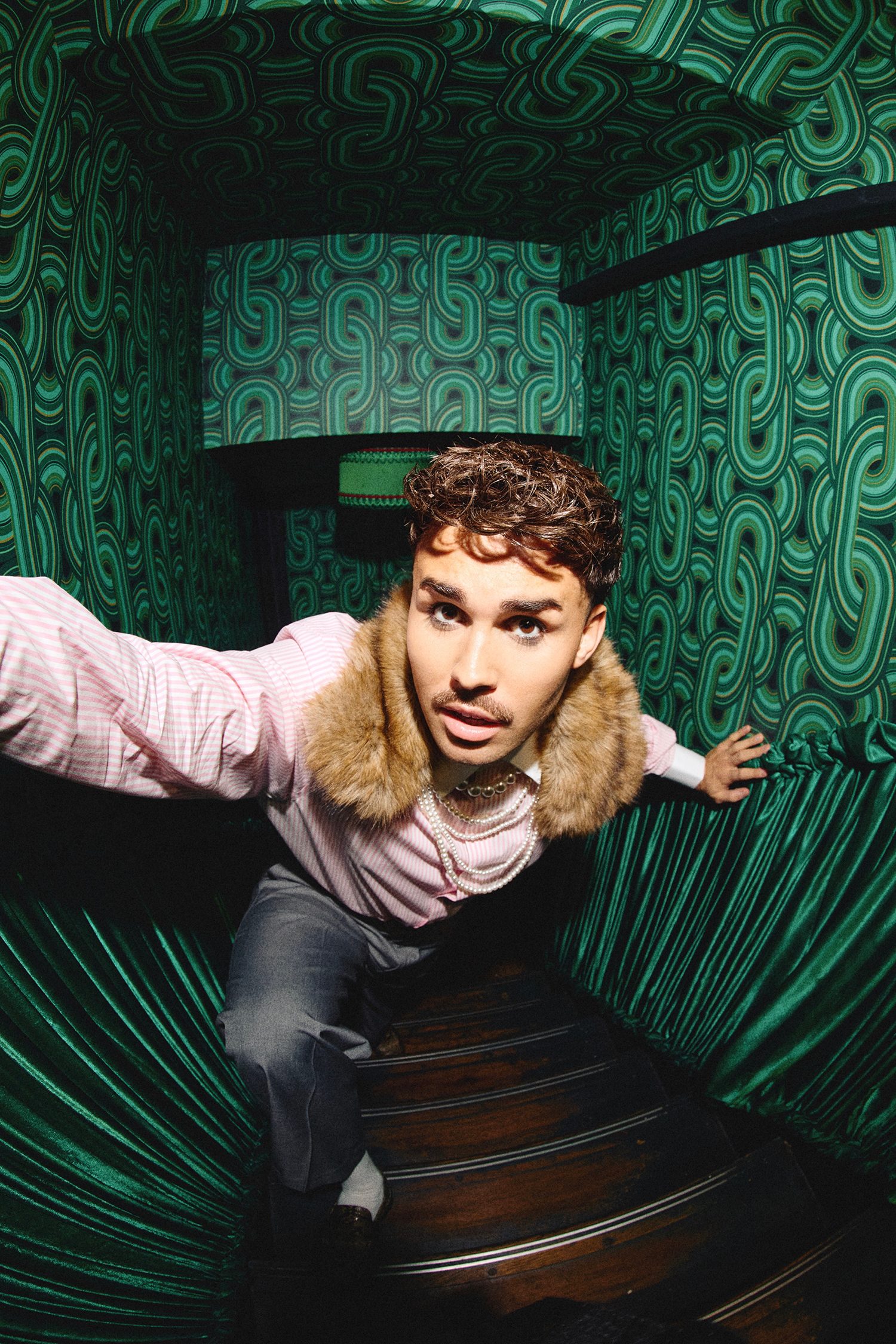
Portrait Photography by Monica Pronk
Production Photograhy by Mihaela Bodlovic