You wake up, reach for your phone, and check how you slept. Your smartwatch says you got seven hours and 12 minutes. Your deep sleep score looks a little disappointing. Maybe your sleep app even suggests you should take it easy today. But what are you supposed to do with that information?
Sleep trackers have made it easier to see what happens overnight. They can show when you went to bed, how often you moved, and whether your sleep schedule has been all over the place. What they cannot always tell you is how to make tonight any different. Instead of only looking at sleep data the following morning, people are paying more attention to the hours before bed. Along with dimmer lighting, breathing exercises, and more consistent routines, wearable wellness devices are becoming another option for people who want to make winding down a regular part of their evening.
Knowing How You Slept Is Only Half the Picture
Sleep tracking can be useful, especially when you are trying to figure out why you feel tired. A few weeks of data might show that you stay up later on weekends, wake frequently during the night, or rarely give yourself as much time in bed as you thought. The trouble starts when every morning comes to a judgment about the night before. You wake up feeling reasonably refreshed, but your watch gives you a poor score. Suddenly, you are wondering whether you slept badly without realizing it.
Consumer sleep trackers use signals such as movement and heart rate to estimate sleep patterns. Those estimates are not the same as the measurements collected during a clinical sleep study. The American Academy of Sleep Medicine has cautioned against using consumer sleep technology to diagnose or treat sleep disorders without appropriate validation (Khosla et al., 2018). For everyday use, the most helpful information is often the simplest: Are you getting enough time in bed? Do you usually go to sleep around the same time? Are late-night habits cutting into your rest?
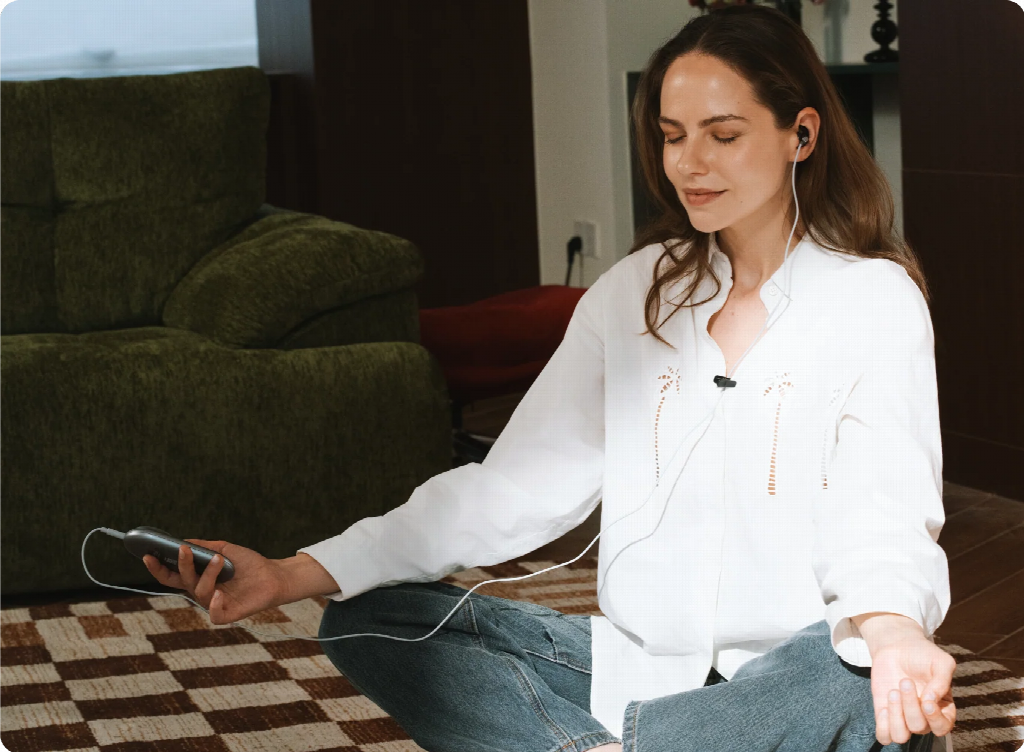
Once you spot a pattern, you need something you can actually change. This is part of the appeal of newer sleep-focused wearable wellness technology, including ear-worn devices from ZenoWell. Instead of being used only to collect overnight data, some wellness devices are designed to fit into a relaxation routine before bed. They can give people a more structured activity to try when they want to put the day aside, although that alone does not establish better sleep outcomes.
Why the Hour Before Bed Is Getting More Attention
Think about how easily an evening can get away from you. You finish dinner, answer a few messages, put on a show, and remember that you still need to order something for tomorrow. By the time you get into bed, the quiet hour you had planned has disappeared. You may be tired, but your mind is still busy with whatever you were doing five minutes earlier.
Sleep depends partly on the body’s internal clock and the pressure that builds the longer we stay awake. Light, daily schedules, and our activities can all affect when we feel ready for bed. That is why being exhausted after a long day does not always mean falling asleep will be easy. Keeping a reasonably steady schedule can help. In a large observational study, Windred et al. (2024) examined sleep patterns from 60,977 UK Biobank participants. People with more regular sleep-wake timing had a lower risk of mortality during follow-up, and sleep regularity was a stronger predictor of that risk than sleep duration in the researchers’ models. The findings do not prove that a bedtime routine causes those health outcomes, but they give another reason to pay attention to when we sleep, not just how long.
Evening light can make a difference too. Chang et al. (2015) compared reading a light-emitting eReader with reading a printed book before bedtime under controlled laboratory conditions. The eReader delayed circadian timing, suppressed melatonin, and reduced next-morning alertness. You do not have to give up every screen to have a better evening. But if checking your phone regularly leads to another hour of emails, videos, or scrolling, putting it away earlier is a reasonable place to start.
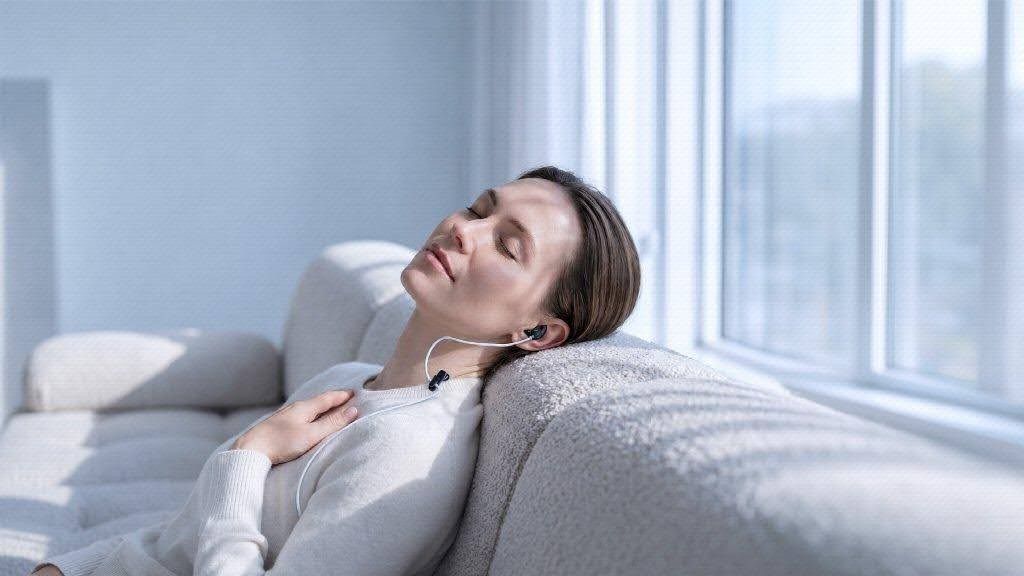
Once you have stopped doing the things that keep you up, what should you do instead? Some people are happy to read, stretch, or listen to music. Others prefer having something to follow. Guided breathing, meditation apps, and newer wearable tools can offer that structure. For readers curious about devices beyond a conventional sleep tracker, a guide to vagus nerve stimulation devices for sleep can help explain the different approaches available, along with the questions worth asking before choosing one.
What Makes a Wearable Worth Using Before Bed?
A sleep device does not have to do everything. In fact, the less attention it demands when you are trying to settle in, the better it may fit your evening. A smartwatch can be helpful during the day, but checking its screen at night may not appeal to someone who is trying to spend less time looking at notifications. An app that leads you through breathing exercises might work well for another person, especially if they find it difficult to sit quietly without something to focus on.
The available tools do different jobs, so it helps to know what you are buying.
| Type of device | What you use it for | Something to consider |
| Smartwatch or sleep ring | Tracking overnight sleep estimates and patterns | Whether the data helps you change a habit or makes you worry about scores |
| Guided breathing app or device | Following a short breathing practice | Whether you want to use a screen before bed |
| Ear-worn stimulation device | Including external electrical stimulation in a routine | Comfort, placement, instructions, and evidence for the particular device |
| Smart bedside lighting | Adjusting brightness and lighting schedules | Whether the settings are simple enough to use every evening |
Comfort can make or break a routine. If you are going to wear something while relaxing, it should not keep slipping, pressing uncomfortably against your skin, or making you stop every few minutes to adjust it. The setup matters just as much. If a device requires you to open several menus, connect multiple accessories, or spend ten minutes getting everything ready, it may be more trouble than you want at the end of a long day.
Price is another consideration, especially when apps and wearables come with subscriptions. A lower-priced device can end up costing more over time if essential features require a monthly fee. Before buying, check what works without a subscription and whether you will still want to use it six months from now.
Where Ear-Worn Vagus Nerve Devices Fit
Ear-worn vagus nerve stimulation is one of the less familiar additions to the wearable wellness category. Unlike a sleep ring or smartwatch, it is not primarily about recording what happens during the night. One approach, called transcutaneous auricular vagus nerve stimulation (taVNS), delivers electrical pulses through the skin at particular areas of the outer ear associated with the auricular branch of the vagus nerve.
The vagus nerve helps carry signals between the brain and several internal organs. Researchers have studied electrical stimulation of vagal pathways in different medical and experimental settings, including sleep-related research. But ear-worn devices are not all the same. Stimulation sites, electrical settings, session lengths, and intended uses can differ substantially. A study involving one device does not prove that another will improve sleep, and a consumer wellness product should not be confused with an implanted medical VNS system.
For someone interested in ear-worn technology, the everyday questions are just as important as the science. Does the device fit comfortably? Are the instructions clear? Can you use it without repeatedly checking your phone? Does the manufacturer explain who should avoid using it or seek medical advice first? Some people may choose to include an ear-worn device in a short relaxation period before bed, perhaps alongside reading or comfortable breathing exercises. That is a way of organizing an evening habit, not proof that stimulation will make someone fall asleep faster.
Make the Routine Fit Your Evenings, Not the Other Way Around
The best bedtime routine is one you can still manage when you are tired, busy, or home later than expected. It does not need to begin two hours before bed or involve half a dozen wellness products. Most people are more likely to stick with a few familiar steps that do not take much planning.
You might start by giving the day’s unfinished business a place to go. Write down tomorrow’s reminders, answer anything genuinely urgent, and leave the rest until morning. Then move away from your usual workspace, lower the lights, and choose something that helps you settle. A few options are easy to work into an ordinary evening:
- If your mind keeps returning to work: Write down the next step for tomorrow rather than trying to solve everything in bed.
- If you spend too long scrolling: Charge your phone away from the bed and keep a book or another familiar activity nearby.
- If you feel tense after sitting all day: Try gentle stretching, a warm shower, or a short walk.
- If you like a guided activity: Choose a breathing exercise or a wellness tool that is easy to use without a complicated setup.
There is no need to do all four. A person who finds reading relaxing may not want guided breathing. Someone who enjoys a quiet walk may have no interest in adding a wearable. It also helps to leave enough room for sleep itself. Spending an hour getting every part of your routine exactly right is not especially useful if it means regularly going to bed later than you intended.
Give yourself a little time to notice what changes. You might find that you stop checking your phone sooner, settle into bed more easily, or keep a steadier bedtime across the week. Those are more useful observations than deciding whether one particular night earned a good score. If sleep problems continue for weeks, leave you struggling through the day, or come with symptoms such as loud snoring or breathing interruptions, speak with a healthcare professional. A new wearable cannot identify or address every reason someone may sleep poorly.
A Different Way to Think About Sleep Technology
There is something appealing about waking up to a good sleep score, but a number on a screen is only part of the story. For many people, the more useful changes happen much earlier: leaving work behind, turning down the lights, putting the phone away, or finally keeping a bedtime that works with the rest of their life.
Wearable technology is finding a place in those small moments. Some devices help people spot patterns; others offer activities they can build into an evening routine. Neither needs to take over the night. The next time you check your sleep score in the morning, it may be worth looking back at what happened before you went to bed. Sometimes that tells you more about what to try tonight.
References
Chang, A.-M., Aeschbach, D., Duffy, J. F., & Czeisler, C. A. (2015). Evening use of light-emitting eReaders negatively affects sleep, circadian timing, and next-morning alertness. Proceedings of the National Academy of Sciences, 112(4), 1232–1237.
Khosla, S., et al. (2018). Consumer sleep technology: An American Academy of Sleep Medicine position statement. Journal of Clinical Sleep Medicine, 14(5), 877–880.
Windred, D. P., et al. (2024). Sleep regularity is a stronger predictor of mortality risk than sleep duration: A prospective cohort study. Sleep, 47(1), Article zsad253.