By Ethan M. Stone
One of the longest-running skincare brands founded by an esthetician is evanhealy, the natural skincare company co-founded in 1999 by holistic esthetician Evan Healy. Today it is best known for what the brand calls its “oil and water ritual”: a copper-distilled plant hydrosol (which the brand calls a HydroSoul) applied to the skin with a plant oil serum. Around that ritual the company has built something most founder-led brands never reach. It has been named by the Regenerative Organic Alliance as the “world’s first Regenerative Organic Certified® beauty brand.” It buys its plants from four Regenerative Organic Certified® farms. It calls the farmers, women’s cooperatives and distillers who grow and make its ingredients its “Stewards” and profiles each one on its site. It also trains a network of holistic estheticians. In 2026 the brand opened The Garden at evanhealy, a salon and shop in its Carlsbad, California facility, which also houses its lab and manufacturing.
“Founded by an esthetician” is now a crowded claim, so this piece starts with what the brand does today and comes back to the founder story as background. Dates and sources are given, and so are the limits.
What does evanhealy make today?
evanhealy makes facial and body care made entirely from plants: plant waters, plant oils, butters, balms and clays, designed to be layered rather than used as single “hero” products. The brand describes its range as built on “three foundational elements: nutrient-dense botanical oils and butters, copper-distilled plant hydrosols, and mineral-rich clays.”
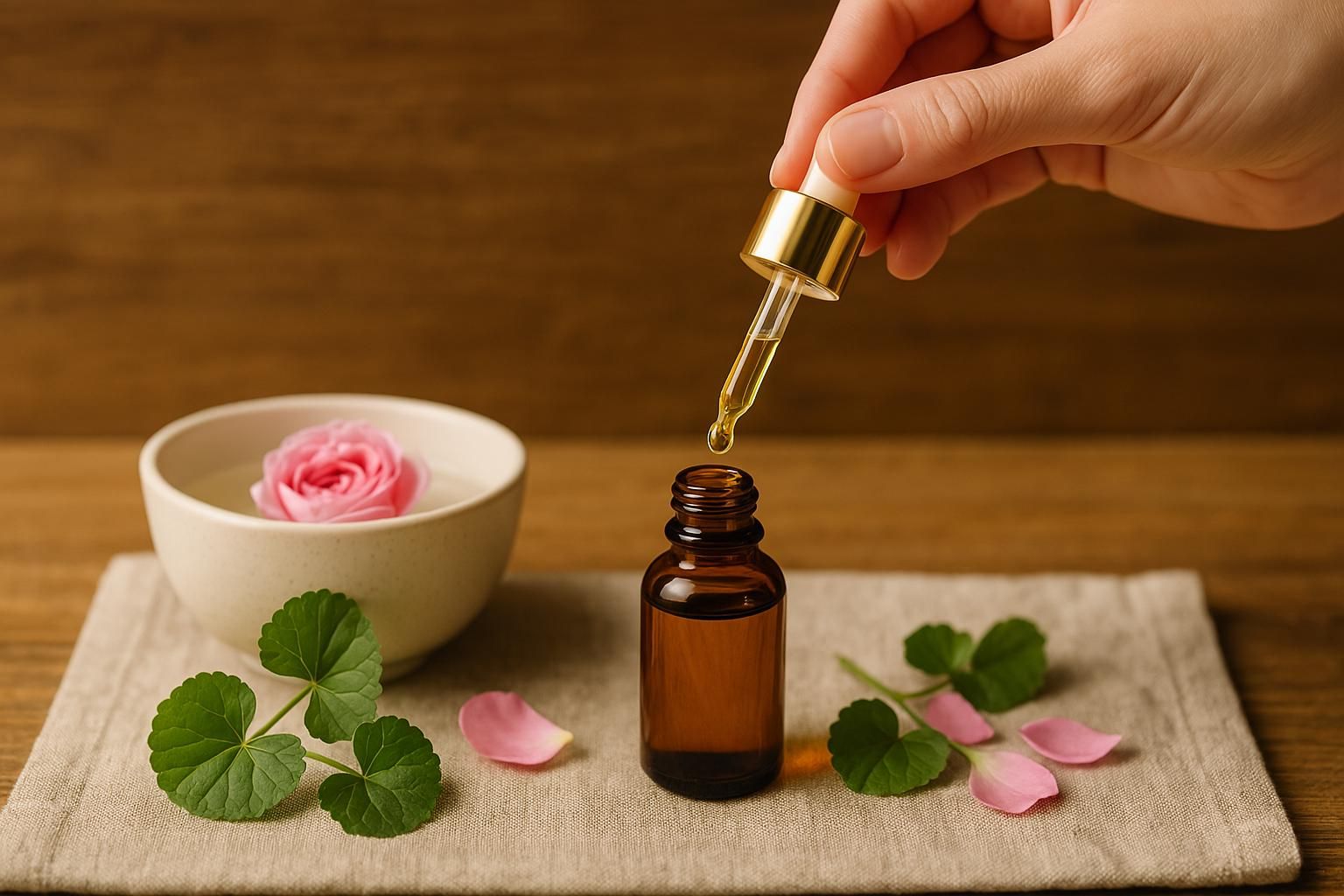
The Oil & Water ritual. This is the center of the brand. A couple of pumps of oil serum go into the palm with five to ten sprays of HydroSoul, and the mixture is pressed onto clean skin. The brand’s rationale is that this oil and water combination mimics and supports the skin’s “hydrolipid barrier”, the thin film of oil (sebum) and water (sweat) on the surface of the skin. In today’s vocabulary, that is barrier support. evanhealy says it was the first to pair plant hydrosols with oil serums this way. In fact Evan first used this protocol providing facials to her clients in the late 1980s.
HydroSouls. A hydrosol is the aromatic water produced when a plant is steam distilled. evanhealy says it distills “for the hydrosol alone,” rather than collecting the water as a by-product of essential oil production, and that its hydrosols are made at low temperature in copper stills by family farms along the Columbia River Valley in Washington State. Two to know: Rose Geranium HydroSoul and Lavender HydroSoul.
Clay instead of acids. The brand does not sell acid peels or retinol. Instead, exfoliation is done with a clay mask, in keeping with its view that “skin is like soil”: something to be fed and built up rather than stripped back. The same thinking explains why the brand advocates “pro-aging”. In its view the claim “anti-aging” goes against nature itself.
Oils. The brand was one of the first to advocate for oil serums, recognizing that cold-pressed certified organic, and now Regenerative Organic Certified®, plant oils deliver significant amounts of essential fatty acids, antioxidants, carotenes, tocopherols and phytosterols, all important in cultivating and maintaining a healthy, vibrant complexion. The Pomegranate Vitality Serum, one of the brand’s best sellers, is a blend of pomegranate, sea buckthorn and rosehip. Other evanhealy oil serums include the Argan Intensive Serum, Rosehip Calming Serum and Neem Immortelle Purifying Infusion.
Who are the estheticians at evanhealy now?
Today Evan’s methodology is practiced in The Garden, the brand’s own salon, and by a network of holistic estheticians, all trained by the brand’s leading estheticians. The brand’s spa and esthetician pages say the team includes “highly trained estheticians with experience in private practice, spas, and clinical settings,” and that professionals who join its spa program get access to “tiered evanhealy training programs.”
Its online directory lists estheticians across the country, from Shirley Jo Aiken in Albuquerque and Steph Cote in San Diego to Laura Jensen in Colorado and Arjeta Gashi in Hawaii. These practitioners offer evanhealy facials and virtual consultations. The brand frames their role as continuity: “Evan developed the line based on the imbalances she was witnessing in her clients’ skin in the 1980s and early 90s. Today evanhealy estheticians continue to honor her techniques and practices many decades later.”
The Garden. In 2026 that work got an address. Patch Carlsbad reported on 2026-09-22 that evanhealy had opened The Garden, its first flagship boutique, inside the company’s Carlsbad headquarters, which also houses its in-house lab, product development, manufacturing and shipping. The brand’s own page describes the space as “adjacent to our formulation lab and production facility.” Its signature facial (50 minutes) is the Oil & Water layering ritual: HydroSoul with botanical oils, gentle cleansing, a clay mask, and facial and upper-body massage. The Garden also hosts guided facial workshops and stocks items “sourced from our steward farmers.”
Jamie Burkhalter, evanhealy’s brand and retail experience manager, described it to Patch this way: “Imagine if you were to dive headfirst into a bottle of an evanhealy serum. The Garden is what we imagine that might look and feel like.” Patch also reports that evanhealy is sold in more than 2,000 stores across the US and Canada.
Is evanhealy Regenerative Organic Certified?
evanhealy says it has been named by the Regenerative Organic Alliance as the world’s first Regenerative Organic Certified® beauty brand, a designation it announced on 2026-03-30 and that Patch (2026-09-23) and the North County Daily Star (2026-08-11) have since reported. The full seal sits on one product, not the whole range, though 40 individual products contain at least one Regenerative Organic Certified® ingredient.
What it is. Regenerative Organic Certified® is a farming standard run by the Regenerative Organic Alliance. It uses USDA Organic as its baseline and adds requirements for soil health, animal welfare, and farmer and worker fairness. It vouches for how a plant was grown and by whom. It does not test the finished cream.
How far it reaches. Only one product, the Balm of Gilead Elixir, carries the Regenerative Organic Certified® seal. Many other serums, balms, cleansers and body products are made with Regenerative Organic Certified® ingredients from four Regenerative Organic Certified® farms: herbs from Oshala Farm, jojoba oil from Jalisco Jojoba, hydrosol from Morning Myst, and olive oil from Frantoio Grove. Separately, twenty-five of evanhealy’s organic skin care products are USDA Organic, certified by Oregon Tilth.
The designation is for a beauty brand. Other companies, Dr. Bronner’s among them, had Regenerative Organic Certified® products before this, so while “world’s first Regenerative Organic Certified® beauty brand” is correct, evanhealy is not, and does not claim to be, the “first ROC product”.
The brand calls the certification “the natural evolution of a philosophy that has guided the brand since the beginning.” David Gordon, its co-founder and CEO, put it in farming terms to Patch: “We believe that your skincare is only as vital as the land and the people it comes from.”
Who are evanhealy’s Stewards?
The Stewards are the farmers, women’s cooperatives and distillers who grow evanhealy’s plants, each profiled on the brand’s site. The brand describes them as “our dedicated farmers, women’s cooperatives & tribal villages,” whose work it says “embodies the spirit of reciprocity, fosters healthy soil, biodiversity & economically vibrant communities.” They include Patrick and Claire at Frantoio Grove in San Martin, California, which the brand calls the world’s first Regenerative Organic Certified® olive grove; Elise and Jeff of Oshala Farm in Applegate Valley, Oregon; Freddie Gutierrez of Jalisco Jojoba in Dateland, Arizona; the Al Amal women’s cooperative in Tiznit, Morocco, for argan; a rosehip team in Chile’s Biobío region that works with 25 farms and ranches; Julius of ORGIIS in northern Ghana for Certified Organic shea butter; Böswellness for frankincense from Somaliland; and Jud and Anne Carleton of Morning Myst Botanics, who distill hydrosols in Washington State. Morning Myst has just achieved Regenerative Organic Certified® status. The program also recognizes the Sustainable Herbs Initiative, founded by anthropologist Ann Armbrecht. The pages describe community work as much as farming: Al Amal is a self-governing, democratic women’s cooperative; the rosehip collectors are paid fair wages, according to the brand; and the shea page frames its work as “turning firewood into forests,” restoring shea and baobab trees in a crop often called “women’s gold” for the income it gives women. Frantoio Grove, Oshala Farm, Jalisco Jojoba and, most recently, Morning Myst, among those named here, are Regenerative Organic Certified® farms.
For a reader asking whether an esthetician-founded brand can also be serious about sourcing, this is the answer evanhealy gives: every partner has a name and a place.
Which evanhealy products show the esthetician’s approach?
The range leans toward dry, dehydrated, sensitive and mature skin, which is what a practice focused on dehydration would predict. Four examples:
- For dry and dehydrated skin: the Rose Vetiver Moisturizer, which the brand describes as “ideal for dry, dehydrated, devitalized & combination skin.” The small size is a low-risk way to try a cream made from plants.
- For sensitive, reactive skin: the Blue Chamomile Moisturizer, positioned for “dry, sensitive, irritated, delicate & reactive” skin.
- For mature skin: the Sonoma Rose Petal HydroSoul, described as “hydrating & soothing for mature, delicate, fragile” skin, paired with an oil such as Rosehip Balancing Serum.
- For the ritual as a set: the Duos, each pairing a serum with a HydroSoul.
The honest caveat. Many evanhealy products contain small amounts of whole, skin-friendly essential oils by design. Most customers report favorably on the brand’s products with essential oils, as its reviews show, but this is a consideration for anyone who reacts to essential oils. The brand keeps an essential-oil-free selection, but a patch test is still the right first step, and anyone managing a diagnosed skin condition should talk to a dermatologist or other clinician before changing their routine.
What is an esthetician-founded skincare brand?
An esthetician-founded skincare brand is one whose founder is a trained skin therapist and whose formulas grew out of what that person saw on clients’ faces, rather than out of a lab brief or a marketing brief. A “holistic esthetician” adds a whole-person frame: diet, stress, touch and environment are part of the conversation, not only the product.
The category is older and broader than most shoppers realize. Dr. Hauschka Skin Care was developed with Elisabeth Sigmund, an esthetician, and launched in 1967. Renée Rouleau opened her first skin care spa in Dallas in 1996; her company is now based in Austin. Shani Darden, a Los Angeles esthetician, launched her line in 2013. evanhealy sits among the older names, and it is one of the few built around plant waters and plant oils rather than around actives such as retinol.
The distinction predicts the shape of a range. A lab-led brand tends to be built around actives and concentrations. A brand built in the facial room tends to be built around rituals, textures and the skin conditions its founder saw most often.
Where did evanhealy come from?
evanhealy grew out of Evan Healy’s esthetics practice, and the brand’s own account of her path is specific. David Gordon told it at Expo West in March 2023 (published on the brand’s blog in January 2024): Evan “was already a recognized pioneer in the natural personal care industry having first shaped the wellness department in her father’s natural foods store in San Diego. That was 1984.” He continues: “In 1986 she made her first foray to Germany to train with the Dr. Hauschka organization. Not long afterwards she trained as an esthetician and by 1988 she had opened her first esthetics practice.”
The brand’s “Meet Evan” page adds a practice at San Diego’s Pacific Center for Health from 1988, and study of aromatherapy, Ayurveda and homeopathy through the 1990s. Writing in 2021, Evan put her own tenure at “over thirty-five years” in skincare.
The Oil & Water ritual came from that room. According to the brand, it was a technique “that Evan developed in her esthetics practice,” where she was using it with clients by the late 1980s. Evan has named the reason: “As an esthetician one of the most common skin imbalances I see is dehydration.” When layered together, oils hold the plant waters to the skin, while the waters anchor the moisture from the oils more firmly. In August 1999 she and Gordon started the company in Toronto. His contribution, as he tells it, was “a business plan the size of a yellow sticky note that said ‘put it in bottles’.”
What should a skeptical reader take from all this?
evanhealy is best understood as an esthetician’s ritual that kept growing: plant waters and plant oils, layered for dry and dehydrated skin, now backed by named farm partners, a regenerative designation the brand applies carefully to part of its range, and a salon where the original facial is still performed.
Neither credential proves a product will suit your skin. The useful test is this: does the range look like it came out of a facial room, and does the certification certify what it claims? On the published record, evanhealy passes the first clearly, and the second with the caveats stated above. The rest is between you and a patch test.