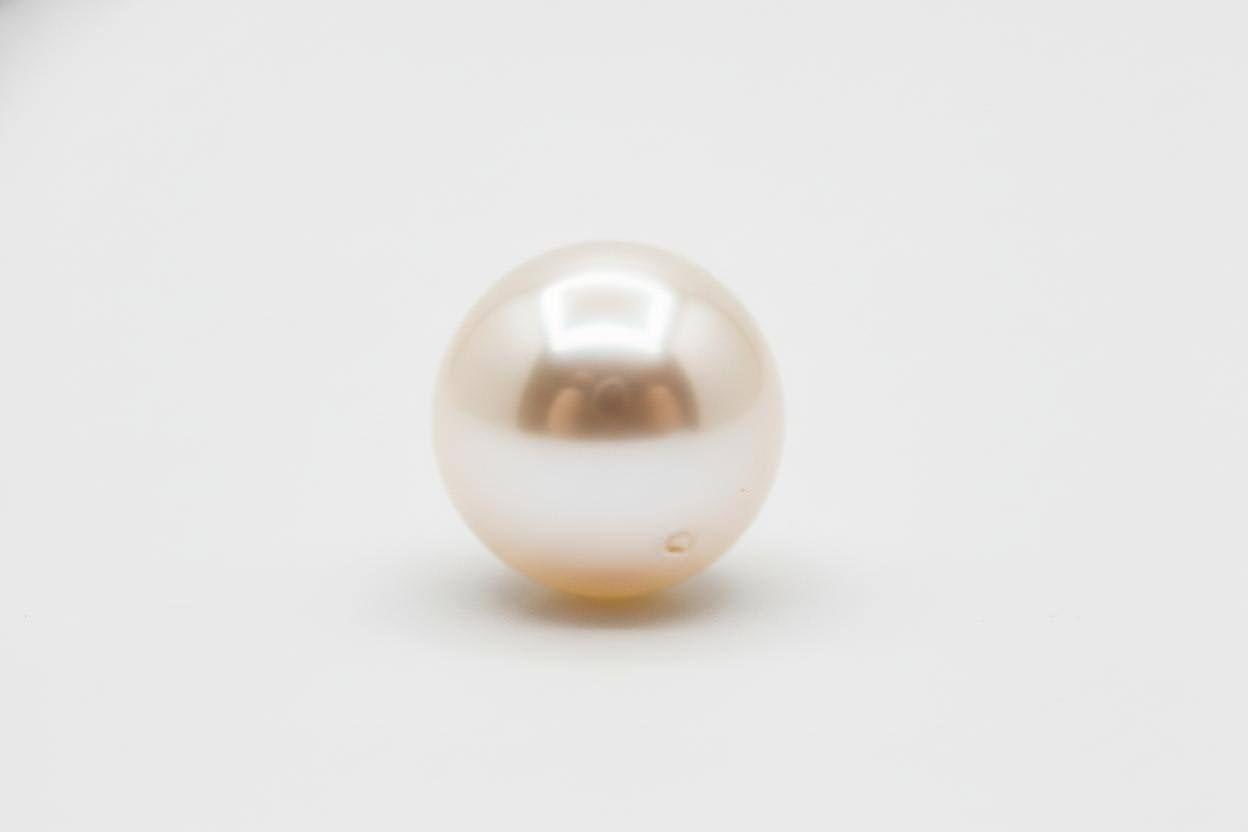
Two strands, same size, same colour, one costs five times the other. Here is what the extra money pays for, and when it is worth paying.
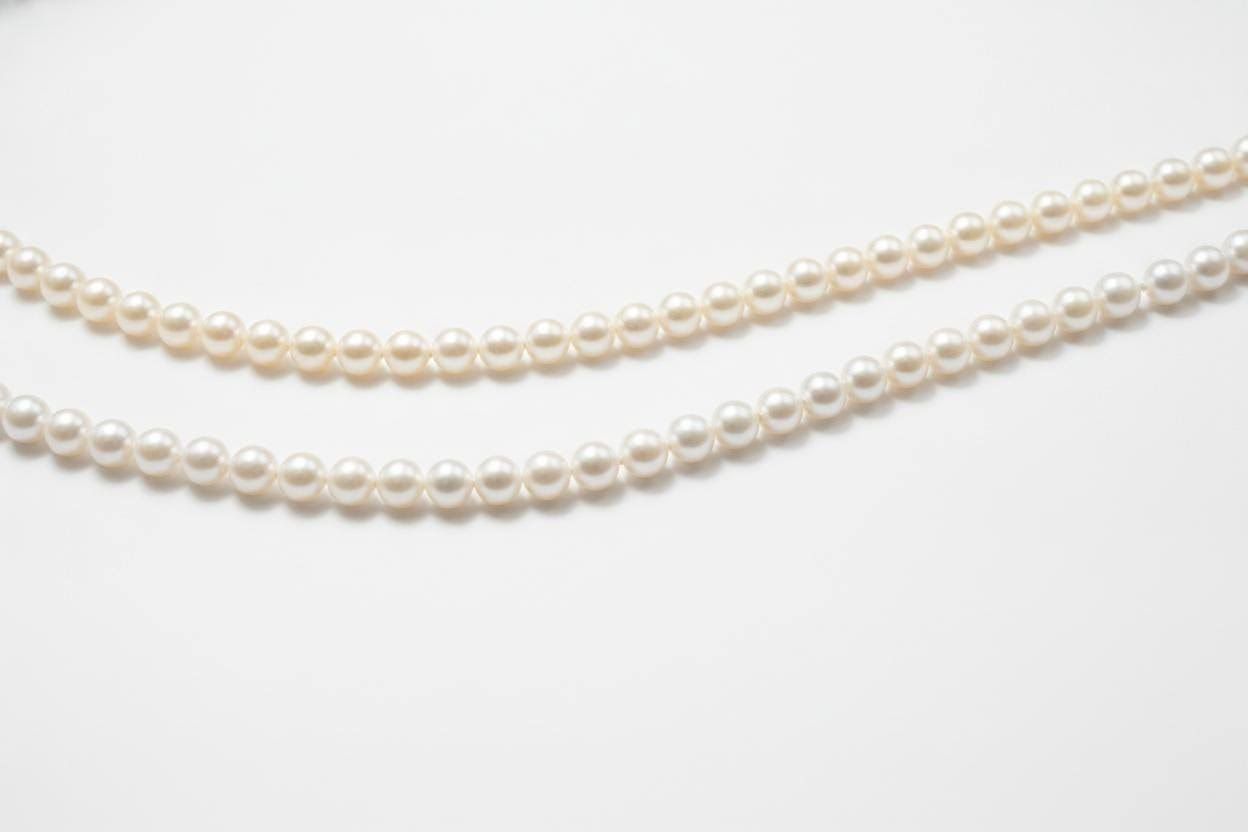
Put a strand of freshwater pearls next to a strand of akoya pearls and most people cannot tell you which is which. Both are white, round, cultured, and real. Then look at the price tags. A 7.5 mm freshwater strand from a direct seller runs from about $135 to $275 depending on grade. The same size in akoya starts around $600 and climbs past $2,000 at a jeweller, and into five figures at Mikimoto. The difference is not marketing, or not only marketing. It comes from how the two pearls are grown, and understanding that is the whole trick to buying either one well.
Two animals, two methods
Akoya pearls come from a small saltwater oyster, Pinctada fucata, farmed mostly off Japan, with growing production in China and Vietnam. The farmer opens the oyster and inserts a round bead of polished shell along with a sliver of mantle tissue. The oyster coats the bead in nacre, the crystalline material that gives a pearl its glow, for anywhere from eight months to two years. Each oyster yields one or two pearls, and the nacre on a finished akoya is typically half a millimetre thick over a bead that makes up most of the diameter.
Freshwater pearls come from mussels, chiefly Hyriopsis species farmed in lakes and ponds in China. The farmer inserts tissue only, no bead, and the mussel builds the pearl from nothing. It takes two to six years, and one mussel can carry a dozen or more pearls at once. The result is solid nacre all the way through.
That single difference, bead versus no bead, explains most of what follows.
What akoya money buys
Honesty first: on average, akoya pearls have better lustre. A thin, even coat of saltwater nacre over a perfectly round bead produces the sharp, mirror-like reflection that people picture when they think of a classic pearl necklace. Because the bead is round, the pearls are round, so matching a strand is easier and the finished necklace looks uniform. Akoya pearls also have a distinctive cool white with rose or silver overtones that freshwater pearls only sometimes achieve.
The money also buys the costs of the method. Sea farming is more expensive than pond farming, Japanese labour is more expensive than Chinese, each oyster gives one pearl rather than many, and a famous name on the clasp adds a margin of its own.
What it does not buy is durability. Half a millimetre of nacre over a shell bead is thin. Akoya pearls can wear through at the drill hole, and a badly treated strand will eventually show the bead beneath. Nor does it buy size. Akoya pearls top out around 9 mm, and anything above 8 mm is priced accordingly.
What freshwater money buys
Solid nacre is the first thing. A freshwater pearl is nacre from the surface to the centre, so there is no bead to wear through and no coating to peel. This matters most on pieces that take knocks: freshwater pearl bracelets sit on the wrist all day, hit desks and door frames, and go on being pearls regardless.
Size is the second. Freshwater mussels grow pearls from 4 mm to 12 mm and beyond without the price curve of a saltwater oyster, so a strand of 10 mm or 11 mm freshwater pearls costs what a 7 mm akoya strand does.
Colour is the third. White, pink and lavender freshwater pearls occur naturally, without dye, which is rare in akoya.
The honest trade-off is consistency. Freshwater lustre varies enormously, from chalky to very nearly akoya-bright, and the cheapest strands on the market are cheap because they are the chalky ones. Shape varies too. Only a small fraction of a harvest is truly round, and off-round pearls are often sold as round by sellers hoping nobody measures. A freshwater pearl is only a bargain if someone has sorted it properly.
Why grading matters more for freshwater
There is no industry standard for grading pearls. The A to AAA scale that most sellers use has no governing body, which is why AAAA and AAA+ keep appearing, and why two shops can grade the same strand differently without either lying. Tahitian pearls have a legally enforced A to D export scale in French Polynesia; freshwater and akoya have nothing of the kind.
For akoya, that matters less, because the method produces a narrower range. For freshwater, it is everything. The useful question for any seller is: graded according to what, exactly? A published scale with measurable criteria, such as a sharp reflection in which you can make out your own outline, pearls within a stated tolerance of each other, no marks on the outward face, is a claim you can hold the seller to. A letter on its own is decoration. The small number of sellers who publish their grading criteria in full tend to be the ones whose grades mean something.
Telling them apart
If you already own a strand and want to know which it is, look at the drill hole under a lens. An akoya shows a clean line where the nacre meets the bead. A freshwater pearl shows layers all the way in, like the rings of a tree. Weight gives a clue as well: freshwater pearls of the same size are a touch heavier, being nacre throughout. And perfect uniformity is a hint of its own. A strand in which every pearl is identical is more likely akoya, or imitation.
Which to buy
Buy akoya when the point is the classic look: a single short strand of small, very bright, perfectly matched white pearls, worn on occasions, stored carefully, and priced as a piece of fine jewellery.
Buy freshwater when the point is to wear pearls, often, without ceremony. Larger pearls, natural colours, solid nacre and a price that allows a strand, a bracelet and earrings together for less than one akoya necklace. Well-sorted freshwater pearl jewellery now comes from direct sellers who publish their grading and accept returns, which is the real reason the category has moved from the budget end of the counter to the everyday one.
The five-times price difference is real, and it buys something real. It just does not buy what most people assume. It buys a method, a reputation and a narrow range of consistency. It does not buy the better pearl in every case, and on a wrist, it rarely buys the one that lasts.