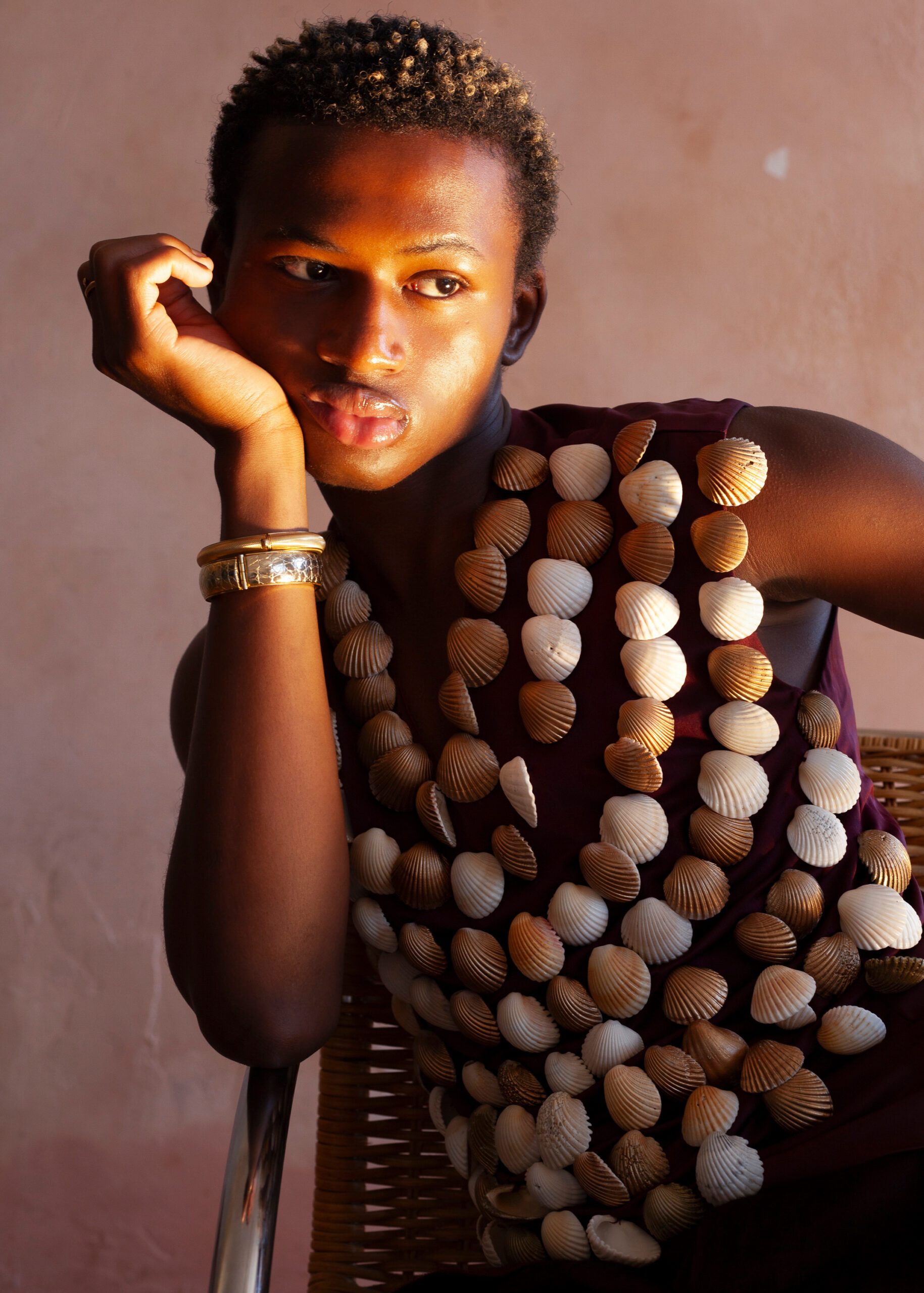
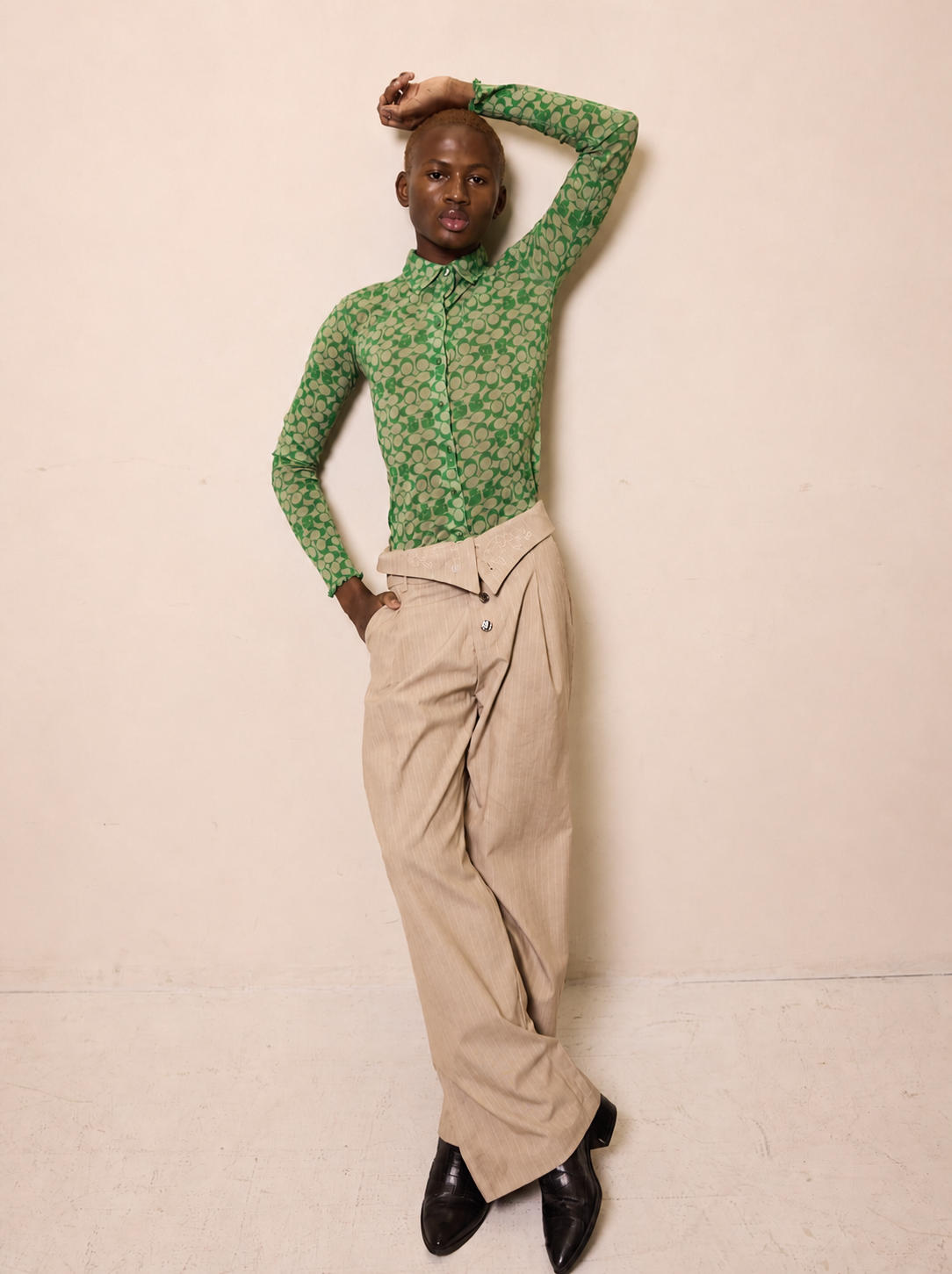
At 14, Juhm was already crossing Manhattan alone to attend modelling castings, only to be turned away because he did not have a parent with him. He had moved from Guinea to the Bronx four years earlier and knew nobody in the industry. What he did have was ambition, a strong sense of style and little interest in waiting for permission.
The traditional route may not have opened for him, but the internet eventually did. After moving to Los Angeles, Juhm deleted his social media accounts and began again. He posted as many as 15 videos a day, took his own photographs and slowly built an audience around the qualities he had once worried people might reject: his voice, humour, expressions and refusal to tone himself down. In a digital world obsessed with quiet luxury, neutral palettes and the clean girl aesthetic, his maximalist approach felt like a welcome interruption.
Then came “Body Matcha.” What began as a playful variation on “body tea” quickly escaped the confines of a viral catchphrase. Hundreds of people attended his first Los Angeles pop-up, turning online numbers into a visible community. Now, as an LGBTQ+ founder, he is developing Body Matcha into a wider brand centred on confidence, self-expression and the belief that nobody should have to shrink themselves to belong.
Social media is only one part of the plan. After appearing in BYOMA’s Super Bowl commercial and Under Pressure, Juhm is continuing his acting and dialect training with the aim of becoming a performer audiences can see beyond the personality they already know online.
In this 18 Questions interview with 1883, Juhm discusses rebuilding his career from nothing, the ambition that drove him to post 15 times a day, turning Body Matcha into a movement and why being “too much” might be the very thing that changes your life.
1. What is the first thing you do when you need to quiet your mind?
I pray. I feel like sometimes life gets so loud, especially with social media, because you’re constantly thinking about what’s next. Prayer brings me back to reality. It reminds me that I can work as hard as I want, but ultimately, not everything is in my control. I just have to do my part and trust Allah with the rest.
2. What is something you understand about yourself now that you completely misunderstood growing up?
That I was never too much. Growing up, I used to think there was something wrong with how expressive I was. I was loud, dramatic and always had something to say. Now I’m realising those are literally the things people love about me. The things I thought I needed to change ended up being the things that changed my life. Isn’t that crazy?
3. Which film or television performance do you wish you could experience again for the first time?
Viola Davis in How to Get Away with Murder. That woman can ACT! It’s not even just the crying scenes. It’s the way she can say absolutely nothing and you still feel everything. I love performances that make you forget you’re watching someone act. That’s the kind of performer I want to become.
4. What is one small luxury you will always make room for?
MATCHA! And I’m not talking about just any matcha. I’m talking about GOOD matcha. The colour needs to be right, the texture needs to be creamy and the umami needs to be there. I’ve become such a matcha snob, it’s actually concerning. But also fragrance. I love smelling expensive, even if I’m just going to Walmart. Beauty is currency, babe!
5. When do you feel most confident, and what tends to bring that side of you out?
When I look good, smell good and feel good. I’m such a believer that how you present yourself can change your entire mood. I could be having the worst day, but give me a good outfit, a fragrance and somewhere to go? Suddenly, I’m a new person. But my confidence also comes from knowing who I am. I don’t need everybody in the room to understand me anymore.
6. What is something you have recently done that pushed you beyond your comfort zone?
Going to Paris by myself during Fashion Week. I had all these expectations of what the trip was supposed to look like, and things didn’t necessarily go according to plan. But instead of sitting around being disappointed, I went out, explored, made content and enjoyed my own company. I think I’m learning that sometimes the experience itself is the opportunity.
7. Which part of your personality tends to surprise people when they first get to know you?
How serious I actually am. People see my videos and probably think I’m just running around screaming “MINUSCULE” all day. Which, to be fair, sometimes I am! But I’m very business-minded. I’m constantly thinking about my next move, my brand, my career and how I can improve. I think people are surprised by how much thought goes into everything I do.
8. What is the best piece of advice you have received about taking up space without apologising for it?
You cannot be afraid to put yourself in rooms you want to be in. The worst somebody can tell you is no. I’ve learned that nobody is going to advocate for your dreams harder than you. Sometimes you have to introduce yourself, send that message or ask for that opportunity. They might ignore you, and that’s fine! At least you tried. I’d rather be told no than spend my life wondering what would’ve happened if I asked.
9. You moved from Guinea to the Bronx when you were 10. Which parts of both places can still be seen in the person and creator you are today?
Guinea gave me my foundation, and the Bronx gave me my personality. Growing up in Guinea taught me about community, family and appreciating what you have. Then I moved to the Bronx, and BABY, you have to develop a personality to survive in New York! I think that’s where a lot of my humour and confidence came from. I’m also someone who speaks Fulani, French and English, so I’ve always existed between different cultures. I think that’s why my content connects with so many different people. I never felt like I had to belong to just one world.
10. At 14, you were travelling around Manhattan alone for modelling castings and competing against adults. What did that experience teach you about ambition at such a young age?
That if you want something, you have to go after it. I was literally 14 years old, travelling around Manhattan trying to make something happen for myself. I didn’t know anybody in the industry. I didn’t have connections. I just knew I wanted to be somebody. Looking back, I’m like, who did I think I was? But I love that younger version of me because he wasn’t waiting for permission to dream big. He just went for it.
11. You eventually stepped away from modelling after casting directors refused to see you without a parent. Did that rejection make you more determined to create opportunities that nobody else could take away from you?
Absolutely. Imagine being 14, getting yourself all the way to a casting and then being told you can’t even be seen. It was frustrating because I was willing to do the work, but there were things I couldn’t control. I think that experience taught me to find other ways to express myself. Social media eventually became that outlet. I didn’t need someone to cast me or give me permission to create something. I could pick up my phone and do it myself.
12. When you moved to Los Angeles, you deleted your social media accounts and started from nothing. What made you believe that losing an existing audience was worth the risk?
I wanted a fresh start. Sometimes you grow, but the version of you that people know hasn’t caught up with who you’re becoming. I wanted the freedom to create without feeling like I had to live up to an old version of myself. Was it scary? Absolutely. But I also knew that if I built an audience once, I could do it again. And this time, I wanted people to follow me for who I actually was.
13. You have spoken about worrying that people might reject your personality and your voice. How did the things you once felt uncertain about become your greatest strengths?
I stopped trying to make everybody comfortable. I think when you’re growing up and you have a big personality, people can make you feel like you need to tone it down. And for a while, I believed that. But the moment I started being myself online, people connected with me. Not because I was perfect, but because I was being real. Now the way I talk, my humour, my expressions, all of that is part of what makes me Juhm. It’s funny because I spent so much time worrying about being accepted, only to realise I needed to accept myself first.
14. At one stage, you were posting between 10 and 15 videos a day while taking your own photographs. Was that discipline driven more by ambition, survival or the fear that your moment might disappear?
A little bit of everything, but mostly ambition. I’ve always wanted more for myself. I knew the life I wanted wasn’t just going to fall into my lap. So I posted, took my own pictures, edited my videos and figured things out as I went. I wasn’t waiting for a team or a big budget. I used what I had. And I still have that mentality today. Obviously, I’ve learned that working smarter is just as important as working hard, but nobody can ever tell me I didn’t put in the work.
15. “Body Matcha” began as a playful twist on “body tea” but has grown into a brand and an IRL community. When did you realise that the phrase represented something much bigger than a viral joke?
When people started showing up in real life. I remember doing my first pop-up in Los Angeles and seeing hundreds of people come out. I was like, WAIT, y’all are actually real people? Because online, you see numbers, comments, likes, but seeing people physically show up for something you created is completely different. That’s when I realised Body Matcha wasn’t just something funny I said on the internet. It was becoming a community. And I want to keep building on that because I see Body Matcha becoming so much bigger than merchandise.
16. Your maximalist style pushes against the clean girl aesthetic and the idea that good taste should be quiet. Why do you think fashion became so afraid of personality?
Because everybody wants to look expensive, but nobody wants to look interesting! And listen, I love a clean look. There’s absolutely nothing wrong with minimalism. But I think social media has convinced people that there’s only one way to look stylish. Everything has to be neutral, effortless and perfectly curated. Where is the DRAMA? Where is the PERSONALITY? Fashion is supposed to be fun. I love experimenting, and sometimes an outfit might not work, but that’s the beauty of personal style. I’d rather wear something people have an opinion about than wear something just because everybody else is wearing it.
17. Between appearing in BYOMA’s Super Bowl commercial, acting in Under Pressure and continuing your dialect training, what do you want to prove about yourself as a performer beyond social media?
That I’m not limited to being an influencer. I love creating content, and I’m so grateful for what social media has given me, but I’ve always had bigger dreams. Acting is something I’ve wanted to pursue since I was young. I want to play characters that are completely different from who I am. I want people to watch me on screen and forget about Juhm from TikTok. I don’t want to just play myself in every role. I want to challenge myself, continue training and actually become a great actor. I’m not interested in doing something just to say I did it. I want to be GOOD at it.
18. As an LGBTQ+ founder building Body Matcha around self-expression and connection, what would you say to anyone still shrinking themselves because they fear they are “too much”?
You’re only too much for people who aren’t meant for you. And I really believe that. There are billions of people in this world. Why would you spend your entire life trying to make yourself smaller for a few of them? I know it’s easier said than done, especially when you’re young and still figuring yourself out. I’ve been there. But you have to give yourself permission to exist as you are. You don’t need everybody to like you, understand you or agree with you. The right people will find you. And one day, the very things you were afraid to show the world might become the reason somebody else feels comfortable being themselves. That’s a beautiful thing.
Juhm is the founder of www.bodymatcha.com. Follow via @imjuhm