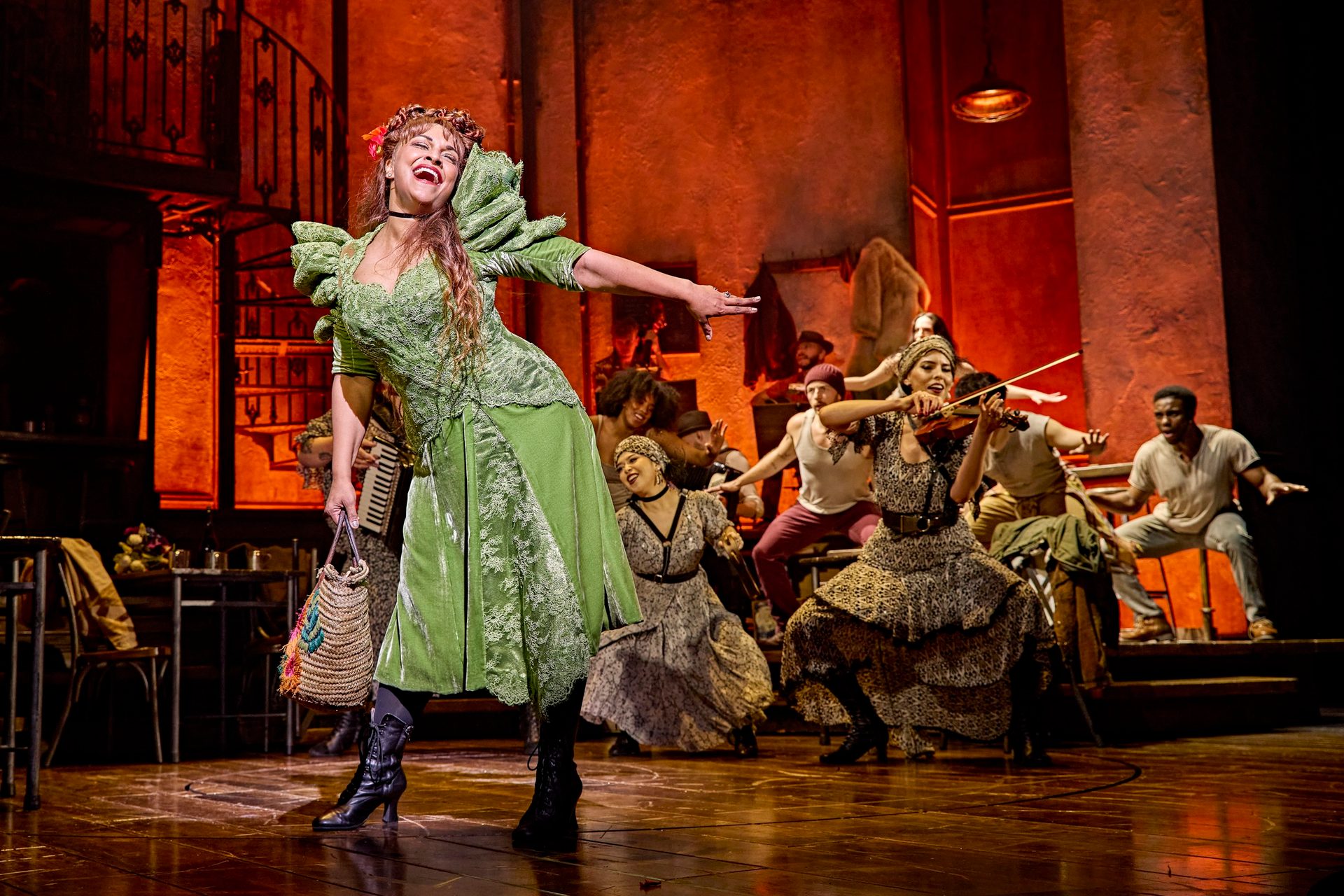
Danielle de Niese is still thinking about a crack in the wall. The soprano, currently playing Persephone in Hadestown at London’s Lyric Theatre, has been exchanging WhatsApp voice notes with the resident director about precisely what her character understands at one particular moment. Even within a production with established choreography and devoted audiences, she wants every movement to begin with a thought.
That attention to detail runs through a career that has taken her from childhood television appearances to the Metropolitan Opera, a breakthrough Cleopatra at Glyndebourne, and the West End. This year’s Olivier Award for Outstanding Contribution to Opera recognised an artist whose work has also encompassed broadcasting, recordings, and musical theatre. Yet the foundations were laid much earlier, in a home where ABBA, Bach, and Dire Straits could all be heard, and Saturday dance classes were something to anticipate all week. Speaking to 1883, de Niese reflects on the parents who nurtured that enthusiasm, the performance that became her Titanic moment, and a Persephone who gives to everyone around her while struggling to recover something she has lost herself.
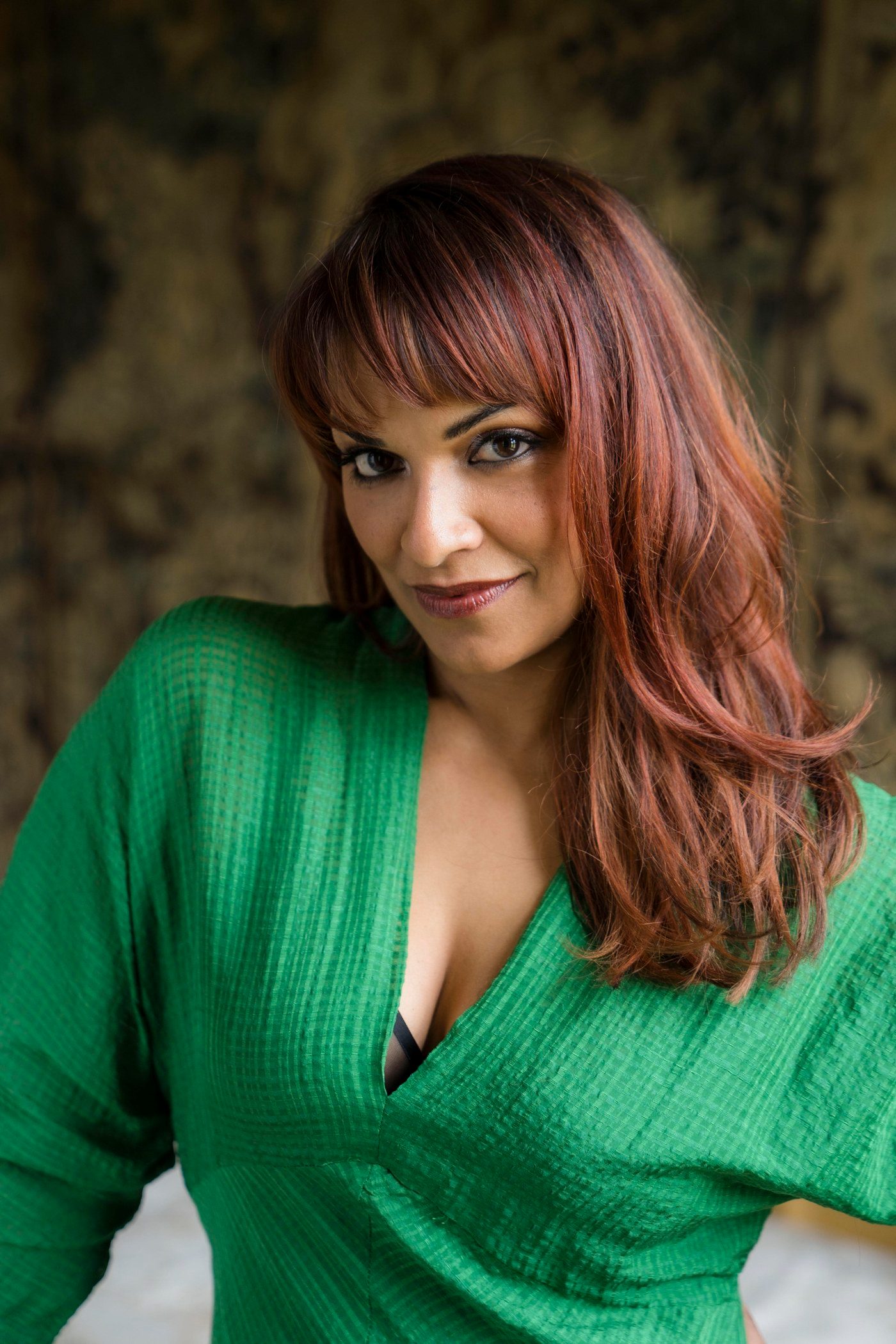
What was music like in your home growing up, and when did performing become something you wanted to do?
Music in my home was ever-present because my mum sang all the time and my parents loved music. There were lots of different types: folk music, Paul Simon, Peter, Paul and Mary, Dire Straits, ABBA, Bach, and Haydn. It was a real mix of different musical joys.
Probably as a result of that, singing was something I was doing very young. If I hadn’t heard the cassettes myself, I wouldn’t have believed it, but my parents have recordings of me singing when I’m two, with really good intonation. Reproducing whatever was given to me was something I could do very quickly. My parents’ antennae were going, ‘Oh, wow.’ I’m very lucky that I’ve been able to make a whole career out of something I fell in love with as a child.
How did your parents begin nurturing it?
Around five or six, I started song and dance classes. That’s quite normal. My daughter’s taking singing lessons now and starting cello, and my son started dance at that age. What happened with me was that it was immediately drawn to my parents’ attention that this girl was unusually good. What they knew was being confirmed by others, and I loved it.
Eventually, on a Saturday, it was ballet from eight to nine, tap from nine to ten, jazz from ten to eleven, a break, then drama at twelve. I couldn’t wait for Saturdays. When you love something and happen to be good at it, that’s icing. My parents had the teachers’ feedback, and because I was so keen, they were like, ‘Of course we’ll take her. You want to put her in the adult class? Of course we’ll bring her.’ I’m lucky they were able to see that and say, ‘We must nurture it.’ If they’d said, ‘That’s nice, but obviously you can’t do that,’ I wouldn’t be here.
Looking at your own children now, can you fathom doing so much so young?
I can’t really fathom being nine and singing on national television, live. I look at my children, measure it against how I know their minds are, and think, ‘I don’t know how I did that.’ As a parent, I believe it has to come from both sides. It can’t just be the parent wanting it for the child. The child has to have a combination of desire, skill, and the ability to absorb information.
You’re not born with skill. You’re born with an aptitude towards developing something, and what you do afterwards determines it. You might be able to develop something but not have the mentality to withstand that slower process of nurturing it all the way through. So many things need to align. In my case, at that age, they did. I took joy from everything, but I also accepted the things sent my way to make me better. I didn’t crumble or think, ‘Why are they asking me to do this again?’ I wanted to improve. I grew up as a stereotypical theatre kid: totally in love with it, always willing, totally committed.
By your late teens, you’d won an Emmy, performed on Broadway, and joined the Metropolitan Opera’s young artist programme. What was that like at such a young age?
It was kind of wild, but nothing seemed chaotic. From a young age, I understood there were so many different angles of development I needed. Eight-year-old me was going to jazz, ballet, tap, drama, and singing lessons. By twelve or thirteen, with piano and music theory too, I understood those were the tools I needed in my toolbox. I never thought, ‘There isn’t enough time to manage it all.’ I can only attribute that to my parents. They certainly weren’t pushing me, so I didn’t feel that pressure.
In Los Angeles, a television show called L.A. Kids came to my school and featured me as their LA Kid of the Week. Think The One Show, but for kids, with arts, culture, and community stories. The producer saw something in me. Later, when my other school was featured on television, she recognised me and came up with the idea of having a child guest host. I was excited to be on camera, but all those different skills I’d been developing helped prepare me. I wasn’t thrown in at the deep end.
We had hilarious times. Once, the cue-card person held all the cards upside down. We were filming almost as live, and afterwards we fell over laughing. The producers were saying, ‘How did you read that?’ And I just did. I think I was lucky to fall in love with something I was really cut out for.
Your parents sound extraordinary. Have you spoken to them about how they managed it?
I’ve asked them as an adult, because I never felt pressured. My mum said, ‘We could see how special you were. We would have been bad parents if we hadn’t helped nurture it, because we could see you loved it.’ Everybody was saying how good I was. They felt they had to help me develop that. A whole set of circumstances led to me becoming the artist I am now. Without them, I don’t know what different path I might have taken.
Your Cleopatra at Glyndebourne in 2005 was a huge turning point. What changed when that performance attracted so much attention?
It was definitely a catapulting moment. I went from being someone the business knew as a young protégée who’d made a historic debut at the Met at nineteen, to being known much more widely. Once that Glyndebourne Cleopatra hit, the press went crazy over the performance and my role in it. I describe it as what Titanic might have been for Leonardo DiCaprio and Kate Winslet. Everyone knew who they were before, but Titanic was that alignment of the stars. That’s what Giulio Cesare was for me.
It led to a bidding war between record companies. It also brought together all those years of dance. I’m not a professional dancer, and I can’t stress that enough, but those years come in so useful when physically interpreting a role. People were seeing an opera singer singing intense roulades and dancing at the same time. All those moments in my life had led to this combination that felt tailor-made. Life changed pretty quickly. It got even busier, and suddenly I was known to many more people.
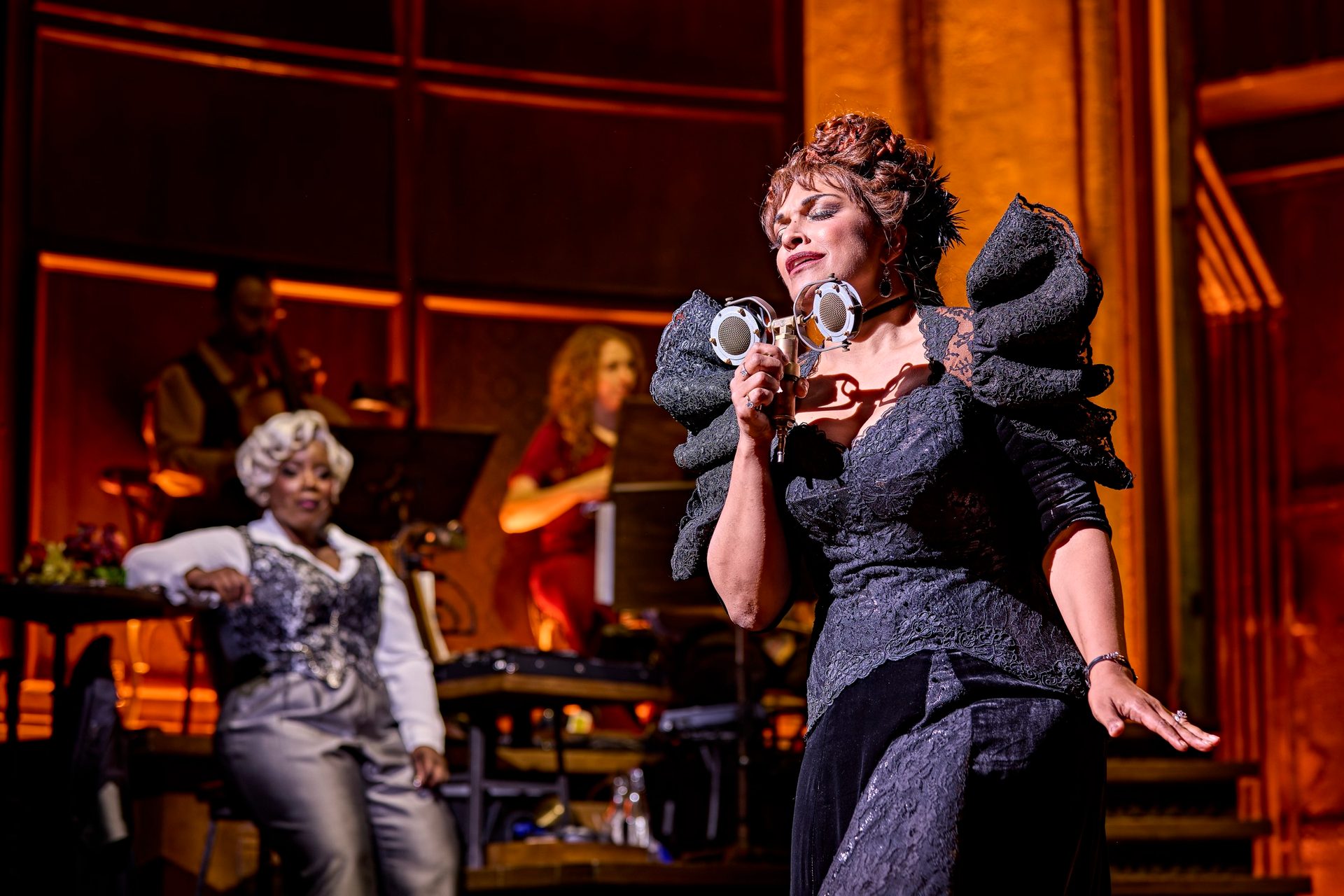
You’ve spoken about worrying that doing musicals might make people take you less seriously as an opera singer. How did you reach the point where you could give yourself that freedom?
Through time. Allowing the business time to understand what sort of artist I am. People learn about you through people they trust, who know the substance of you rather than the impression. Sometimes people’s impression can be different from your substance without you doing anything at all. Some of that is bias, hearsay, or more revealing about their own judgement of superficial things. Over time, anyone who might have thought I was a flash in the pan has had that taken away, because it’s revealed the person I am: a hard worker who is forensic in my attention to detail on stage.
I don’t mean forensic to sound clinical. I mean I leave no stone unturned in discovering a character. I’m not doing it to prove anything. It’s how I become one with a role. I have to devour what’s there in the music. Yesterday, I was having a philosophical discussion with our resident director about the crack in the wall in Hadestown, sending WhatsApp voice notes about what that crack is.
At first, you could assume it’s Orpheus arriving to break the spell. But Persephone doesn’t know he’s arrived yet, because she wasn’t there when he sang ‘Wait for Me’. So perhaps it’s something else. I love delving through a score, even one people know, and finding how the staging works with what I’ve discovered in my character. A movement comes from a thought that’s mine. That’s where I live. That’s what I love.
You clearly value the experience of live performance. Does that feel particularly significant as AI changes other kinds of work?
Isn’t it fascinating to imagine a world where a child says, ‘Mum, Dad, I think I want a career in the arts,’ and their parents say, ‘That’s a good choice,’ instead of, ‘What about something more serious, like tech?’ I love the idea that the arts might become the thing people encourage because a live theatrical experience can’t be replaced. AI might help with programming or running a lighting programme, but someone still has to come up with the idea. Hopefully not AI!
What was it about Hadestown, and Persephone in particular, that made you want to join?
This Persephone has been a long time coming. Looking back at my messages, I think it was five years ago that I was asked to look at her. But things were heading in different directions, or I wasn’t free to take on the engagement. I’m thrilled the stars aligned for this run. I think Hadestown is an example of a new musical that’s going to stick, that could become as performed as The Phantom of the Opera or Les Misérables.
There’s room for different kinds of voices to do Persephone. What’s interesting is bringing my timbre, and the lyrical and folk colours I can bring, which aren’t necessarily the same as those of the Persephones before me. I’d never seen the show until four days before we opened. When we started rehearsals, I said, ‘I need to go and see it, don’t I?’ They said, ‘No. We like what you’re doing. Don’t see it.’ But because of the triple turntable, I knew I needed to see it eventually. I chose the end of tech week, once I’d walked on the stage, so what I saw would make more sense. I loved watching it from the audience.
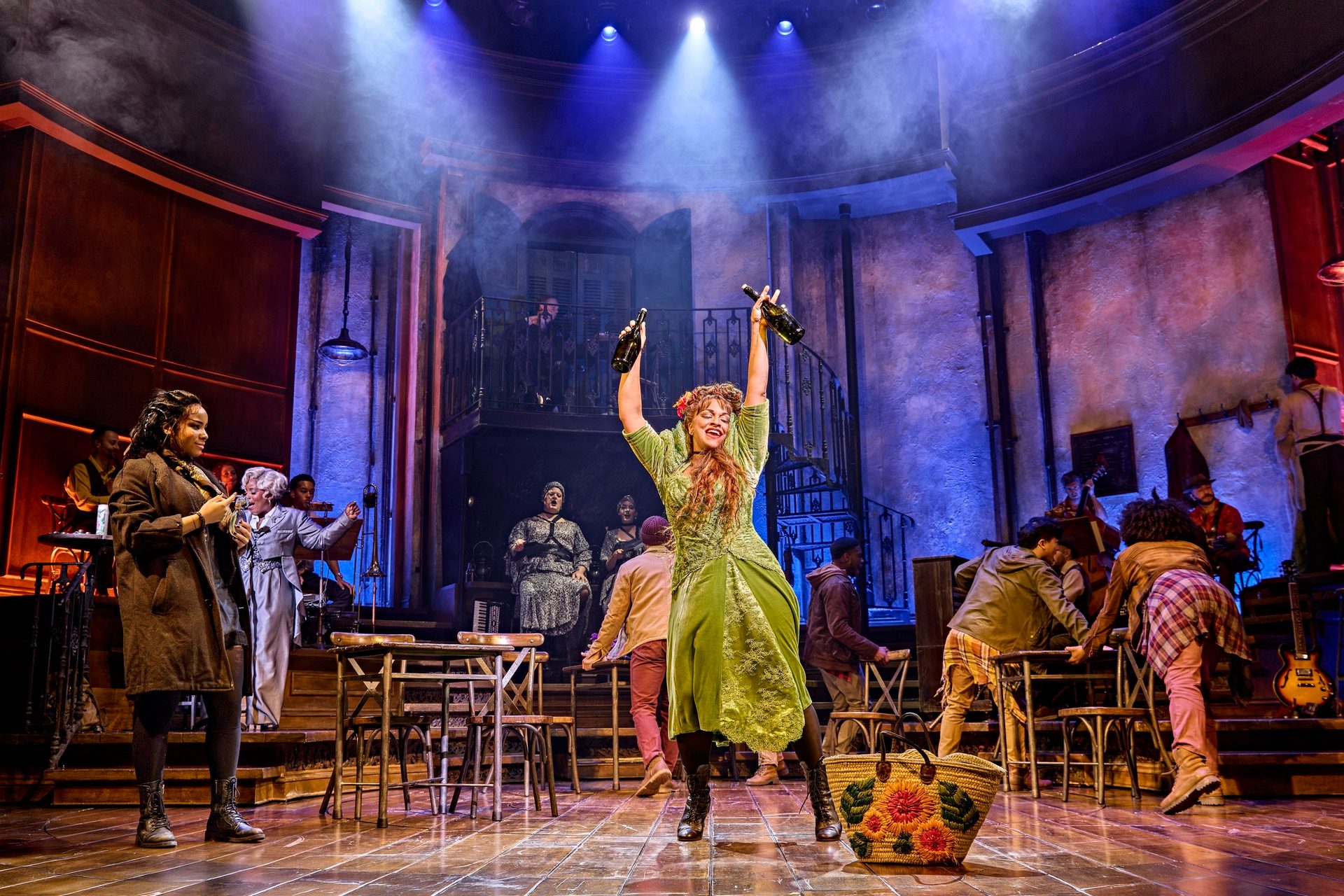
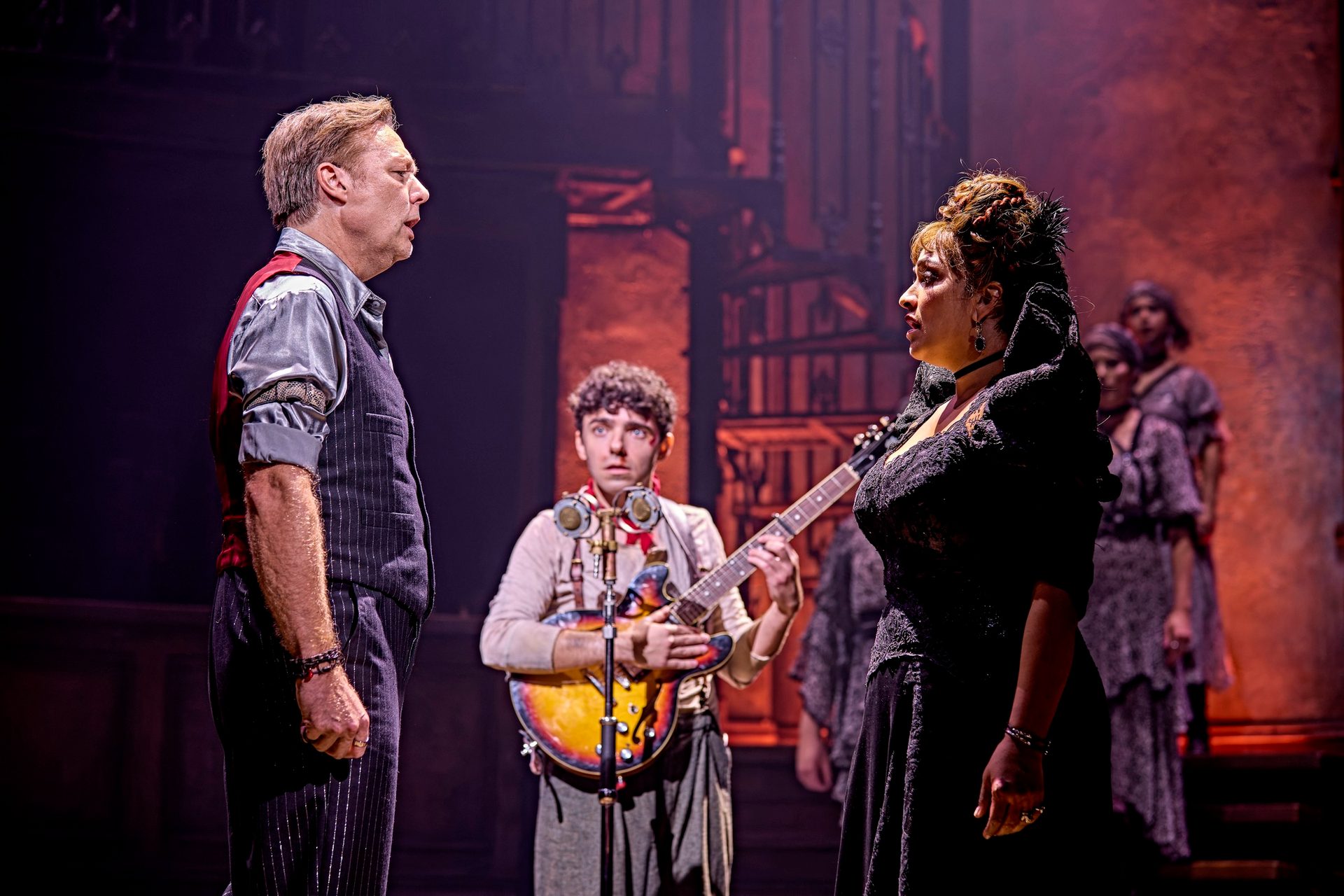
How much room have you found to make Persephone your own?
I’ve loved having the opportunity, with our five principals, to build something that feels internal to me. That’s a unique point about Hadestown, and why fans return again and again. It lends itself to individualism. There’s a structure, a show bible, a kick you have to do on a particular beat. But within that form, there’s room for the individual colours of each interpreter. When I watched after tech week, I thought, ‘This cast is wildly different from us.’
The fans are so keyed into the show that they notice every thought and detail that varies. When someone says they’ve seen it thirty times and noticed all these things I’ve done differently, that connection is moving. I feel very seen. Those details will be there anyway, and I’m happy when someone seeing it for the first time loves it. But I’m amazed by the dedication and intimate knowledge of people who’ve seen it so often. Their energy is part of how we perform. It ebbs and flows with who’s in the audience and how they react.
What have you discovered about Persephone beneath the celebrations and the drinking?
I’ve performed Persephone in a different context, in a spoken role, and knowing the mythological background, I feel she carries a great amount of empathy. In Hadestown, she falls in love with Hades and chooses to go down. I feel close to that idea. I was keen not to start her on one note and stay there. I didn’t want to begin with someone who was just angry and drunk. I wanted someone relieved to be in the overworld.
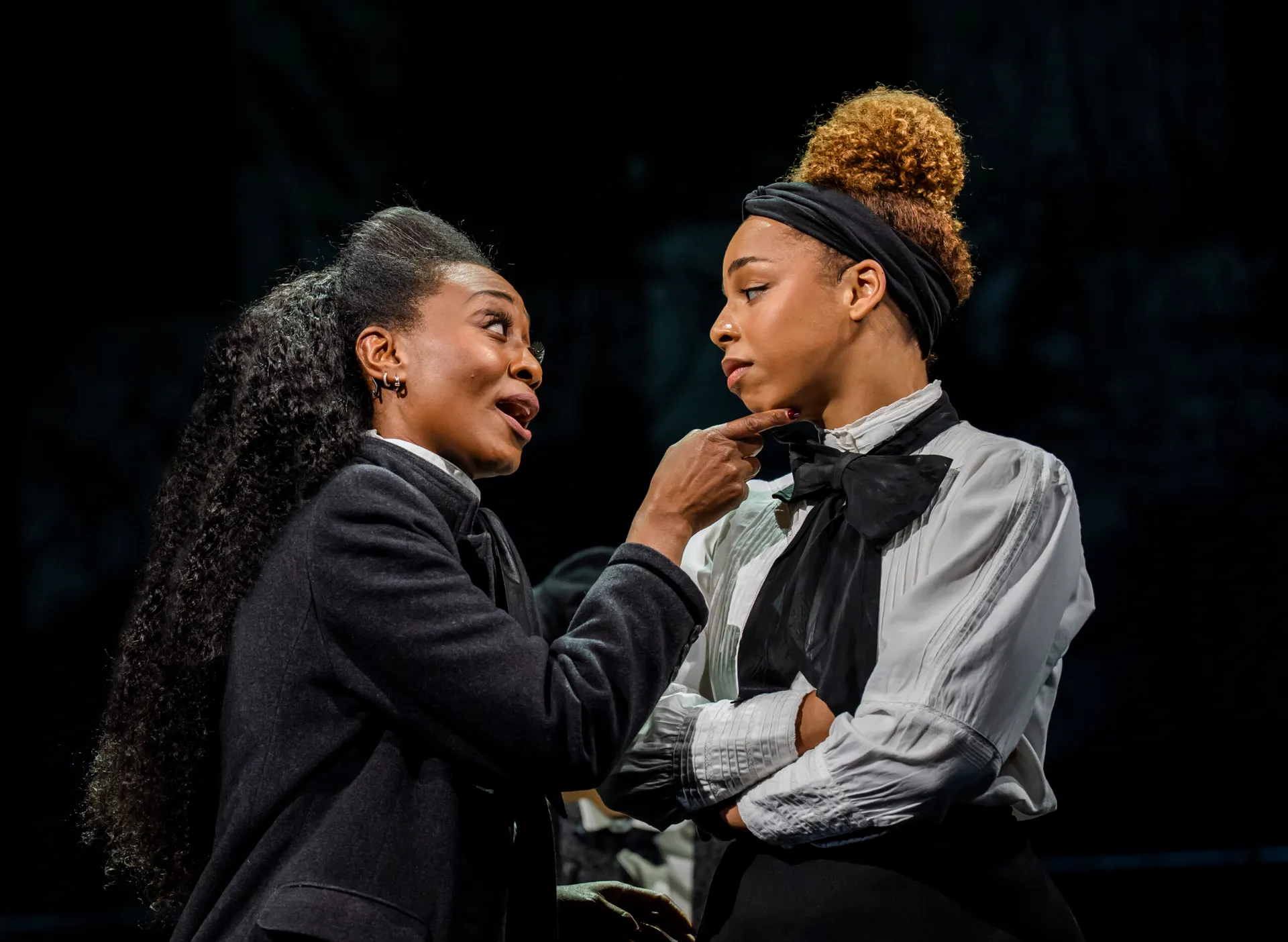
She’s also the only person on stage who doesn’t have a whole thing with the Fates. They don’t seem to have an influence on her. They’re almost intimidated by her because she’s not affected by them. People have also noticed that I look at the workers and the people around me. That makes sense because I think of her as a giver and nurturer to the souls below and above. Everything is about what she gives others, but nobody’s really thinking about what they give her.
She’s busy being a Mother Earth to everybody. When you’re a nurturer, people want you to give because it feels good. Her sense of self almost has to take a backseat. There’s one person who gives to her, and that’s the person she’s lost that connection with: Hades.
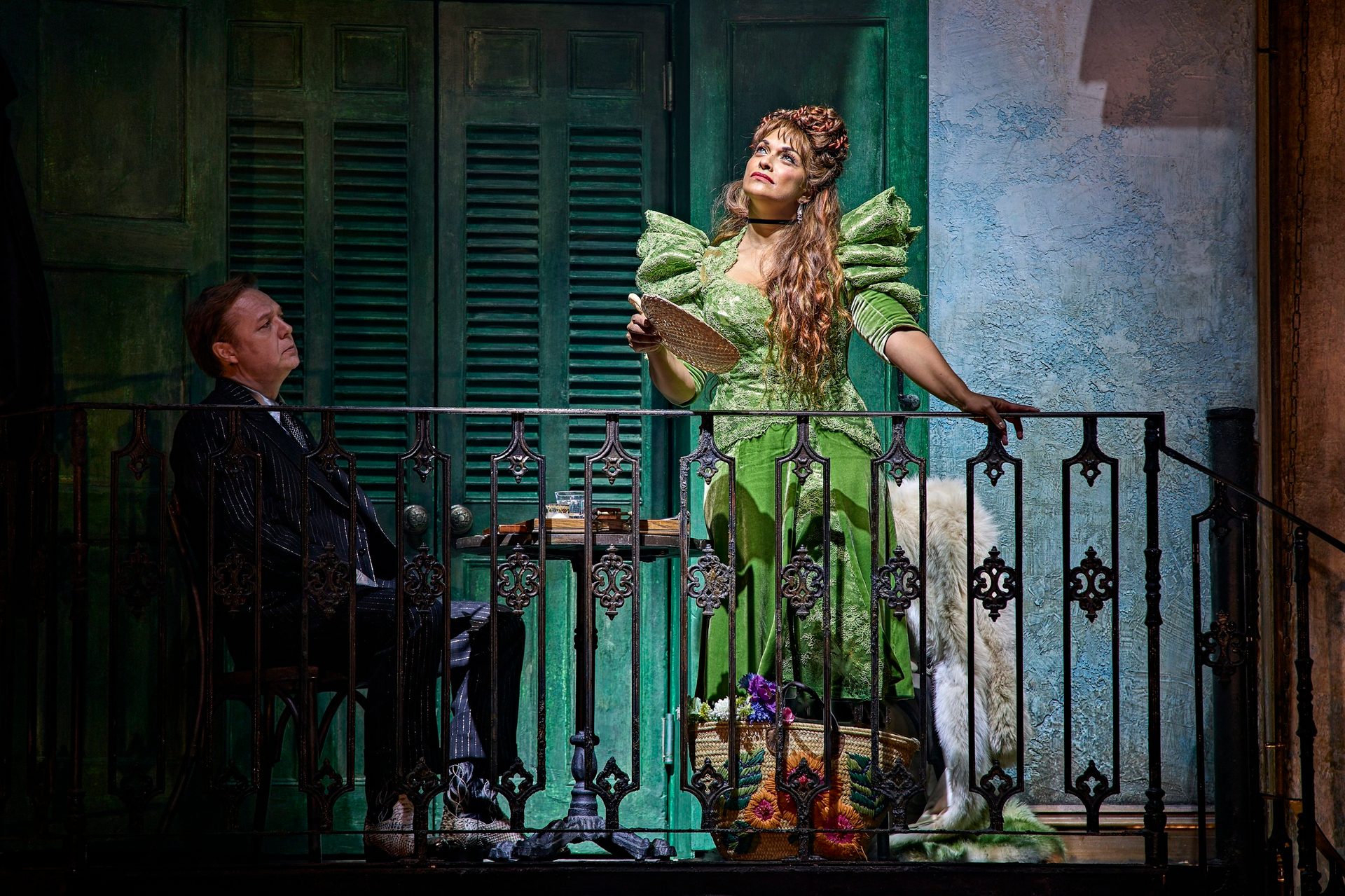
How has that shaped the marriage you and Shaun Dooley have built on stage?
Sometimes it can appear that Hades is simply at fault: he’s being a jerk, he’s become obsessed. But look at the roots of what he’s erecting as a monument to his love, and where that misguided love has led him. It’s still love. I feel she’s also missed something. When she goes above, she’s giving again, but perhaps she hasn’t fully taken in her absence and its effect on Hades. I love relationships where one person isn’t just the villain and the other the hero or victim. In a marriage, in deep love, both people can have lost something from each other.
Shaun and I have had the best time building that relationship. The fans have connected with the chemistry, which is lovely. You don’t miss that there’s love between us. Couples can love and spar. You can love someone and be so cross and disconnected that the engagement becomes misdirected, but it’s still there. We’re united in our attention towards each other. Magnets are like that: even when they repel, there’s tension.
What do you want people to take away from your Persephone, and from the show?
I want them to see a complete, nuanced person: a kaleidoscope of emotions, affections, and conflicts. There are many colours to Persephone, and I think it’s that infinite variety Hades fell in love with. Though her personal situation is miserable because of the disconnect with her husband, she still gives and feels joy. Love hasn’t been lost. Anger has come in, but that anger is due to love. I want people to be moved by her journey towards finding her husband again. She’s never disconnected from the people, the earth, nature, or the elements, but she’s lost a bit of herself through losing her partner.
From the show, I think the moral is that we must continue to have hope, even when life feels desolate and hope feels really far away. Within the oppressed world of Hadestown, the workers still have something underneath, ready for someone like Orpheus to question it. If they were totally deadened to it, they would be unchangeable. People who seem fixed in an ideology or a way of thinking can still have question marks inside themselves that seek to be answered. That’s something we must see in the world today: there’s still room for discussion and tolerance. I think that’s why Hadestown will last. That will always be present in society.
Danielle de Niese is currently playing Persephone in Hadestown at London’s Lyric Theatre.
Book your tickets at uk.hadestown.com.
Words by Nick Barr
Portrait by Sven Arnstein. Production photography by Brinkhoff-Moegenburg.