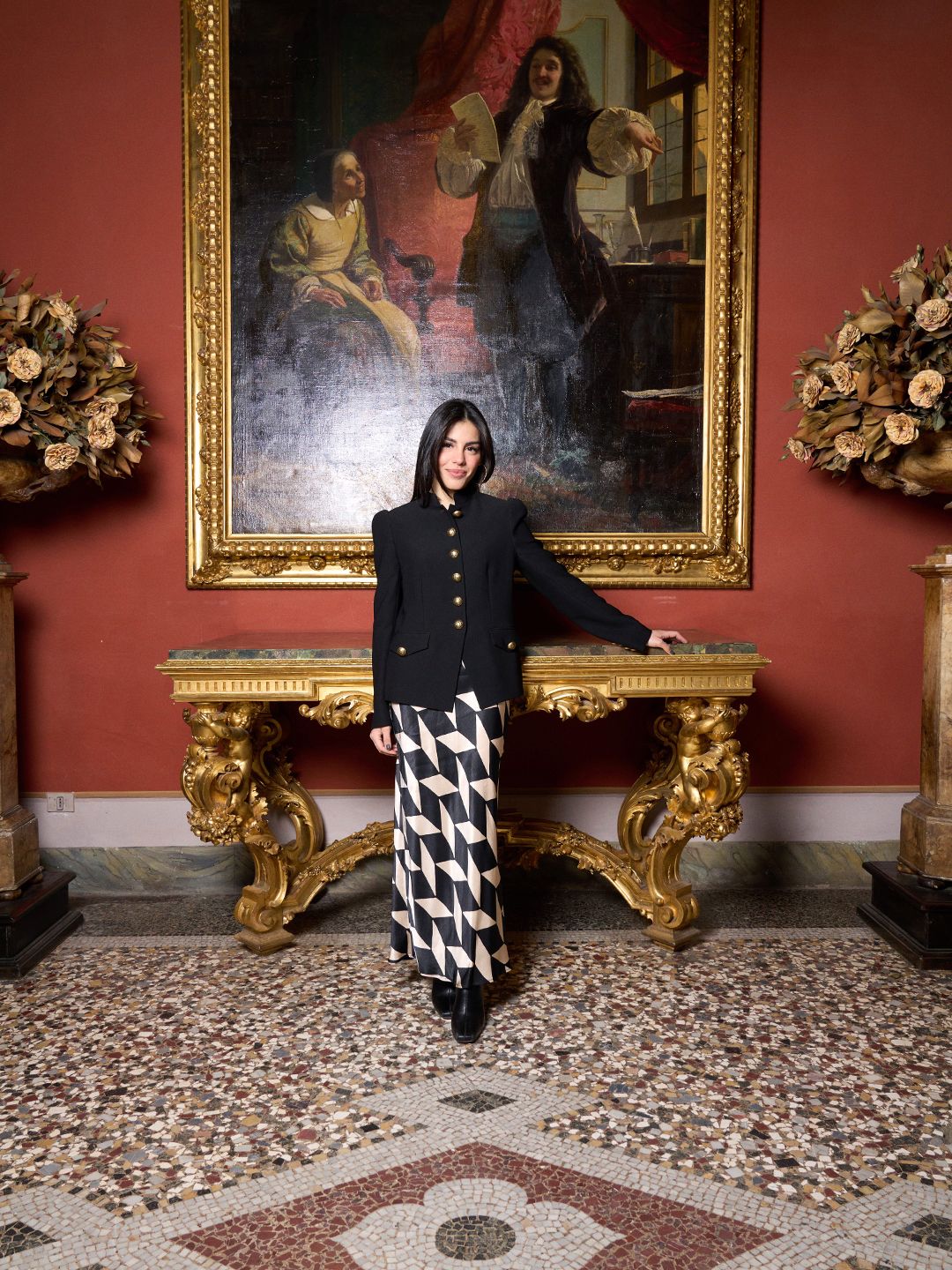
Thorough research, the exploration of overlooked documentary archives, and the patient study of how institutions shape artistic memory in often unseen but essential spaces form the context in which Inès Trafford has emerged. She is a committed advocate for the arts and their impact, part of a generation that has transformed scholarship into a practical tool for building new cultural frameworks.
With training in Common Law at the University of Law in London and a master’s degree in Art Business from the Sotheby’s Institute of Art in New York, Trafford developed early on a perspective that combines academic analysis with a clear understanding of how cultural institutions operate in practice.
During her early years working within commercial galleries, Trafford became increasingly aware of the challenges surrounding the long-term preservation and organization of artists’ work and documentation. This realization led her to develop a consulting practice focused on the protection, organization, and long-term stewardship of artistic and archival material.
Her work as an independent consultant centers on helping artists, curators, and collectors structure archives and materials in ways that allow an artistic career to be understood in its entirety. Her experience includes collaborations with influential figures in the art world, including art historian Jack Flam, as well as projects connected to institutions such as The Frick Collection and the Archives of American Art at the Smithsonian Institution.
Alongside her archival practice, Trafford also serves as Tributes Editor at The Brooklyn Rail, an international publication recognized for its critical coverage of contemporary art. In this role, she coordinates the production of essays dedicated to influential figures within the art world.
Perhaps the clearest bridge between her academic background and her role within the cultural ecosystem lies in her research work. She is currently developing a biographical and critical study of curator Carmen Giménez, a central figure in the evolution of contemporary curatorial practices. The project examines Giménez’s influence within post-Franco Spain and her impact on the development of new institutional dynamics in the international art world. Through archival research and original interviews, Trafford explores how cultural institutions and curatorial figures have shaped the way contemporary art is presented, circulated, and interpreted.
This interest in cultural structures extends beyond research. In 2024, together with Matilde Sirolli, Trafford co-founded Cuadra Projects, an independent curatorial platform dedicated to producing exhibitions in direct dialogue with the spaces and contexts in which they are presented. The initiative emerged from a need to create more flexible and sustainable models to support emerging artistic practices outside traditional institutional circuits.
The platform’s first project, The Paper Room, was presented during Milan Design Week 2025 in the Certosa District, a former industrial area of Milan that is now part of an ongoing process of urban and cultural regeneration. The exhibition brought together a commissioned collection of furniture, lighting, and works on paper created by French designers Joséphine Bourdariat and Luana Meneux.
Inès Trafford’s work suggests a different way of thinking about the role of the contemporary curator and researcher. With a vision centered on the long-term significance of artists and their work, figures like Trafford are beginning to act as cultural architects, designing the systems that will shape the art world of the decades to come.
Connect with Inès Trafford on Instagram