Designing a home is no longer a process reserved for architects or interior specialists. With the emergence of intelligent systems, people are now approaching design in a more fluid and experimental way. Home design AI and AI room design tools are not just speeding things up, they are reshaping how decisions are made, how ideas are formed, and how spaces come together.
Rather than starting with rigid plans, users can now begin with a simple idea and allow it to evolve visually. This shift makes design feel less like a task and more like an ongoing creative process.
Thinking Beyond Traditional Layouts
In the past, home design often followed predictable patterns, fixed layouts, standard furniture placement, and familiar color schemes. AI introduces a different approach.

Instead of repeating common templates, it explores variations that might not immediately come to mind. A living area might be arranged in a way that encourages more openness. A bedroom might feel more spacious simply by adjusting alignment and proportions.
This ability to rethink familiar spaces is what makes AI-driven design stand out.
AI Room Design as a Micro-Level Tool
While home design AI looks at the bigger picture, AI room design works on a more detailed level. It focuses on how individual elements interact within a single space.
For example, it considers:
- How far furniture should be spaced for comfort
- How visual weight is distributed across the room
- How lighting affects different corners
These small but important details are often what separate an average room from one that feels well-designed.
Designing Without a Fixed Starting Point
One interesting aspect of AI design is that you don’t need a complete plan to begin.
You can start with:
- A single piece of furniture
- A preferred color tone
- A rough idea of style
From there, the design develops step by step. This removes the pressure of having everything figured out in advance and allows ideas to grow naturally.
Visual Thinking Instead of Abstract Planning
Many people struggle with design because it requires imagining outcomes that don’t yet exist. AI changes this by making design visual from the beginning.
Instead of thinking in abstract terms, you interact with visible options. You can compare layouts side by side, observe how changes affect the space, and refine your choices in real time.
This makes the process more intuitive, especially for those without design experience.
Creating a Sense of Balance
Balance is one of the most important aspects of design, yet it’s also one of the hardest to achieve manually.
AI helps by identifying when a space feels uneven whether it’s due to overcrowding, poor alignment, or mismatched elements. It then adjusts the layout to create a more stable and visually comfortable environment.
This doesn’t mean every design looks the same. Instead, each layout finds its own balance based on the space and input provided.
The Subtle Role of Proportion
Proportion plays a quiet but powerful role in how a room feels. Large furniture in a small space can feel overwhelming, while small items in a large room can feel lost.
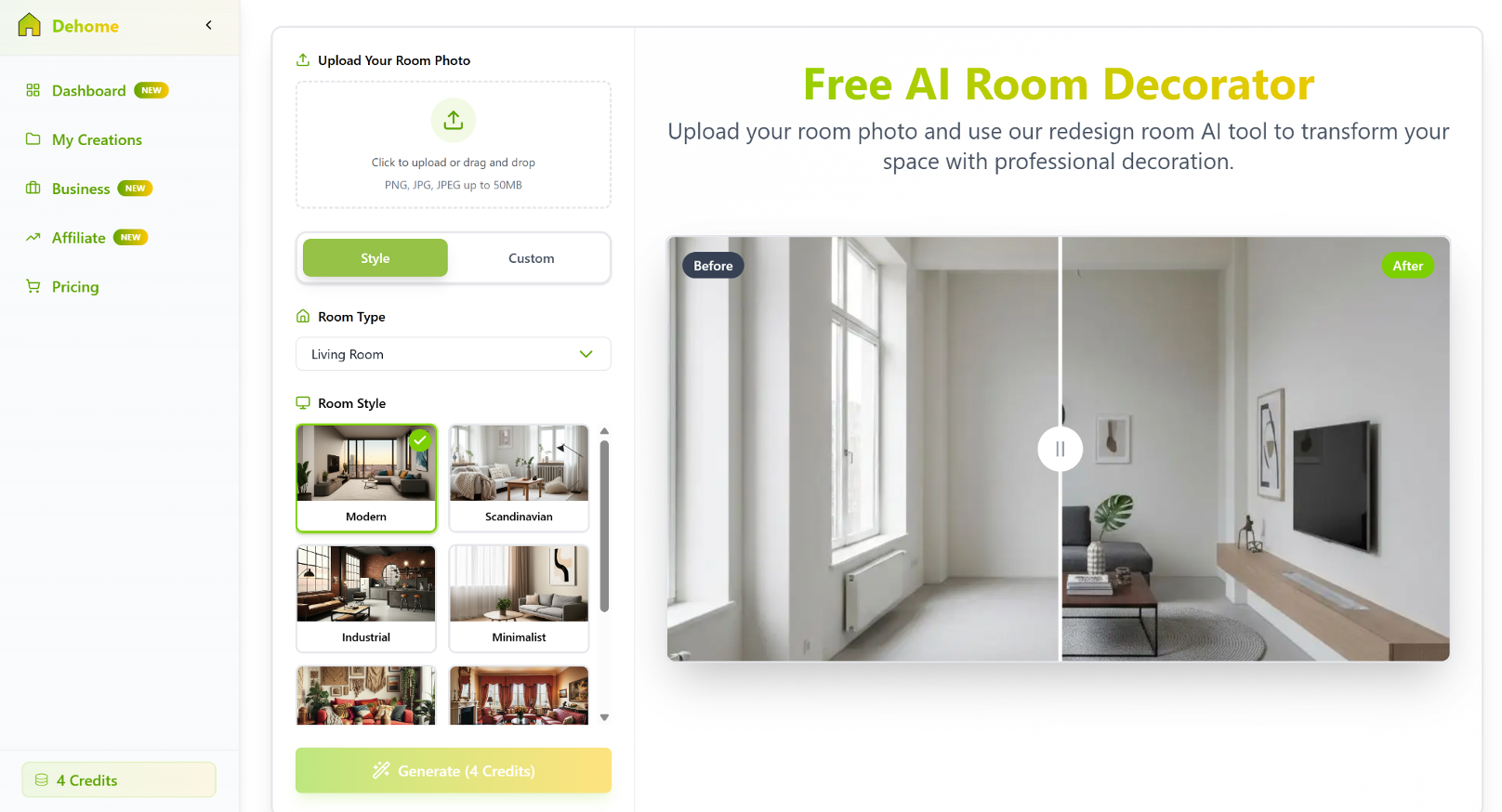
AI room design tools are particularly effective at managing proportion.They scale elements appropriately, ensuring that everything fits within the space without disrupting harmony. This attention to proportion often results in designs that feel more natural and less forced.
Home Design AI as a Unifying Layer
When designing multiple rooms, maintaining consistency can be challenging. Each room might look good individually but feel disconnected from the rest of the home.
Home design AI acts as a unifying layer.
It ensures that:
- Design elements flow smoothly from one room to another
- Color palettes remain cohesive
- Styles do not clash across spaces
This creates a home that feels complete rather than fragmented.
Adapting to Real-Life Constraints
Design is not just about aesthetics it must also work within real-world limitations.
AI takes into account factors like:
- Limited space
- Existing structures
- Practical movement within rooms
By working within these constraints, it produces designs that are not only visually appealing but also usable in everyday life.
Encouraging Experimentation
One of the most valuable aspects of AI design tools is the freedom they provide.
You can:
- Try unconventional layouts
- Combine different styles
- Explore bold design choices
If something doesn’t work, it can be changed instantly. This encourages users to step outside their comfort zone and discover ideas they might not have considered otherwise.
A Gradual Design Process
Instead of forcing quick decisions, AI allows for a gradual approach.
You can revisit your designs, make small adjustments, and refine them over time. This leads to more thoughtful outcomes, as decisions are made with clarity rather than urgency.
Learning Design Without Realizing It
As you interact with AI tools, you naturally begin to understand design principles.
You start noticing:
- How spacing affects comfort
- How colors influence perception
- How layout shapes movement
This learning happens organically, without the need for formal training.
A More Personal Outcome
Even though AI generates the designs, the final result reflects your input. Your choices guide the process, and the AI responds accordingly.
This creates a sense of ownership. The design doesn’t feel generic it feels like something you’ve shaped, even with the assistance of technology.
Looking Forward
As AI continues to evolve, home and room design will become even more responsive. Tools will better understand user preferences, adapt more precisely to spaces, and offer deeper levels of customization.
But even now, the shift is clear: design is becoming more accessible, more flexible, and more aligned with how people actually think and create.
Final Reflection
Home design AI and AI room design are not just tools they represent a different way of approaching space. They remove the need for guesswork and replace it with clarity, allowing ideas to take shape visually and naturally.
Instead of struggling to bring concepts to life, you can now interact with them, refine them, and understand them as they develop.
In the end, the goal remains the same: to create spaces that feel right. AI simply makes that journey smoother, more engaging, and far more achievable