There is a particular kind of exhaustion that has nothing to do with sleep.
It builds in increments, across months of overbooked calendars and notifications that never stop and the particular guilt of a weekend that contained every task except the one labelled rest. And eventually, even the idea of a holiday begins to feel like something that requires recovery.
The antidote is not a more efficient itinerary. It is a different relationship with time altogether.
The Rise of Slow and Mindful Travel
The slow travel movement has been gathering momentum for years, but its meaning has deepened. It is no longer simply a preference for trains over planes or local guesthouses over chain hotels. It has become a philosophical stance on what travel is actually for.
The argument is straightforward. When you move through a place slowly, you notice different things. You find a bakery that does not appear on any recommendation list. You spend three hours in a museum room that would normally be a five-minute stop. You fall into conversation with someone whose name you will remember for years.
Speed, in this context, is the enemy of experience.
Research published in the Journal of Positive Psychology found that anticipating and savouring experiences rather than rushing through them significantly increases wellbeing. Applied to travel, the implication is clear: the quality of what you remember has less to do with how many places you visited and more to do with how present you were when you were there.
A considered travel lifestyle, one built around intention rather than volume, produces the kind of memories that hold their shape long after the passport stamps have faded.
Creative Ways to Relax While Travelling
The most restorative holidays tend to involve the hands.
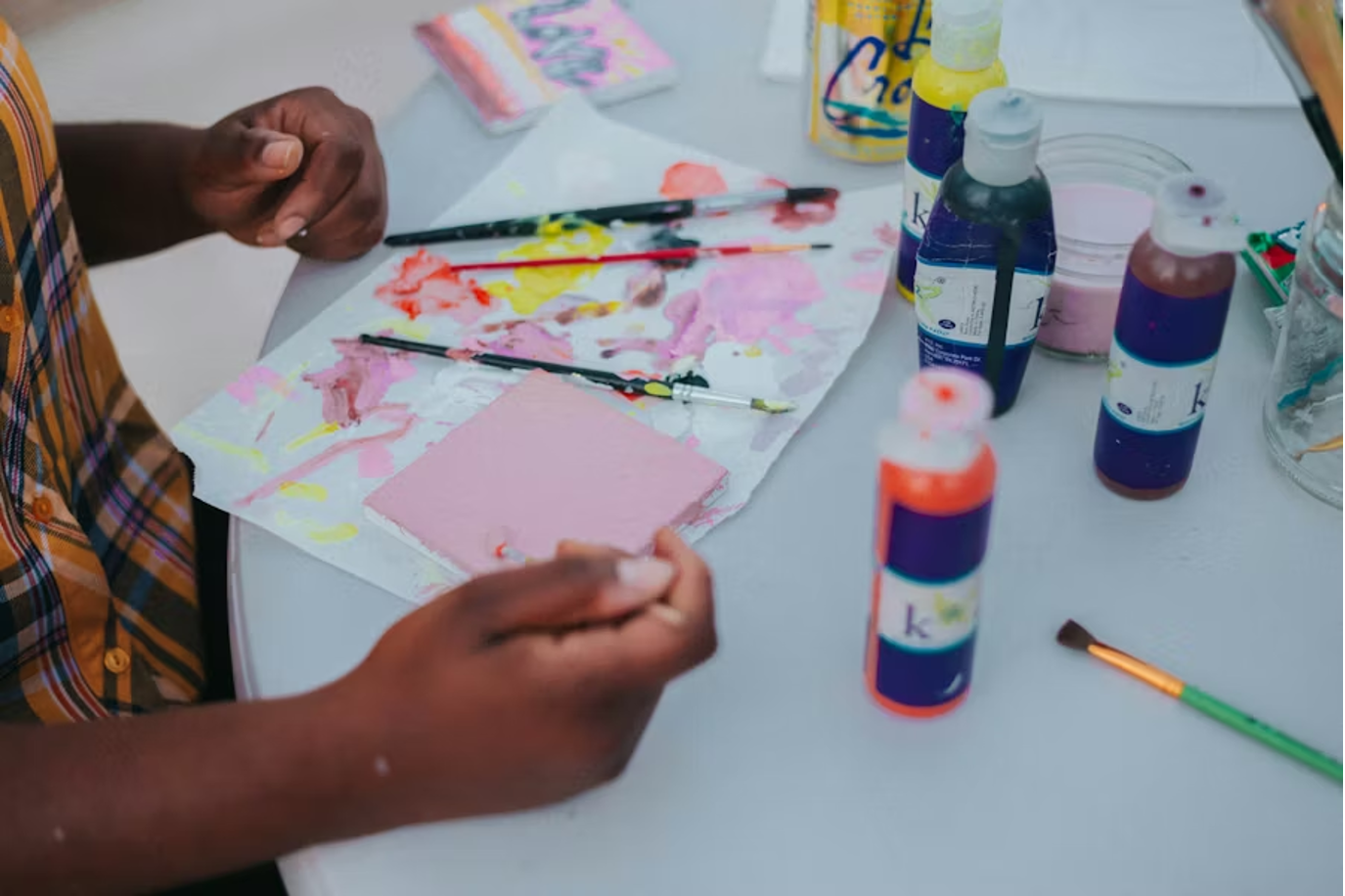
Not the hands swiping through photographs or managing itineraries, but hands engaged in something slow and deliberate. Cooking a local dish in a rented kitchen. Building sandcastles with the kind of focus that would embarrass you in front of colleagues. Or painting, which has accompanied travellers since long before travel photography existed.
Watercolour painting in particular has a long and elegant association with travel. It is the medium of the sketchbook tradition, of artists who carried small kits through the Italian countryside and across North African markets and into Japanese gardens. What made it ideal then, and what makes it ideal now, is its simplicity. A block of paper, a brush, a palette and water from the nearest sink.
The act of trying to paint a view forces a different quality of attention than photographing it. You have to actually look. You notice the angle of afternoon light on an ochre wall. You wrestle with the way water reflects clouds. You fail, revise, fail better, and produce something imperfect and entirely yours.
Packing a travel set of watercolour paints asks almost nothing of your luggage and returns something substantial. Not museum-quality work, necessarily, but a practice of seeing that changes what a holiday actually feels like while you are in it.
The goal is not the painting. The goal is the hour you spent sitting still with something beautiful in front of you.
Destinations That Encourage Stillness
Some places are conducive to slowing down. Others seem almost designed for it.
The landscapes that encourage genuine rest tend to share certain qualities: a visual scale that makes the human body feel appropriately small, a climate that discourages frenetic activity and a cultural relationship with quietness that the visitor can borrow for the duration of their stay.
Japan has long understood the architecture of calm. In cities like Kyoto, entire temple complexes have been constructed around the experience of contemplative walking. In the countryside, centuries-old onsen towns built around hot springs remain largely unchanged in their essential purpose.
But it is the mountain region of Niseko, in Japan’s northern island of Hokkaido, that offers something closer to elemental stillness. Known internationally as a ski destination of exceptional quality, receiving an average of around 600 inches of snow each year, Niseko is also a place of profound quiet outside the ski runs. Mount Yotei, a near-perfect volcanic cone visible across the valley, provides a constant visual anchor.
Winter stays here and moves to a different rhythm entirely. Days organised around snow conditions. Evenings that end in an outdoor onsen, where steam rises against a sky full of stars. The particular silence of a landscape that has been buried under several metres of powder.
For those planning an extended stay, finding the right accommodation Niseko offers is the first and most important decision of the trip. Private villa accommodation allows the kind of domestic rhythm, morning coffee by a snow-covered window, unhurried evenings with no obligation to dress or perform, that hotel lobbies rarely permit.
What Niseko does particularly well is the juxtaposition of exhilaration and stillness. You can ski through deep powder in the morning and spend the afternoon doing precisely nothing, watching snow fall, reading something you have been meaning to read for months.
Balancing Exploration and Rest
The pressure to fill a holiday is largely self-imposed.
There is a version of travel guilt that sounds like this: we came all this way, we should see more. It is the same logic that produces people who speed-walk through the Uffizi photographing every painting without stopping to look at a single one.
The alternative is not laziness. It is editing.
Choosing one or two things each day that matter, that warrant genuine attention, and protecting the time around them for whatever comes naturally. A slow morning. A long lunch. An hour of drawing in a cafe where no one knows you.
Some of the most disorienting experiences in travel are the unplanned ones: the conversation with a shopkeeper that turns into an hour-long education, the wrong turn that leads somewhere better than the destination, the afternoon of rain that forces a stillness you would not have chosen and are glad to have found.
These moments require space. They cannot be planned into an itinerary. They only arrive when there is room for them.
The Case for Returning Changed
The best holidays leave something behind in you that was not there before.
Not necessarily a philosophy or a transformation. Sometimes just a slightly different sense of what matters. A recalibrated relationship with the pace of daily life. A memory that you return to during difficult weeks and find it still works, still delivers something, which is the test of whether you were truly present.
Slow travel, creative rest and the willingness to simply inhabit a place rather than consume it are not luxuries. They are the mechanics of the thing that travel, at its best, is supposed to do.
The world is not short of extraordinary places. The shortfall, for most people, is not in the destinations available but in the quality of attention they allow themselves to bring.
Slowing down is not a compromise. For most people, that is the whole point.