Before a word is spoken, something has already been said.
The way a collar sits. The weight of a fabric against the wrist. A colour chosen not because it is fashionable but because it has always felt like yours. Getting dressed is, at its core, an act of communication. One directed inward as much as outward.
This is the part of fashion that the industry often underestimates. The runway gets column inches. The campaign gets the clicks. But the real conversation happens quietly, in the moment between reaching into a wardrobe and walking out of a door.
The Self Before the Season
Fashion operates in cycles. Identity does not.
Trends arrive with a kind of authority. They declare what is relevant, what is considered, what signals cultural literacy. And for a while, people dress accordingly. But underneath the seasonal surface, something more persistent operates.
A grammar of self that reasserts itself regardless of what is sitting in the windows of Dover Street or Soho.
It shows up in the way certain people always reach for the same silhouette. In the attachment to a particular jacket that has outlived three editorial cycles and shows no sign of being retired. In the instinct, stronger than any trend report, that says this is mine.
Style, at its most honest, is not about clothes at all. It is about the self that existed before anyone told you what to wear, and continues long after the noise fades.
Detail as Declaration
There is a reason the most memorable dressers are rarely remembered for a single statement piece.
What lingers is always the detail. The unexpected lining. The monogram worked into a cuff. The way a pocket square has been folded with practised nonchalance that suggests it was not folded at all.
These are the elements that resist mass reproduction because they resist the logic of mass consumption entirely.
A well-chosen detail does not shout. It rewards attention.
In menswear particularly, this is where identity lives. The silhouette may conform. The palette may be restrained. But something small, chosen deliberately, shifts the register entirely. It becomes the signature. The thing that, if you know how to look, tells you everything.
The Return of the Considered Wardrobe
Something has shifted in how men approach what they wear. It is not a revolution. It is quieter than that.
The appetite for the generic has narrowed. Fast fashion built its empire on convenience and volume, but the conversation around modern style has moved decisively toward intentionality. Toward fewer things, chosen with more care. Toward objects that carry meaning because they were made to carry it.
This is where personalisation enters, not as novelty, but as necessity. When everything is available everywhere, the only truly scarce thing is the specific.
A garment that reflects a particular person rather than a broad demographic. Something that could not have been algorithmically generated and shipped to three thousand other people before breakfast.
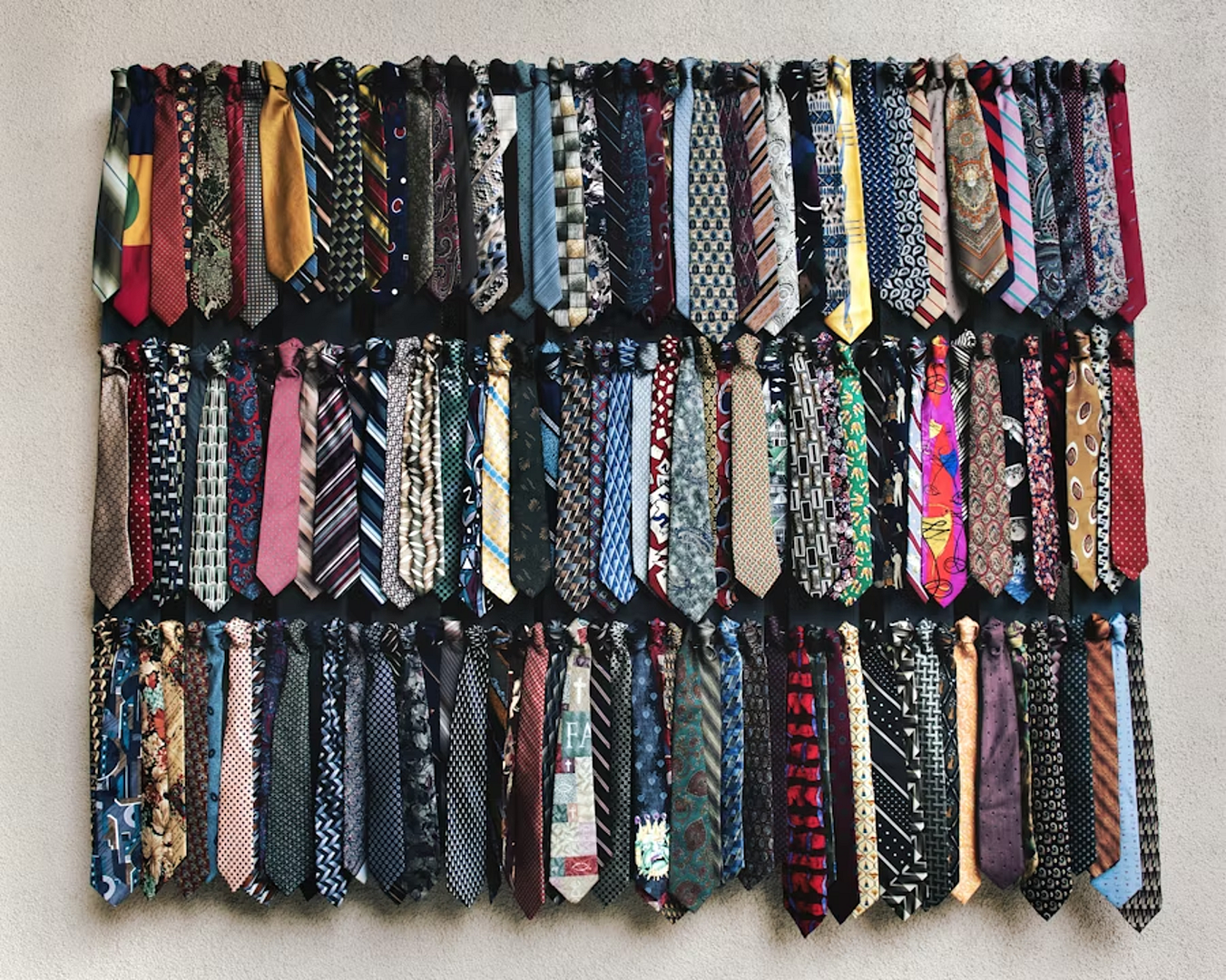
The interest in custom ties, for instance, is less about accessory trends and more about the instinct to own something that has no catalogue stocks. A colour pulled from a specific memory. A weave that recalls a textile seen once in a city still thought about. The detail becomes the story.
What Clothing Carries
There is a philosophy embedded in the act of choosing.
Susan Sontag wrote that style is the measure of the distance between the self as it is and the self as it aspires to be. Fashion, in this reading, is not vanity. It is an aspiration made visible. The daily, quiet work of becoming.
The most interesting dressers understand this intuitively. They are not chasing a look. They are constructing a language. One that evolves over time, accumulating new references while retaining the original grammar. A coat bought at 22 that still works at 40 because it was chosen honestly, not strategically.
This is also why the personal wardrobe outlasts the editorial mood board. Trends are designed to expire. Identity is not.
Dressing in the Age of Everything
We live in a moment where any garment from any era is technically available, where algorithms predict what you will want before you know you want it, and where the volume of visual reference is so vast it risks becoming meaningless.
In this context, the act of dressing with genuine intention becomes almost radical.
Not in a loud way. Not in the way that demands to be noticed. But in the way that suggests a person has thought carefully about who they are and has chosen accordingly. That the clothes are not a performance for anyone else.
That the getting dressed happened in private, for private reasons, and whatever you see now is simply the result.
This is the quiet power of personal style. It does not need permission. It does not need validation. It does not need a season to justify it.
It simply is. And in the vast noise of contemporary fashion, that stillness is its own kind of statement.