The costume designer behind a 30-million-play ReelShort hit and three international magazine covers on building characters through clothes — and recoding visual language across two continents.
Interview by Mary Smith
When we met Yu Yiwen, she had just come back from a shoot. A dense costume inventory sheet sat by her side; tucked into her notebook were several character reference images. This is her daily life on a Los Angeles short drama production. The Shanghai-born costume designer has built a working method that spans two very different production cultures, along with a visual sensibility that is entirely her own.
MS: How did you get here? The path from fashion styling to costume design for film isn’t an obvious one.
YY: Fashion and clothing have been my world since university. I did my BA in Product Design at Donghua University in Shanghai — one of China’s top institutions for textiles and fashion — so I was immersed in that environment from the very beginning. During and after my studies, I worked on celebrity styling, magazine shoots, and bridal photography art direction in China. I never left the clothing track. Then I came to the US for my MA in Fashion Art Direction at the Academy of Art University in San Francisco. After graduating, with the hands-on experience I’d built in China and a cross-cultural perspective from my training in the US, I moved to Los Angeles and began working as a Costume Designer in short-form drama production.
MS: What does your work look like right now?
YY: I work as a Costume Designer on English-language short dramas here in Los Angeles. The productions I’ve been part of include Surrender to My Dangerous Boss, which has accumulated over 30 million plays on ReelShort, and Daisy in the Gun’s Chamber, distributed in French, Italian, and Portuguese markets with over 100,000 viewers and a 7.8 rating on IMDb. Put simply, everything costume-related — every decision and every execution — from the first day of pre-production through wrap, falls under my responsibility.
MS: What does that actually involve? Walk us through the process from script to screen.
YY: It starts the moment the script arrives. The first step is a full read-through — mapping out each character’s background, personality, emotional arc, and social position. All of that feeds directly into the costume direction. A business magnate hiding his identity and a street-level nobody operate on completely different dressing logics. It isn’t just about expensive versus cheap. It’s about what someone wants the world to see, and what they’re concealing.
After the read-through, I build a character mood board and costume lookbook for every major role. These are the primary tools I use when sitting down with the director. I translate my read of a character into concrete visual references — colour palette, silhouette, period feel, fabric texture — and then we go through it all together. Sometimes the director will say a character shouldn’t look this polished, that he is actually struggling financially, or that a particular scene needs a look the audience will remember immediately. That feedback pushes me to revise. The back-and-forth is essential. The costumes have to be completely
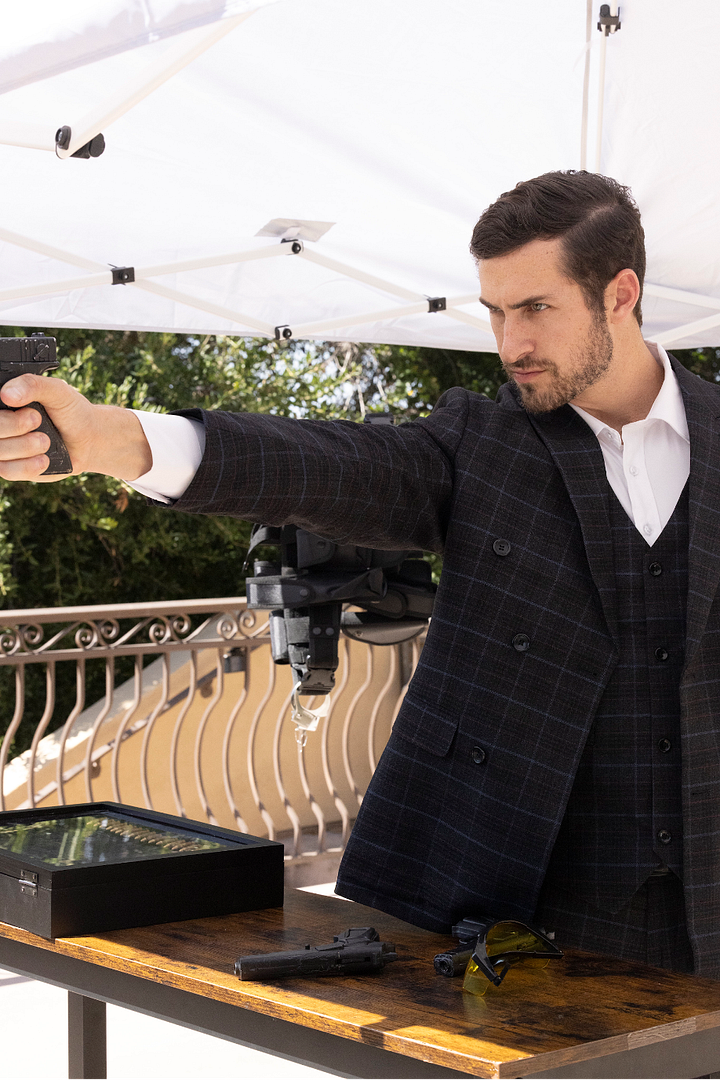
aligned with the director’s understanding of the character, or they won’t say the right things on screen.
MS: And once the direction is confirmed?
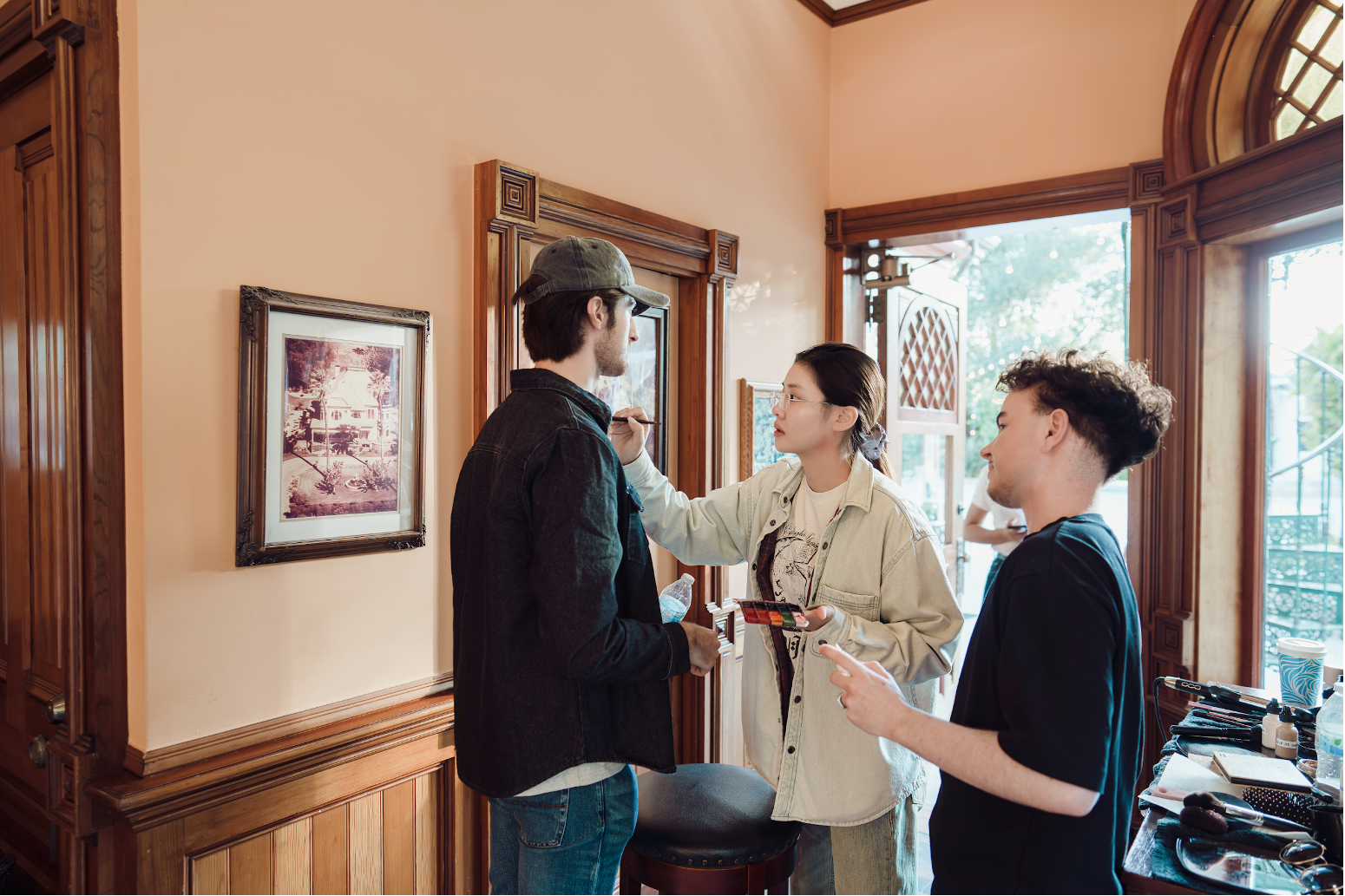
YY: We move into sourcing and prep. Following the lookbook, I go out and find the pieces — some need to be purchased, some rented, some altered. Once the clothes arrive, fittings begin. A fitting isn’t only about whether something fits. More importantly, it’s about whether the piece works on this particular actor, in this particular role — whether the camera feel is right, whether the character’s energy comes through. Sometimes a piece that looks perfect on a hanger completely falls apart once it’s on a person. When that happens, you decide on the spot: alter it or replace it.
I keep a full costume record from each fitting — every look photographed and logged, matched to its corresponding scene and shot. That documentation becomes the foundation for continuity management throughout the shoot.
MS: Short-form drama shoots are known for their pace. What’s it like managing costumes on set?
YY: Short drama shoots move fast. Sometimes you are covering many scenes in a single day, and there is no room for error on costume changes or continuity. I stay on set for the full duration. Before every take, I do a final check — wrong scene costume, a collar that has shifted, creasing from movement that needs to be smoothed out. These things get magnified on a monitor. Let them go and they will read as mistakes.
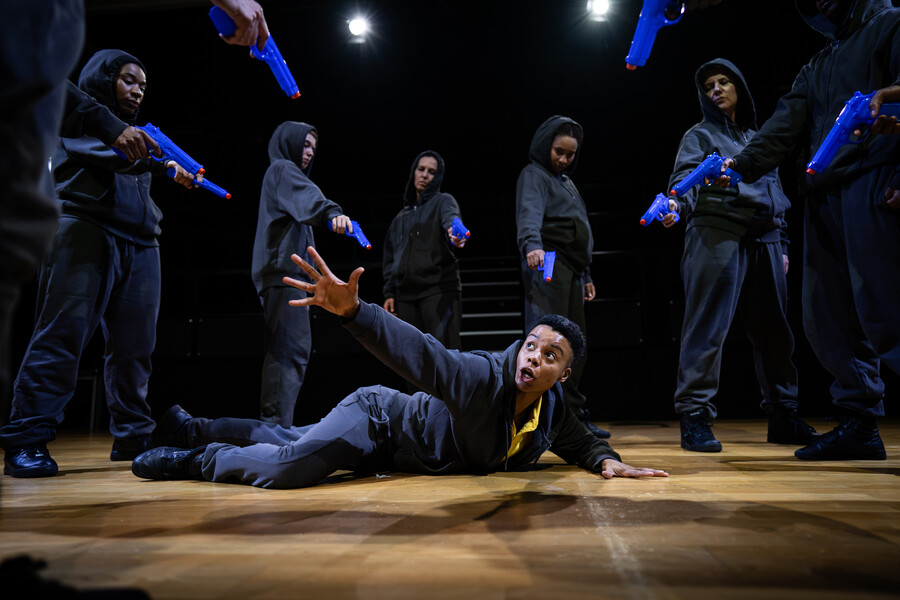
The real test is when something unexpected happens. On one production, a costume we needed for the day’s shoot had gone missing during a scene transition between locations. That piece had already appeared in earlier scenes — the audience would recognise it — so we couldn’t simply swap it out. We immediately put a backup plan into motion: sourced the closest available substitute and hand-finished it on set to bring it as close as possible to the original. The director signed off, and we moved forward. There is no time to panic in those situations. You just solve it. Everyone on set — costume, production, every department — operates with that same problem-solving instinct. Something comes up, you deal with it.
MS: Before Los Angeles, you worked across quite a different landscape in China. Can you tell us about that?
YY: A range of different projects. For Shen Teng’s performance at the finale of a top-rated comedy special, I was the on-set costume coordinator, following the production from fittings through the live taping. For Zhao Lusi’s gala performance, my role was the fitting stage — working through each look, adjusting and confirming the final state of every performance costume. For Ding Yuxi, I handled the execution styling for a brand campaign, responsible for fittings and on-set styling on the day of the shoot.
The project I owned from beginning to end was a Biotherm Homme event in partnership with L’Oréal — four comedians, each needing a fully developed wardrobe plan with multiple backup options, from the initial costume brief through to on-site execution. That one was entirely on my shoulders.
MS: Your fashion editorial work has appeared in several international publications. How does that side of your practice relate to what you do on set?
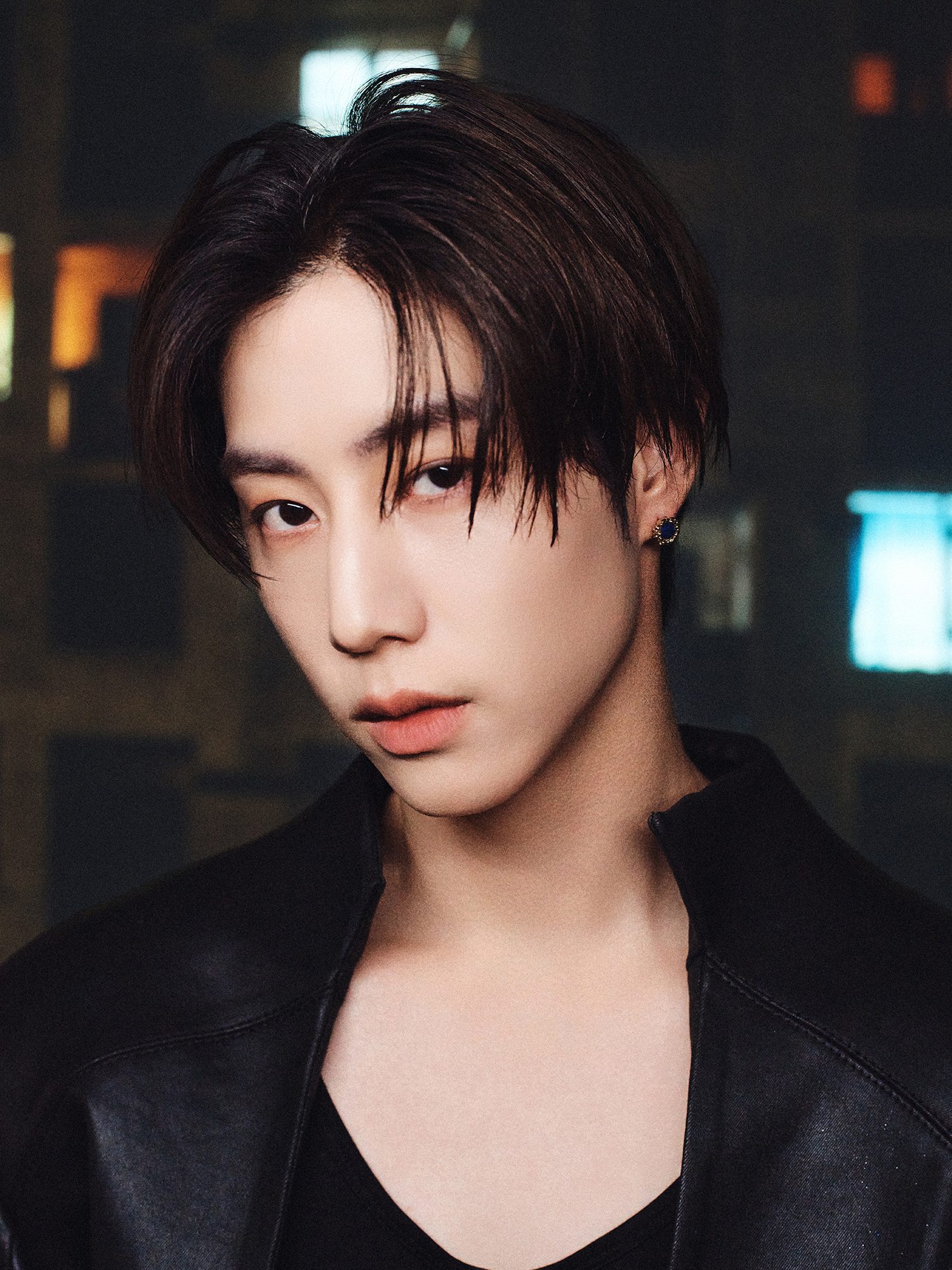
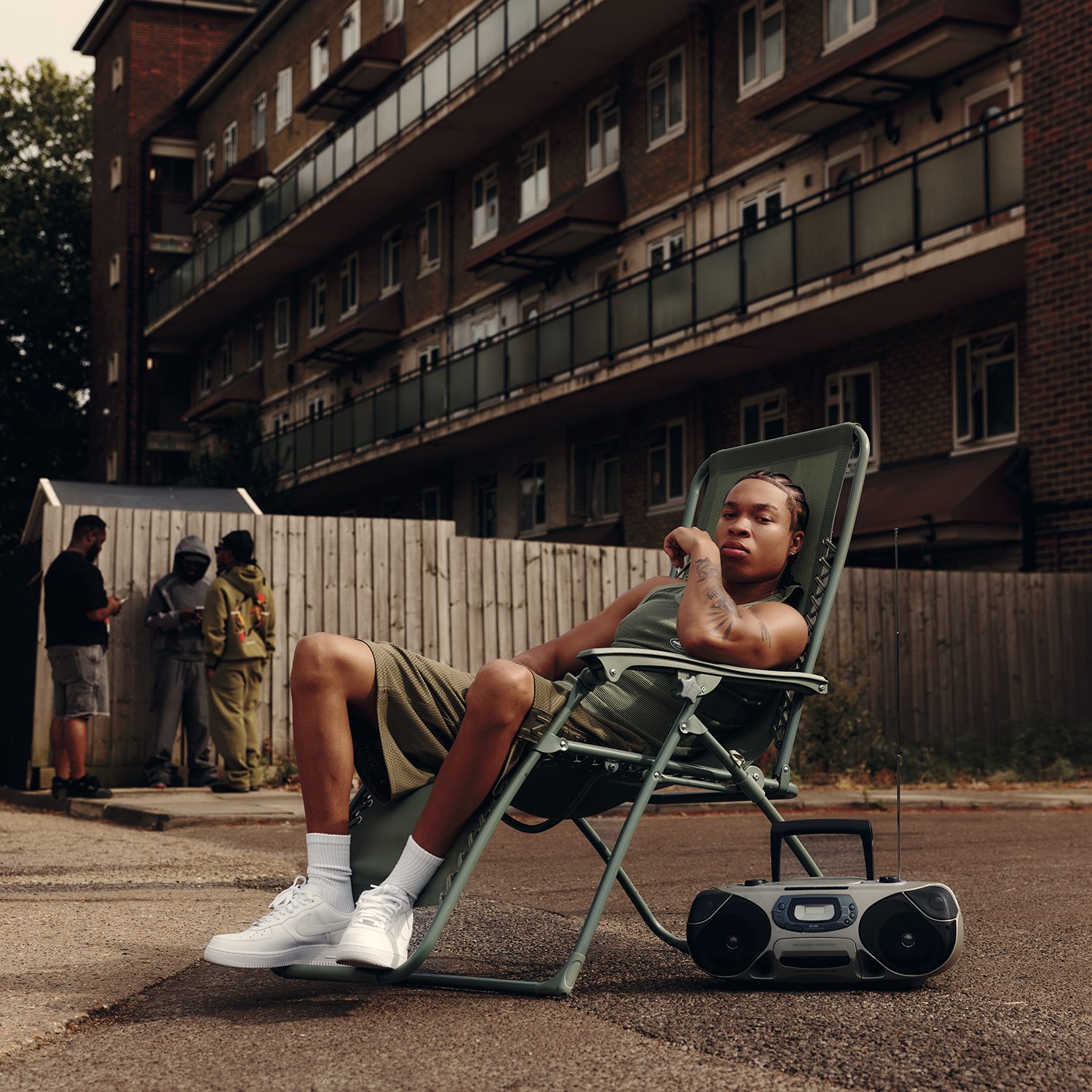
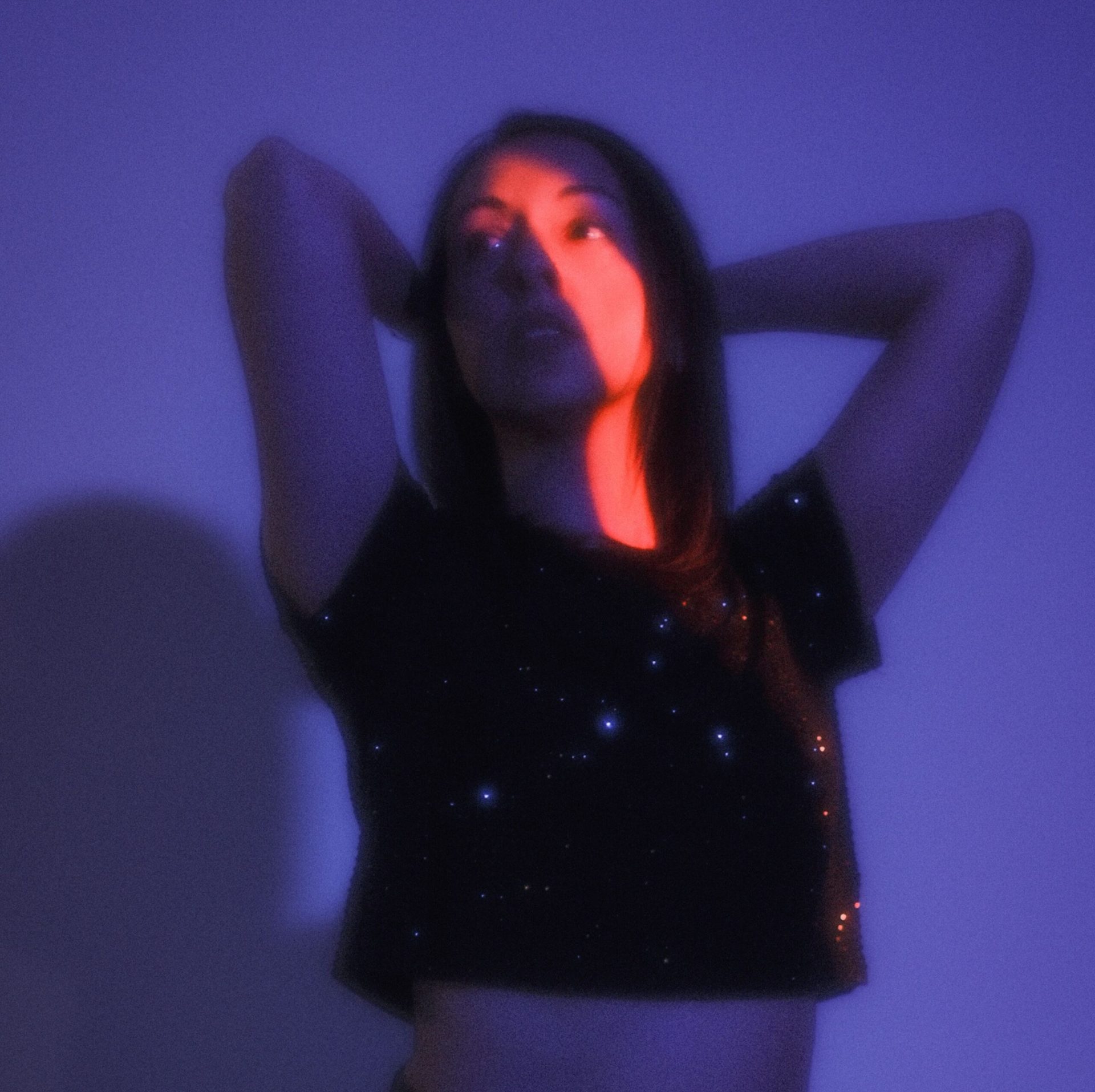
YY: Nuclear Sewage made the cover of 17:23 Magazine’s November 2023 issue. It was a conceptual fashion project responding to the nuclear wastewater crisis — translating the urgency of an environmental issue into a visual language. The work found readers, and it found a place in the archive. That mattered to me. L’Amour Magazine included my still-life styling and art direction work in their October 2024 issue, and PAP Magazine published HURRY UP, a fashion editorial I led, in their January 2025 issue.
Editorial and costume design are different disciplines, but they draw from the same instinct — understanding what a garment communicates and controlling that message within a frame. Editorial gives me space to push concepts further, to be more abstract. On set, the constraints are tighter, but the intention is the same: every piece of clothing is saying something.
MS: You’ve now worked extensively in both China and the US. What has moving between those two systems given you?
YY: The ability to move fluidly between two different visual languages. Most of the English-language short dramas being produced in the US right now are localised adaptations of Chinese originals. I understand the visual logic of the source material, and I also understand what resonates with American audiences. This isn’t translation in the linguistic sense — it’s a complete re-encoding of an entire system of visual signifiers.
A concrete example: I worked on a production where the male lead in the Chinese original was hiding his identity as a butcher in a wet market. When the script was adapted for the US, that became a mechanic working in an auto repair shop. Once the identity shifts, the entire wardrobe logic has to be rebuilt — what kind of workwear, what degree of wear and tear, what subtle details signal that this person is more than he appears. Every one of those decisions has to be made fresh. That kind of judgment only comes from having actually worked in both markets.
(Postscript: In the fast-expanding world of English-language short-form drama, Yiwen Yu represents a rare kind of practitioner — one who brings both the cultural fluency to decode a story’s origins and the technical precision to rebuild it for a new audience. Her work reminds us that costume design, at its best, is not decoration but language.)
【About the Designer】
Yiwen Yu is a costume designer and fashion art director based in Los Angeles. She holds a BA in Product Design from Donghua University, Shanghai, and an MA in Fashion Art Direction from the Academy of Art University, San Francisco. Her fashion editorial work has been published in 17:23 Magazine, L’Amour Magazine and PAP Magazine. Her costume design credits include Surrender to My Dangerous Boss (ReelShort, 30.5M+ plays) and Daisy in the Gun’s Chamber (NetShort, IMDb 7.8, distributed in French, Italian, and Portuguese). She has styled for projects involving Shen Teng, Zhao Lusi, Ding Yuxi, and L’Oréal’s Biotherm Homme.
Photo Credit to Kimo “Qimo” Li