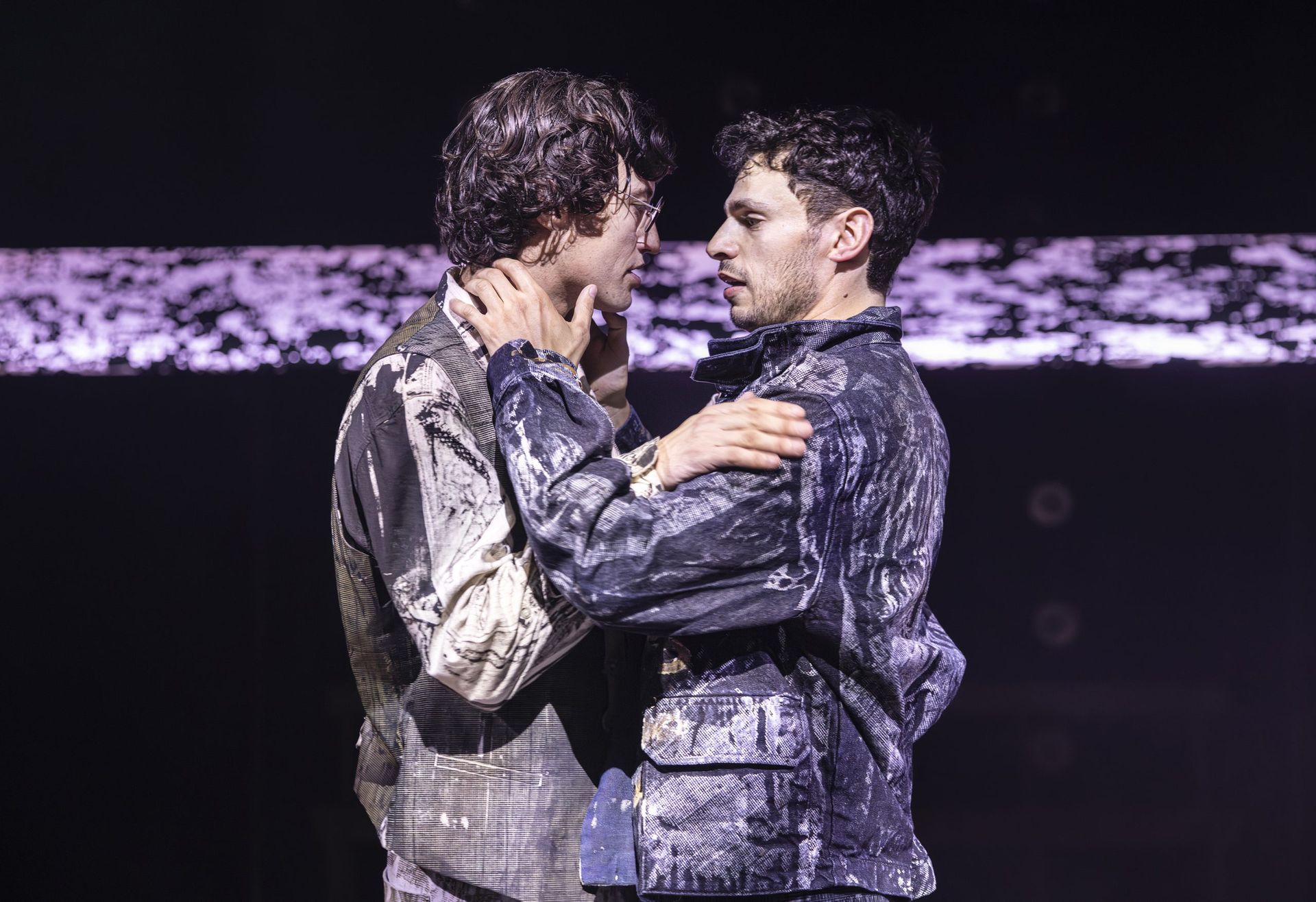
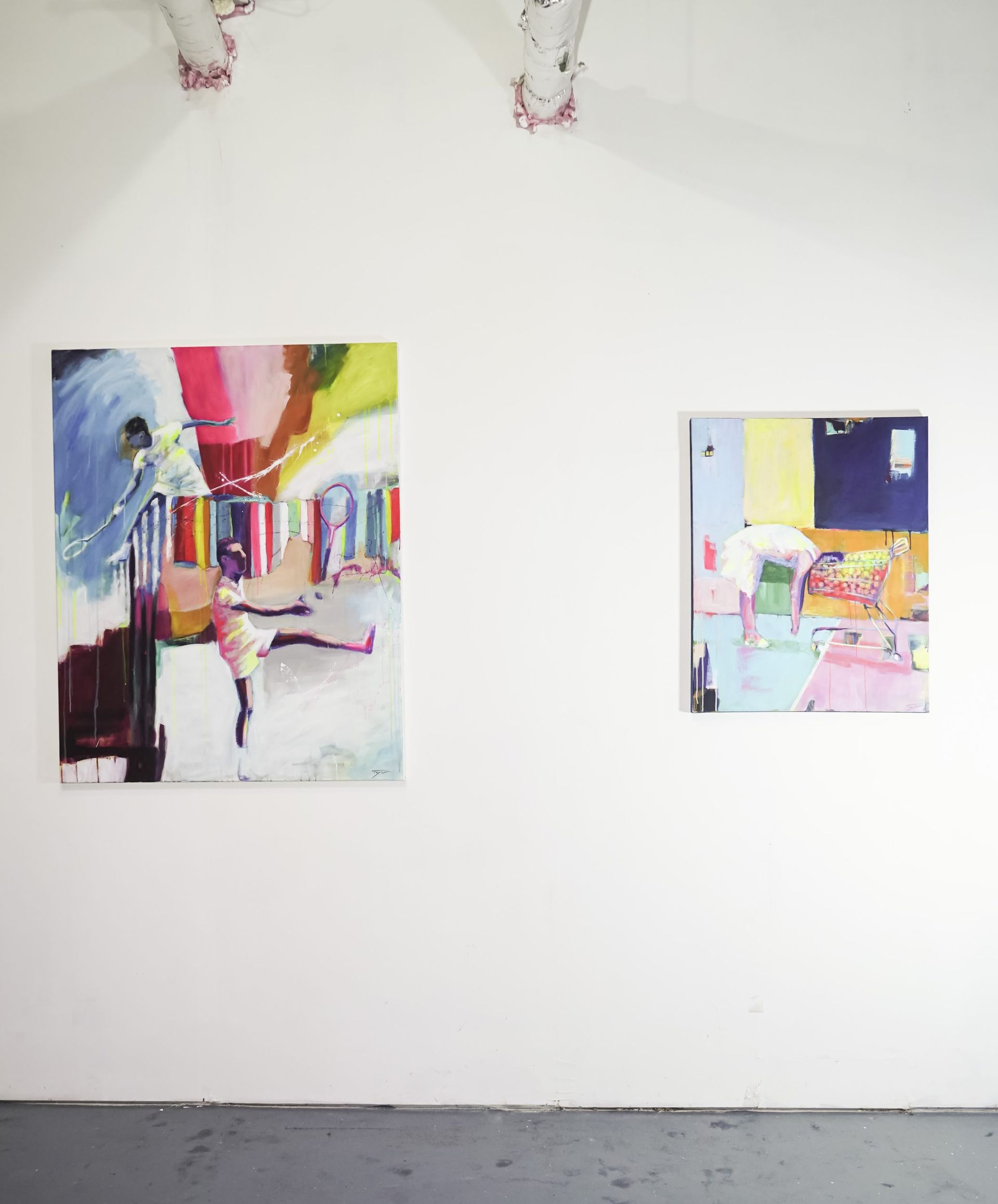
In an image-driven age dominated by speed and sensory overload, emotions and experiences have been rapidly consumed before they have time to settle. Moments have been quickly passed over before they can be memorised. Those repetitive daily routines are also slowly losing their sense of existence because people are too used to them. Contemporary life is increasingly composed of countless short fragments, and it is difficult to leave anything behind. In such a context, Faderera Wahab’s works present a rare concern for slowness, atmosphere and emotional residue. Her works have always revolved around the vague and unstable state between memory and forgetting.
Faderera Wahab was born and raised in Lagos, Nigeria, and is currently living in the UK. Her practice spans painting, photography and mixed media. Yet regardless of medium, her work consistently draws viewers into a particular emotional condition. Figures within her works often slowly dissolve into their surroundings, while the boundaries between the body and the environment become increasingly indistinct. Rather than telling complete or clearly defined stories, her works feel more like traces of memory that briefly linger before gradually fading.
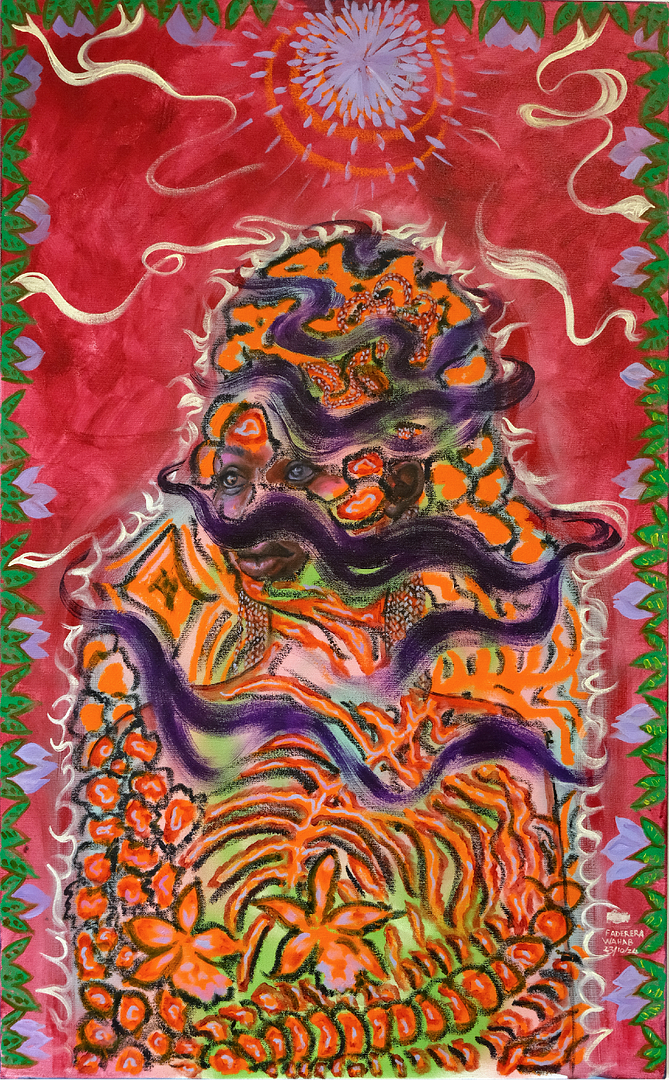
This sense of tension is especially evident in her work Disappearance Into the Night. When I first encountered the work earlier this January at an exhibition at Arrival Gallery, I felt that it was in a state of instability. The figure within the painting appears to be gradually merging into the background, giving viewers the sensation that the boundary between the self and space is beginning to collapse. The backgrounds in her paintings resemble memories carrying emotional weight, while the figures themselves never fully emerge into clarity. The subject is undeniably present, yet still feels somehow distant. It is also in this ambiguity and instability that “Disappearance Into the Night” captures a very contemporary emotion, that is, when life changes, the increasing difficulty for people to really locate themselves does exist.
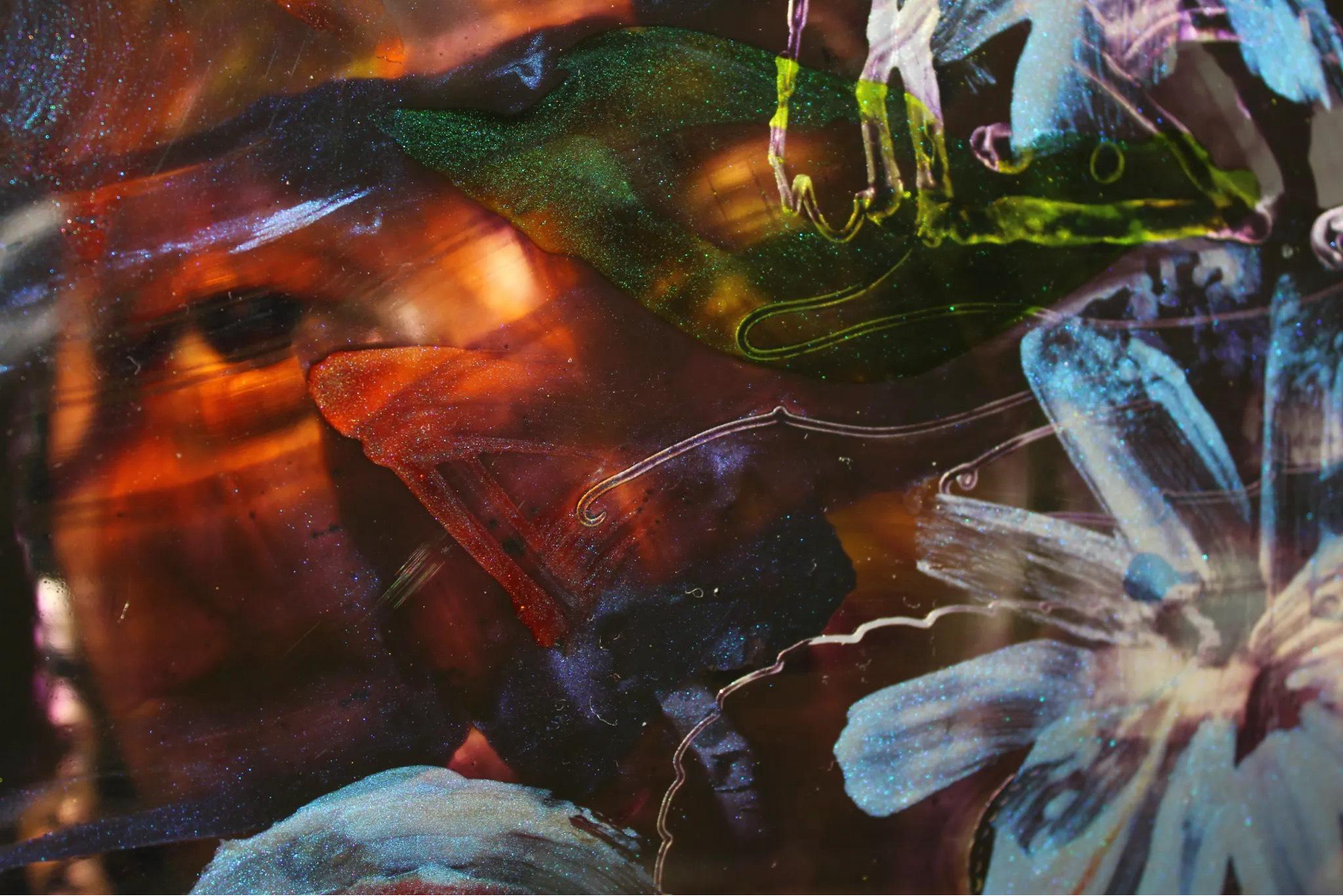
This ambiguity also reflects one of the most representative features of Faderera’s creative process. Rather than constructing the figure first, she usually begins by building the surrounding environment. The colours, textures, symbolic objects and emotional atmosphere in the background will continue to accumulate until the figure slowly begins to emerge. Therefore, the environment in her paintings is not simply a backdrop surrounding the subject, but something that actively absorbs part of the figure itself. In these works, emotions are no longer just the facial expressions or bodily gestures, but more like an atmosphere that pervades the whole space. The body is no longer the absolute centre of the image, but seems to be floating in the environment of perception and emotion. In this sense, her practice actually breaks away from the traditional portraits that emphasise the reproduction of the subject, and instead forms a visual language rooted more deeply in emotional and psychological perception. Within her work, identity is never fixed or fully stable, but constantly shifting and unresolved.
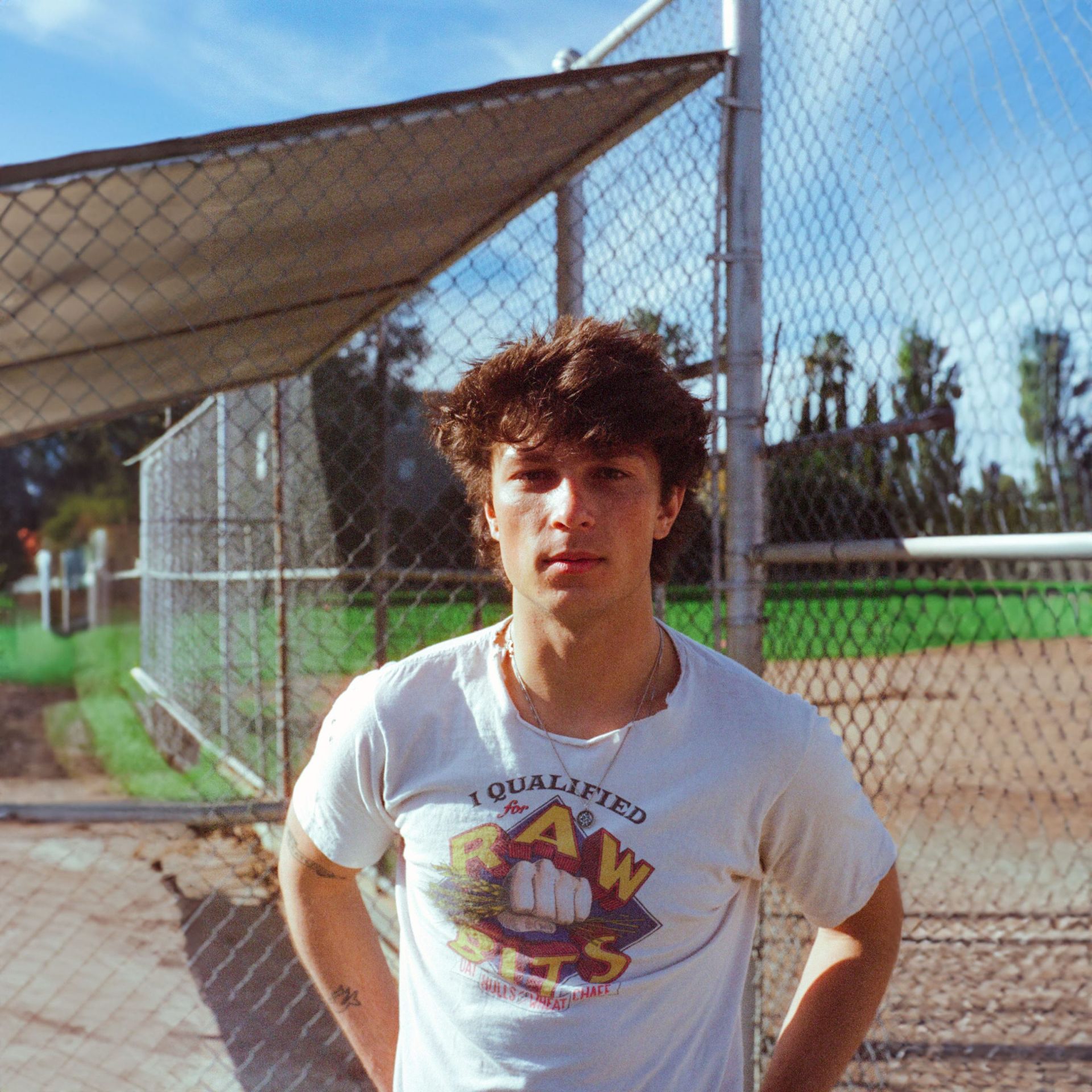
This approach continues throughout her photographic practice as well. But unlike the dreamlike quality of her paintings, her photography feels much closer to lived reality. Many of the images are actually just some moments that are easy to ignore, such as a beam of light, a brief pause, or a flash of emotion. This is evident in her photography I Hide From Myself Within Myself. Even before looking at the work, the title has brought a sense of alienation. While looking at the work, viewers experience the feeling that the self is somehow present yet impossible to fully reach. For her, the camera is not a tool to define ‘who I am’, but more like a way to constantly understand the self emotionally.
Unlike photography that emphasises perfection and post-production, Faderera’s images retain immediacy. The shifting focus, the dim light, and the casual framing make the photographs more like a real experience than a carefully designed visual work, like a kind of private emotional record that has been quietly preserved. This reflection on the relationship between photography and emotion is also central to Faderera’s practice. Her work conveys the feeling that many moments begin to disappear at the exact moment they are being experienced, including growth, memory, and one’s understanding of the self.
Some recurring motifs further reinforce this emotional atmosphere. Flowers, domestic spaces, and landscape fragments repeatedly appear in her works and are often connected to ideas of memory. Flowers in particular, which point toward memories of her mother’s garden in Lagos, transform plants into emotional vessels rather than decorative elements. Faderera constructs a visual language between dreams, memory and emotional self-observation. Her work reminds us that the most meaningful emotional experiences are often not the loudest or most dramatic moments, but rather those quiet and fleeting instances that are already beginning to disappear before we fully realise they were there.
Author: Qiwen Deng
Image Credits: Faderera Wahab