The strange thing about sport watches is that most of them are no longer used for sport.
Very few chronographs time anything meaningful. Most dive watches never see open water. Aviation watches are rarely worn in cockpits. The majority of luxury sport watches now live ordinary lives: school runs, offices, airports, restaurants, weekends away.
And yet these are the watches that continue to dominate the market.
That tells us something. The appeal of a sport watch is no longer just about what it can technically do. It is about what the design suggests. Purpose. Durability. Movement. A life beyond the display cabinet.
That is why sport watches still feel relevant in a way many formal watches struggle to match. A slim dress watch can be beautiful, but it often belongs to a narrower world. A good sport watch feels less precious. It can take a knock, sit under a jacket, work with a T-shirt, and still feel like a serious piece of design.
This is where the category became powerful. Sport watches stopped being specialist equipment and became the default language of modern luxury.
The Chronograph Became More Than a Timer
The chronograph is probably the clearest example.
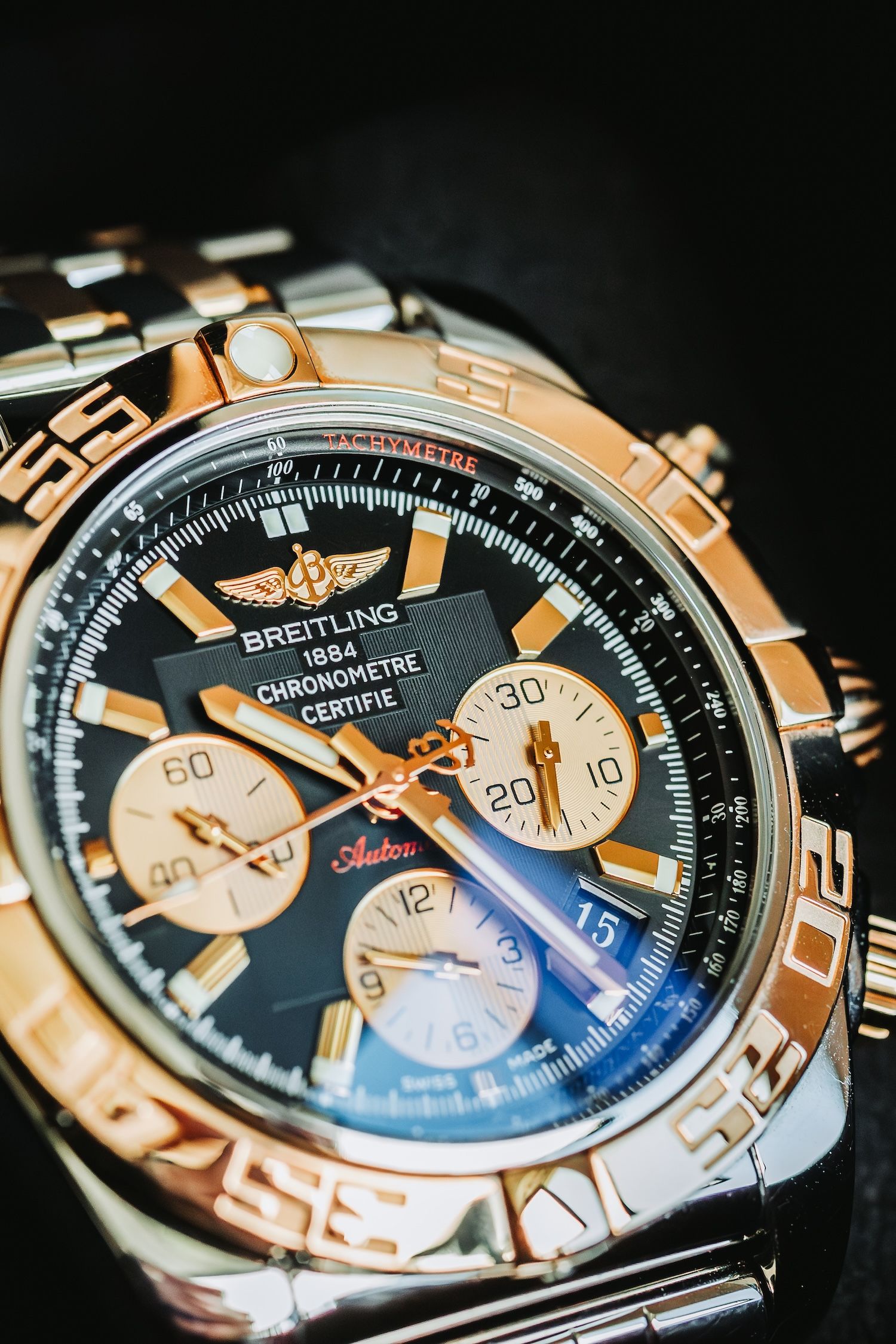
On paper, it is a timing device. In reality, most people are drawn to chronographs because of how they look. The sub-dials, pushers, tachymeter scales and layered dials give the watch a sense of energy. There is more going on, but when the design is right, it does not feel messy.
That is why motorsport watches still work so well. They carry the suggestion of speed without needing to be literal. The best examples do not look like novelty racing merchandise. They simply borrow the useful parts of that world: contrast, clarity, tension and precision.
This is one reason collectors still look closely at TAG Heuer. Their strongest designs have always understood the connection between timing and movement. The Carrera, Monaco, Autavia and Formula 1 each approach it differently, but they all sit in that same space where sport, design and everyday wear overlap.
The key is that these watches do not need to be treated as museum pieces. TAG Heuer chronographs can be worn hard, worn casually and still feel sharp. That is a big part of the appeal.
Aviation Watches Still Have Presence
Aviation watches have a different kind of pull.
They tend to be more technical, more instrument-led and often more confident on the wrist. That can be a risk. Done badly, an aviation watch becomes cluttered or oversized for the sake of it. Done well, it has a presence that few other watches can match.
Breitling built much of its identity in that world. The Navitimer is the obvious reference point, but the wider catalogue carries the same broad idea: timing, legibility, robustness and a sense of mechanical confidence.
That is whyBreitling watches remain such a strong part of the sport watch market. They are not quiet watches, and they are not trying to be. A Breitling often works because it has a clear point of view. The design is rooted in instruments, not minimalism.
For some buyers, that is exactly the attraction. In a market where many watches have become safer and more restrained, Breitling still offers something with a bit of weight behind it.
Panerai Proves Shape Still Matters
Then there is Panerai, which is almost the opposite of a busy chronograph.
Panerai’s strength is not complexity. It is their shape. The cushion case, large dial, crown guard and stripped-back numerals do most of the work. You can spot one instantly, which is harder to achieve than it sounds.
That is why Paneraistill makes sense for collectors who want something distinctive. The Luminor and Radiomir lines are not trying to please everyone. They are bold, direct and rooted in military diving design.
The proportions can be challenging, and that is part of the point. Panerai is not a brand built around disappearing under a cuff. It is built around silhouette, legibility and presence.
In a crowded market, that matters. A watch does not always need more features to stand out. Sometimes it needs a stronger shape.
Why Pre-Owned Sport Watches Make Sense
The pre-owned market suits sport watches particularly well.
These are watches designed around use, so a carefully worn example often feels natural rather than diminished. Light signs of wear can suit the character of the watch, provided the condition is honest and the watch has been properly checked.
There is also the question of choice. Current retail only shows part of the story. The pre-owned market opens up discontinued references, older case sizes, unusual dial colours, limited editions and models that may no longer be easy to find new.
That is where independent specialists such as MVS Watches have become increasingly useful. For buyers looking at brands like TAG Heuer, Breitling and Panerai, the value is not just in finding the watch. It is in understanding condition, originality, authentication and whether the piece actually makes sense.
Because the truth is simple: not every sport watch is worth buying. Some are too tired. Some are overpolished. Some are missing the things that matter. The right example is what counts.
The Sport Watch Became the Modern Default
Sport watches dominate because they fit how people actually live.
They are practical without being boring. Recognisable without always being obvious. Technical without needing to be explained every time someone notices them.
A good sport watch gives you the feeling of purpose, even if the original purpose has become mostly symbolic. That might sound contradictory, but it is exactly why the category works.
Most people do not need a dive watch, a racing chronograph or an aviation timer.
They want a watch that feels ready for more than the day will probably ask of it.
That is why sport watches won.