Battery anxiety has a way of changing how people shop for an e-bike. A rider may only travel 12 miles a day, yet start comparing machines advertised for 80, 100, or even 150 miles. Nobody wants to pedal a heavy bike home with a dead battery, so more capacity feels like the safest choice.
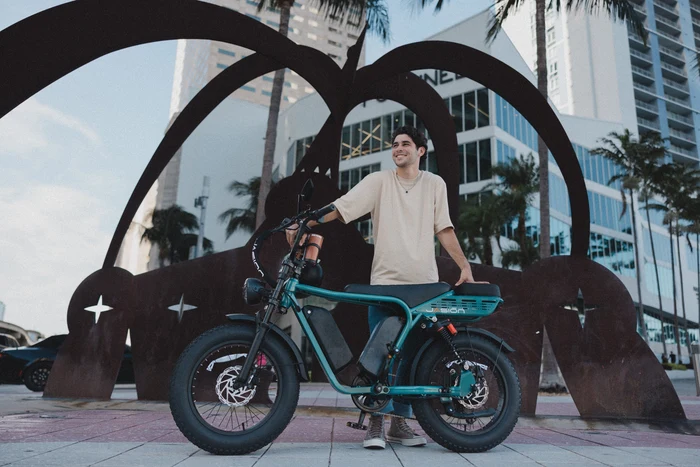
That logic has helped make dual-battery models increasingly attractive, particularly in the moped style ebike category. These bikes often combine a long seat, wide tires, relaxed riding position, and the visual presence of a small motorcycle. Adding another battery seems to complete the package.
But a second battery also adds weight, cost, charging time, and another component to maintain. A dual battery ebike can be extremely useful for the right rider. For someone whose longest journey is a short coffee run, it may be capacity that rarely leaves the garage.
The decision becomes easier when you stop asking how far the bike can go and calculate how far you actually need it to go.
Begin With Your Longest Normal Day
Do not start with your average commute. Start with the longest day you expect to repeat.
Imagine a rider who travels eight miles to work and eight miles home. A lunch errand adds four miles, while an evening stop adds another six. That creates a 26-mile day before accounting for a detour, missed turn, or change of plans.
A reasonable range buffer matters because advertised maximum range is usually achieved under favorable test conditions. Real rides include hills, wind, starts and stops, rider weight, cargo, changing temperatures, and higher assist settings.
Instead of buying exactly enough capacity for 26 miles, that rider might want a bike capable of covering the route with a meaningful reserve under normal conditions. The reserve should create flexibility, not attempt to prepare for a once-a-year trip that would be better handled with different planning.
If your longest repeatable day is well within the realistic range of one battery, a second one may add little practical value.
Read Watt-Hours, Not Just “Miles”
Range claims are easy to understand and difficult to compare. One brand may test at a low assistance level with a light rider on flat ground, while another may use different conditions.
Battery capacity provides a more concrete starting point. It is usually expressed in watt-hours, or Wh. When a product page lists only voltage and amp-hours, multiply them:
Voltage × amp-hours = watt-hours
A 52V 20Ah battery, for example, has a nominal capacity of 1,040Wh. Two batteries of that specification provide 2,080Wh in total.
That does not allow you to calculate exact mileage by itself. Motor efficiency, controller behavior, speed, tires, terrain, weather, load, and rider input still matter. Watt-hours do, however, make it easier to compare the stored energy of two systems without relying entirely on marketing language.
Also confirm whether both batteries are included in the listed price. Some bikes are “dual-battery capable” but ship with only one. Others show a second pack in promotional images while treating it as an option.
Who Benefits Most From Two Batteries?
Dual batteries make the strongest case when the bike performs work that regularly uses the additional energy.
Long-distance commuters
A rider covering a substantial round trip may not have a reliable place to charge at work. Two batteries can provide enough reserve to complete the day without carrying a charger or depending on an available outlet.
Delivery and mobile-work riders
Frequent acceleration, long operating hours, cargo, and unpredictable routes can consume more energy than a steady commute. Remaining range is not merely convenient when the bike supports paid work; it affects whether the rider can finish the day.
Heavier riders and cargo users
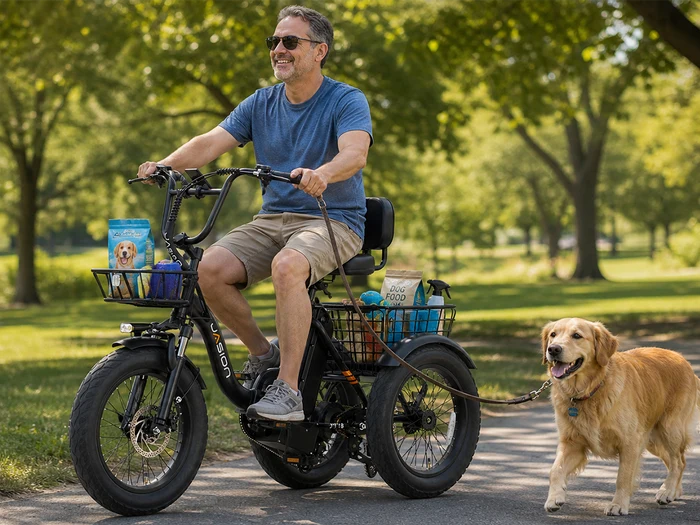
Additional weight requires energy, particularly on repeated hills. A rider carrying groceries, equipment, or a passenger may see less range than a lightly loaded test bike.
Weekend explorers
Long recreational rides often include terrain and detours that are difficult to predict. Extra capacity can create room to explore without making the return journey a calculation.
Riders in hilly areas
Climbing demands substantially more from the motor than rolling along flat streets. Regenerative braking, when available, should not be assumed to replace all the energy used during a climb.
For these riders, the second battery is not about chasing the largest possible number. It supports a routine that would otherwise involve inconvenient mid-day charging or an uncomfortably small reserve.
The Hidden Cost Is Weight
Battery capacity is never weightless.
A second high-capacity pack can add a noticeable amount to a bike that may already be heavy because of its frame, tires, suspension, long saddle, lights, and accessories. The additional weight is less obvious while the motor is assisting and very obvious when the bike needs to be pushed, parked, lifted, or turned around in a confined space.
Before buying, consider the moments when the motor is not helping:
- Moving the bike through a doorway
- Rolling it up a loading ramp
- Lifting it onto a vehicle rack
- Holding it on sloped ground
- Pushing it after a puncture
- Maneuvering it inside a garage or apartment
Some systems allow one battery to be removed when the extra range is unnecessary. That can make the bike easier to handle, but only if the manufacturer approves riding in that configuration. Battery removal may also change weight distribution.
A dual-battery bike should be evaluated at its complete operating weight, not as though the extra pack were an invisible fuel tank.
Two Batteries Do Not Always Work the Same Way
The phrase “dual battery” can describe several designs.
Some systems draw from both batteries through a battery-management module. Others use one pack and then switch to the second, either automatically or manually. Certain bikes allow the batteries to be charged simultaneously, while others require separate charging.
These differences affect convenience. Ask:
- Can the bike operate with either battery removed?
- Does it automatically balance power between the two?
- Are the batteries identical and interchangeable?
- Can both be charged on the bike?
- Are two chargers included?
- How long does a complete recharge take?
- What happens if one battery develops a fault?
- Are replacements available directly from the manufacturer?
Do not connect unrelated batteries or improvise a dual-battery setup. Voltage, chemistry, connectors, current limits, battery-management systems, mounting hardware, and controller compatibility all matter. Use only configurations approved for the bike.
Charging Can Become the Daily Bottleneck
A large total capacity extends riding time, but it also contains more energy that eventually needs to be replaced.
If both batteries are depleted, a single charger may need to be moved from one pack to the other. That can turn an overnight charge into a longer process. Two compatible chargers may reduce the inconvenience, although the charging location and electrical setup still need to be suitable.
Charging habits should follow the manufacturer’s instructions. Use approved chargers, inspect cables and battery housings, and charge in a dry location where the equipment is visible and protected from damage. A battery that is damaged, swollen, unusually hot, recalled, or behaving abnormally should not continue to be used or charged.
For many riders, the better strategy is not to drain both batteries every day. The additional pack acts as reserve capacity, while routine charging depends on how much of that reserve was actually used.
Moped Styling Changes the Use Case
Moped-style e-bikes attract riders for reasons beyond range. The longer seat, upright position, wide tires, lighting, and distinctive frame can make them feel more substantial than a conventional bicycle.
That design can suit relaxed cruising and longer rides, but it introduces practical questions. Some fixed bench-style seats offer less adjustment than a traditional saddle and seatpost. The bike may also be longer, wider, and heavier than expected.
Check rider fit rather than assuming the long seat accommodates everyone. Confirm whether the bike is designed and rated to carry a passenger before adding a second rider or passenger seat. Payload capacity must account for riders, locks, bags, and other cargo combined.
Speed, motor output, and throttle operation can also affect where a model may legally be ridden. The styling does not determine the legal classification; the bike’s actual equipment and performance do. Check current state and local rules before using it on roads, bike lanes, or shared paths.
When One Battery Is the Smarter Choice
One battery may be enough if:
- Your regular rides are short and predictable
- You can charge at home or work
- Low bike weight matters
- You need to carry the bike
- Storage space is limited
- Replacement cost is a priority
- Your occasional long rides can include a planned charging stop
A high-quality single-battery system that comfortably covers the real route can be more practical than a dual-battery bike purchased mainly for an impressive range claim.
Jasion’s RetroVolt Max illustrates the other side of the decision: a moped-style platform built around dual-battery capacity for riders who genuinely want longer days between charging stops. That capability is meaningful when it matches the owner’s routine, not simply because two batteries sound more premium than one.
Buy Enough Range, Then Stop
Range anxiety encourages shoppers to prepare for every imaginable journey. A better approach is to calculate the longest day you will repeat, add a realistic reserve, and choose a system that covers it under the conditions you actually ride.
For some people, that answer will clearly be two batteries. For others, the extra pack will spend most of its life carrying unused capacity.
The smartest battery setup is not the one with the largest mileage figure. It is the one that lets you complete your normal day without charging drama—and without making the bike unnecessarily difficult to own.