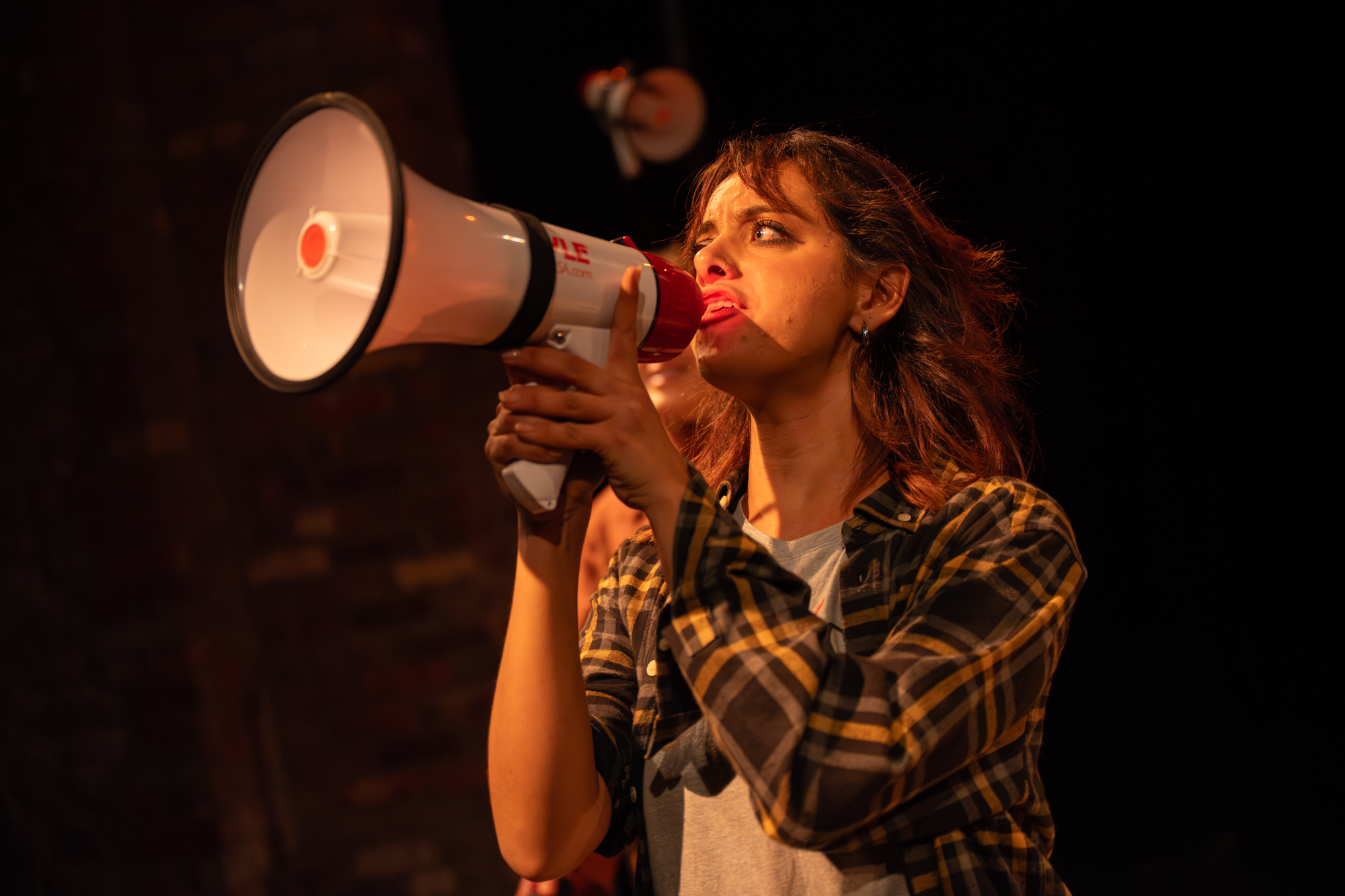
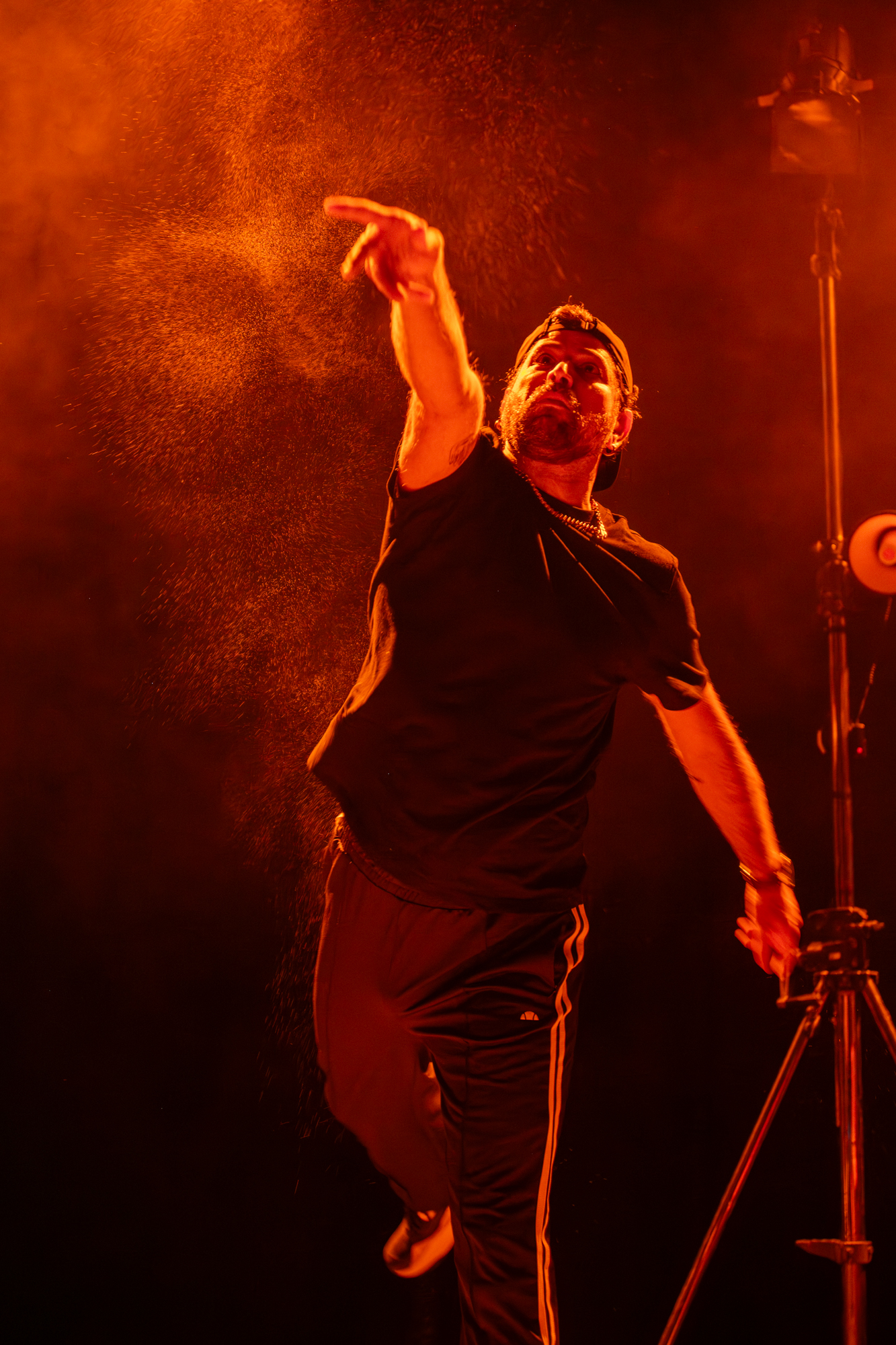
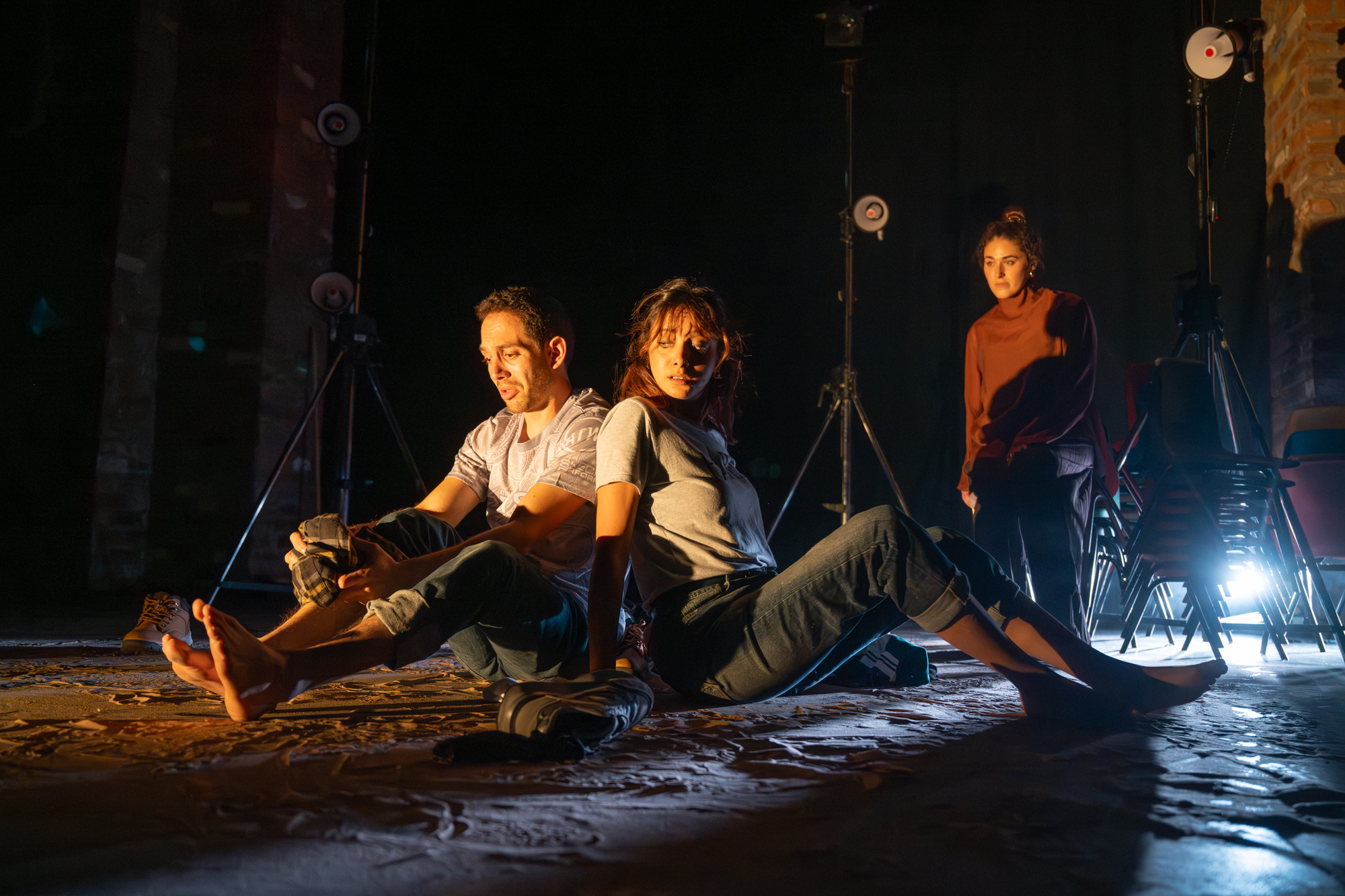
With the conflict in Gaza in the news almost every day, it might seem an unlikely setting for a comedy. But Palestinian writer Ahmed Masoud wants audiences to see the place he knows: its humour, its people, and their ambitions for the future. In Application 39, two IT workers living in 2040s Gaza copy a French bid to host the Olympics and submit it as a prank. When their application succeeds, Gaza finds itself preparing to welcome the world to the 2048 Summer Games.
Originally written as a short story in 2018, the play has taken on a painfully different significance as elements of its imagined future have become reality. Directed by Cressida Brown, the new touring production brings together political satire and real experiences from Gaza, including at least one story from Masoud’s own family.
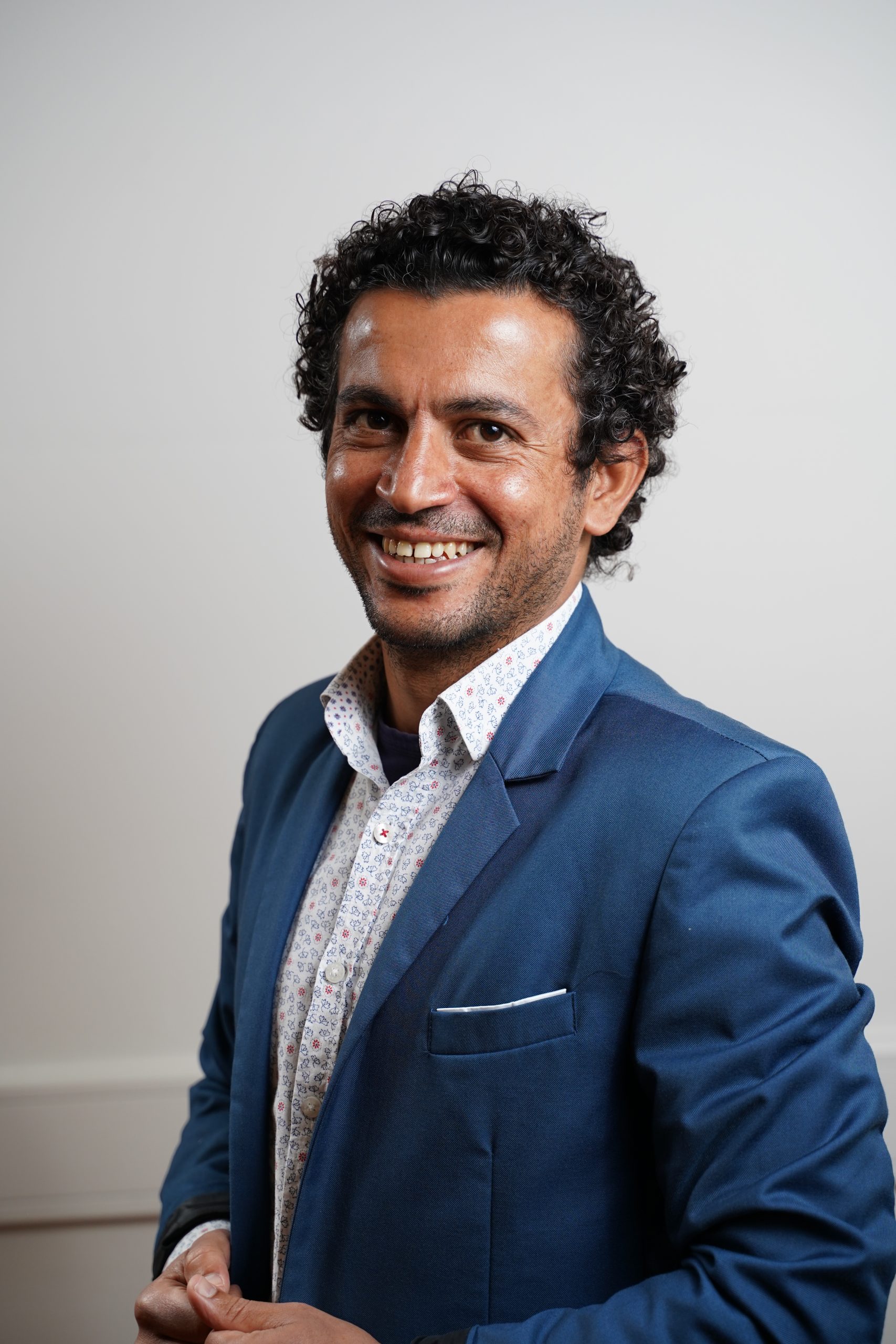
Masoud grew up in Jabalia refugee camp and came to Britain to continue his studies. His work spans novels, radio, dance, and theatre, with dark comedy running through stories that allow Palestinian characters to be funny, difficult, flawed, and fully themselves. His earlier play, The Shroud Maker, also recently returned to London’s Pleasance Theatre as part of the PalArt Festival.
As Application 39 begins its UK tour, we spoke about the Gaza he remembers, finding London through Charles Dickens, the responsibilities of storytelling, and why Palestinian voices must be part of any conversation about what comes next.
When you think about growing up in Gaza, what do you wish people could picture beyond the images they see on the news?
I’ve always said to people that Gaza is a beautiful city. It always has been. It’s a Mediterranean town with these beautiful alleys, shops, cafés, and restaurants. It’s got its own character, which is very different from the rest of Palestine and the region.
Geographically, Gaza is at a crossroads between Asia and Africa, so historically it has this mix of cultures. You can see that when you walk through Gaza City, through its historic buildings and archaeology.
You only need to see the sunset over Gaza, when the sky turns completely red and the sun is sinking into the sea, to think, wow, this is an incredible place. Obviously, I’m not talking about Trump’s version of a Riviera in Gaza. I’m talking about a simple, warm, hospitable place. The people have an incredible sense of humour.
That’s my memory of growing up there, and it’s still my memory now because the last time I was there was May 2023. I haven’t seen it totally obliterated and destroyed.
Most of my writing invites people to imagine that place and see it. My novels and plays are about taking you to Gaza and leaving you there for a bit.
You helped fund your studies through Palestinian dance and ended up forming a theatre company. How did that experience shape the storyteller you became?
When I came to the UK as an international student, I couldn’t afford the fees. I established this dance company, and our main commercial side hustle was weddings. Lots of Palestinian expats wanted traditional dabke dancing, so we used to charge quite a bit of money. Weddings are the best place to charge money because people are happy to pay up!
But it wasn’t just about the fees. I wanted to tell the story of Palestine through its culture and dance. Dabke is found in Palestine, Syria, Lebanon, and Jordan. Think of it as Irish rhythm dancing, but a lot better! We use a lot of footwork, but also the upper body and linking arms. It’s a community dance, seen at weddings, celebrations, and national events.
People connect to culture a lot more than they do to politics. That grew into dance theatre, and we did some crazy productions, such as Shakespeare’s Henry V set in Palestine through dance. It was the bravest thing I’ve ever done. We took the concepts of the few against the many, comradeship, and loyalty, and tried to put Palestine on stage differently.
I grew up quite poor in Jabalia refugee camp. Sometimes we didn’t have food for weeks, but I had access to books because my dad brought them home whenever he could find them. I read a biography of Lenin, translated into Arabic, at nine, sitting by candlelight with no electricity.
My memory of the camp is being cold. In summer, it was really hot, and in winter, really cold. I developed this affinity for stories and moving into a different world. Books give you hope and a space where the outside world somehow becomes invisible.
I studied English literature in Gaza and fell completely in love with Charles Dickens. He might as well have grown up in Gaza because those things about class and divisions in society were so visible to me.
When I came to London, it was my first time outside Gaza, but somehow it felt familiar. I thought, I’ve walked this street before. It took me about six months to realise it was because of the Dickens books I’d read.
What made the idea of Gaza hosting the Olympics the story you wanted to tell?
It was almost by accident. I made the decision to write about Gaza, to be the writer from Gaza. I like that concept of writers becoming global by writing about something local.
Carlos Ruiz Zafón, who wrote The Shadow of the Wind, one of my favourite books, wrote about Barcelona. You’ve got Abdulrazak Gurnah writing about Zanzibar, and Khaled Hosseini writing about Afghanistan. I like the idea of writing about somewhere you know so well, telling its stories from different angles.
A lot of my work explores history. The Shroud Maker goes back to 1936 and through to 2014. Then, in 2018, Comma Press approached me about writing a story set in the future. It was my first experience of that, and I thought, why not?
I started thinking about what defines cities and how people connect with them. There are landmarks, such as the Eiffel Tower, the London Eye, and Big Ben, but also sport. The Olympics are connected to cities: you think of London 2012 or Beijing 2008. So, I thought, how about Gaza hosting the Olympics?
Knowing the politics in 2018, it wasn’t hard to see that things were going to get worse. In the short story, I imagined there would be a genocide in Gaza in 2025. When I adapted it for the stage, I was quite scared. It felt prophetic because the genocide started in 2023 and look where we are now.
I also imagined Gaza divided and isolated, with robots talking to people. That’s happening now as well, with flying drones that talk to people, biometric scanning, and so on.
But I also wanted to think about how things might change. Surely there would be something after these atrocities. I wanted to imagine something beyond things becoming worse and worse. That leads into the final scene, which I won’t spoil.
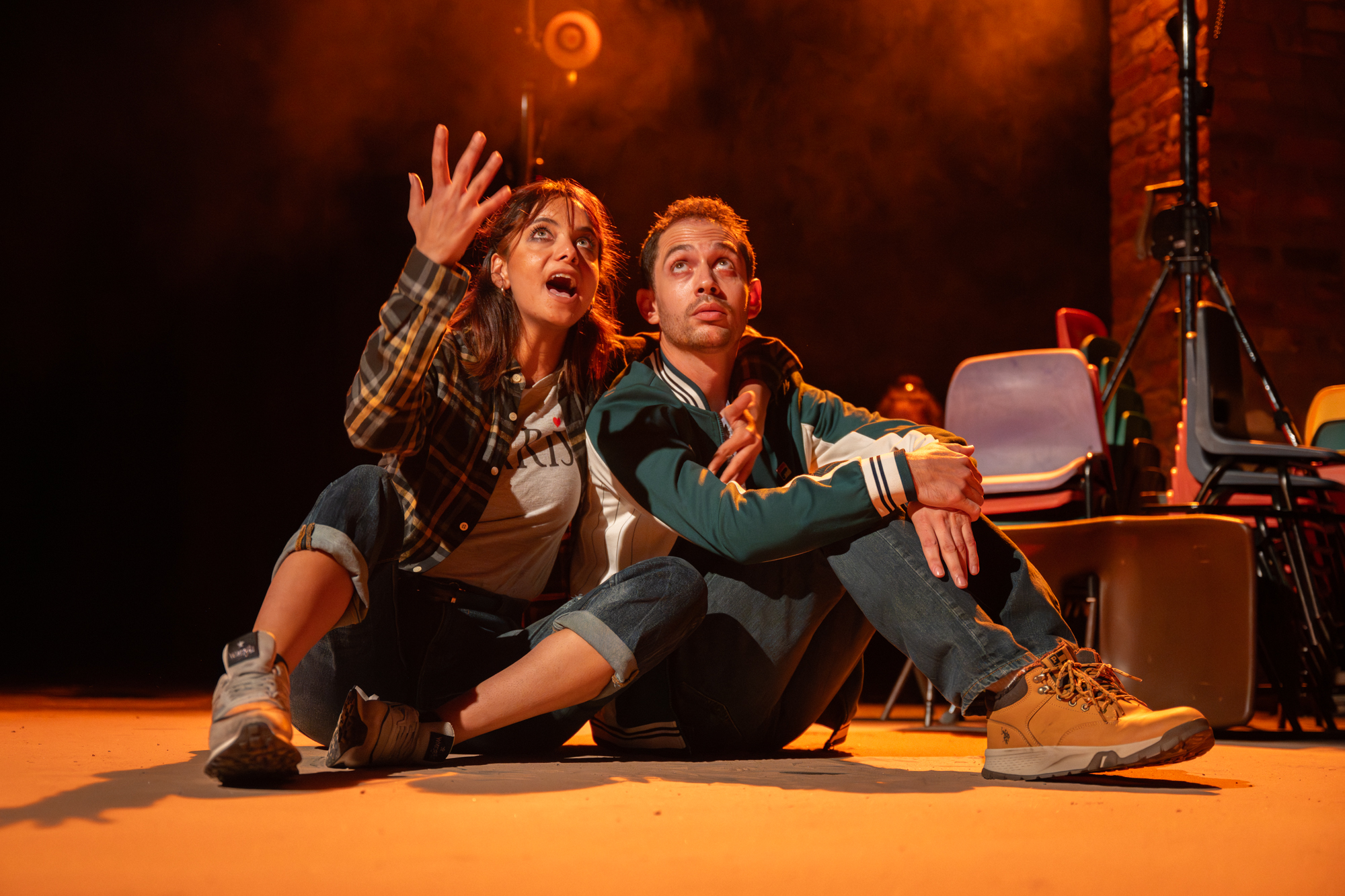
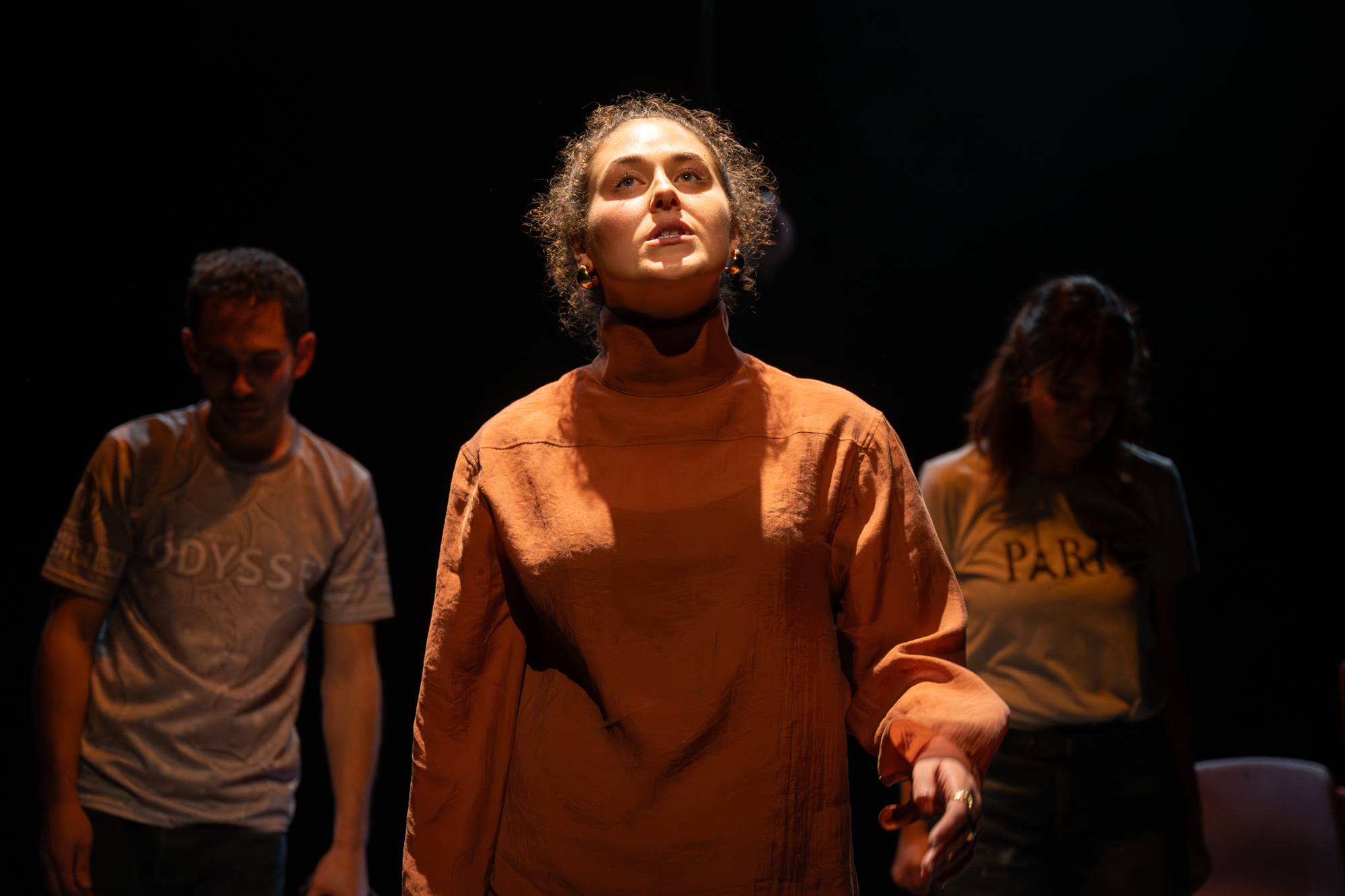
The premise is whether Gaza will be allowed, or able, to host the Olympics. There are lots of jokes because these two IT workers do it as a prank. They copy the French application, submit it, and somehow get accepted. What happens then? Do they organise it or not? That’s the plot.
How has the current genocide in Gaza changed what this play means to you?
It changed the story a lot, from the original short story to the play. I wanted to imagine the children who have survived and are experiencing this now. What will they be like in 20 years?
I wanted to challenge the idea that violence just creates violence. A lot of people say what’s coming will be worse because these children are going to grow up angry. From a psychoanalytical perspective, I understand that. But I wanted to explore how some might imagine a different way of campaigning and resisting, through sport or another way of presenting themselves and their stories.
I wanted to write about now and move forward. Before, I was just imagining the future. The other major change was that I had imagined this genocide as something fictional, and now it was reality.
There’s a scene set during the current genocide, when the two IT workers are children. They experience it and carry the story forward. That particular scene is based on my sister’s experience when she was forced to leave Jabalia. It’s exactly her story, word for word.
That’s how the writing changed from something imaginary to having a lot of realism in it.
When you’re bringing real experiences into fiction, what responsibilities do you feel towards the people whose stories you’re telling?
To be as real as possible and present the character as they are, without trying to turn them into a hero or a complete victim.
I’m not shy about criticising anybody, including Palestinian society, patriarchal practices, traditions, or political parties. The responsibility is to present the humanity of those characters and stories.
I always write dark comedy. The Shroud Maker is about an 84-year-old woman in Gaza who sells shrouds for the dead. She makes money from people dying. She was a real person I met, and the play is loosely based on her story because she couldn’t remember everything.
I wrote another play with a taxi driver I met in Gaza who was on Tinder. He was the most misogynistic character I’d ever met, and I presented him that way. I remember Palestinian friends coming to see it and asking, ‘Why are you putting our dirty laundry out there?’
But why not? We’re not perfect victims. We’re not heroes. We’re like everybody else, trying to live. We have the good and the bad, the heroes and the villains.
Being true to the people, their stories, and their humanity is my main responsibility. Beyond that, I have no political position around the parties that govern. I’m a free, independent person.
You use the word genocide directly. What does it mean to you when institutions or interviewers avoid using it?
It’s been very difficult with a lot of institutions. There are places that are scared of using the word, and for me, that means they’re complicit. We have to call things what they are. There are published reports from the UN, Amnesty International, and other organisations that have looked at this and said it is genocide.
You can’t just say you won’t use the word because it hasn’t been proved, because the Israelis will get angry, or because there will be connotations. If we do that, then we can’t call out domestic violence, for example, because we have to wait for the abuser to admit it and say, ‘Yes, I’ve done it.’ We can’t wait for the perpetrator to take responsibility before we say something is a crime.
For me, it’s insulting. If organisations don’t use the word genocide, I think they’re allowing and enabling it to continue. It hasn’t finished. It’s not over.
My family are in Gaza right now, living under extreme circumstances. Genocide isn’t just about killing and bodies. Yes, the intensity of people being killed has reduced, but the conditions in which people are living, and therefore dying, have intensified.
For women, access to sanitary products, something so simple, isn’t there. Healthcare, education, housing, clean water: all these things aren’t there.
Putting people into a tight space and closing the borders around them is a war crime. We have two million people in Gaza living practically in a tiny space. It’s an open-air prison, and everything is controlled by the Israelis. Every single thing.
Your play imagines a future for Gaza. When powerful people elsewhere announce their own visions for its future, what do you feel is missing?
A lot, especially the Palestinian voice and our choice. That’s why I feel my writing and my voice are important. It’s hearing from me, rather than other people talking about us and tailoring their version of our story to what works for them, their businesses, and their political alliances.
What’s missing is the Palestinian narrative. What do Palestinians want? This goes back to the Balfour Declaration in 1917. No one consulted the Palestinians. That’s the real issue for me, and why I continue to write and shout out loud: this is our story, this is our version.
Can you imagine a world where Hamas won the elections in 2006 and the world said, ‘Okay, that’s your choice. Let’s try to work with this’? I think we would be in a completely different reality.
Can you imagine a world where the Oslo Accords were actually applied and there was permanent peace in the region, as intended? We would be in a completely different place.
Respecting the wishes of the Israelis, of one side, and not the Palestinians has always been the problem. That has to change.
If there is a vision for Gaza, we need to be part of it. We need to build it because we’re the people who live there. We know what we want and what we need to do.
When people leave Application 39 and Gaza next appears on their news feed, what do you hope they’ll see or think about differently?
How hopeful people are, and how hard they’re trying to live a peaceful, dignified life. In the play, that’s through sport and organising the Olympics.
I’d like audiences to think about people who are just like you and me. We make choices. Sometimes we get them right, sometimes wrong, but that doesn’t mean we’re lesser than anybody else. It doesn’t mean we don’t deserve dignity and human rights.
I’d like them to leave thinking about the humour, the funny side of Palestinians, and how we love to make fun of everything.
And I’d love them to leave thinking, why not? Why not organise the Olympics in Gaza? It’s a city. It’s a beautiful city.
Let’s believe in that. Let’s believe that it can and will happen.
Application 39 tours the UK until 14 October 2026, visiting Northern Stage, Newcastle (30 Sep – 1 Oct), New Wolsey, Ipswich (6 – 7 Oct), Factory International’s Aviva Studios, Manchester (9 – 10 Oct) and Stratford East, London (13 – 14 Oct).
The play is presented by ETT (English Touring Theatre), Matthew Schmolle Productions, and Stratford East.
For tickets and further information, visit ett.org.uk
Words by Nick Barr
Production photography by Tommy Ga-Ken Wan