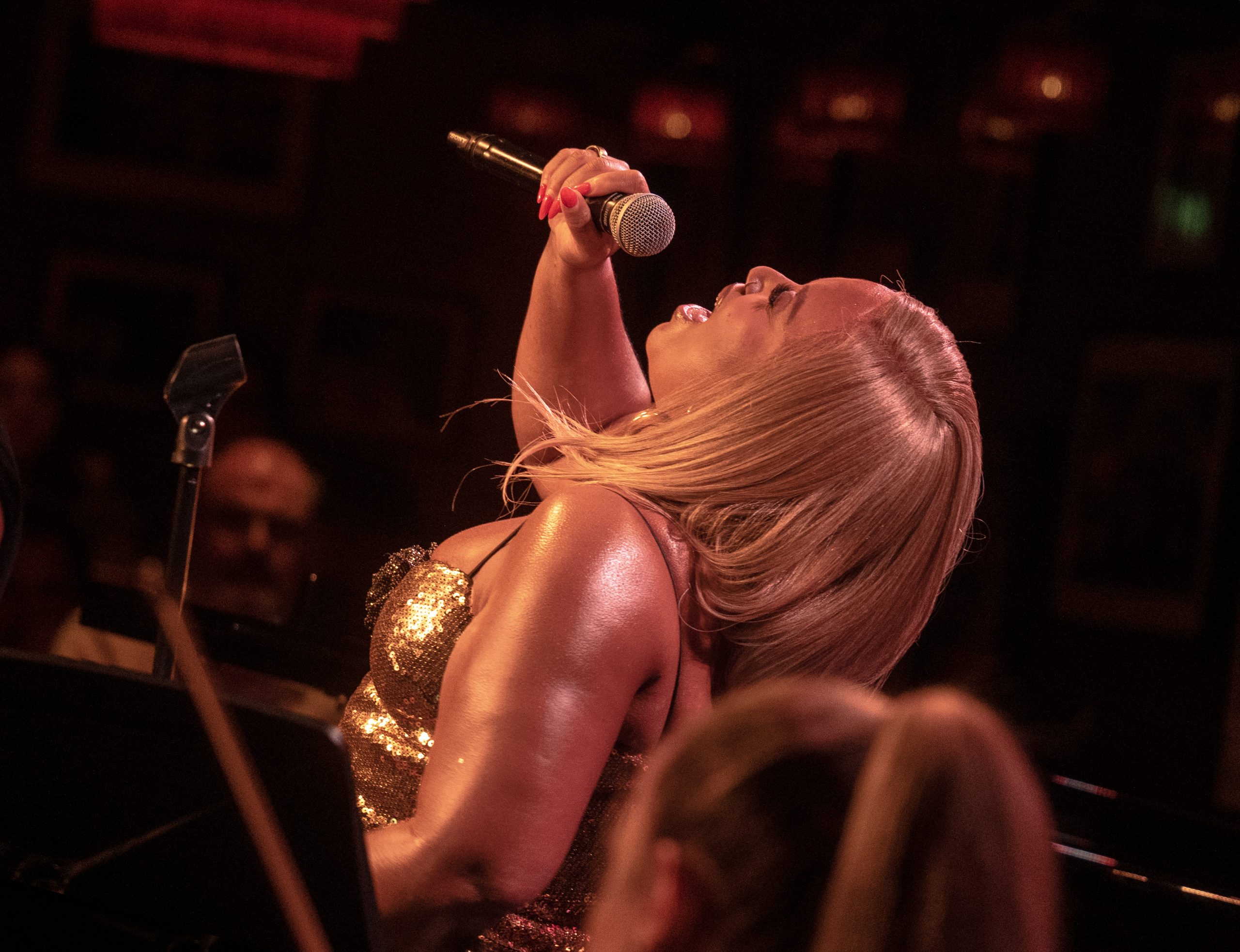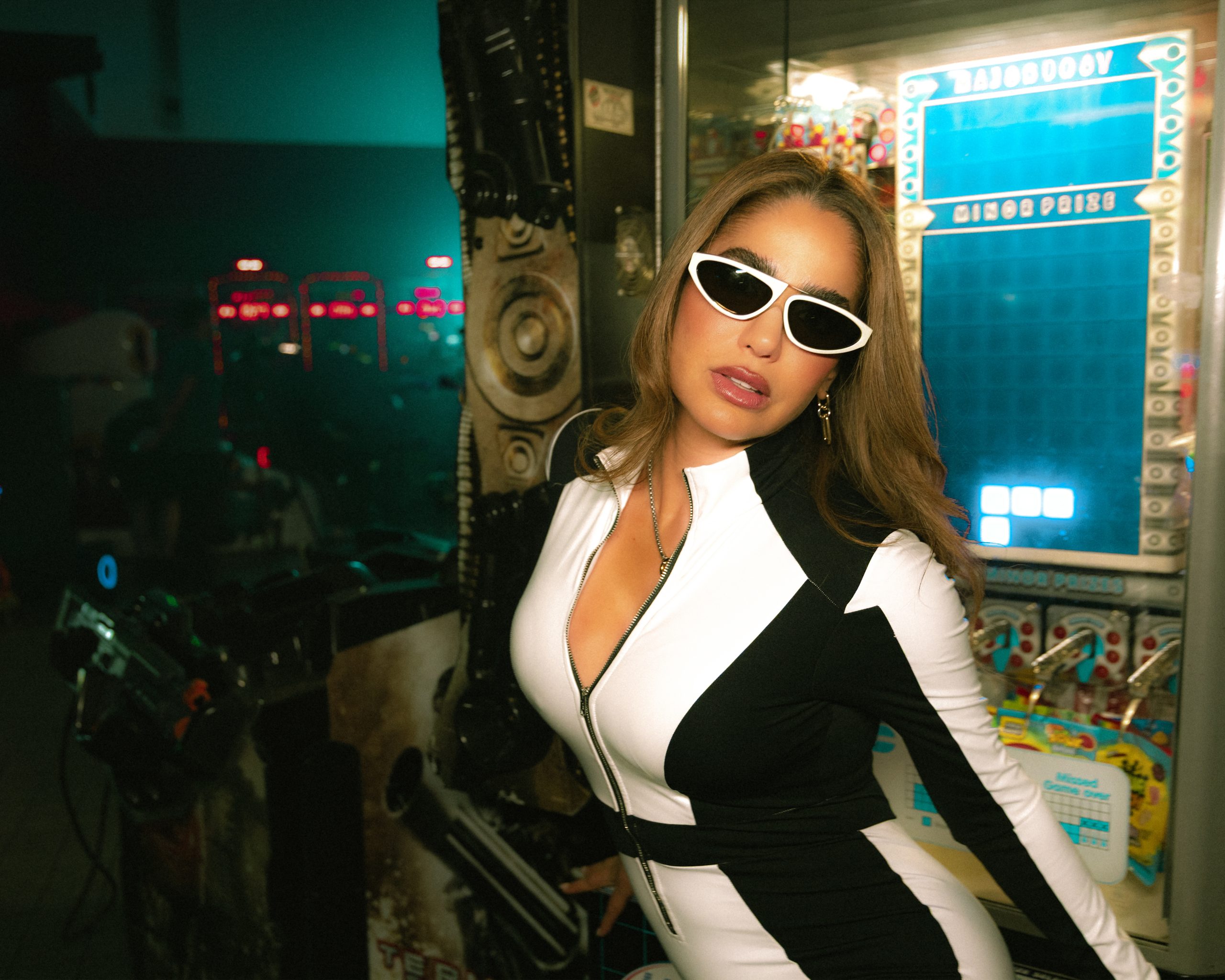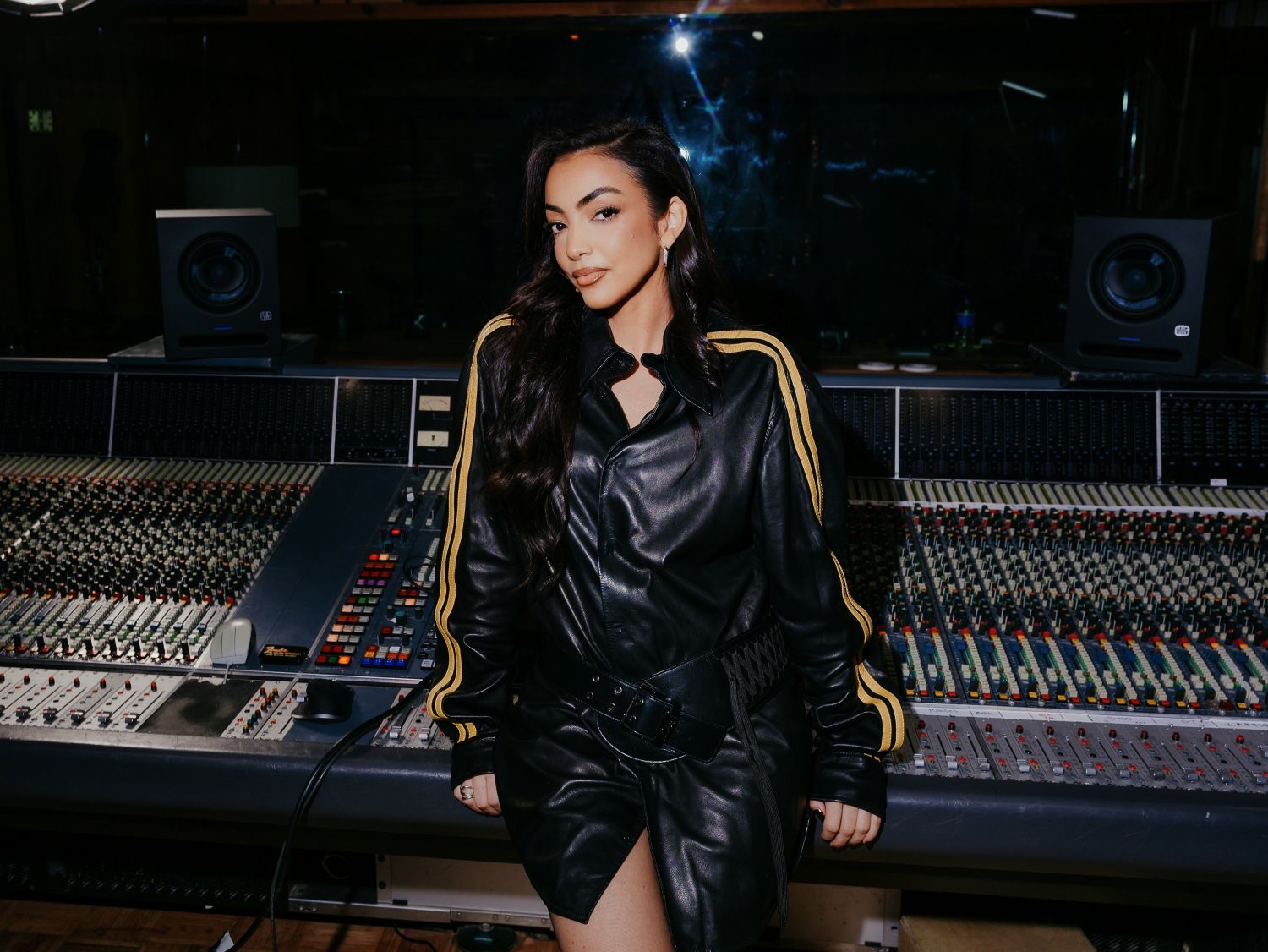
For over a decade, ALISSIA has helped shape the sounds of some of music’s biggest names. Swiss-born ALISSIA is a multi-instrumentalist, DJ, artist and five-time GRAMMY-nominated producer who has built an impressive résumé, working with artists including Mariah Carey, Anderson. Paak, Duran Duran, Doechii and Ayra Starr. Over the years, she has developed her craft behind the scenes, helping artists bring their musical visions to life. Now, she’s stepping forward with music of her own, offering audiences a closer look at the artist behind the production.
Speaking with ALISSIA, it becomes clear that stepping further into her own artistry doesn’t mean abandoning the musicianship and creative principles that have shaped her career. Her New York studio, known as the Spaceship, is equipped with instruments and analogue gear, allowing her to capture inspiration as it strikes rather than interrupt the creative process. She is equally intentional about balancing technology with live instrumentation, combining programmed elements with her distinctive approach to create a sound that feels distinctly her own. At a time when digital production tools are increasingly prominent, she remains committed to preserving the craft and spontaneity that have informed her musical journey.
ALISSIA is also vocal about the need for greater opportunities for women in production. As the ninth woman in GRAMMY history to receive a Producer of the Year nomination, she believes meaningful change requires more than conversations about representation. She wants artists, labels, A&Rs and executives to be intentional about bringing women into studios and giving them opportunities to demonstrate their talent.
With releases including ‘Hypnotic Night’ featuring EARTHGANG and Nile Rodgers, and ‘Can’t Get Enough’ with Anderson .Paak, ALISSIA is bringing her experience as a producer, musician and DJ into her own artistic work. Her forthcoming project offers audiences an opportunity to discover another side of an artist who has spent years helping others realise their creative visions. Speaking with 1883, ALISSIA reflects on the evolution of her artistry, the importance of live musicianship, the realities of navigating the production industry as a woman, and what she hopes listeners will take away from her music.
Hi, how are you?
Hey, I am good, thanks. Happy to be home. Where are you based?
I’m based in London.
Okay, I was just there. I was just there during Fashion Week.
Were you? No way. So was I.
Yeah. I was in Paris, London, Milan, and then back to Paris, and I just got back yesterday.
That’s crazy; we could have met up in person in London then.
I know.
It’s all good though. How has the run of Fashion Week been going for you?
It’s been good. I went there because I was DJing for an event, and then I stayed and attended some shows. It was very, very intense but good. But it feels good to be back in New York.
I can imagine. Which fashion week was your favourite? In terms of country, of course, if you want to name the show, go for it.
I love Paris. The energy during that time is amazing because everybody’s there, which is really fun. Milan was great too, though. I think my favourite show was Prada. That was definitely the highlight for me.
This year was good because we approached it strategically. I didn’t do a million shows; I focused on a select few, which meant I could really enjoy the experience. I also attended a lot of events, so overall, it was good.
Sounds super fun. You also looked very nice. I saw on your Instagram some of the outfits that you wore. Think one of the shows- I think it was maybe a Prada show. The outfit was T.
It feels nice to get dressed up and be in that vibe for a little bit. I’m mostly in the studio, so it’s nice to get out and enjoy being outside.
Funny enough, I’ve noticed you call your New York studio the spaceship. And it feels like more than just a studio from the way you talk about it. What does a perfect day inside the spaceship actually look like? Who’s there, who’s playing?
Honestly, I love my studio so much. I’ve dreamed about that kind of setup for years, and I’ve been collecting gear for a long time. It was really nice to finally set everything up the way I wanted. I have a lot of analogue gear, synths, guitars, basses, pedals, drums and everything, so I wanted it all set up and switched on at all times.
I’ve noticed that in other studio settings, when you’re working with an artist and start playing something on the Rhodes or on a synth, by the time you turn everything on, grab a pedal and run the guitar through it, it can break the flow of inspiration. I’m such an in-the-moment person, and I feel like you have to catch those moments. Sometimes, they’re what turn a song into something beautiful.
I’ve been in situations so many times where you have to wait 15 or 20 minutes while trying to make something work, find a cable or track down a power cord. Those technical difficulties can interrupt the creative process.
So, whenever an artist or musician comes through, everything is ready to go. We just have to press record and focus on the music rather than the technical difficulties.
I didn’t really answer your question at all! But I’d say a perfect day in the studio is about having good energy, working with fun artists and musicians, and just vibing out and making music. Whenever I cook up in here, it’s always the best because of the way everything is set up and how smoothly the workflow runs.
Why do you call it the Spaceship? I could be completely wrong, but it sounds like a name that you’ve thought about for a really, really long time.
Yeah, you know, everything with artists is intentional. (laughs)
Yeah, exactly.
The Spaceship came about because one of the reasons I started playing bass in the first place was my love of funk legends, including P-Funk, Bootsy Collins, Larry Graham and the Brothers Johnson. I was a huge P-Funk fan. They were a big part of what made me want to become a better musician. Synth-wise, I started transcribing everything. I’ve gone through different phases: the MJ phase, the Prince phase, the P-Funk phase. They’re all still part of me now.
At that time, I really admired P-Funk and the way they dressed. It was so iconic. They created a new way to express themselves, not just through music but also through their clothing. It was revolutionary back then, and it helped pave the way for a lot of rappers who later adopted that whole look, with the fur, the leather and all the extravagant styling.
They were also among the first to bring a huge spaceship onto the stage for their live performances. It was called the Mothership, and I think it’s now in a museum in DC. They built this whole concept around it, with Mothership Connection and everything. It was so revolutionary.
I’ve always been drawn to the idea that when you make music, you’re entering another dimension somehow. It’s another language, another world, somewhere out in space. The Mothership was always a reference point for me, so I called my studio the Spaceship. It’s a nod to that whole P-Funk world, but also to the feeling I get when an artist comes through. I feel like we take off and enter another dimension where we just make music.
I love that feeling. It’s hard to explain, but it’s almost like the world stops and you just focus on the music. That’s why it’s called the Spaceship.
Well, thanks for sharing. It’s nice that it keeps you centred on why you’re doing it and reminds you of all the phases that led you to this point, where you now have your own studio.
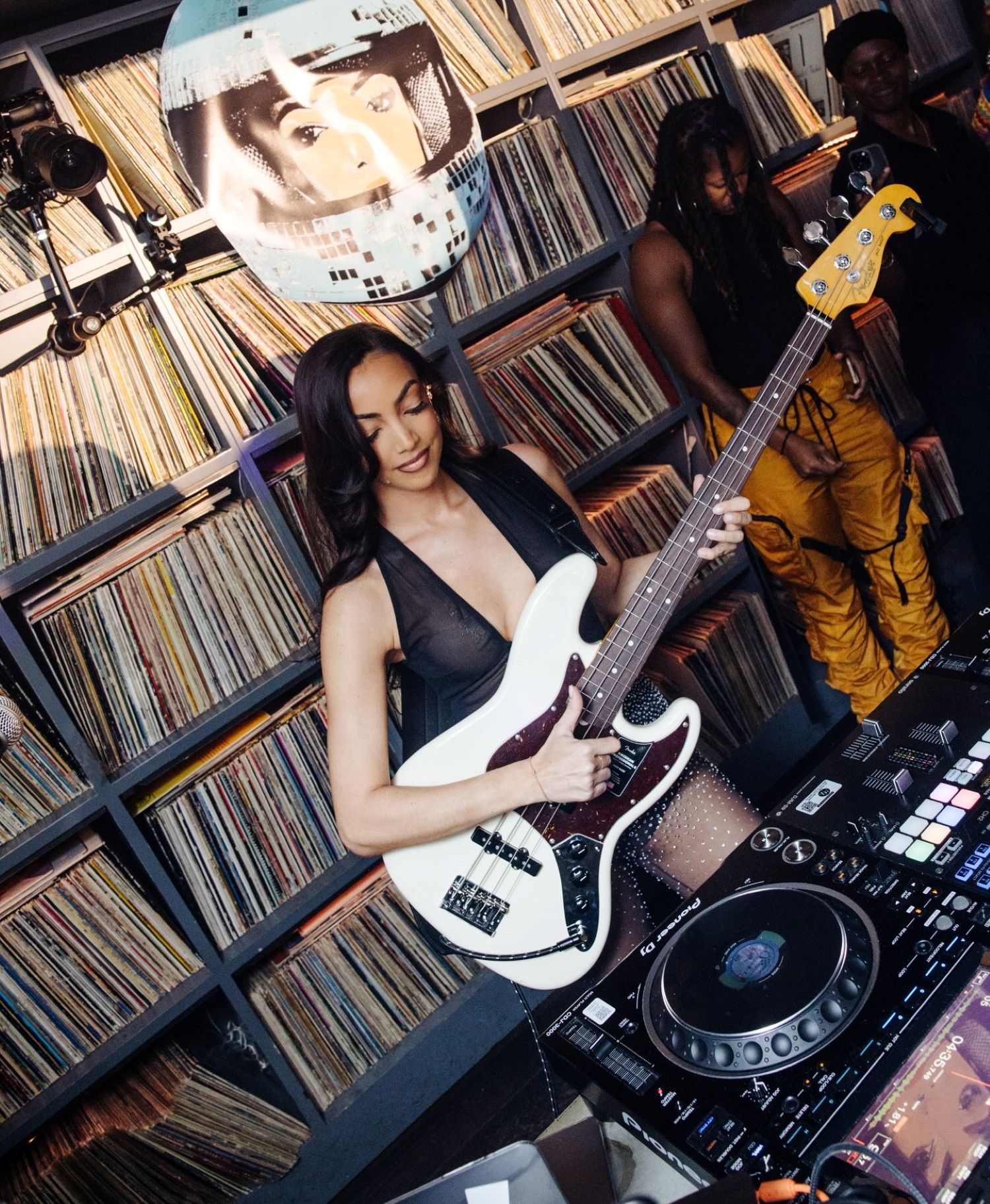
There’s a big picture of James Brown on my wall, which I’ll show you, and another of Sly, Bootsy and Larry Graham. They remind me to ask myself, “Remember why you started in the first place?” I’ve been in music professionally for about 15 years now, and I think sometimes, when you get caught up in the day-to-day work, you forget why you started and what that initial passion felt like. Having those pictures around me, along with my huge vinyl collection, reminds me of that. It keeps me grounded.
You spent years helping shape other artists’ worlds, and now you’re building your own as an artist. What did you want this new chapter to reveal about you that people couldn’t necessarily see through your work as a producer?
I really love making music, but I also love helping others realise what’s in their minds and bringing their projects to life. That’s what I enjoy most.
Now, as I enter this new chapter, I’m still producing for others, but I’m also stepping more into the forefront and releasing my own music. I’ve been DJing for years, and lately, as I’ve been DJing more, I’ve found myself thinking, “I’d love to spin my own music.” I already play a lot of the music I’ve produced, but I feel like many great producers have gone on to develop their own projects, and people have responded well to that. I just hope people enjoy my music as much as I enjoyed making it.
I’ve always had this alter ego because I’m a very chill person. I’m not the loudest person in the room, whether in general or in the studio. I’ve always communicated through my music and kept things relatively low-key. Now, I feel like I’m entering a world where people get to meet that alter ego and experience the musical world I’m stepping into as an artist. To me, it’s a continuation of what I’ve already been doing with other artists, just with a different spin.
My latest single with Anderson .Paak, Can’t Get Enough, is an example of that. It came out of years of collaborating with him. Often, artists have a specific vision for their projects, and sometimes a song I’ve produced doesn’t fit what they’re working on. I’ve always wondered what would happen if I had that vision myself. With Can’t Get Enough, I thought about what I’d love to hear Anderson sing and what kind of track I’d want to create for him.
So, I guess it’s really a continuation of what I’ve been doing all along, while introducing the world to a slightly different side of me.
Is your alter ego completely different from who you are as a person? Will there be a difference in your style or persona? For example, will you be more outspoken or the loudest person in the room?
When I step on stage, enter the DJ world and perform with my bass, I feel completely at ease. It’s something that really fulfils me. I took a long break from performing live so I could focus on being in the studio and making songs for other people. Reconnecting with that feeling just feels right.
When I first started as an artist, I was still very early in my career. I didn’t sign a record deal because I didn’t feel ready. I felt like I needed to learn more before taking that step. There are so many young talents out there now, but I really believe in taking the time to develop yourself, understand who you are as an artist, try different things and figure out what works for you and what makes you special.
So, I wouldn’t say it’s a completely different person. I call it an alter ego, but it’s more about experiencing another side of myself. People have seen me in the studio for much of the past ten years, and now I’m spending a little more time outside of it. It also comes in phases. Sometimes I’m locked in the studio for six months, then I’m doing shows and mini-tours for four months before going back again. But even when I’m DJing somewhere, I’m still working. I’m bouncing stems for artists, sending things over and keeping projects moving. It never really stops.
Your production credits now stretch from Mariah Carey, Duran Duran, Ravyn Lenae, Doechii, Ayra Starr and Channel Tres. When you move between such different artists and musical worlds, what are you listening for that tells you how you can contribute without losing what makes the artists themselves?
Mm. That’s a great question. That’s what I love about making music, and it’s why I’ve chosen to work with so many different people. I’m really honoured to collaborate with artists from so many different worlds. I love the challenge of entering someone’s world, whether it’s Ayra’s, Channel Tres’s, Anderson.Paak’s, or Mariah Carey’s, and thinking about what I’d personally love to hear from that artist.
I feel really blessed to be able to work in those rooms. They must have heard something I’ve done that they liked. I’m always going to bring my own sauce, my own approach and a little bit of my sound to the table, but the most important thing for me is making sure the music sounds like them. It needs to feel true to their past catalogue, fit within their career, tell a story and move them forward in some way. I also think a lot of these artists draw inspiration from similar places. We often go back to the same eras and artists, taking inspiration from certain things and developing those ideas and making it theirs.
You’re a multi-instrumentalist, producer, songwriter and DJ, but there’s a very physical quality to the music you make from bass, drums, groove, and live instrumentation. What do you think music and musicianship allow you to express that technology alone can’t?
I use a lot of technology. I program all my drums, for example, but because I come from a musician’s background, I feel like it’s my duty to keep live musicianship alive, especially at a time when AI is taking over and samples are being sampled over and over again.
I just don’t think there’s anything better than sitting down with an instrument and writing a song. I love doing that. Sometimes I’ll cook up a beat entirely in the box, on the computer, and that works too. But I tend to use a lot of live elements, and I love merging both worlds: combining live musicianship with programmed elements.
A while ago, I challenged myself not to sample because everybody was sampling, and I felt like it was becoming the easy option. Prince once said in an interview that if you keep sampling samples, you’ll eventually end up sampling a sample of a sample that’s already been sampled. I feel like we’re seeing that now. A song from the 2000s might already have sampled something that was sampled before, which originally came from the ’70s.
So, in an age where technology is moving a million miles an hour, how do we preserve the organic quality of instruments and keep musicianship alive? Of course, I use samples and technology, including computer software. But merging those tools with live musicianship is something I really love doing because of my background as a musician.
It’s a really interesting point because I listen to a lot of music, and sometimes I’ll hear a song and think, “I already know this song.” Don’t get me wrong, it’s a great song.
Yeah! It would be amazing songs that I would love, but other people are already doing that. Because I come from a musician’s background, I feel like I have a different perspective. Sometimes, in interviews, people ask me if I’m against sampling, and I’m not at all. I love a lot of the music I hear and play when I’m DJing that uses samples. It’s just that, personally, I wanted to find my own approach.
Over the years, I’ve had to understand why people call me to produce their music. There are a million producers and artists out there, so I had to figure out what makes me different and what people specifically come to me for. At some point, it clicked. I realised people were starting to come to me for a particular sound. I love the quality of live instruments, analogue gear and musical progressions, and I think that’s become a big part of my identity as a producer. Honestly, a lot of the music that really stands out on the charts has live musicianship behind it, too.
On the topic of instruments and their value, what is your favourite instrument or a particular instrument that is significant to your sound?
Bass. I feel like bass is the instrument that got me here in a certain way, you know?
You’ve also taken on more of a visual and creative directing role around your own music, particularly with the world around ‘Can’t Get Enough’. When you’re creating an entire world around a song, does the visual idea ever change the way you hear the music itself?
When I’m making music or working on a song, I’ve always been a visual person. I’ve always admired art, creative direction, photography and visuals in general. I think the biggest artists of all time have had a very specific visual identity and created a distinct visual world around their projects. Visuals are so important. Even when I’m working with other artists, I’ll suggest ideas for music videos, styling or photography. I’ll say, “It would be dope if you did a video like this,” or suggest a particular look for the pictures.
With Can’t Get Enough, it was a big collaboration with Anderson. He’s an incredible director, so his directing skills were a huge part of it. I was also really inspired by my party series, Boogie Nights, which celebrates disco and pays homage to that era of nightlife, with places like Studio 54. I felt the song deserved visuals that captured that world.
It’s a fun, upbeat party song that you can dance to in the club or listen to in the car, so it was really fun bringing that vision to life. We had such a good time shooting the music video. The whole project was special. Honestly, the song was fun from start to finish, from creating it in that first studio session and working on the post-production to developing the concept, having Anderson in the room recording and eventually bringing everything together for the video. The entire process was enjoyable.
You can hear that in the music and see it in the video, too. It looks like so much fun. It almost makes you wish you were in the room with them.
Yeah, that was the intention. It’s just a party. We’re all partying, you know. I definitely wanted to feature the incredible string players who performed on the song. I do a lot of string arrangements, and I arranged the strings for this track. I work with a core group of musicians in New York, and I love arranging for strings.
I really wanted to showcase them because the string arrangement is such a big part of the song. And obviously, Anderson and I are both musicians, so I wanted to show that side of us, too. We’re just doing what we do, the same way we would if we went to a club and played the song.
It’s incredible. It looked like so much fun, and you could really see the bond and connection between you both as musicians. You really get that feeling from the video.
Oh amazing. Thank you. It was honestly such a fun song to work on. I really challenged myself to be specific with the arrangement and the sonic choices, including the string arrangements. Everything came together really well.
There’s a lot of musical call and response, especially in the bridge, and the arrangement is quite rich. It has an intro, a verse, a pre-chorus, a chorus, a bridge and a breakdown.
That’s not something I always get to do. Sometimes artists want to keep things simple with a verse, chorus, verse, chorus and outro. With this song, I wanted to explore more. I love intros, and I think they’re really underrated. So, we have the intro, verse one, pre-chorus and chorus, and everything flowed very naturally. It was a really satisfying arrangement to work on.
You’ve spoken about wanting to encourage more women to pursue production, songwriting and musicianship. After everything you’ve experienced in studios and at the highest levels of the industry, what do you think still needs to change about the culture of those rooms?
I’d love to see labels, executives, A&Rs, and artists be more intentional about working with women. There are so many incredibly talented women out there, whether they’re musicians, engineers or producers, but the numbers are still very low compared to men in the industry. I don’t think it’s necessarily a lack of talent. I think women often aren’t given the same opportunities. Throughout my career, most of the work I’ve done has come through people I know or word of mouth. Very rarely has an A&R specifically called me to bring me into a session.
It’s sad to see, because there are women who work incredibly hard and are exceptionally talented, yet they don’t get the same opportunities as men who might not be putting in the same level of work. I’ve seen that happen a lot. Throughout my career, I’ve also rarely been in a room with another woman, and I’d love to see that change. I want artists, label executives, A&Rs and everyone involved in deciding who’s in the room to be more intentional about who they call. A lot of women feel discouraged because they’re working so hard but don’t feel seen or recognised.
We talk about these issues a lot. There are panels, discussions and writing camps, and I’ve taken part in those myself. But often, you go to these events and see women talking to other women about the problem, without seeing enough action from the people who actually make the decisions. I’d love to hear someone say, “Do you know any other women engineers we could bring in for this session? We’re trying to be more intentional about who we work with.” I’ve never really heard that happen. I also don’t like the term “woman producer” or “woman engineer”. I’m using those terms in this context, but ultimately, she’s a producer who’s a woman. We don’t usually say “male producer”, so why should we need to distinguish women in the same way? It should be normal.
There’s still a lot of work to do, not just in music but across industries. I’m glad social media is giving more women visibility and allowing people to see them doing their thing. But I’d really love to see more action from labels, A&Rs and artists. Be intentional. Give someone a chance. Let’s work with that person and see what happens. If it doesn’t work out, it doesn’t work out. But at least give them the opportunity.
You’re now moving between producing, performing, DJing and making your own records. Is there one of those roles where you feel most like yourself, or do they bring out completely different sides of you?
I feel like everything is connected. Music is music, and making music is making music, regardless of who it’s for. DJing and performing live are another way of bringing that music to life.
Sometimes, I feel like I have two brains. On one side, there’s the producer, musician and engineer brain, which comes into play when I’m in the studio creating. On the other, there’s the DJ and music nerd in me, going through songs, downloading music, putting sets together and practising for live performances.
They’re two different worlds, the studio and the live environment, but I feel like they’re deeply connected. Performing live is another way of experiencing what you’ve created in the studio. As a DJ, I play a lot of other people’s music, but those tracks often reflect the references and inspirations behind the music I make myself.
I’m such a music lover. I love curating playlists, and I listen to so much music every day. I’m genuinely grateful that I get to DJ and make music for a living, and I take both very seriously. For me, it’s always about serving the music and making the best music we possibly can. It’s never about ego or what I personally think. Everything has to serve the music. DJing has also taught me how inspiring it can be to experience music out in the world and see how people react to it. There were periods when I’d be locked in the studio with no idea what was happening in the clubs in New York’s East Village or what people were listening to in Paris during Fashion Week.
I’ve learned a lot from Anderson in that respect, too. He’s someone who loves experiencing life, and we’d go into the studio and talk about things that had happened to us or conversations we’d had. Those experiences would often become part of the creative process. I think you have to feel inspired to make good music, and life itself is what inspires you. Whether it’s experiencing Ibiza in the summer, going to clubs in New York during Fashion Week or seeing how people respond to different sounds, it’s all valuable. I love observing what’s happening, what people are listening to and how they react. Sometimes, I’ll even play unreleased music and see how people respond to it. That’s part of the fun.
I think it shows how naturally the talent and craftsmanship come to you. You’re creating from a genuine place rather than simply following what’s trending or drawing inspiration from whatever you happen to see online. That musical depth is clearly there, and I think it’s something worth recognising.
Thank you. Thank you so much. I appreciate it. That’s a great compliment.
With your debut project on the horizon, what do you hope someone understands about ALISSIA after they’ve listened to the whole thing and that they might not have understood from a single song or production credit?
I hope that, once people listen to it, they take something away from it, whatever that might be for them. As long as it triggers some kind of emotion, whether it puts someone in a good mood or changes their day in some small way, that’s what matters to me. We all listen to music, and I love how certain songs stay with us.
You can listen to a song years later and suddenly associate it with a specific memory. You might hear something and think, “My God, I remember listening to this in high school,” or remember a particular summer. I really love that about music. It can take you back to a moment in your life, and everyone has their own intimate relationship with a song.
So, I hope people connect with the project and enjoy listening to it as much as I enjoyed making it. I always come back to that because it’s important to me. There are also some interesting messages in certain songs, and I hope people take the time to think about them. Maybe it’ll even inspire someone to pick up an instrument and think, “I’d love to learn that bass line.” That would be really cool.
I was actually thinking about one of the videos that I saw on your Instagram about Michael Jackson’s album and you said that that specific album really you know influenced your work and I and I wanted to ask what is your favourite song on that album?
No, I hate this question (laughs). Honestly, I’d go with a slightly atypical choice: Baby Be Mine. People wouldn’t necessarily expect that one, but I don’t know. What about you? I feel like Thriller is so associated with Halloween, but it’s such an epic song. I’d also say P.Y.T. is a great choice.
Yes, ‘Pretty Young Thing’, I love that one.
Yeah, maybe P.Y.T. would be my second choice, but there’s something about Baby Be Mine. I don’t know why, but that song instantly puts me in a specific mood.
That’s lovely. Thank you so much for your time. It was so lovely speaking with you.
Yeah, of course. Likewise. Hopefully, we can do it in person next time. I’ll let you know when I’m next in London.
I’d love that. That would be great. I look forward to the project being released, and I wish you all the best in your future endeavours.
Thank you, same with you.
Thank you. Keep doing your thing, girl.
You too, keep spreading the good vibes. We need people like you. Keep spreading the news in music!
Thank you so much.
Much love. Talk to you soon.
Take care, bye.‘
‘Can’t Get Enough’ out now, follow via @ALISSIA @Anderson .Paak
Interview by Nancy Anekwe