Food allergies turn mealtime into a gamble. One bite of beef kibble and your dog is itching, licking, and pacing. Because beef, dairy, chicken, and wheat top dermatologists’ allergy list, a real elimination diet must erase them all, not simply trade chicken for salmon.
Balanced vegan diets now match—or beat—meat formulas for canine health. By ditching every common animal allergen in one sweep, limited-ingredient plant foods provide the clearest test of whether food fuels your dog’s misery.
This guide shares eight standout recipes and a step-by-step elimination plan.
Ready to swap guess-and-stress for data-backed relief? Let’s dig in.
Why go plant-based for an elimination diet?
The allergen advantage of vegan recipes
Beef, dairy, chicken, and wheat sit at the top of the canine allergy leaderboard. A peer-reviewed survey of confirmed food reactions ranked these four ingredients ahead of every other trigger. When we drop all animal proteins in one sweep, we bypass more than ninety percent of known offenders.
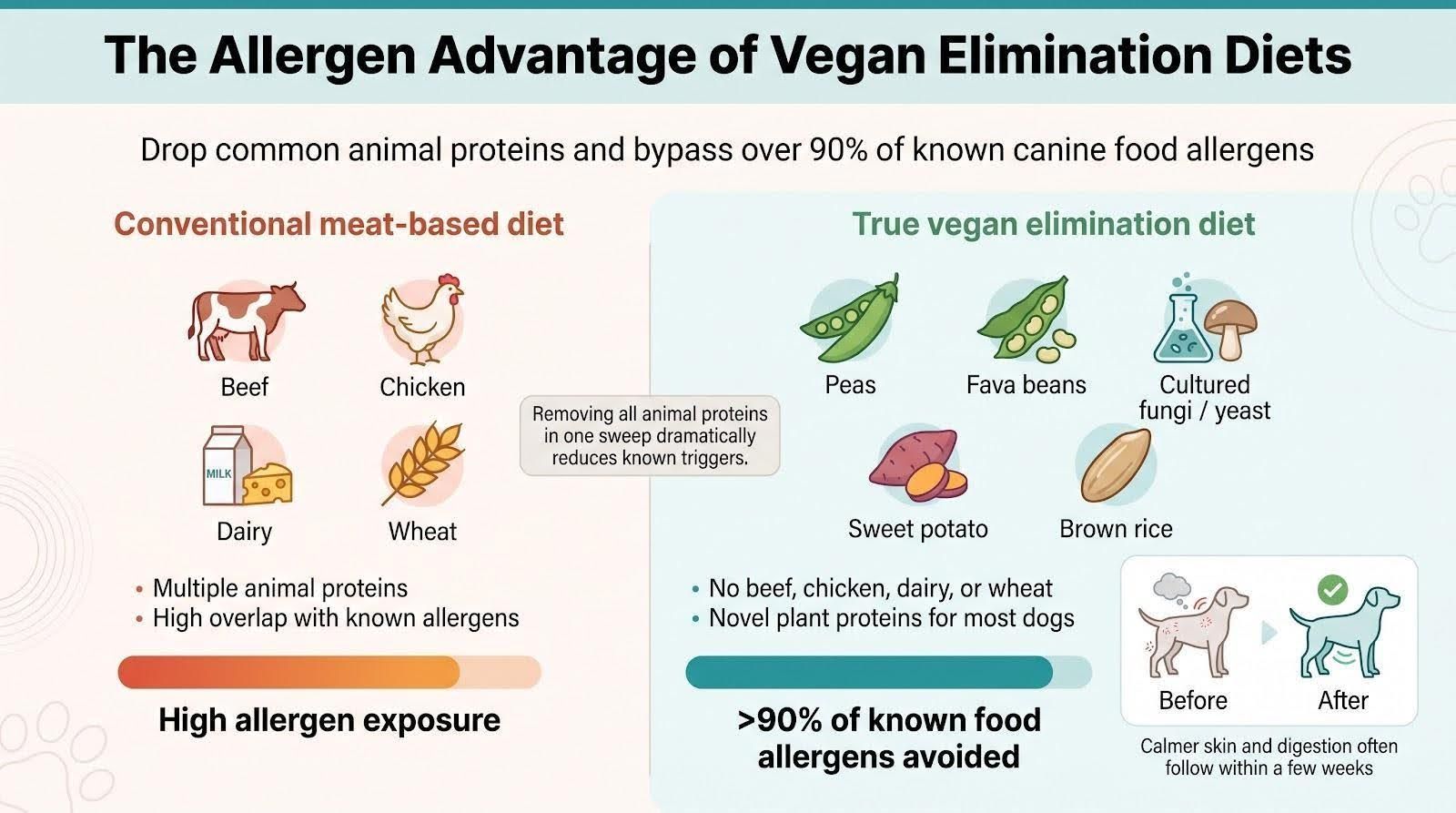
That wholesale swap does two things. First, it simplifies life for you and your vet: no juggling “novel” rabbit today and kangaroo tomorrow while hoping your dog has never tasted either. Second, it gives the immune system a clear break. With the primary culprits gone, inflammation often eases within a few weeks, letting skin heal and digestion settle.
Plant proteins such as peas, fava beans, and cultured fungi remain novel to most dogs yet deliver the full amino-acid spread once fortified with taurine and L-carnitine. Because every food we recommend meets AAFCO completeness, you can run the trial for eight to twelve weeks without stressing over nutrient gaps.
We also ease an overlooked burden: palate fatigue. Many hydrolyzed or exotic-meat diets taste clinical. Modern vegan formulas borrow culinary tricks like nutritional yeast and gentle coconut oil that coax picky eaters back to the bowl. Your elimination plan stays realistic, not theoretical.
Bottom line: a limited-ingredient vegan diet is the most straightforward, data-driven way to test, confirm, and, if you see results, maintain relief from food allergies. In the next subsection, we unpack what “limited-ingredient” looks like in the real world and why fewer inputs mean fewer flare-ups.
What “limited-ingredient” really means
The phrase looks simple on a bag, yet brands stretch it for every marketing whim. For a true elimination diet, we must tighten the definition.
At its core, a limited-ingredient formula relies on one primary protein and as few supporting players as possible. Picture a recipe short enough to read while your dog circles the bowl: roughly a dozen whole-food items plus the vitamin pack.
Why does brevity matter? Each extra component is another lottery ticket for the immune system to misread as a threat. Trim the list and the odds of a reaction drop to almost zero.
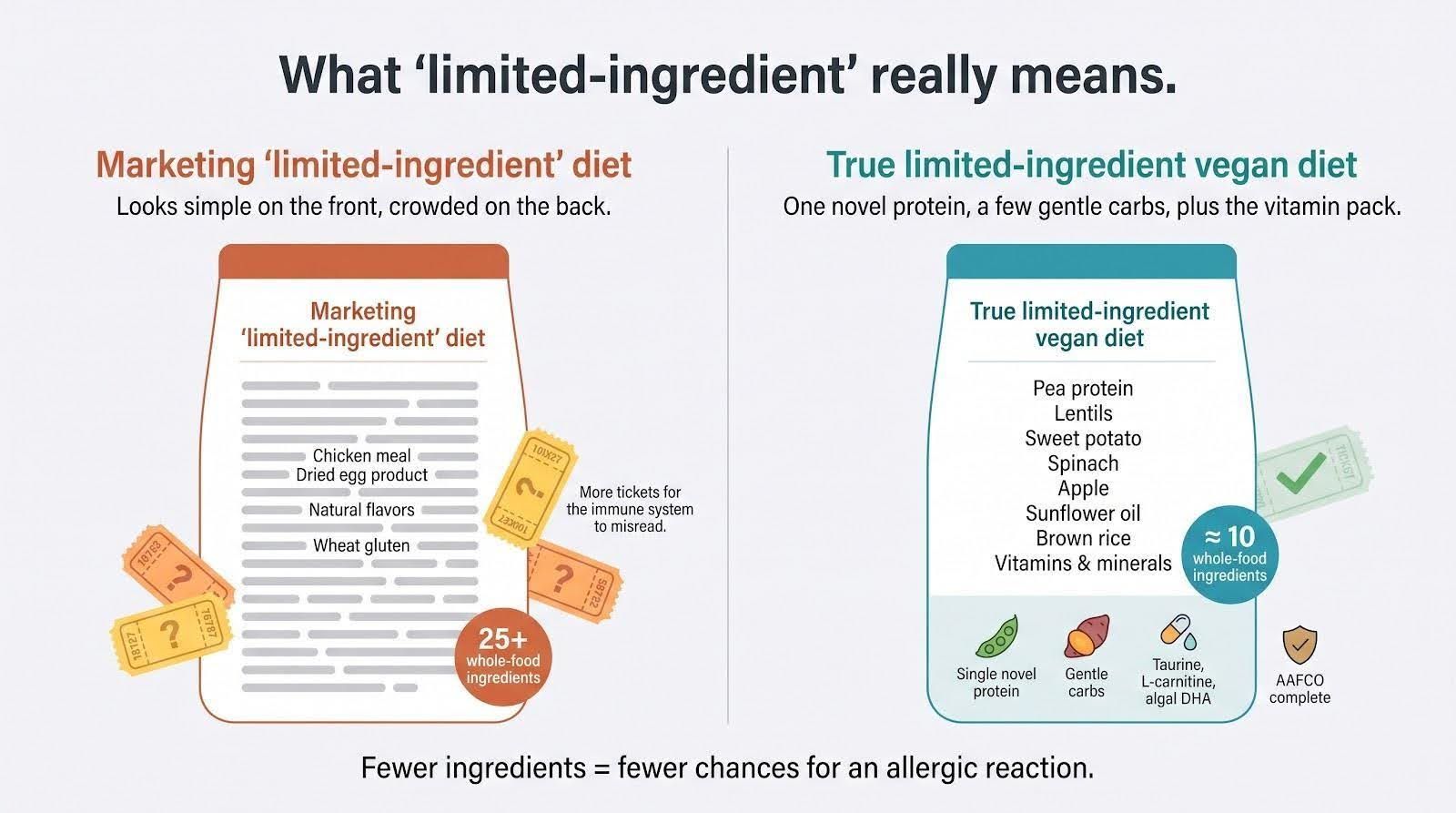
Protein source comes first. We favor peas, fava beans, potato, or koji fungus because most dogs have never tasted them. Novelty keeps the immune radar quiet.
Carbohydrates follow. Gentle options such as sweet potato or brown rice supply energy without adding potential wheat or corn sensitivities. Grains themselves rarely cause allergies, but we keep them minimal for consistency.
Bramble’s Cowbell fresh dog food shows how that brevity looks in the real bowl: its main six whole-food ingredients—pea protein, lentils, sweet potato, spinach, apple, and sunflower oil—keep the label comfortably under our ten-item sweet spot.
According to Bramble’s published guaranteed analysis, those six plants still deliver 37 percent protein on a dry-matter basis, a figure reviewed by a board-certified veterinary nutritionist.
Supplementation seals the deal. Taurine, L-carnitine, and algal DHA cannot hide under vague “natural flavor.” They belong in plain sight so you and your vet know heart and brain demands are covered.
Format also matters. Kibble is convenient, yet some dogs digest fresh or wet foods more comfortably during the eight- to twelve-week trial window. Whatever you choose, feed it exclusively: no flavored pills, no table scraps, no surprise treats. Consistency is the only way to gather clean evidence.
Keep this stricter lens in mind as we step into our ranking criteria. It is the filter that separates genuinely therapeutic recipes from clever label talk.
How we picked the eight stand-out recipes
We started with a giant spreadsheet of every vegan or vegetarian dog food sold in the United States, including kibble, canned, fresh, and vet-only lines. More than forty labels made the first cut.
Then we asked six blunt questions. Any product that failed even one was crossed off instantly.
Is it nutritionally complete?
Every dog requires all ten essential amino acids plus taurine, carnitine, and key micronutrients in the correct ratios. If the bag lacks an AAFCO adequacy statement, it never reached round two.
Is the ingredient list truly short?
We counted whole-food ingredients, not the vitamin premix. Our ceiling was roughly fifteen items. Fewer inputs equals fewer allergy traps.
Does it use a single, novel protein?
Pea, fava bean, potato, koji, or yeast all qualify. Mixing five different legumes muddies the diagnosis, so those blends were cut.
Are the critical extras spelled out?
Taurine, algal DHA, and L-carnitine must appear in plain English. Generic “natural flavors” did not earn trust.
Has the formula stayed recall-free?
We scanned FDA databases and news archives back to 2018. Diets with quality-control hiccups were removed.
Can the average owner actually buy it?
A diet that requires a three-month waitlist or overseas shipping is not helpful during a flare-up. We kept options that ship nationwide within a week.
Only eight products cleared all six hurdles. We ranked them by clinical rigor, ingredient simplicity, proven palatability, sustainability perks, and price per day for a fifty-pound dog.
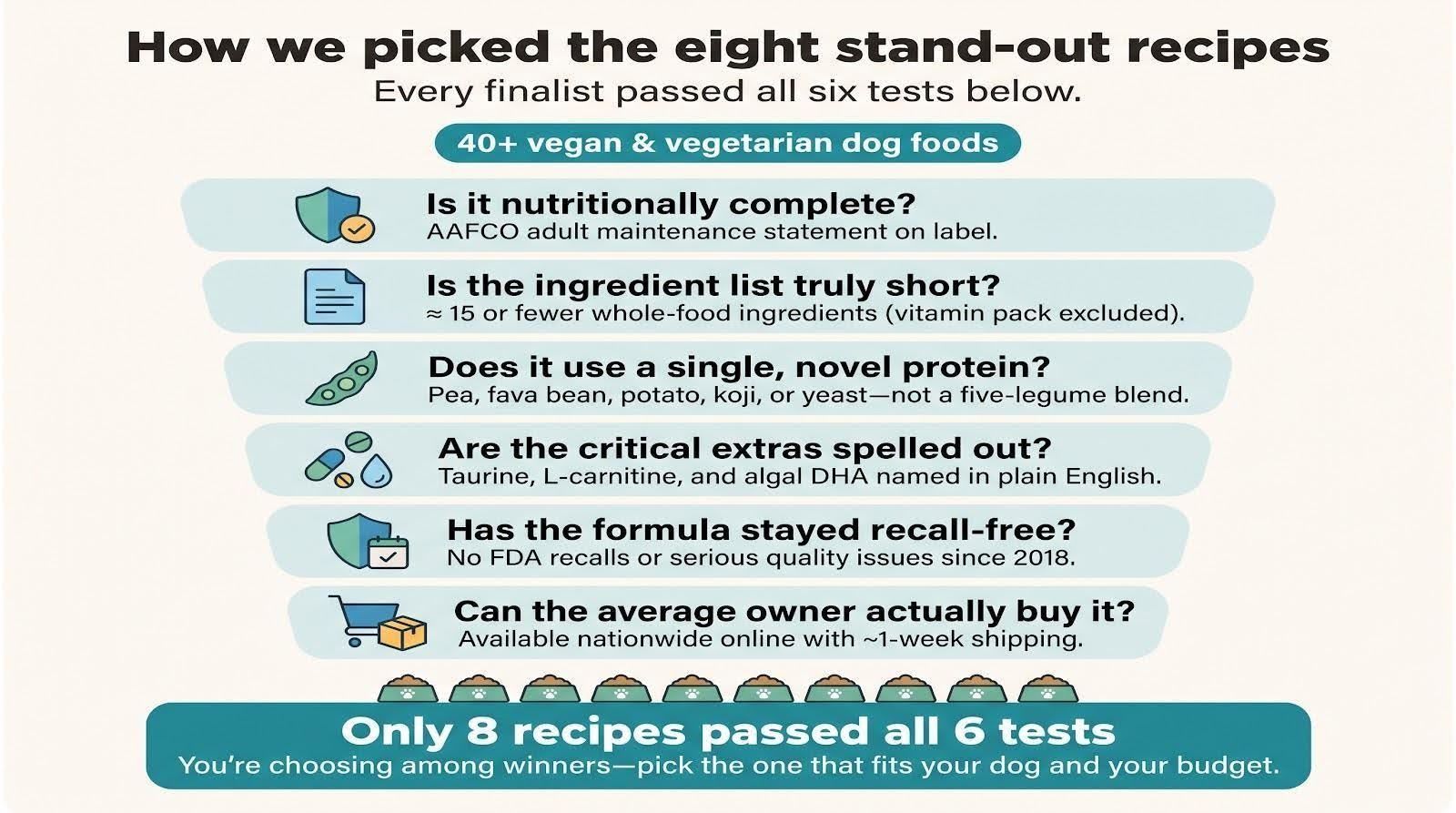
That final ranking is coming up next, but remember: every pick already passed the high bar above. You are choosing among winners; select the one that fits your dog and your wallet.
Quick look at the finalists
Scan the grid, spot the fit, then keep scrolling for deeper dives.
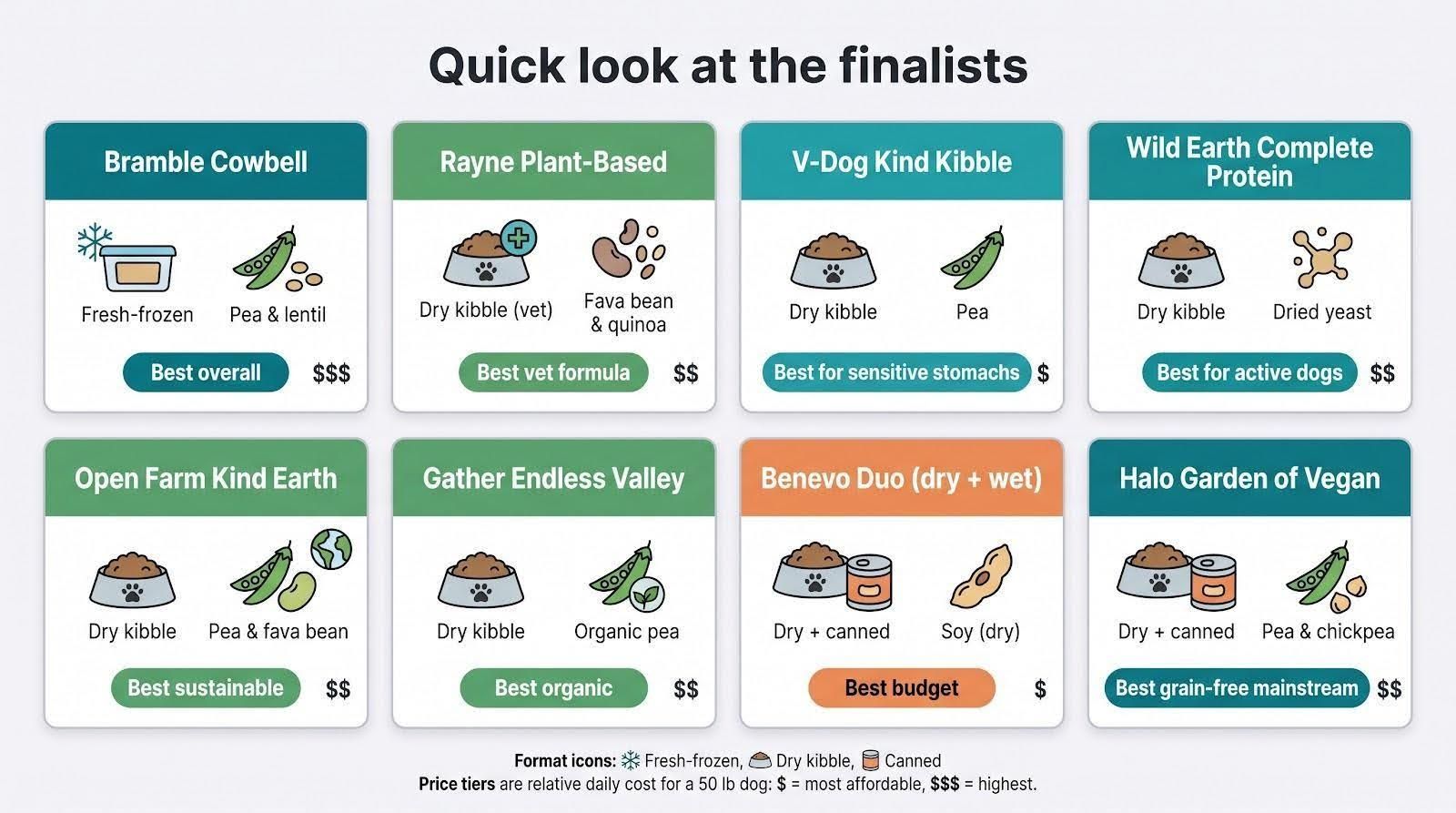
| Product | Format | Main protein | AAFCO status | Stand-out edge | Approx. cost / day* |
| Bramble Cowbell | Fresh-frozen | Pea & lentil | Adult | Vet-formulated, human-grade | $8.00 |
| Rayne Plant-Based | Dry kibble (vet) | Fava bean & quinoa | Adult | Prescription-level rigor without a script | $4.20 |
| V-Dog Kind Kibble | Dry kibble | Pea | Adult | Highly digestible plant-based whole foods | $1.40 |
| Wild Earth Complete Protein | Dry kibble | Dried yeast | Adult | 28 percent protein for active dogs | $3.60 |
| Open Farm Kind Earth | Dry kibble | Pea & fava | Adult | Climate-tracked supply chain | $3.30 |
| Gather Endless Valley | Dry kibble | Organic pea | Adult | Certified-organic produce | $3.10 |
| Benevo Duo (dry + wet) | Dry / canned | Soy (dry) | Adult | Most budget-friendly, shelter-tested | $1.05 |
| Halo Garden of Vegan | Dry / canned | Pea & chickpea | Adult | Grain-free plus probiotic boost | $2.90 |
*Cost estimates assume a moderately active 50-pound dog in 2026 pricing. Your actual spend can vary.
Keep this cheat sheet handy. Next, we unpack each recipe one by one, starting with our overall champion.
1. Bramble “Cowbell” fresh dog food: best overall plant-based hypoallergenic dog food
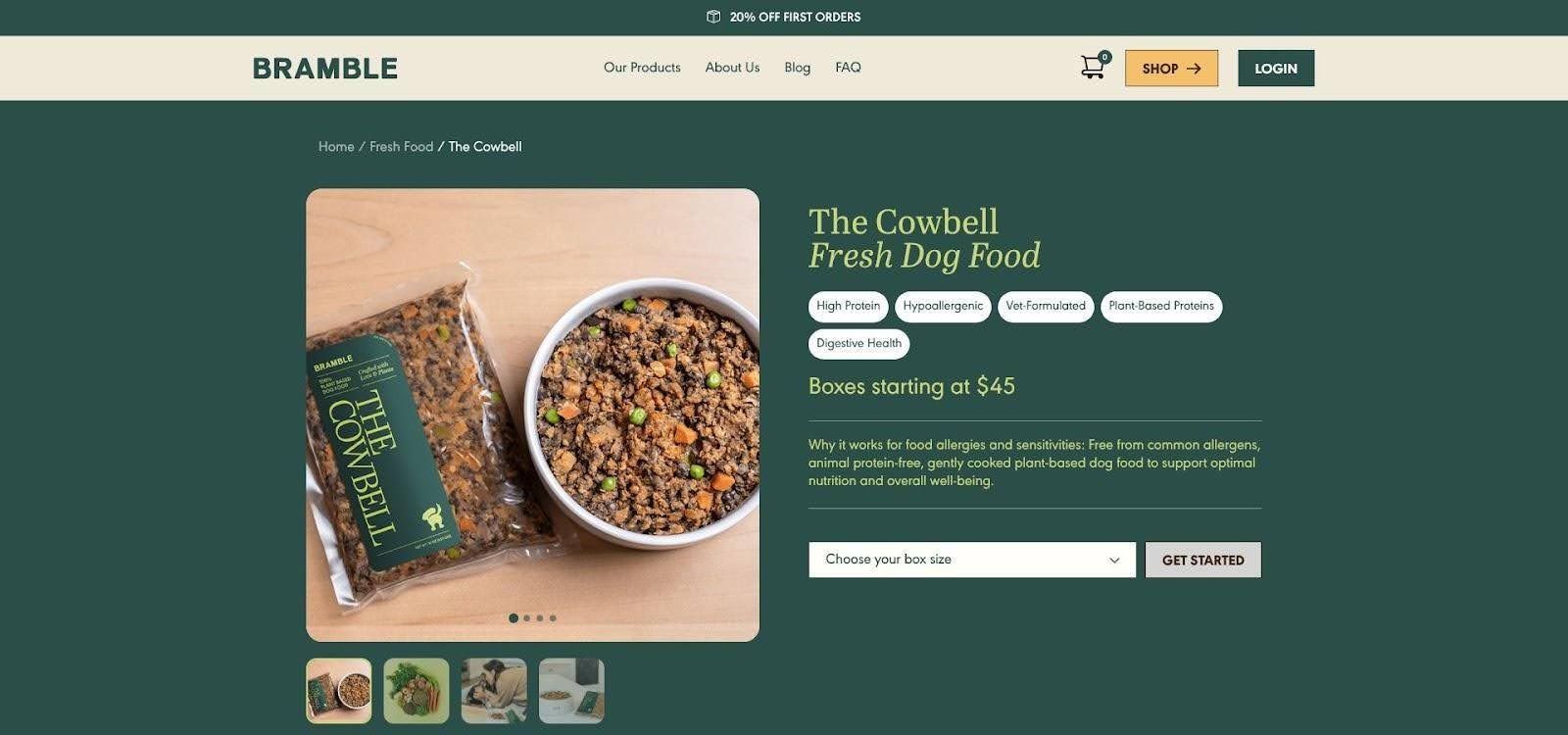
Like the rest of Bramble’s lineup, the Cowbell formula is crafted by board-certified veterinary nutritionists to exceed AAFCO standards while skipping beef, dairy, chicken, soy, eggs, and wheat gluten, the six most common canine allergens.
That pedigree makes it the standout plant based hypoallergenic dog food on our list, outscoring every other recipe on elimination-diet metrics. A board-certified veterinary nutritionist built the formula for clinical soundness first and flavor second, so you get evidence and empty bowls in the same package.
The ingredient panel reads like a farmers-market list: organic pea protein, lentils, sweet potato, spinach, apple, sunflower oil. That is it, plus the vitamin pack. No wheat, no soy, no “natural flavor.” Fewer than fifteen whole-food inputs keep the allergy math simple.
Protein lands at thirty-seven percent on a dry-matter basis, muscle-friendly even for working dogs. Bramble adds taurine, L-carnitine, and algal DHA to cover every nutrient the canine heart and brain demand on a meat-free plan.
Palatability often sinks fresh diets, yet Cowbell smells like Thanksgiving mash thanks to nutritional yeast and slow simmering. Most picky eaters dive in within two meals. The food ships frozen in one-pound bricks; thaw only what you plan to serve, and nothing spoils in the fridge.
Practical notes for the trial window:
- A fifty-pound dog typically eats about two bricks a day, roughly $8 at 2026 pricing.
- Each pouch lists a batch-specific nutrient analysis you can share with your vet.
- Packaging is curbside recyclable, trimming your dog’s carbon pawprint along with their allergen load.
Trade-offs exist. The diet requires freezer space and a predictable delivery rhythm. Households juggling multiple diets or limited storage should plan ahead.
For guardians seeking a true limited-ingredient, vet-validated, plant-powered solution, Bramble sets the bar. Start here, track results, and many dogs show clarity within six weeks on whether food fueled the itch all along.
2. Rayne Nutrition adult plant-based diet: best veterinary formula for elimination trials
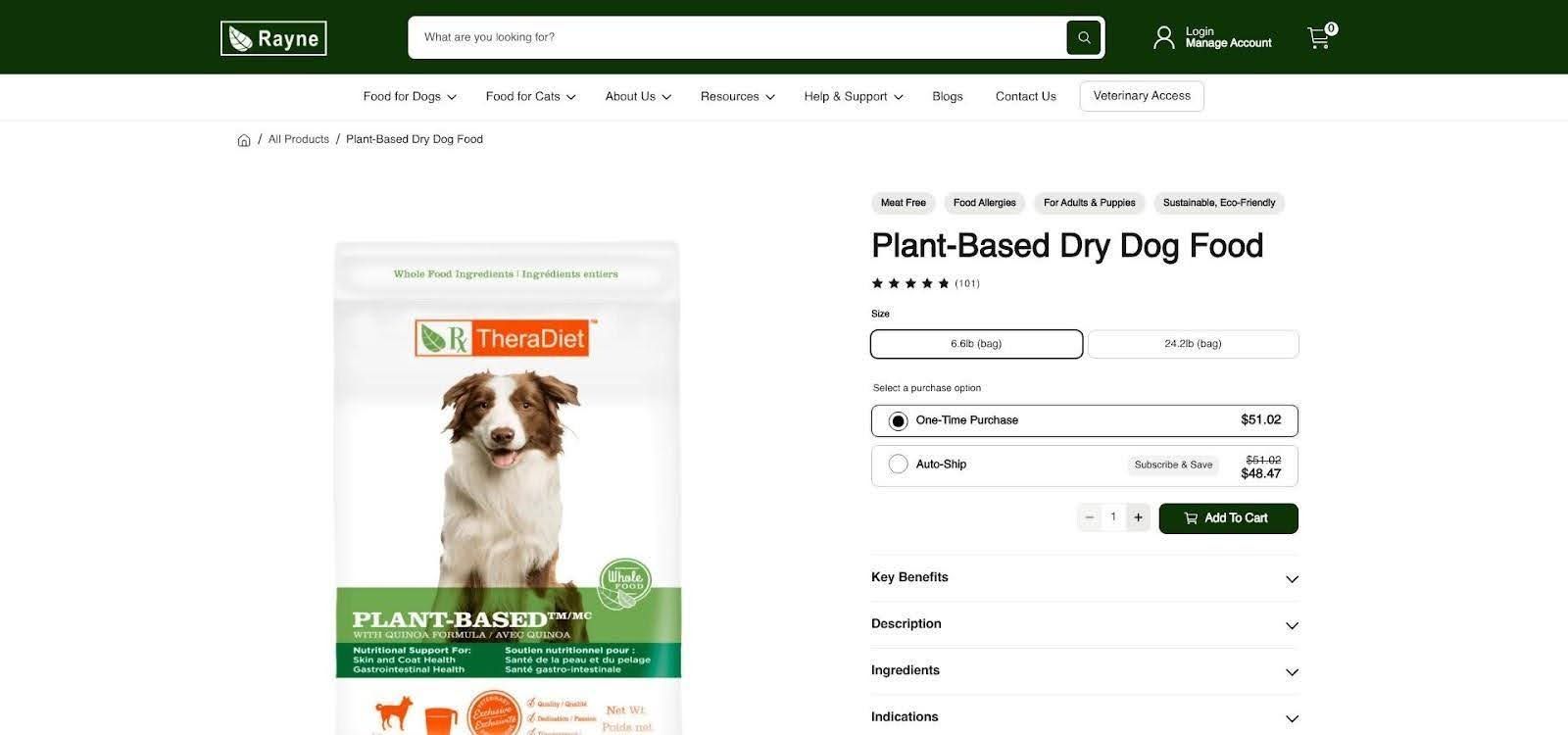
Rayne tackles food allergies with the precision of a dermatologist reading a skin biopsy. Its veterinary diet uses fava bean and quinoa as twin protein-carb pillars—ingredients most dogs have never sampled. From there, the recipe stays almost monastic: millet, sorghum, coconut oil, and a mineral pack. No soy, wheat, corn, or hidden animal fat.
Because Rayne sells mainly through clinics, each bag arrives with a full nutrient dossier. Your vet can scan calcium, phosphorus, and amino-acid lines without guesswork. The diet carries an AAFCO adult maintenance claim, so you can feed it to seniors with equal confidence, though it is not formulated for growing puppies.
Skin flare-ups often ride shotgun with gut trouble. Rayne counters that double hit by adding marine-algae DHA plus prebiotic fiber. Dogs prone to itchy ears and loose stool usually show calmer skin and firmer output within a month.
Practical pointers:
- The dense kibble benefits toy breeds when soaked briefly in warm water.
- Cost averages $4.20 per day for a fifty-pound dog—higher than retail kibble yet lower than many hydrolyzed prescriptions.
- While you do not need a written prescription, buying through your vet can unlock manufacturer coupons and ensures medical oversight during the trial.
If retail vegan foods have failed to clear hot spots, Rayne is the clinical next step before moving to hydrolyzed soy. It offers prescription-grade rigor without the animal protein and without the sticker shock of exotic-meat diets.
3. V-Dog Kind Kibble: best simplicity for sensitive stomachs
When a dog’s gut throws tantrums, complexity makes things worse. V-Dog tackles the issue with a highly digestible ingredient list: pea protein for muscle, brown rice and oats for energy, plus canola oil for skin support, alongside other plant-based whole foods and the vitamin pack.
Brown rice and oats stay gentle, so stool firms up fast. Many guardians report chronically loose pups producing tidy pickups within a week. Moderate protein—about twenty-four percent dry matter—keeps digestion calm without sacrificing muscle tone.
Flavor surprises newcomers. The kibble smells a bit like herb-seasoned crackers thanks to nutritional yeast, and picky dogs often inhale V-Dog after a three-day transition.
Budget is another win. At roughly $1.40 per day for a fifty-pound dog, V-Dog costs less than half the price of most premium allergy diets. Large bags ship from Amazon and Chewy, so refills reach your door before the bowl runs empty.
Caveats:
- Pea protein appears in many grain-free foods the FDA flagged during the DCM investigation, so schedule regular vet check-ins.
- V-Dog adds taurine and carnitine, yet peace of mind comes from monitoring.
For a clear-cut first trial—easy on the gut and the wallet—V-Dog keeps things simple and effective.
4. Wild Earth Complete Protein: best novel protein for active dogs
Dried yeast, specifically Saccharomyces cerevisiae, powers Wild Earth’s recipe, and that novelty is gold for allergy work. Most dogs have never encountered these yeast proteins, so the risk of a cross-reaction sits near zero.
Novel does not mean lightweight. The finished kibble delivers twenty-eight percent protein plus a solid omega-3 boost from algal oil, helping high-energy breeds hold muscle and shine during long hikes or agility runs. Turmeric and a probiotic blend add anti-inflammatory support when skin is already angry.
Flavor is another win. The kibble smells like toasted malt, a scent many dogs find irresistible. Guardians switching from meat-based kibble often report zero transition refusal—rare praise for vegan food.
Cost lands in the mid-premium tier at $3.60 per day for a fifty-pound dog. That price covers precision fermentation, U.S. manufacturing, and a carbon footprint far smaller than comparable meat-based diets.
One caution: the formula still includes peas and chickpeas to round out amino acids. If previous pea-heavy trials failed, keep that history in mind. Otherwise, Wild Earth provides a fresh reset for dogs that crave novelty and robust nutrition.
5. Open Farm Kind Earth: best sustainable option
Some diets heal your dog yet leave you questioning planet impact. Open Farm tackles that tension head-on. Every bag of Kind Earth carries a QR code; scan it to view ingredient origins and the recipe’s verified carbon footprint.
Inside, the formula balances pea and fava-bean protein with brown rice and coconut oil. That mix earns an adult maintenance AAFCO claim, making it ideal for grown dogs, though it is not formulated for puppies.
Guardians chasing eco credentials often worry about taste. Feedback says otherwise. Pumpkin and nutritional yeast create a savory, slightly sweet aroma that coaxes cautious eaters. Added probiotics support calmer digestion alongside happy taste buds.
Cost averages $3.30 per day for a fifty-pound dog, a premium driven by traceability and recyclable packaging. If shrinking your pup’s carbon pawprint ranks high on the family priority list, Kind Earth delivers without compromising elimination-diet discipline.
6. Gather Endless Valley: best organic recipe
If you study produce stickers before you bite an apple, Gather will feel familiar. Endless Valley sources certified-organic peas, barley, and lentils, then cooks them in small batches without synthetic pesticides or GMOs.
That organic focus trims the ingredient list to fewer than a dozen recognizable foods. Allergic dogs benefit because each crop traces back to farms that avoid chemical residues, removing one more wildcard for sensitive skin.
Protein sits at a modest twenty-two percent—plenty for couch-loving companions and easier on kidneys than some high-octane formulas. Flaxseed, kelp, and blueberry add omega-3s and antioxidants, helping immune balance and coat shine.
Cost averages $3.10 per day for a medium dog. The recipe is dry-only, so guardians of soft-food fans should plan ahead. For those chasing both allergy relief and organic ideals, Endless Valley offers a practical sweet spot.
7. Benevo dry and canned: best budget-friendly option
Allergy care often clashes with household budgets. Benevo eases that strain without cutting nutritional corners. The UK-based brand has produced vegan dog food since 2005 and ships large bags across the United States for about $1.05 per day for a mid-size dog.
The dry recipe leans on soy, rice, and corn, ingredients processed for digestibility rather than filler. Taurine, carnitine, and algal DHA appear clearly on the label, matching pricier competitors.
Palatability is a bonus. The loaf-style canned version shares the same core ingredients, so warming a spoonful as a topper keeps the elimination trial uncontaminated. Many picky dogs dive in once that aroma reaches the bowl.
Trade-offs still apply. Corn shows up, so guardians of dogs with documented corn allergies can skip this pick. Protein lands at twenty-seven percent dry matter, and dogs training for marathons often require extra calories.
When vet bills stack up yet a controlled diet remains essential, Benevo offers a practical on-ramp. Run the eight-week trial, watch symptoms fade, and keep both your dog and your wallet calm.
8. Halo Garden of Vegan: best grain-free mainstream pick
Some allergic dogs react to grains as fiercely as they do to chicken. Halo’s Garden of Vegan line erases that worry by omitting wheat and corn entirely. Protein comes from peas and chickpeas, carbohydrates from pearled barley and oats, all fortified with taurine and algal DHA for heart support.
Halo leans into a “whole-veggie stew” vibe. The dry kibble carries herbal notes from parsley and kelp, while the canned version resembles a chunky minestrone. That duo makes rotation simple: kibble for crunch, wet for hydration, both within the same ingredient set so your elimination trial stays clean.
Shelter partnerships give Halo a long safety record; no recalls tied to nutrient gaps appear in public databases. At about $2.90 per day for a fifty-pound dog, it sits mid-range on the price ladder yet shows up on Petco shelves, making emergency bag runs painless.
One quirk: garlic powder appears low on the label. The trace amount falls well below toxicity thresholds, but guardians who prefer zero garlic can choose another option. For everyone else seeking a grain-free, widely available vegan diet, Halo rounds out the shortlist with ease.
Honorable mentions and emerging twists
Eight products met our strict scorecard, yet a few outliers deserve a quick spotlight because they solve edge-case problems.
- Nature’s Recipe Healthy Skin Vegetarian. This supermarket staple relies on soy and wheat, so it missed our core list, but for dogs that react only to meat proteins it can cover a late-night emergency.
- Prescription hydrolyzed diets such as Purina HA. Soy protein is chopped into fragments too small to trigger the immune system, making these formulas the gold standard when every other food fails. The trade-off is specialty pricing and a bland taste built around a single plant source, so save this option for last-resort cases.
- Petaluma Baked Plant-Based. Sustainability takes center stage with slow-baked peanut-and-sweet-potato squares plus climate-neutral certification. Peanut ranks low on canine allergen lists, but households with severe peanut allergies should steer clear.
- Insect-protein kibbles from brands like Jiminy’s. These diets are not vegan, yet black soldier fly larvae are novel for dogs and far greener than chicken. Guardians willing to bend the no-animal rule can explore this Plan C before returning to meat.
Each option broadens the toolbox. If the primary eight miss the mark, discuss these specialty routes with your veterinarian.
Transition tips and elimination-diet best practices
Switching food looks simple on paper yet turns slippery in real life. A few guardrails keep the plan honest and your observations reliable.
Start with a seven-day ramp-up. Mix twenty-five percent of the new food with seventy-five percent of the current diet for two days, then move to fifty-fifty, then seventy-five-twenty-five, and finally one hundred percent plant-based. Gradual steps let gut microbes adjust and protect your carpet from surprise “adjustments.”
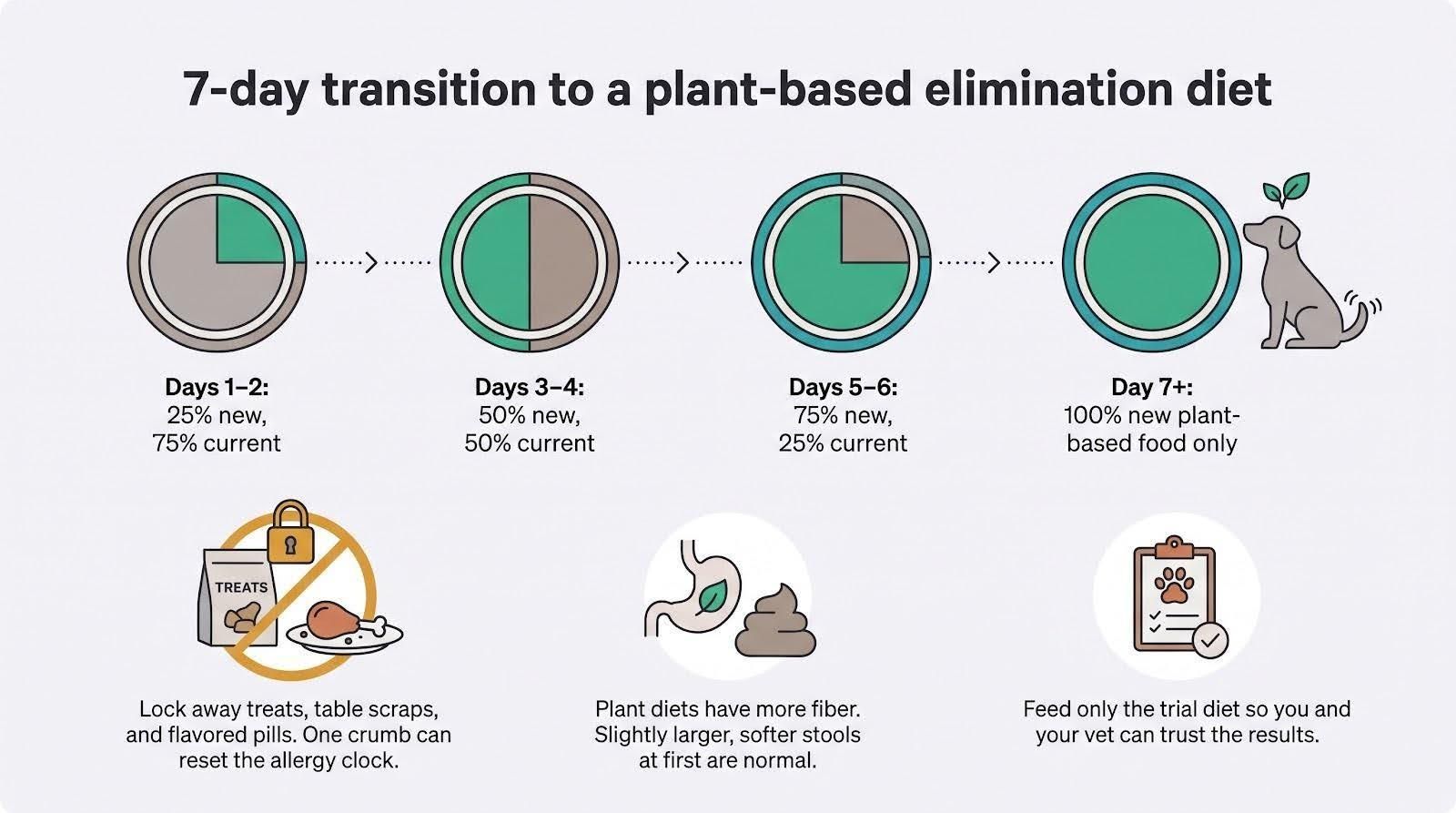
Once you reach one hundred percent, lock every other edible item in the pantry. Skip chicken-flavored pills, table scraps, and surprise treats. One foreign crumb resets the allergy clock.
Expect stool to change. Plant diets carry more fiber, so output often grows in size and softens for a week or two. That shift is normal; focus on overall comfort rather than stool perfection.
Conclusion
Document weekly checkpoints. Jot down itching intensity, ear condition, stool quality, and any medications given. Clear notes help you and your vet separate food progress from seasonal pollen or a missed flea dose.
Aim for eight to twelve full weeks before calling victory or defeat. Skin cells turn over in roughly a month, so patience now prevents second-guessing later. If the dog improves, the vet may suggest reintroducing the old protein as a challenge. A relapse within days confirms the food allergy and justifies sticking with the vegan recipe long-term.
Stay in touch with your veterinarian. Share the nutrient analysis sheet, arrange a mid-trial weight check, and discuss optional blood taurine testing for large breeds. Teamwork converts a diet trial from guesswork into science.