
Coffee is an acidic beverage as a starting point, but it is a sliding scale. Some can be more acidic than others. There can be several causes of acidity, and a bag labeled, and a bag labeled “low-acid” may fix one of them, or none. Roast profile, bean varietal, growing altitude, processing, and brew method all affect acidity. This review covers eight low-acid coffee brands, nearly all certified organic, asking the same questions of each: where the low acidity comes from, how the coffee tastes, and what it costs.
Methodology: The Five Checks Behind This Review
To build a comprehensive comparison, we’ve analyzed the brands based on these core points:
- Acidity-reduction strategy: Whether low acidity comes from origin, processing, roast design, or a mix.
- Evidence: A published pH number, third-party lab work, or nothing but the company’s own description.
- Certifications: USDA organic status first, then fair trade, Bird Friendly, Demeter, non-GMO, and kosher certifications.
- Taste and range: Roast levels from light to French roast, formats from whole bean to pods, and each roaster’s flavor notes.
- Price: Range per 12 oz, converted where bags differ.
Facts were verified with the brands’ official websites. However, product information, availability, and prices may change. This review is current as of September 2026.
Top Brands Side by Side
Two columns matter most: how each roaster brings acid down, and who checked the result.
| Brand | Low-acid approach | Verification | USDA Organic | Price range per 12 oz |
| Fabula Coffee | Bean varietal, growing climate, roast method | No pH published; third-party tested for mold and other substances | Yes | $19.49–$29.99 |
| Alex’s Low-Acid Organic Coffee | Air convection roasting | Third-party tested for primary types of chlorogenic acids; published pH 5.4-5.7 | Yes | $15.99–$19.99 |
| Java Planet | Slow-grown beans, darker roasts | Not disclosed | Yes | $13.50–$20.25 |
| Purity | Roast to pH 4.95–5.19 | Published pH in help center; quality certificates by product | Yes | $16.70–$29 |
| Lifeboost | Shade, washing, roast | In-house pH testing | Yes | $19–$29.99 |
| Puroast | Patented slow roast | pH 5.82, two universities | No | $14.55–$17.70 |
| Volcanica | Low-elevation origins | pH 5.2–5.6, source unnamed | By product | $14.25–$24 |
| Biodynamic Coffee by Holistic Roasters | French roast, shade-grown beans | Toxin certificates available, no pH | Yes | $18.10–$22.65 |
1. Fabula Coffee
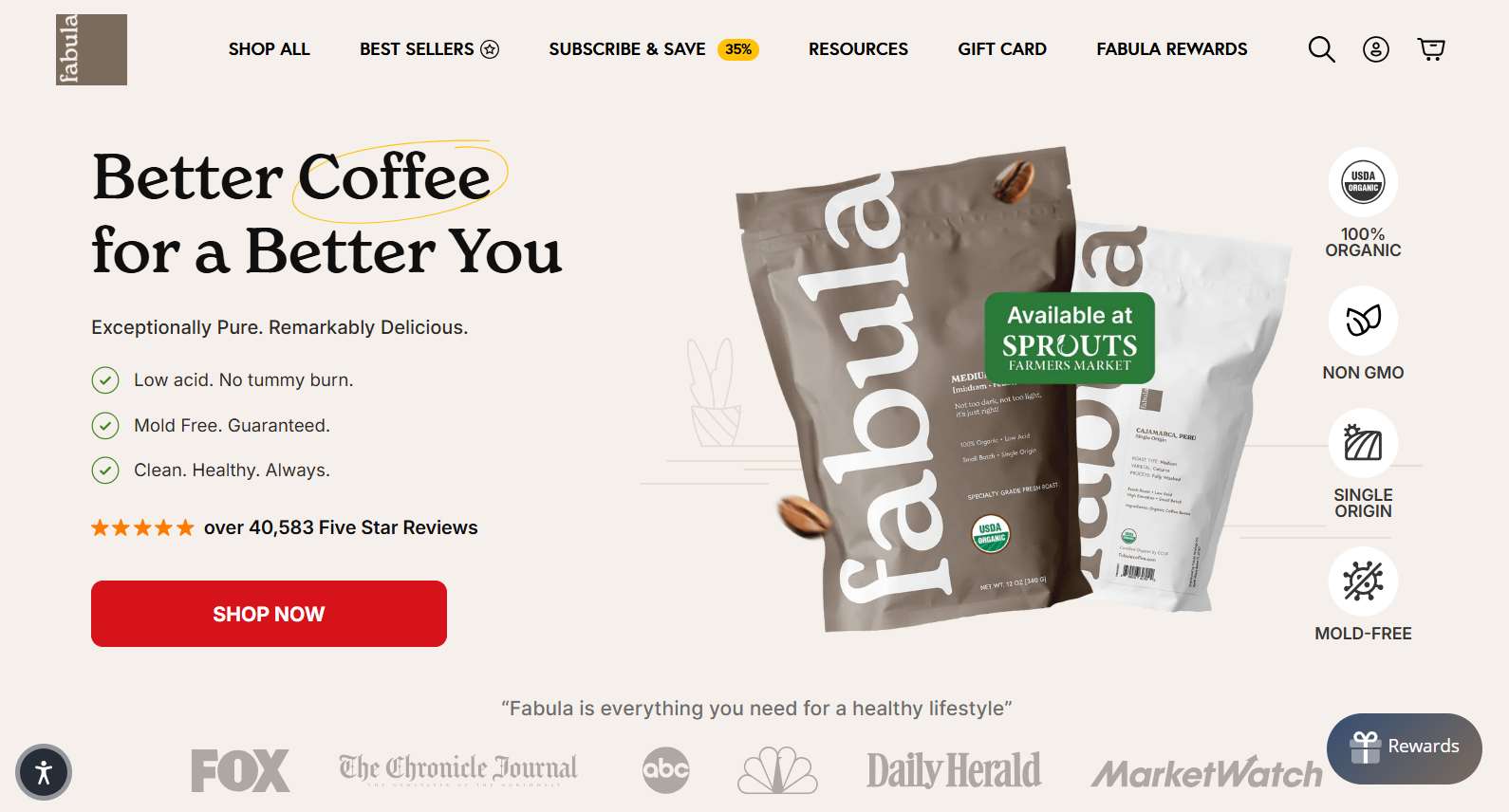
Fabula Coffee built its catalog for drinkers with stomach issues who refuse to give up coffee. Most of the Fabula organic coffee options are single-origin rather than blends, which is positive. Peru supplies the medium roast and dark roast, Mexico the light roast and decaf, Colombia the espresso.
Low acidity starts on the farm: bean varietal, microclimate, and altitude set the baseline before the roast method finishes the job to a lower-acidity profile.. Beans come from the top 2% of Arabica; the beans are tested against 350+ contaminants, and the entire catalog is USDA organic. No pH figure is published, so this low-acid coffee rests on the roasting logic.
The Peru medium roast tastes of praline, nutty sweetness, and cocoa, a rich and balanced flavor; the dark roast brings caramelized sugars and dark chocolate, smooth rather than sharp. Whole bean, ground coffee, pods, instant, and cold brew are all available. The brand roasts beans daily so that each order gets fresh coffee. Whole-bean and ground bags run $19.49 to $29.99 per 12 oz, depending on quantity.
2. Alex’s Low-Acid Organic Coffee
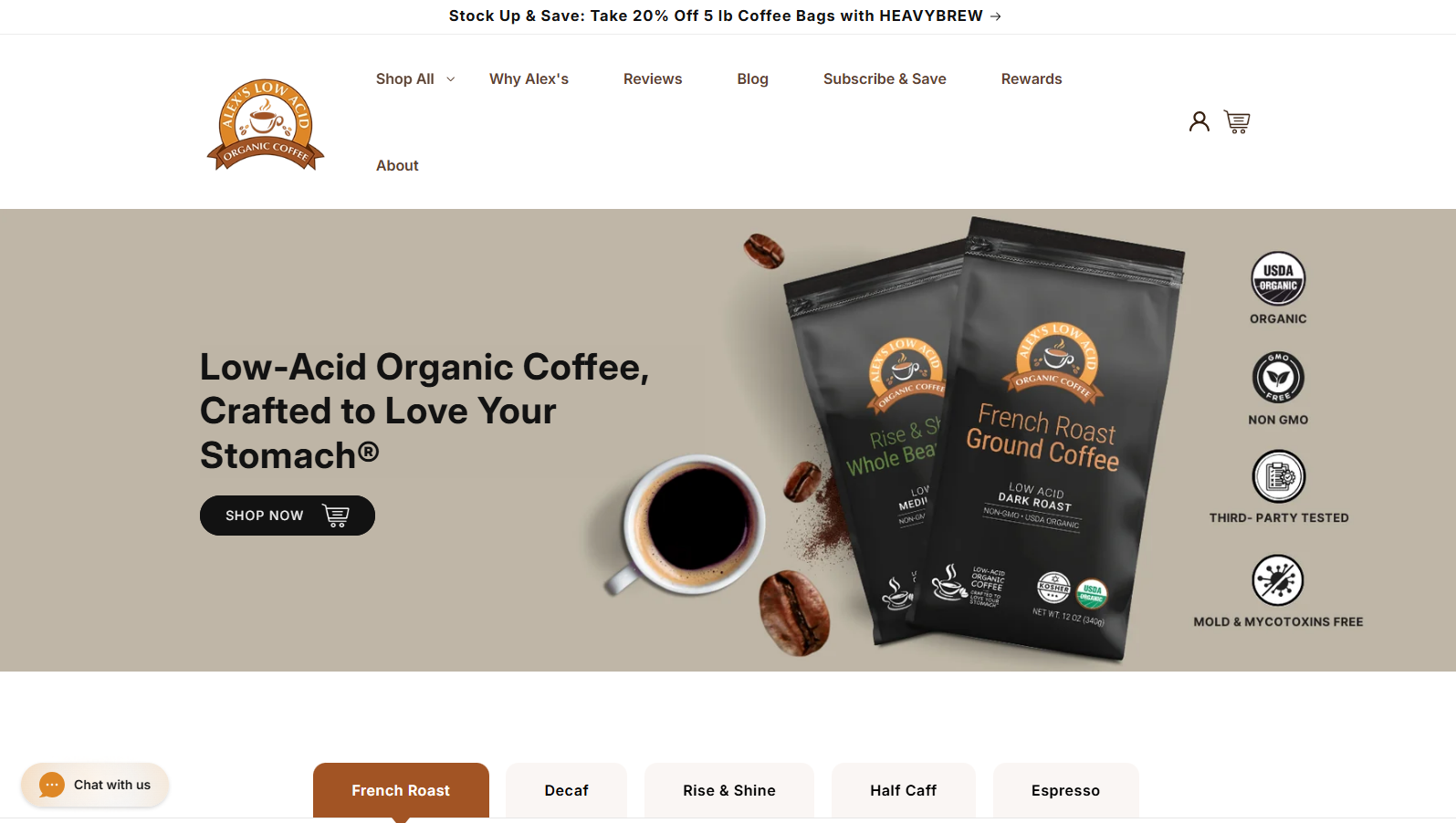
Alex’s grew out of one person’s acid reflux and refusal to quit coffee. Green coffee beans come from Mexico, Honduras, and Nicaragua, and the 2025 purchase of the company Sonoma Roasters put sourcing and roasting under one roof.
Acid reduction happens in the roaster: patented air convection heats beans with moving air, not hot metal, cutting chlorogenic acids and acidity while keeping flavor. The brand publishes several pH estimates ranging from 5.4 to 5.7, along with toxin testing results. Fair trade, non-GMO, and kosher marks sit beside the organic certification.
Rise & Shine, the medium roast, tastes of chocolate and caramel; the French roast is smoky and intense; the decaf lands medium-dark and smooth. Pricing is $19.99 per 12 oz, or $15.99 on subscription. The main drawback is the lack of single-origin options in the catalog.
3. Java Planet
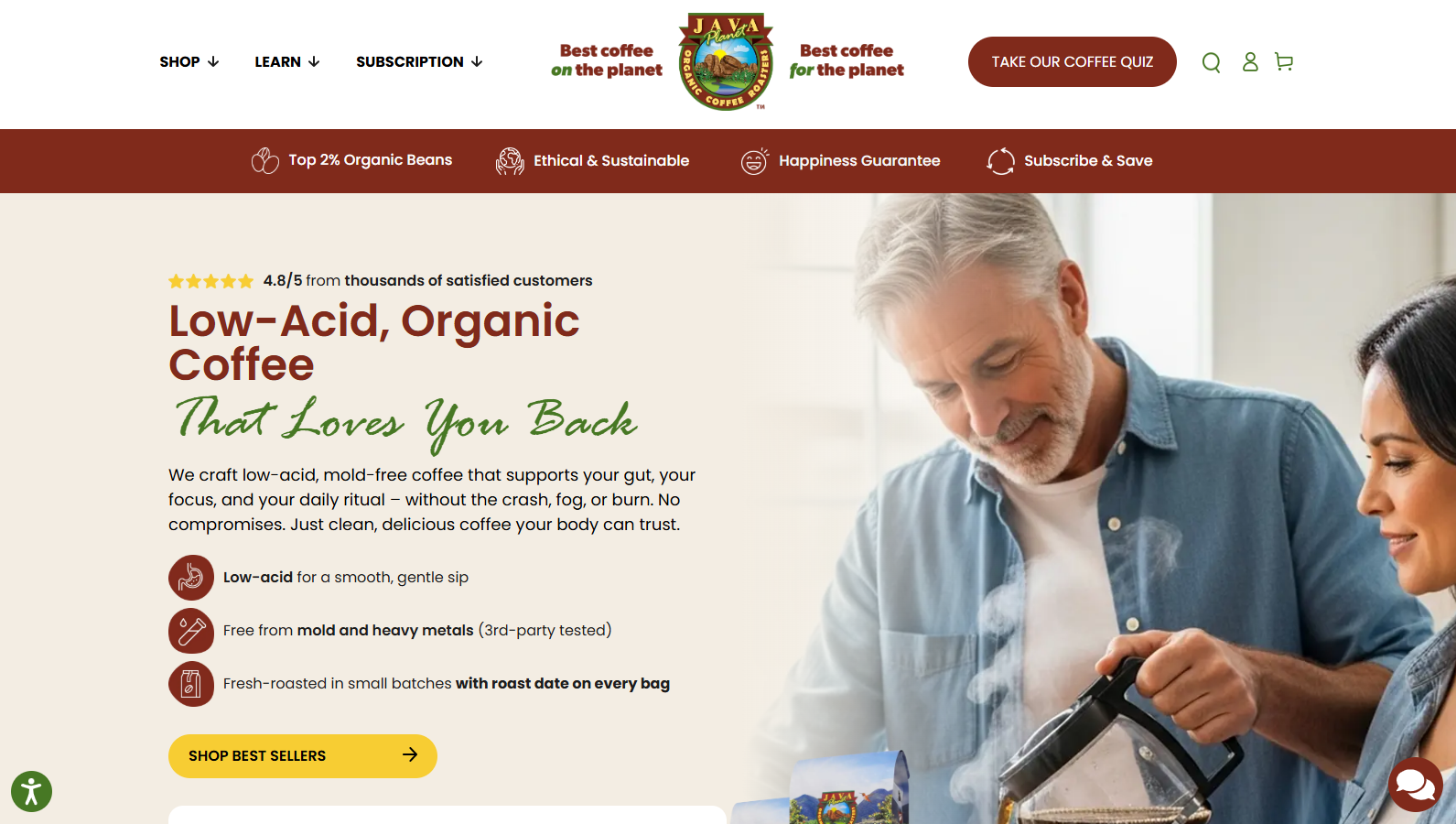
Java Planet has roasted in Tampa Bay since 2008, in small runs. Single origins run from Ethiopia and Sumatra to Costa Rica, Peru, and Guatemala, beside blends like Good Morning and Black Magic.
The company is blunt about the category: no standard governs low-acid coffee. Its case points to beans that mature slowly in mineral-heavy volcanic soil, giving a pH closer to neutral and a rounder flavor — from customer feedback, not lab work.
Most of the catalog sits medium to medium dark, where cocoa, chocolate, and nutty flavors lead, and the cup tastes smooth. USDA organic certification covers the line, Bird Friendly beans appear when available, and an outside lab has tested for mold and heavy metals. A 1 lb bag costs $26.99, near $20.25 per 12 oz, and the 5 lb bag brings that to about $13.50, with no acidity figure published.
4. Purity Coffee
Purity treats acid as one variable among several. Founder Andrew Salisbury started the company in 2016 after a health scare sent him reading about what ends up in a cup of coffee, and its roast protects antioxidants as much as flavor.
Three independent labs screen every lot for mold, mycotoxins, 310 pesticides, metals, and acrylamide, and testing results are available on the brand’s website. Purity holds its brewed pH between 4.95 and 5.19, so acidity lands inside coffee’s normal range of 4.7 to 5.3, a smaller shift than most low-acid coffee brands promise.
FLOW is the medium roast, EASE is a dark roast with chocolate depth made for easier digestion, and CALM is the decaf, all smooth, balanced, and low in bitterness. Bird Friendly and B Corp seals sit beside the organic one. Bags cost $29 per 12 oz, and the catalog stays small, with no flavored options.
5. Lifeboost Coffee
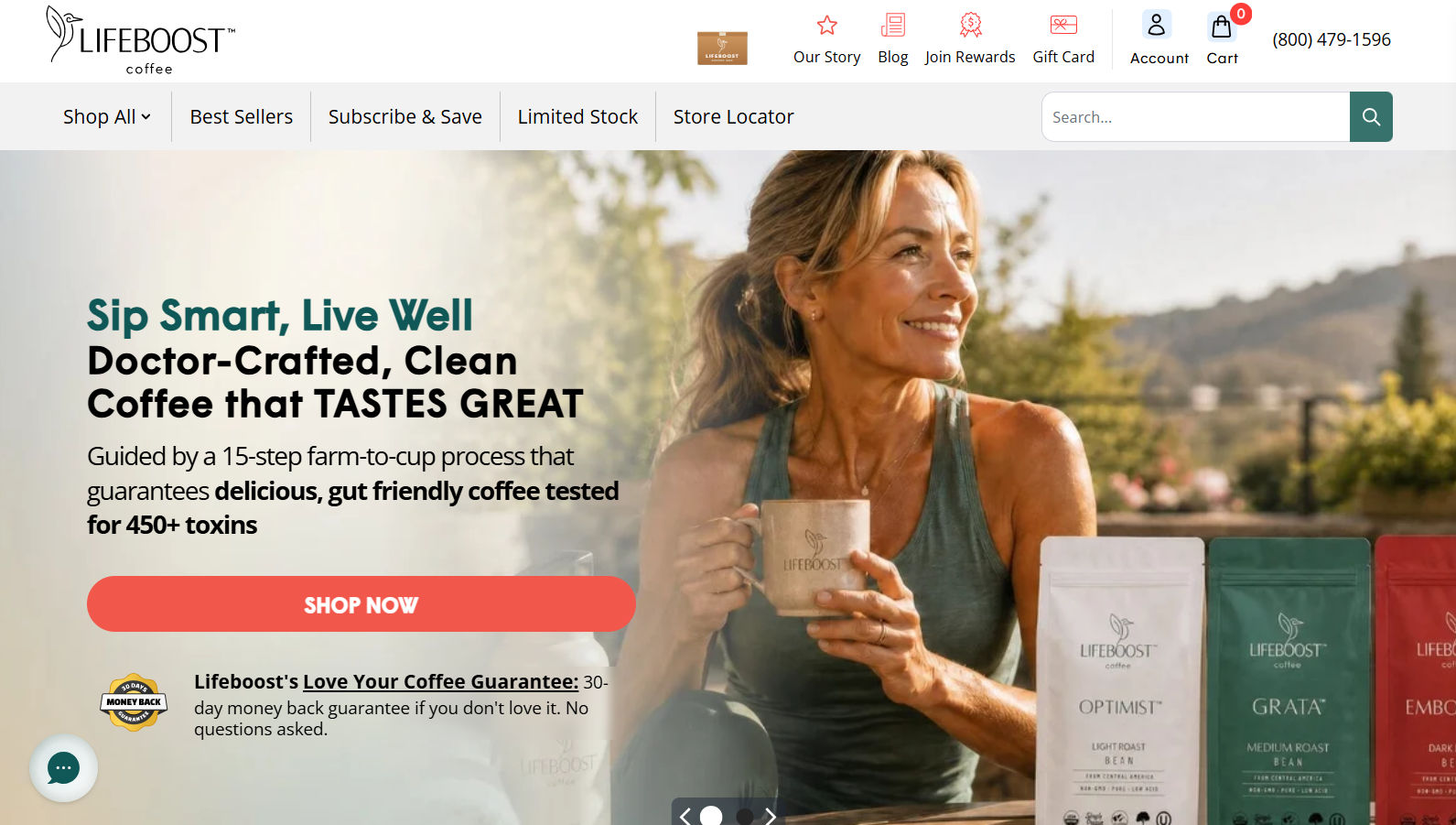
Lifeboost’s beans are sourced from Nicaragua, where they are grown above 5,700 feet. That elevation usually yields brighter, more acidic beans, so the case leans on shade, processing, and roast. Cherries are hand-picked, spring-water washed, and sun-dried.
In-house pH work puts this low-acid coffee up to 27.7% less acidic than store-bought bags, and the brand claims it will not bother sensitive stomachs. No third-party lab has tested these statements, so the number is self-reported.
The catalog is quite wide. The most popular products are the Optimist, a light roast, and Grata, a medium-level option. The Embolden dark roast tastes of cocoa and dark chocolate, with a smooth finish. In addition, there are espresso beans, flavored bags, ground coffee, and cold brew. The coffee is tested against 450 substances, and the main roasts hold organic certifications. A 12 oz bag is $28.99, or about $19 on subscription and multi-pack.
6. Puroast
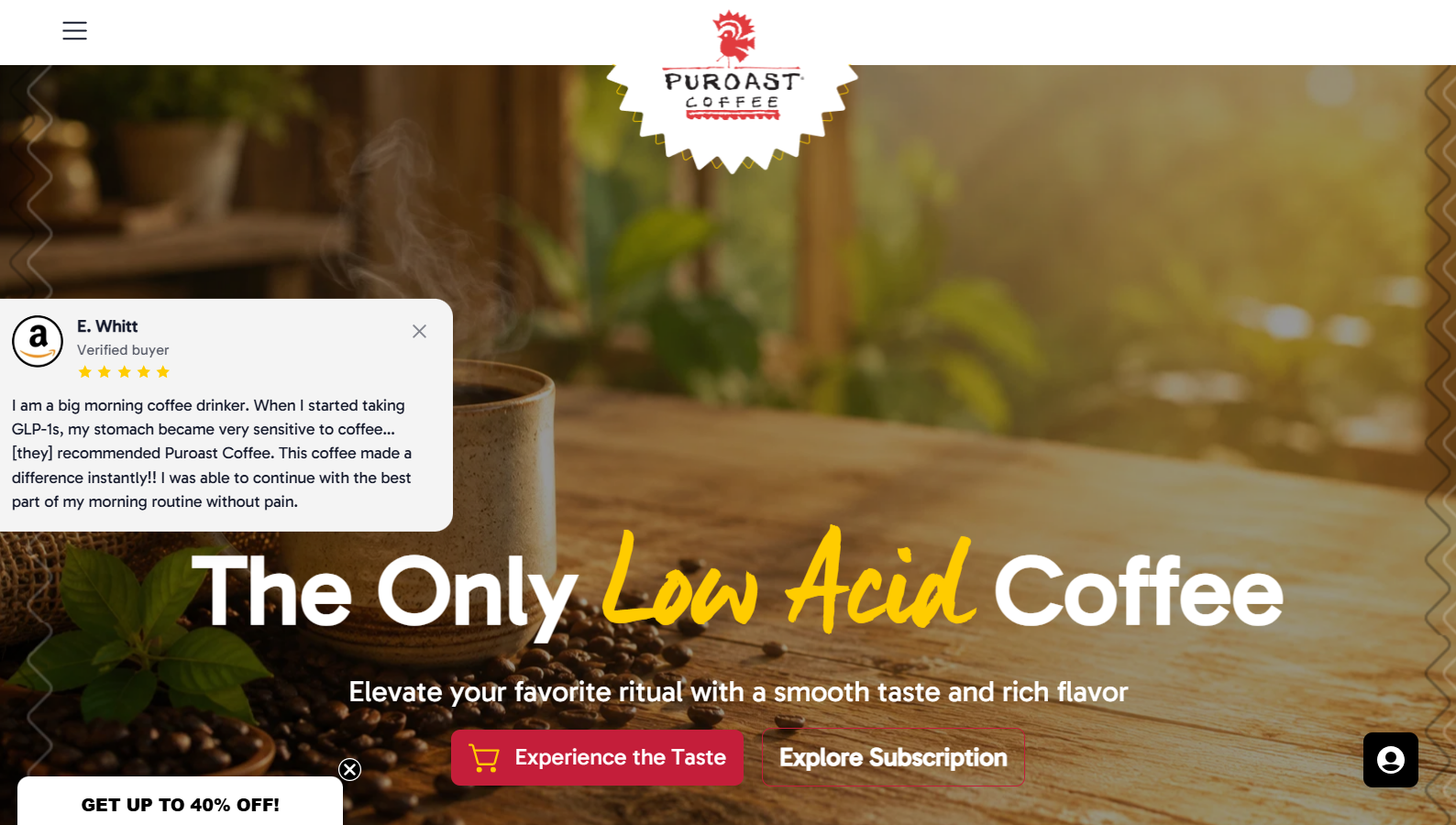
Puroast has run one idea since 1994: roast slower and cooler so less acid survives in the cup, without flattening flavor. The method traces back to traditional coffee roasting in the Andes, and the company holds the only US patent for low-acid coffee roasting.
UC Davis and NC A&T each tested the brewed coffee at pH 5.82, against roughly 4.8 to 5.2 for regular coffee. On a logarithmic scale, Puroast has several times less acid than traditional coffee carries.
House Blend covers the medium roast end; the French roast and an Italian espresso blend handle the dark, both intense and rich in cocoa and dark chocolate, with decaf and half-caff cutting caffeine content. The smallest bags are 20 oz for $29.50, and the 2.5 lb bag is $48.50, about $14.55 per 12 oz. Certification is the gap: no organic certification, only an LACCSA low-acid credential.
7. Volcanica Coffee
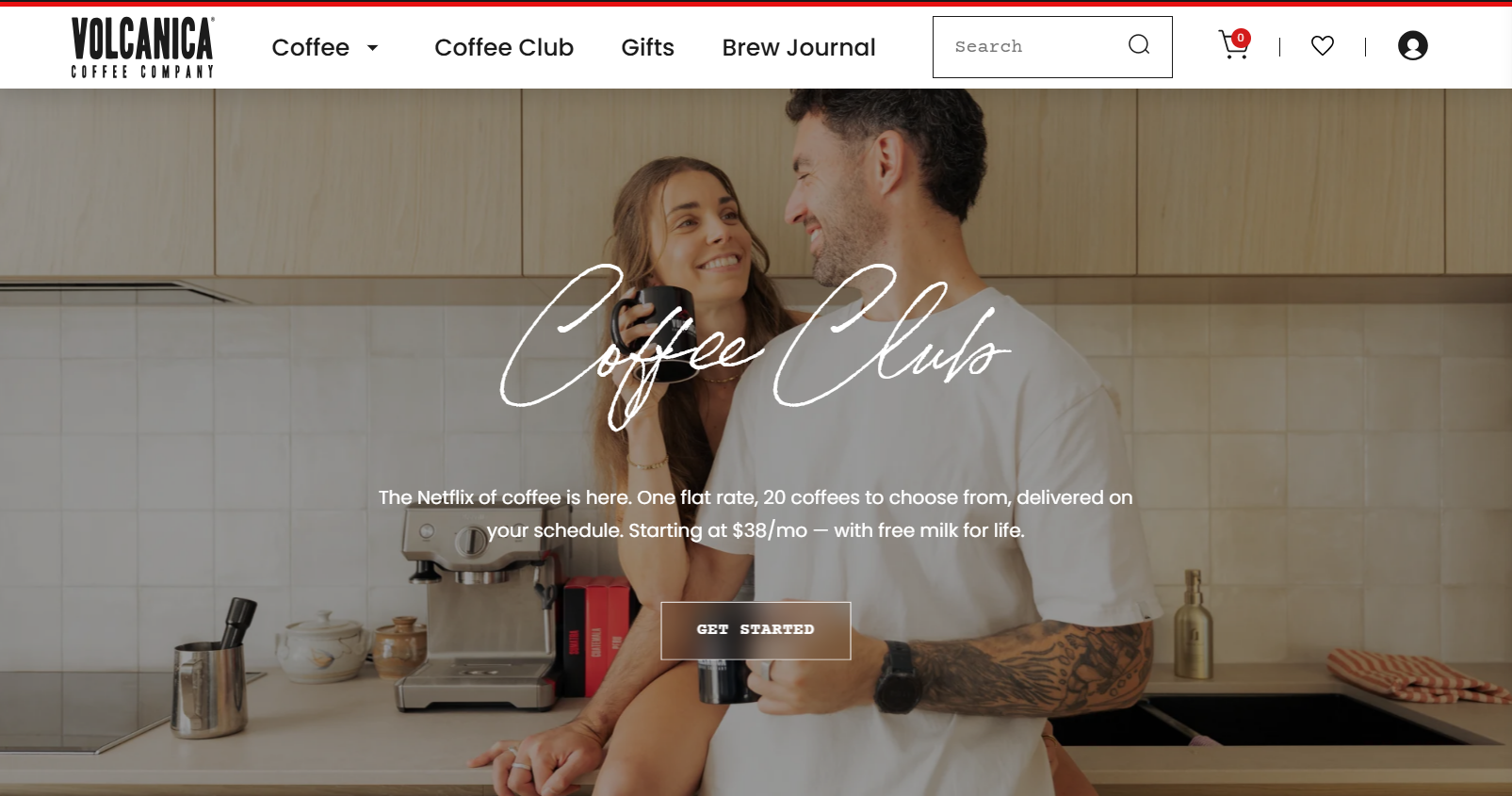
Volcanica offers the widest selection of origins, selling 100+ coffees. The catalog has 25 low-acid coffee options, including Sumatra Mandheling, Costa Rica Tarrazu, Guatemala Antigua, and Chiapas.
Selection does the work here, not a special process. Beans grown at lower elevations are naturally low-acid, and medium-roast and dark-roast profiles keep the taste round. Volcanica publishes a pH of 5.2 to 5.6 for these lots, but names no lab.
Flavor varies more than anywhere else here: Sumatra tastes earthy, chocolatey, and heavy in body; the South America lots run nutty with real sweetness; and a Tarrazu keeps its bright acidity even as a dark roast. Bags are 16 oz at $18.99–$31.99, about $14.25–$24 per 12 oz, with organic certification applied by product.
8. Biodynamic Coffee by Holistic Roasters
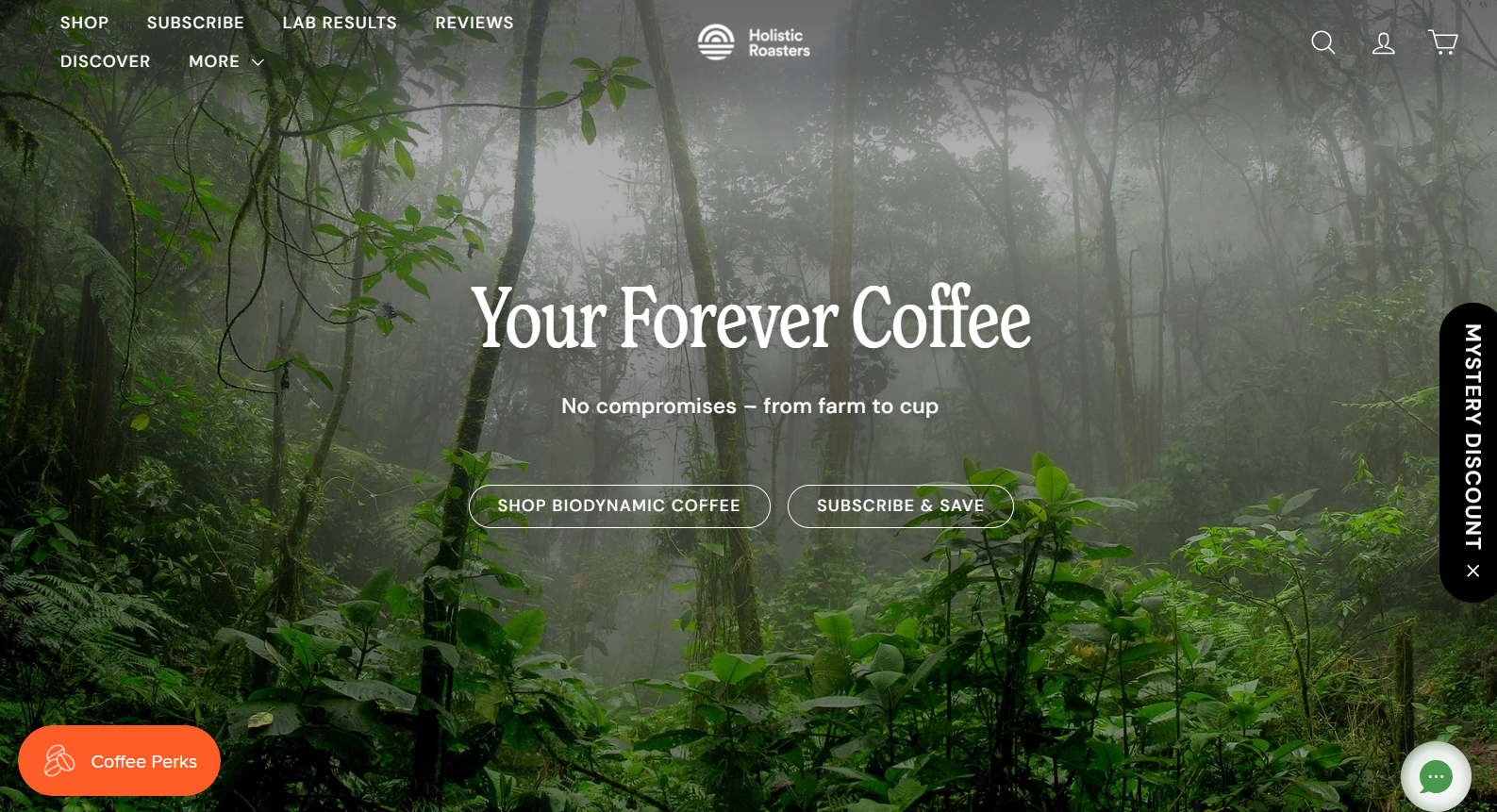
Biodynamic Coffee comes from Holistic Roasters in Montreal, which buys from two family farms: La Chacra D’Dago in Peru and 18 Conejo in Honduras. Both of them grow coffee in a working forest without synthetic pesticides.
The roast level makes this a low-acid coffee, and the brand says so plainly. Lighter roasts keep more chlorogenic acid, so the darker French roast is the gentlest option here: smoky, smooth, and full in body, with sweetness and flavor that survive the long roast. Actlabs and Eurofins have tested every harvest for mycotoxins, metals, and microbiology, with certificates posted unedited, though none report pH.
The catalog holds four options: Rubicon, a floral light roast; Rise & Shine, a balanced medium tasting of chocolate and caramel; French Roast; and a Swiss Water decaf. The brand holds Demeter and USDA Organic certification. That short range is a drawback for those who want more variety. A 300 g bag is $19.95, or $15.96 on subscription, which comes to about $18.10–$22.65 per 12 oz.
Where Coffee Acidity Comes From
Several factors determine the acidic content.
Roast Level
Roasting degrades chlorogenic acids, so the longer beans stay in the drum, the less acid reaches the cup. A dark roast generally tastes gentler than a light roast of the same bean, and a medium roast splits the difference. A low-acid dark-roast blend is the standard suggestion for anyone with heartburn, which is why most low-acid coffee beans on sale skew dark.
Bean Varietal and Growing conditions
There are a multitude of Arabica coffee bean varieties, and some yield lower acidity than others. Caturra and Catuai are examples of lower-acidity Arabica beans. Beans grown high and slow carry brighter acidity, at least in the flavor notes. Coffee from lower elevations, including much of Brazil’s crop in South America, starts closer to neutral, and Sumatra’s wet-hulled beans taste earthy. Most low-acid coffee beans trace back to origins like these.
Brew Method
Water temperature and contact time finish the job. Long cold steeping and no heat produce smoother, less acidic coffee than a hot pour-over of the same grounds; cold brew made with low-acid coffee combines two factors. Espresso runs under 30 seconds, which limits how much acid and flavor dissolve. Water at a boil burns the grounds, whatever the brewing method.
Milk and Grind Size
A French press and a fine grind pull more acid out. If you add milk, it buffers what is left, so the same cup tastes mild with dairy and sharp without it.
Low-Acid Coffee and Your Stomach
Low-acid coffee gets sold on two separate health promises worth pulling apart.
Acid Reflux and Heartburn
No low-acid coffee brand claims to cure acid reflux, and none should. Coffee sets off heartburn through more than acidity: caffeine relaxes the valve that holds stomach acid down, and a large hot cup pressures an empty stomach. The Cleveland Clinic suggests eating first, keeping cups smaller, and leaning toward a dark roast or espresso. A gentler cup helps mild heartburn; a burn after every cup of coffee is worth talking to a doctor about.
Caffeine and Acid Are Separate
Low-acid coffee is not decaf, and low acid does not mean low caffeine. Caffeine content follows the bean, the roast level (darker roasts carry less), the dose, and the brewing method, not the pH. A decaf made from the “wrong” beans can taste more acidic than a caffeinated low-acid option. If caffeine is the problem, cut it with a half-caff; if your stomach is, a dark roast and a low-acid bean type matter more.
What the Low-Acid Label Leaves Out
“Low-acid” is not a regulated claim, and no formal certification for it exists anywhere, so no one audits low-acid coffee brands for it either. Bags sold as gentle may test at the same pH as the traditional coffees they replace.
Smooth Is Not the Same as Low-Acid
A coffee can also taste smooth without being low in acid: smoothness comes from balanced flavor, more body, and low bitterness, while acidity is a more complex matter of chemistry as well as flavor notes. Also, a brand being certified organic doesn’t say anything about these aspects — it covers a completely different part of the bean production.
Questions to Ask Before You Order
Three questions separate marketing from measurement.
- Test source: Who tested the acidity, and are the reports available? A figure from a lab or a university is more significant than a brand’s in-house measures.
- Roast range: Does the low-acid coffee lineup cover a medium roast, a dark roast, and a light roast, decaf, or just one flavor profile?
Packaging: Does the bag block light, have a one-way valve to let CO₂ bleed off, and come with a proper resealable closure?
Which Bag to Start With
Fabula Coffee suits anyone who wants single-origin organic low-acid coffee tested for contaminants; Alex’s is among the more affordable specialized brands; Puroast fits anyone wanting a lab-verified pH. Java Planet and Volcanica reward buyers who choose by origin and flavor; Purity and Holistic Roasters publish certificates worth reading, and Lifeboost covers the broadest testing panel.
Among low-acid coffee brands, flavor generally shapes the final decision: cocoa, nutty, and dark chocolate notes point to a rounder, smoother cup of coffee, while citrus and floral notes signal a brighter, more complex one. Give a new bag of low-acid coffee a week, take a break from your usual beans, and judge by how the cup sits an hour later, not by the label.



