
Xiaoming Ai’s recent solo exhibition The Order of Chaos, held at LumiNoir ART, London, and supported by London Art Collective, from 5th – 10th October explored the concept of ‘chaos’. Utilising the visual language of traditional Tibetan Buddhist art, Ai investigates contemporary consciousness as a continuous negotiation between fear, change, the unknown, memory and desire. She presents order, typically seen as the opposite of chaos, as part of this ongoing process – a phase rather than a certainty or an end.
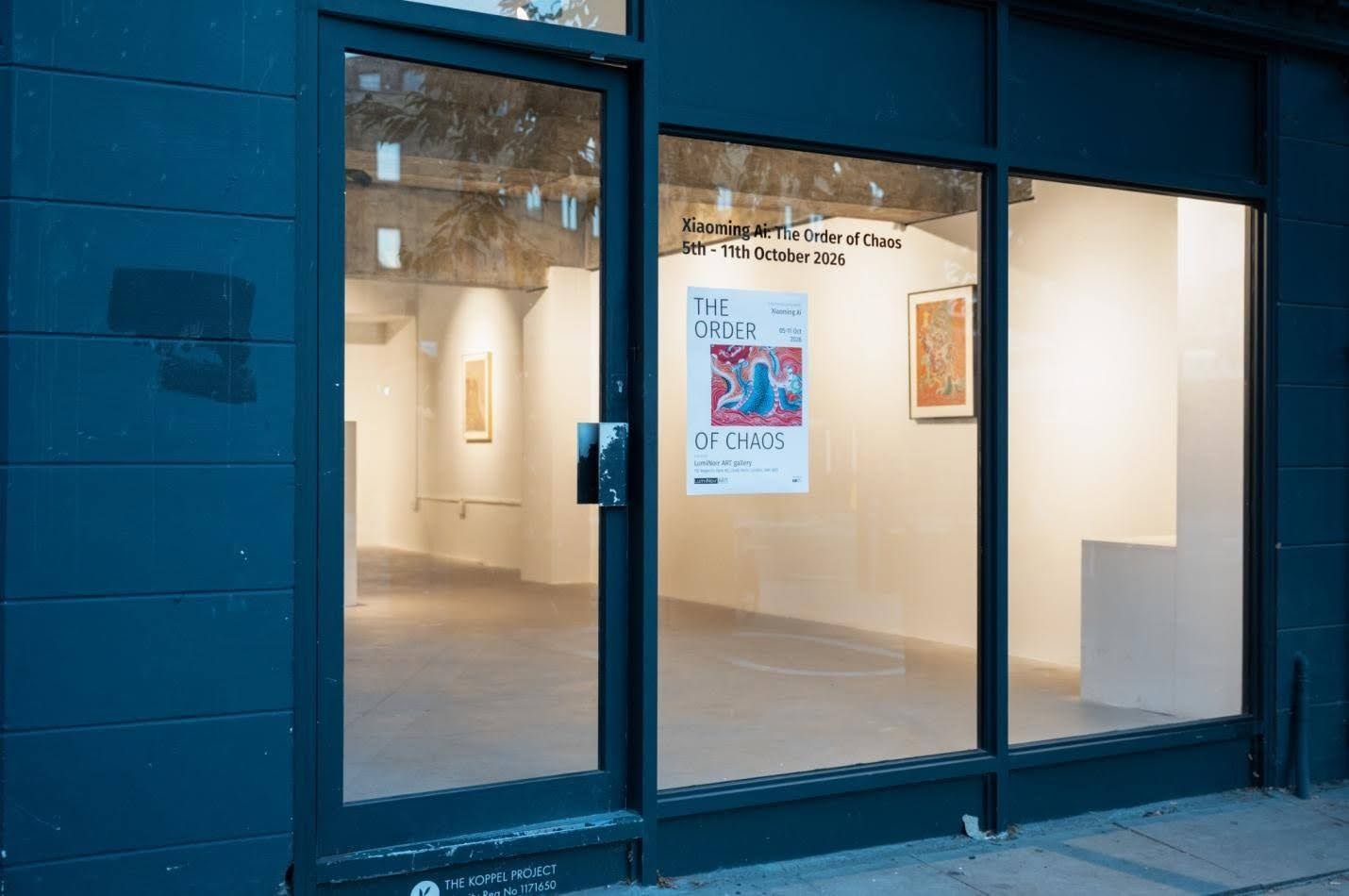
Ai’s artistic practice centres on human consciousness and the emergence of order within experience, despite chaos, desire and constant change. She presents chaos as contributing to the formation of order. A primary visual and methodological influence is Tibetan Buddhist art and philosophy. Ai adapts the form and function of traditional artistic objects to explore contemporary states of consciousness. Particularly relevant is the Thangka, a traditional Tibetan Buddhist painting or scroll used as a meditative device or ritual centrepiece for contemplation. In Ai’s works this function is replicated as a site of contemplation and self exploration, encouraging viewers to pause and reflect. Instead of worship, Ai’s works inspire introspection.
Ai’s representation of the relationship between order and chaos recalls the Tibetan Buddhist conception of reality in which apparently opposing states coexist within a larger whole. As represented by the Mandala, this challenges the idea of isolated opposites, instead suggesting an organic world in constant transformation. Ai translates this concept into contemporary consciousness through visual motifs of cyclicality. In Turning uses a flowing circular form defined by written phrases yet undefined by borders. Through the repetition of words the boundaries between centre and edge dissolve and instead seem to generate and disappear constantly in a cycle of repetition and rejuvenation.
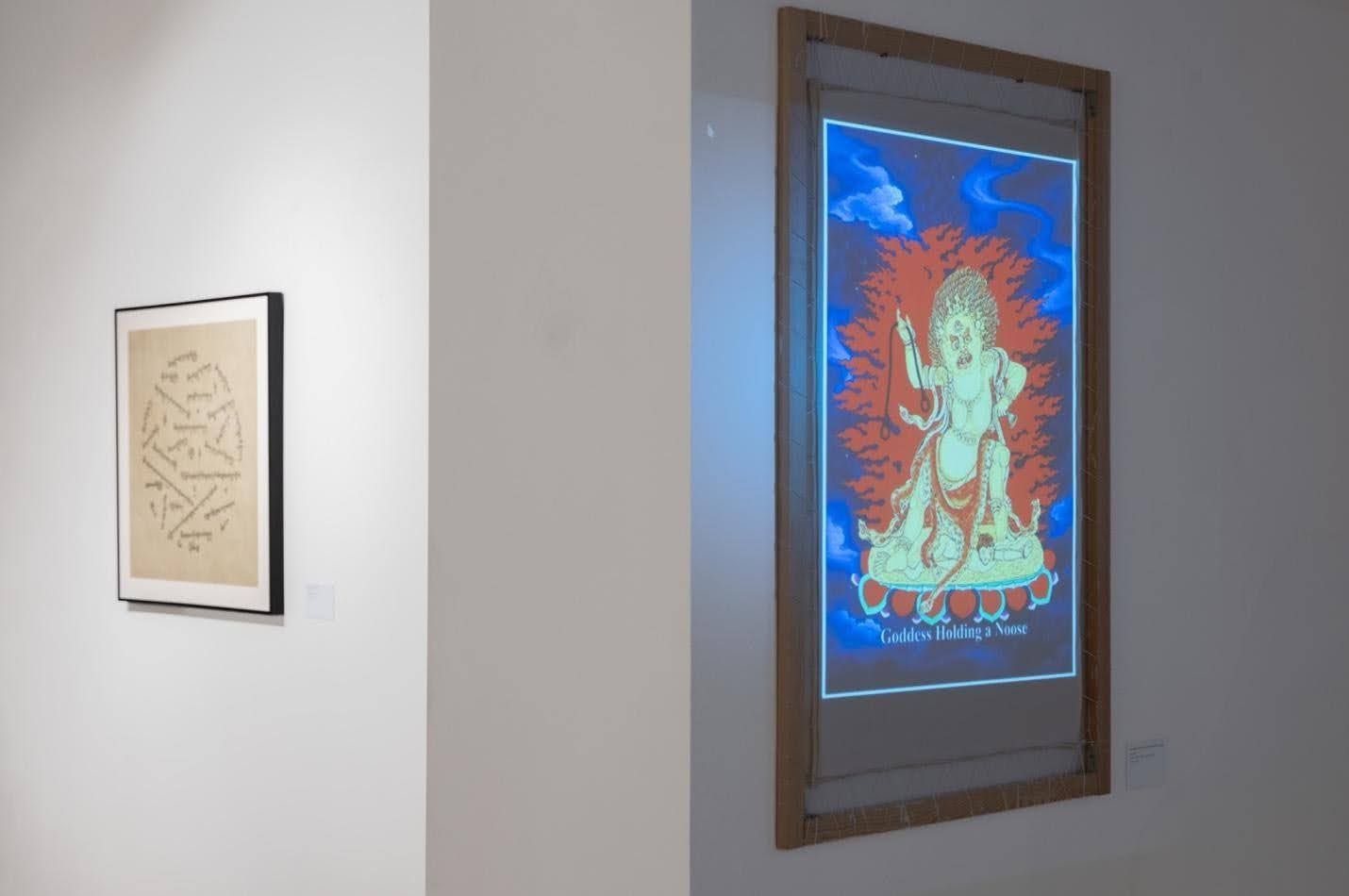
Motifs such as fire, the body, and the gaze are employed as transitory states within a process of transformation between destruction and life, the internal and the external, experience and reality. Fire appears as the central visual element of Rahula: The Fire That Sees, a title which combines the name of The Buddha’s son, Rahula, and the power of fire, suggesting purification and the relinquishing of attachments that may obstruct awareness. The work consequently reflects the exhibition’s broader emphasis on introspection and self awareness, suggesting that transformation can emerge through confronting destructive forces.
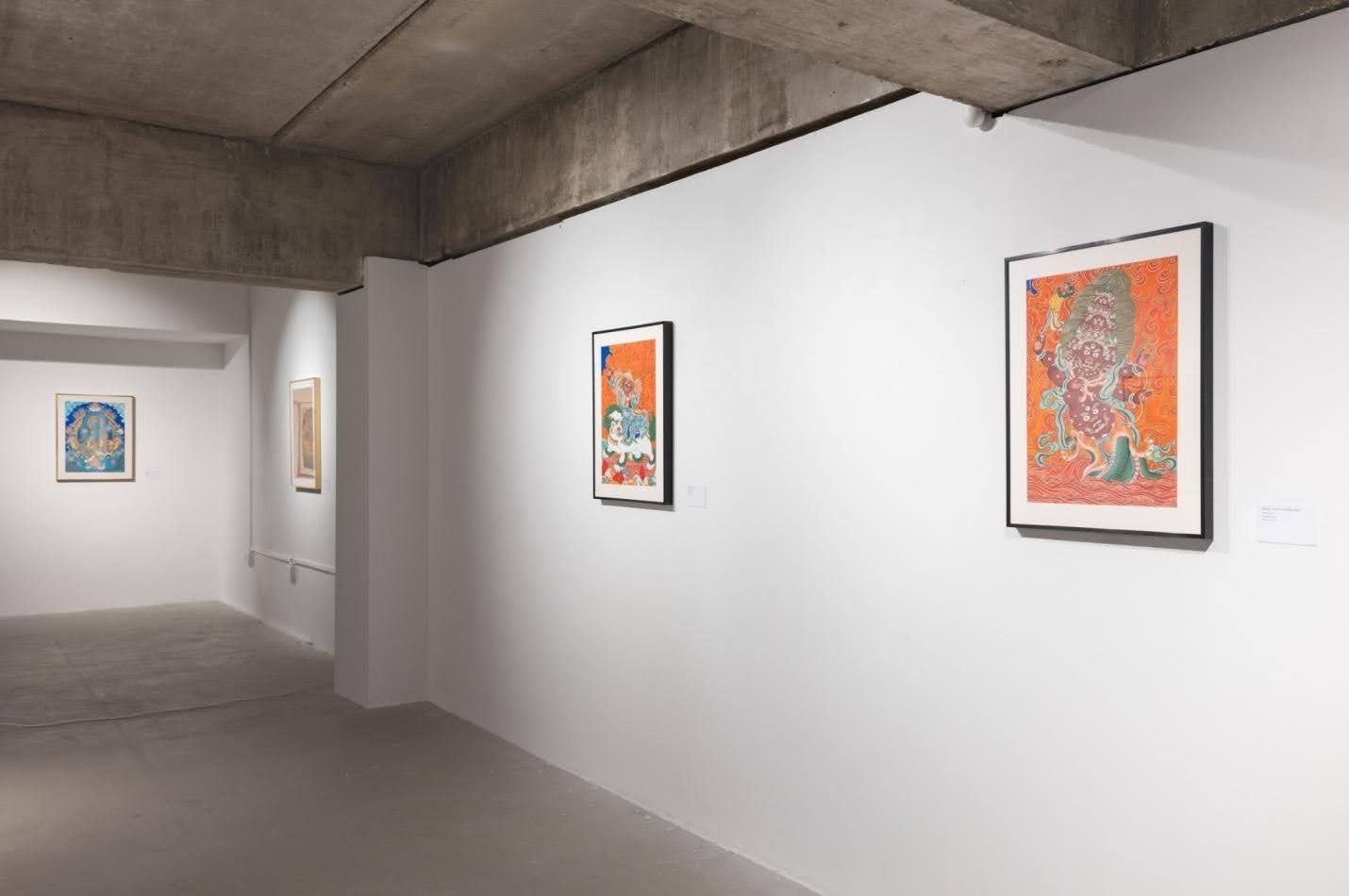
Similarly, a stylised pattern of fire appears as the background of One, a depiction of Ekajati, one of the protectors of the Dharma in Vajrayana Buddhism. She is traditionally represented as a symbol of “oneness” with a singular eye, tooth, and breast which are associated with non-duality and the rejection of simplistic divisions such as good and evil, right and wrong. Her nature and that of fire mirror Ai’s perception of the relationship between perceived opposites as something constantly transforming. Fire is further employed within The Fixed Fire, in which the viewer is confronted with the realities of living within the flow of time, which ultimately transforms everything we see as a certainty, into a transient state.
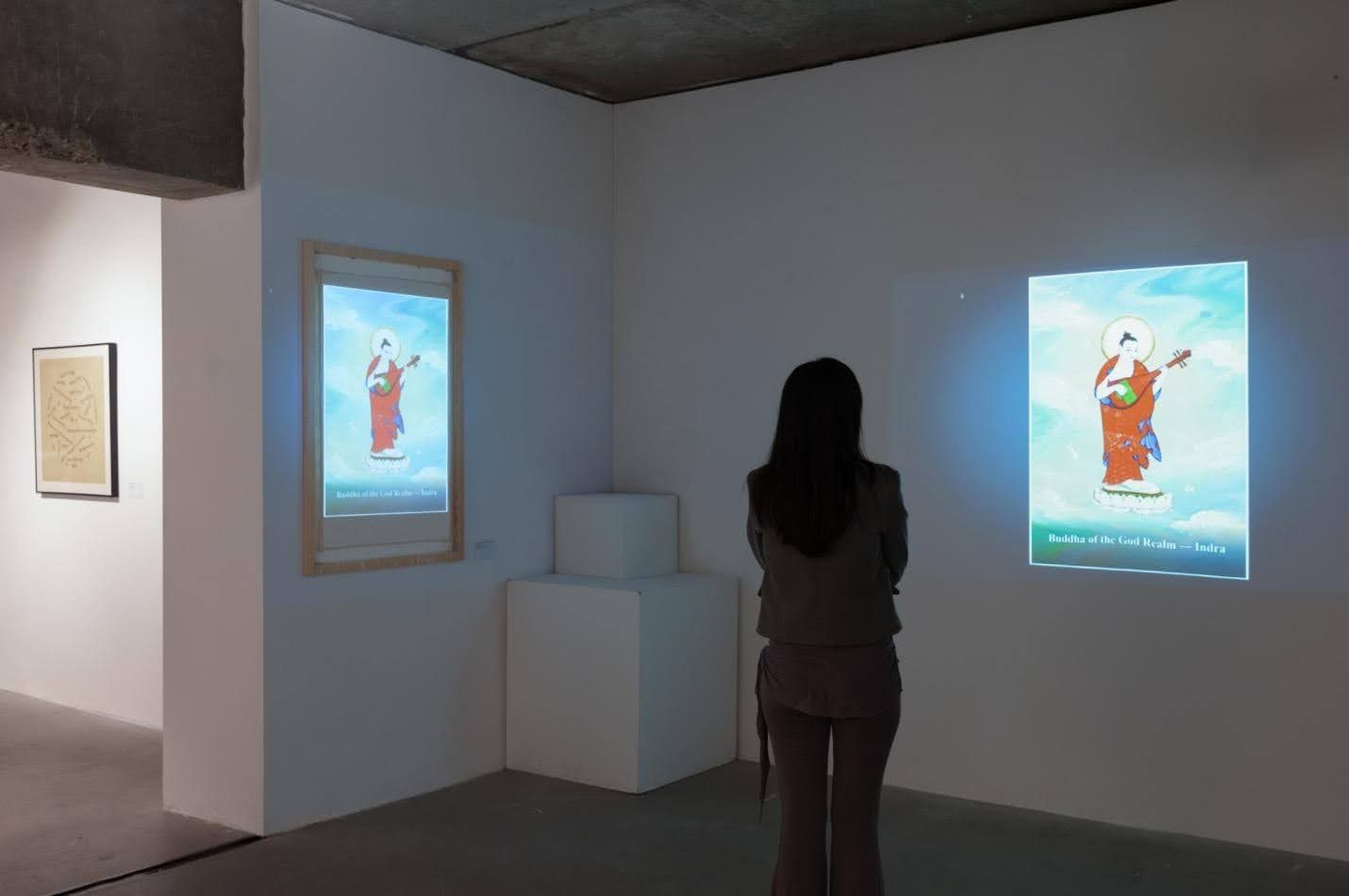
The exhibition is further transformed by the final piece The Body, Algorithms, and Mindfulness, an interactive digital art project which combines real time input with traditional imagery creating entirely individual encounters. Symbolically mirroring the unique experiences of consciousness for each individual the work questions how experience is shaped through the juxtaposition of cultural heritage and digital media. Ai ultimately invites viewers to consider their own place within this cyclical reality, and whether, through our binary based perception of order and chaos, we may in fact hold ourselves back from fully experiencing life in flux.



