The wedding dress may be the foundation of a bridal look, but it is rarely the whole story. Shoes alter posture, jewelry changes how light moves around the face, and a veil can transform the silhouette with one layer of fabric. The bouquet belongs in that same conversation.
Flowers are often selected as decoration first and styling second. Yet the bouquet sits directly against the dress, moves with the bride, and appears in many of the day’s defining images. Its color, texture, scale, and shape can either strengthen the look or distract from it.
A successful bridal style does not require every element to match. It requires each choice to feel connected to the person wearing it.
Begin With the Silhouette
Before considering flower varieties, look at the complete outline of the dress.
A sharply tailored column gown has a different visual language from a layered ball gown. A slip dress follows the body with minimal interruption, while architectural sleeves or a dramatic train create stronger lines. The bouquet should respond to those proportions.
Compact arrangements tend to preserve a clean silhouette. They can work well with structured dresses, city ceremonies, and looks built around precise tailoring. Looser bouquets introduce movement and may complement softer fabrics or relaxed shapes. Cascading arrangements extend the vertical line of the body and can create drama, but they also occupy more visual space.
Size is equally important. A very wide bouquet can obscure the waist and bodice. A bouquet that is too small may appear disconnected from a voluminous gown. The goal is not to follow a fixed rule but to maintain balance.
When possible, test the approximate bouquet size while wearing the dress or a garment with a similar silhouette. A mirror reveals some issues, but a full-length photograph is often more useful. It shows how the bouquet changes the proportions of the complete look.
Let Fabric and Flowers Speak to Each Other
Wedding dresses rely heavily on texture. Satin reflects light in broad, smooth areas. Chiffon creates softness and movement. Lace introduces intricate detail, while crepe has a quieter, more matte finish.
Flowers can echo these qualities or provide contrast.
A dress with elaborate lace may work beautifully with a restrained bouquet that allows the fabric to remain the visual focus. A minimalist satin gown can accommodate a bouquet with more varied petal shapes and greenery. A soft tulle dress may pair naturally with open, romantic flowers, while a precisely cut suit can be sharpened by a controlled arrangement with defined edges.
This relationship becomes especially important when choosing between fresh and silk florals. Fresh flowers bring natural variation, while well-made silk arrangements allow couples to review the bouquet’s shape, scale, and color well before the wedding. Browsing Rinlong silk flowers for wedding can also make it easier to compare different bouquet structures with the fabric and silhouette of the chosen outfit before making a final decision.
The bouquet should not imitate the dress too literally. Pairing lace with an excessively intricate arrangement, for example, may create too much detail in one area. Often, the most interesting styling comes from a controlled contrast: smooth fabric with layered petals, or an ornate gown with a cleaner floral shape.
White Is Never Just One Color
A white dress and white bouquet do not automatically match.
Bridal clothing can range from crisp white to ivory, cream, champagne, and shades with subtle pink, blue, or gray undertones. Flowers described as white can vary just as widely. When these tones are placed beside one another, differences that seemed minor in isolation become more noticeable.
This does not mean every white needs to be identical. Exact matching can make a look feel flat. A more considered approach is to build a family of related tones.
An ivory dress might be paired with cream flowers, pale neutral accents, and soft greenery. A bright white dress may work with cleaner whites and cooler green leaves. Champagne fabric can be supported by warmer petals rather than flowers with a blue-white cast.
For brides considering a white-and-green palette, Rinlong white bridal bouquets offer useful examples of how greenery can define the bouquet’s outline, keep pale petals from disappearing against the gown, and add depth without introducing a strong secondary color. The green defines the edge of the bouquet, prevents white petals from disappearing against the dress, and gives the arrangement greater depth.
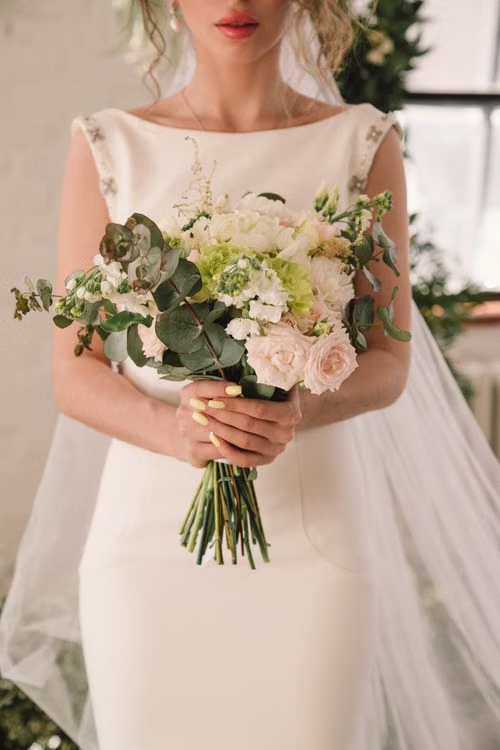
It is always worth checking the flowers beside the actual garment in both daylight and indoor lighting. Fabric and petals respond differently to warm bulbs, camera flash, and natural window light.
Treat the Bouquet Like an Accessory
A bouquet occupies the same styling space as jewelry, shoes, gloves, and a veil. If each accessory demands equal attention, the final look can feel crowded.
Choose a hierarchy.
If the dress has a dramatic neckline or detailed sleeves, the bouquet may need to remain visually quieter. If the gown is deliberately minimal, flowers can introduce personality through color, shape, or scale. A statement veil may call for a bouquet with a simpler outline, while an understated hairstyle and limited jewelry can leave room for a more expressive arrangement.
The bouquet handle is part of the look as well. Ribbon color, length, and finish can connect the flowers to the dress or introduce a subtle contrast. Raw-edged silk feels different from a tightly wrapped satin handle. Long trailing ribbons create movement but may compete with flowing sleeves or a detailed skirt.
Consider how the bouquet will be held. It should feel comfortable at waist level and remain easy to carry during portraits, the ceremony, and transitions between locations. A beautiful arrangement that is too heavy or awkward can change posture and make natural movement more difficult.
Build Cohesion Without Copying
The bridal party should look connected, but their flowers do not need to be identical.
Bridesmaid bouquets can repeat the bridal bouquet’s main color while using fewer flower varieties or less volume. They might emphasize greenery, feature one recurring flower, or reverse the balance of the main palette. This keeps the bride’s bouquet distinct while maintaining a shared visual language.
Boutonnieres and corsages require even less repetition. One recognizable flower, leaf, or color may be enough to connect them to the larger design.
The same principle applies to clothing. If bridesmaids wear different dresses within one palette, their bouquets can provide continuity. If the dresses are identical, small floral variations may help each person retain individuality.
Cohesion comes from repeated decisions, not exact duplication.
Style for the Person, Not an Imagined Bride
Wedding imagery can make bridal style feel like a set of established characters: romantic, modern, bohemian, classic, or glamorous. These categories can be useful when communicating with designers, but they should not become restrictions.
A person who dresses minimally every day may not feel comfortable carrying an oversized bouquet simply because the wedding is formal. Someone who enjoys color does not need to abandon it because white flowers appear more traditionally bridal. A suit, short dress, vintage gown, or understated ceremony look can each support a thoughtful floral choice.
The most convincing bridal looks usually contain something familiar about the person wearing them. It may be a favorite color, a preference for clean lines, an affection for loose garden flowers, or a dislike of anything overly arranged.
Instead of asking what a bride is supposed to carry, ask what feels natural with the clothing and the individual.
A Quick Bridal Bouquet Styling Check
Before finalizing the bouquet, review six elements together: the dress silhouette, fabric texture, floral undertones, bouquet width, handle treatment, and lighting. Check whether the flowers conceal an important detail on the bodice, whether the ribbon competes with the sleeves or skirt, and whether pale petals remain visible against the gown. A few full-length photographs in daylight and indoor lighting can reveal issues that may not be obvious when each element is viewed separately.
See the Complete Look Before the Wedding
Whenever possible, bring the main elements together before the event.
Try the dress with the intended shoes, jewelry, veil, and a bouquet of approximately the correct size. Photograph the outfit from the front, side, and back. Sit down, walk, and hold the bouquet at different heights.
This process may reveal that the flowers cover a detail, the ribbon clashes with the fabric, or the bouquet needs more greenery to remain visible against the dress. Small adjustments are easier to make before the wedding morning.
The purpose is not to remove every element of surprise. It is to ensure that the final choices support one another.
A bridal look becomes personal when the dress, accessories, flowers, and wearer no longer appear as separate parts. The bouquet completes the style not by matching everything perfectly, but by belonging naturally in the same visual world.