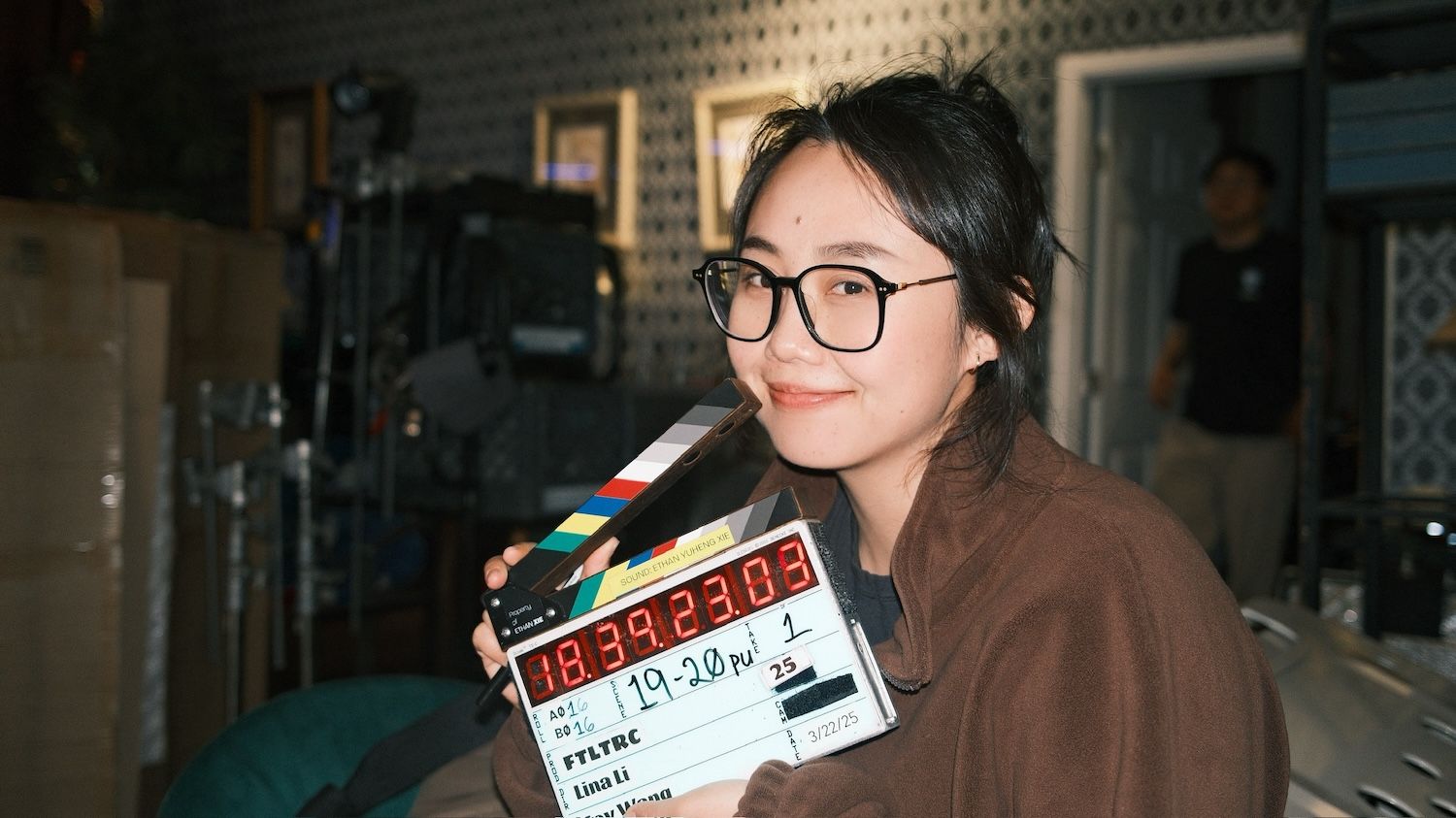
There is a certain calm in the way Kunqi (Lexi) Yang approaches her work, even in moments of uncertainty. A last-minute location collapse or a compressed production schedule might unsettle some, but her response is rarely dramatic. It is structural. Protect the emotional core and separate what is non-negotiable from what can bend.
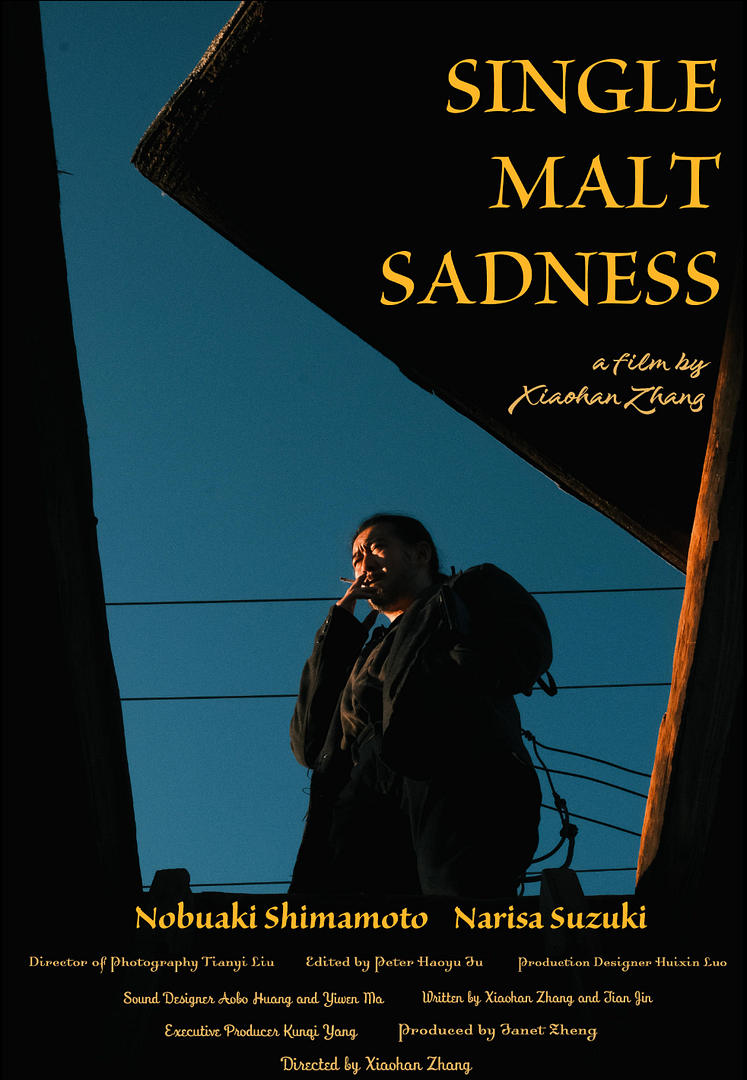
Her short films, including Single Malt Sadness and The End of the World, have found recognition on the international festival circuit. As the founder of LEADERSHEEP, a Los Angeles-based visual production company, Lexi has produced more than 20 vertical mini-series by 2025, including the recent breakout Abstinent CEO’s Pregnant Sweetheart, which quickly found its audience. I caught up with Lexi to talk about leadership on set and the way she protects the heart of a story.
What drew you to filmmaking, and how did NYFA shape the way you work today?
The biggest influence NYFA had on me was not a specific class, but turning hands-on work into instinct. In film school, no one waits for you to feel ready. Projects grow faster than you do. You have to jump in immediately, collaborate with strangers, and solve real problems. That experience taught me that execution matters more than inspiration, and collaboration is more reliable than individual heroism.
Later, as a producer, I rarely viewed things only from a business angle. A project only truly flows when you can think from the perspective of every department. NYFA gave me that muscle memory.
Your work, including Single Malt Sadness and The End of the World, has been recognised at several international festivals. What have those moments meant to you?
Single Malt Sadness received an award at the SHORT to the Point International Film Festival and was recognised by festivals including Mannheim Arts and Film Festival, Golden Short Film Festival, Broadway International Film Festival Los Angeles and Anatolia International Film Festival.
The End of the World received an Honorable Mention at Hollywood ShortFest and is now being submitted to more noir-focused festivals such as the Tallinn Black Nights Film Festival, which value not only narrative impact but also stylistic identity.
For me, film festivals are never just about honors. They function as a dialogue system between creators, the industry, and culture. Awards do not define the value of a work, but they do indicate whether your storytelling has crossed linguistic and cultural boundaries.
Does festival recognition carry a particular significance for you as an Asian filmmaker?
As an Asian filmmaker working internationally, I have always been conscious that festivals are not only artistic evaluation systems, but also channels of global cultural exchange. Entering an international context requires maintaining the sharpness of local storytelling while understanding how different audiences perceive narrative.
To me, these recognitions represent signals rather than trophies. They indicate that my approach to cross cultural storytelling is effective, while also reminding me that visibility comes with responsibility.
What does leadership look like for you on set? Is there a moment that crystallised it?
When we were filming Single Malt Sadness in the summer of 2023, a key night location was suddenly withdrawn just before the shoot, and the atmosphere on set was close to breaking.
The first thing I did was cut through the panic and restore order. We had to separate our creative goals into two levels: what was non-negotiable and what could be transformed. We preserved the emotional structure and lighting logic of the scene, but changed the spatial execution.
That moment reinforced my belief that true leadership is not about suppressing creativity, but about building a safe boundary for it in moments of chaos.
How do you balance commercial demands with artistic integrity?
I protect what the audience can actually feel first, and I deal with internal preferences second. Audiences pay for emotion, not for our struggle.
The market needs rhythm and platforms need hooks. But a hook is only a ticket, not the film itself. If the characters have no soul, even the most dazzling twist becomes fireworks. When we produced The End of the World in 2024, although it carried commercial elements, we focused on protecting the noir pressure and the emotional trajectory at its core.
True trade-offs do not weaken a project. They concentrate it. When resources are limited, restraint is not compromise. Restraint is control.
What led to the creation of LEADERSHEEP?
Founding LEADERSHEEP was not a romantic decision. Reality pushed me into that position. After working on enough projects, you realise the real factor behind success is not equipment or budget, but work culture. The atmosphere of a team seeps directly into the texture of the final piece.
Our philosophy is simple. Serve clients well, take care of crew members, and let actors release their true nature. We function like a family, not a squeezed army.
In visual storytelling, we believe in precision and decisiveness. If a scene can be told in two shots, we never use four. High efficiency in imagery is not laziness, but respect for the audience’s time. Restraint itself is style.
You’ve produced several vertical dramas in recent years. How has working in that format reshaped the way you think about storytelling?
The world of vertical mini-series moves in a harsher rhythm. What matters is not the format, but how you find dignity within it.
From a distribution perspective, vertical drama receives feedback almost in real time. You release today, and tomorrow you already know what is burning and what is dying. Vertical series require a much more agile mindset. That training sharpens our narrative instinct and makes our judgment more realistic.
Your recent series Abstinent CEO’s Pregnant Sweetheart quickly found its audience. How do you approach genre within vertical storytelling?
Hollywood has never rejected genre. The real secret is how to place humanity inside genre. Billionaire romance and dramatic twists are simply modern skins of classical drama.
The market needs rhythm and platforms need hooks. But a hook is only a ticket, not the film itself. If characters have no soul, even the most dazzling twist becomes fireworks. Motivations must be real and emotions must land.
The market is not an enemy. It is a mirror that simply speaks more directly.
Vertical production is known for its relentless pace. How do you protect storytelling integrity within that intensity?
Short cycles and tight rhythms are essentially a combination of physical labor and mental warfare. The real safeguard is never passion, but a mature and reliable workflow.
We rely on a fast reacting casting team, close partnerships with local locations and rental companies, and detailed paperwork to protect every step. Only when people feel psychologically safe can they truly focus.
Looking ahead, how do you see vertical storytelling evolving globally?
Globalization is already obvious. The way humans receive information has migrated from newspapers to television and then to mobile phones. People have been reading news on their phones for more than fifteen years, and phones are vertical.
I hope to be a guide within this wave, influencing audiences with better works rather than being dragged by algorithms. Formats may change, but storytellers should never retreat.
If you had to offer one piece of advice to emerging filmmakers, what would it be?
Stay persistent and focused on one thing.
Interviewed by Elin Ren