At this season’s New York Fashion Week, YINAN presented The Archive of Touch, a collection shaped around ideas of memory and tactility. Draped textiles, framed silhouettes, and diffused lighting created a quiet environment that invited guests to slow down and experience the garments up close.
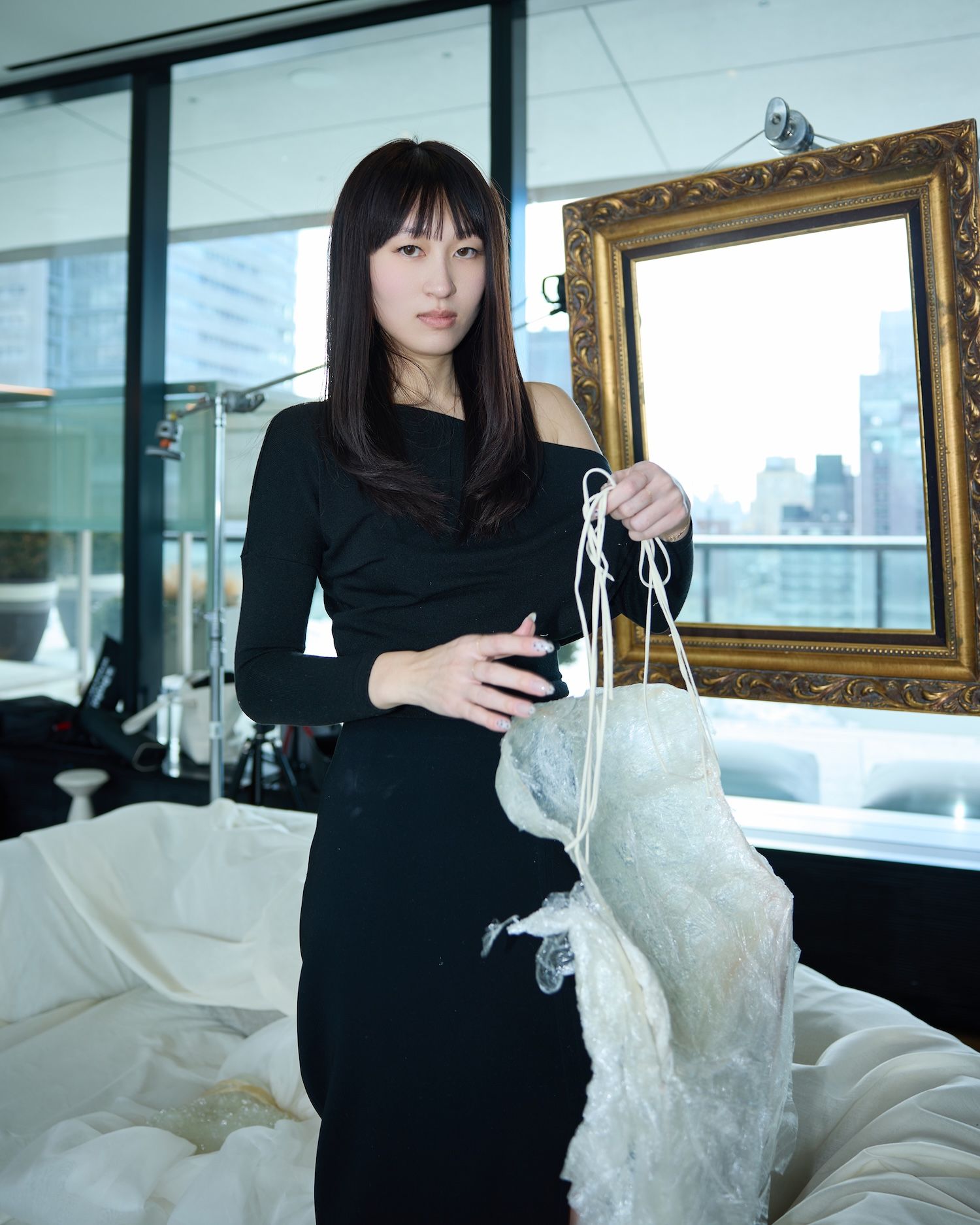
Behind the presentation’s spatial language was New York-based art director Tingyu (Tia) Chang. Approaching set design as an extension of storytelling, she transformed the venue into something closer to a living archive of touch, where objects, textures, and garments shared the same atmosphere. I caught up with Tia to talk about translating tactility into space, collaborating with designers, and shaping environments where fashion can be experienced rather than simply observed.
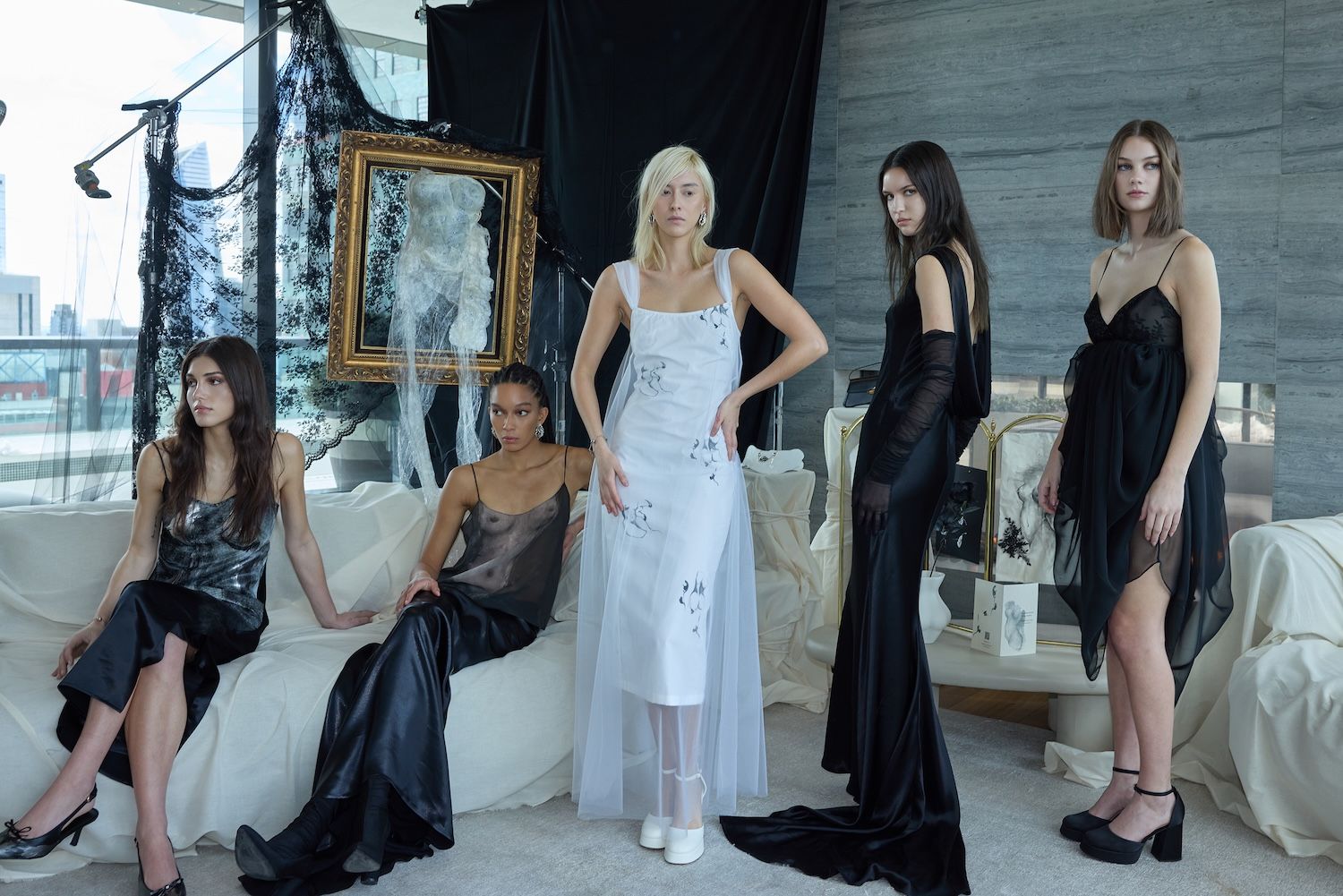
When you first encountered YINAN’s “The Archive of Touch” Artistry & Ready-to-Wear Collection, what shaped your initial visual direction for the presentation?
What immediately stood out to me was the collection’s artistic language. There were sculptural references, human figure sketch prints, and delicate draped textiles that felt very tactile and handcrafted. I wanted the set to echo those qualities rather than compete with them, so my direction focused on preserving that sense of artistry within the space. Instead of creating spectacle, I aimed to build an environment that quietly reflected the collection’s poetic and handcrafted essence.
In this presentation, how did you approach building a dialogue between the garments and the surrounding environment?
After speaking with YINAN’s designer, Anna, she expressed wanting the presentation to feel immersive and intimate, allowing guests to experience the garments up close, noticing the textures, details, and craftsmanship, rather than viewing them from a distance like a traditional
runway. I began to think of the space as an enlarged studio, almost as if the creative process itself had been transported into the venue. That idea shaped how I structured the environment so the garments and space could exist together within the same narrative.
Elements such as fabric-covered furniture, archival frames, sculptural vessels, and diffused lighting played key roles in the setting. How did you approach bringing these elements together within the space?
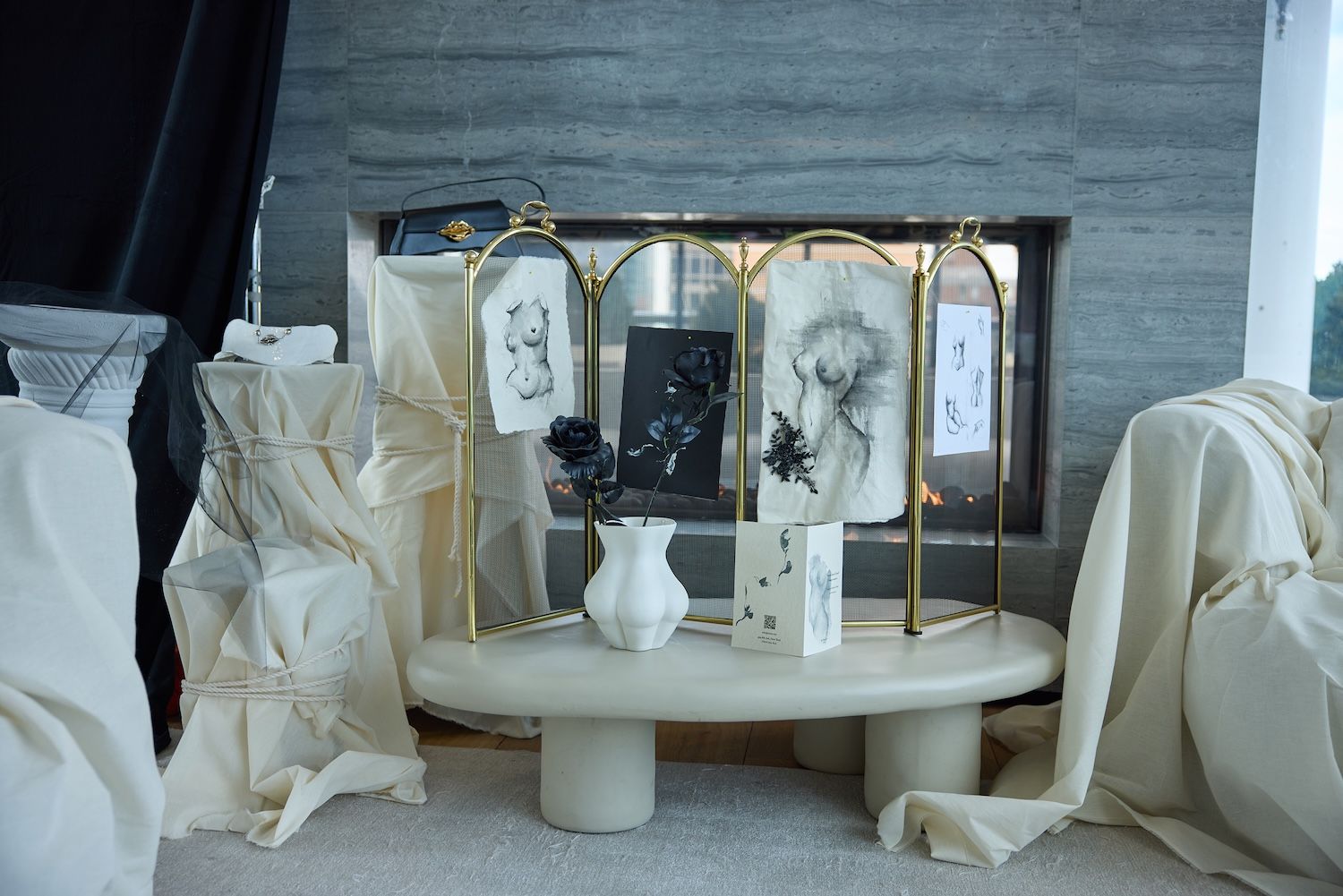
The venue was a luxury residential lounge, which naturally felt very polished and contemporary, almost like a cocktail setting. Since the space didn’t allow construction, large installations, or structural alterations, I focused on subtle interventions instead. I used fabric-covered furniture to soften the modern atmosphere and incorporated vintage-inspired objects to introduce a sense of artistry and depth. By layering these elements, I was able to shift the mood toward something more archival and poetic, aligning the environment with the emotional tone of the collection.
The presentation centers on tactility and memory. How did you distill the idea of “touch” into something atmospheric rather than literal?
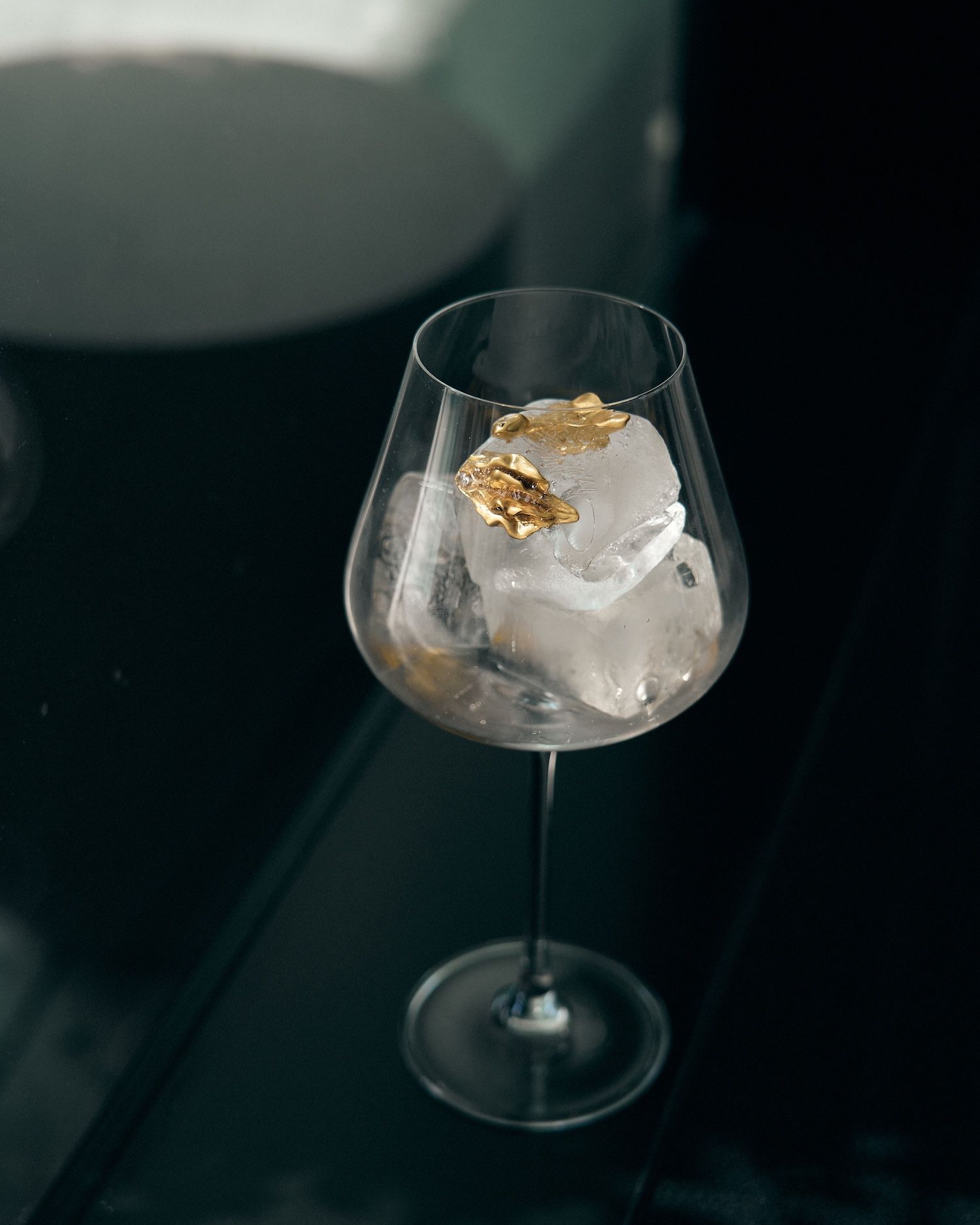
I focused on organic elements that could express the process of creation rather than illustrating touch directly. The fabric wrapping the furniture was muslin used for sample making, and the screen displayed print drafts and embroidery samples from the design process. For tactility, I worked with contrasting textures. For example, freezing YINAN’s jewelry inside blocks of ice. As the ice slowly melted, the metal gradually emerged, revealing the pieces over time. I also used sculptures created by the design team during development as display structures, allowing the garments, objects, and space to share one narrative.
You collaborated closely with the YINAN team to align the set with the collection’s silhouettes and textures. What does that kind of creative exchange with the YINAN team bring to a project like this?
Working closely with the YINAN team allowed me to understand their creative process from within, which became a major source of inspiration. Since I also come from a fashion design background, I deeply relate to how a silhouette or garment comes into existence and the intention behind each decision. I wanted the presentation to feel intimate enough for guests to sense that process, not just see the finished pieces. In a way, the audience wasn’t simply observing the collection. They were witnessing its making.
You grew up in Taiwan and are now based in New York. How has navigating between cultures shaped your sensitivity to emotion and atmosphere in your work?
Taiwan, like New York, is shaped by layered cultures. I grew up in Keelung, a port city where imported influences first entered, and that diversity created a visual environment where refined and everyday aesthetics coexist naturally. New York carries a similar energy. It’s a place where anything can happen, where inspiration might appear just around the corner. Moving between cultures has taught me to step outside fixed ways of thinking and approach creative work more intuitively, blending ideas, references, and emotions into one visual language.
Your practice moves between set design, styling, and art direction. How do these different roles shape the way you construct a visual world?
Working across these roles allows me to think about image-making from multiple entry points. Set design shapes spatial perception, styling defines character and narrative, and art direction connects everything into one cohesive language. Rather than seeing them as separate disciplines, I approach them as interconnected layers. Moving between them helps me
understand how atmosphere, silhouette, texture, and composition influence one another. When constructing a visual world, I’m not designing individual elements. I’m shaping how they coexist and communicate as a whole.
What defines your aesthetic, and how does it shape your approach to design?
My aesthetic is rooted in restraint, tactility, and emotional atmosphere. I’m drawn to materials and details that feel intimate rather than decorative. Instead of imposing a style onto a project, I try to listen to what the concept naturally suggests and let the visual language emerge from that. For me, design isn’t about adding more. It’s about refining until the environment feels intentional, balanced, and quietly expressive.
How did the audience’s response shape your reflections on the work, and did it open up any new ideas for you?
What moved me most was seeing guests slow down inside the space. Instead of walking through quickly, they paused, leaned in, and spent time noticing details. That response confirmed something I strongly believe: atmosphere can influence how people experience fashion, not just how they see it. The presentation became not just a showcase, but a shared moment of observation.
What are your future plans, and are there any designers you hope to collaborate with in the future?
I want to continue expanding my work across different visual formats, especially collaborations where there’s a strong narrative foundation and a willingness to experiment across disciplines. Rather than focusing on specific names, I’m drawn to designers who see fashion as a language rather than a product. I think the most meaningful collaborations happen when both sides are curious, open, and willing to build something unexpected together.
Interviewed by Sora Lin