Key Takeaways
- Cannabis genetics define potential, not guarantees.
Genetics influence growth pattern, flowering time, cannabinoid range, and terpene expression—but environment and cultivation still shape the final outcome. - “Good genetics” usually means predictability.
Stable genetics produce more consistent plants, which matters for medical supply chains, commercial production, and home growers alike. - Regular, feminized, and autoflower seeds serve different goals.
There is no universally “best” seed type—each comes with trade-offs depending on whether you value diversity, efficiency, or speed. - Premium seeds aren’t about hype—they’re about consistency and transparency.
Clear lineage, realistic THC/CBD ranges, proper storage, and reliable germination matter more than flashy potency claims. - Preservation and innovation both matter in cannabis breeding.
Maintaining classic genetics protects diversity and heritage, while innovation drives new traits, improved resilience, and evolving cannabinoid profiles. - Medical and recreational breeding prioritize different outcomes.
Medical-focused genetics emphasize consistency and repeatability; recreational genetics often prioritize potency, flavor, and visual appeal. - Matching genetics to your environment prevents frustration.
Plant height, flowering time, climate tolerance, and stability should align with your space, timeline, and growing conditions. - Basic genetic literacy improves decision-making—even if you never grow.
Understanding genetics helps you interpret strain names, seed descriptions, and product expectations more realistically. - Strain names are shorthand, not standards.
Variation between producers—and even between seeds from the same pack—is normal and expected.
Introduction
Cannabis genetics can easily feel like a language of their own. Strain names, seed types, terms like “stable lines,” “F1 crosses,” or “autoflowers,” and promises of high yields are often used without much explanation of what actually matters in practice.
Genetics aren’t just background details. They influence how a plant grows, how long it takes to flower, how consistent the results are, and the typical range of THC, CBD, and terpene expression. For anyone trying to understand cannabis—whether from a medical, general interest, or basic cultivation perspective—genetics are often the starting point for making sense of everything else.
Educational resources such as Weed.de focus on explaining these concepts in straightforward language, so readers can understand strain and seed information without needing a background in plant science. The aim is clarity, not hype, and helping people interpret the information they see more confidently.
What “cannabis genetics” really means
Every cannabis plant expresses a set of traits—height, branching, flowering time, aroma, resin production, cannabinoid profile. Those traits come from its genetic blueprint, shaped by the parents and how the plant is grown.
Two important ideas help keep things grounded:
1) Genetics set a range, not a guarantee
A seed can’t promise a precise THC percentage or a perfect clone-like outcome. It can only make certain outcomes more likely.
2) Environment still matters
Light intensity, nutrition, temperature, stress, harvest timing, and curing can shift the final results significantly—even with excellent genetics.
So when people talk about “good genetics,” they usually mean one thing: the plant is more likely to behave predictably under normal conditions.
How breeding creates new strains
Breeding is selective reproduction. In simple terms:
- Breeders pick two parent plants with desirable traits
- They cross them (pollinate)
- They grow the offspring
- They select the best offspring
- They repeat the cycle for multiple generations
Over time, traits become more consistent. That consistency is what people usually mean by “stabilized genetics.”
Why stabilization matters
With stable genetics, a batch of seeds tends to produce plants that are relatively similar in:
- flowering time
- growth structure
- aroma/terpene expression
- cannabinoid range
- yield potential
With unstable genetics, one seed might produce a star plant, another might produce something very different. Sometimes that variety is exciting. Sometimes it’s frustrating.
For commercial producers and medical supply chains, predictability matters. For hobby growers, predictability usually matters too—because space, time, and effort are limited.
The three main seed categories
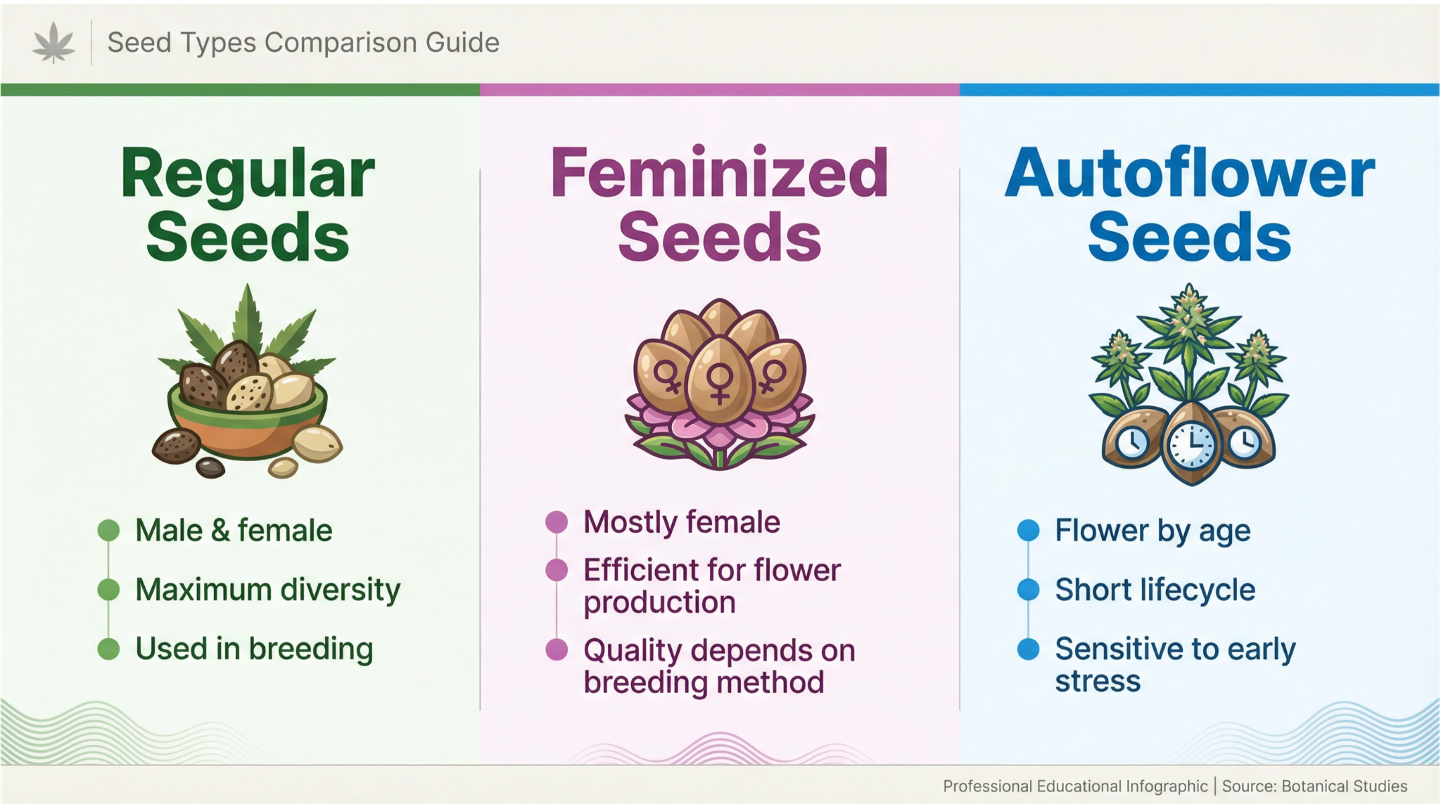
Regular seeds
Regular seeds can produce male or female plants.
In cultivation contexts, males are usually removed early because pollination shifts the plant’s energy toward seed production rather than resinous flowers. But regular seeds are still valued for breeding projects and for people who want full genetic diversity.
Plainly: regular seeds give you the “natural lottery.” That’s either a feature or a bug depending on your goal.
Feminized seeds
Feminized seeds are bred to produce almost all female plants.
They’re created by using pollen from a female plant (produced through specific techniques) to fertilize another female plant. Because there’s no male chromosome contribution, the offspring are overwhelmingly female.
Why people like feminized seeds is obvious: every plant has the potential to produce flower. You don’t invest weeks of time and space only to discover a male.
The caveat: quality matters. Poor feminization practices can increase the risk of hermaphroditic traits (plants producing both male and female flowers under stress). This isn’t inevitable, but it’s one reason “seed quality” is more than just branding.
Autoflower seeds
Autoflower plants flower based on age, not light schedule.
Traditional photoperiod cannabis plants typically require a change in light cycle (often around 12 hours of darkness) to trigger flowering. Autoflowers don’t. They start flowering automatically after a set period, which is why they’re often described as faster and simpler.
Autoflower genetics come from Cannabis ruderalis, a cannabis variety that evolved in regions with shorter seasons. Breeders crossed ruderalis with THC-rich varieties to combine automatic flowering with potency and desirable terpene profiles.
Autoflowers can be a great fit for shorter timelines, but they’re not “easy mode” in every sense. Because they move quickly into flower, early stress (overwatering, transplant shock, poor lighting) can reduce final yield more dramatically than with photoperiod plants.
What makes “premium” seeds different (in real terms)
People talk about “premium seeds” like it’s a luxury label. The better way to think about it is: premium seeds tend to come from breeding programs with more consistency, testing, and selection pressure.
Genetic consistency and predictability
Premium genetics usually mean more uniform plants: similar height, similar flowering window, and fewer surprises. In practical growing terms, that makes planning easier.
Germination rate and storage standards
A well-run seed program typically stores seeds properly and tracks viability. Poor storage (heat, humidity fluctuations) can reduce germination and seed health.
Clear lineage and realistic claims
A trustworthy seed listing usually gives you:
- strain background (parents)
- typical flowering time range
- general growth expectations
- realistic THC/CBD ranges (as a range, not a promise)
When you see “guaranteed 30% THC” with no context, that’s usually marketing, not genetics.
Preservation vs. innovation: why both exist
Cannabis culture includes two parallel instincts:
Preservation: keeping older genetics alive—classic lineages, regional varieties, historically important strains.
Innovation: creating new combinations—new terpene profiles, more resin, different cannabinoid ratios, better disease resistance, faster finishing.
Neither is “better.” They serve different priorities. Preservation plays an important role in maintaining genetic diversity and cultural heritage, especially as breeding trends continue to shift toward modern preferences and production efficiency. Some platforms, such as OfficialCannabisSeeds.com, focus on documenting and conserving established genetics alongside newer developments, helping ensure that older lineages are not lost as innovation pushes plant traits in new directions.
Medical-focused breeding vs. recreational-focused breeding
In educational spaces, this is often where confusion shows up.
Medical-oriented breeding tends to prioritize:
- consistent cannabinoid ratios (like higher CBD or balanced THC:CBD)
- predictable effects profiles
- repeatable batch outcomes
Recreational-oriented breeding often prioritizes:
- potency
- flavor and aroma (“bag appeal”)
- resin production (especially for concentrates)
- distinctive colors or novelty profiles
A strain can overlap both worlds, but the priorities differ. And understanding those priorities helps you read seed and strain descriptions with more clarity.
Matching genetics to growing constraints
Even without going deep into cultivation, one practical truth holds: genetics should match your environment.
Indoor considerations
- height and stretch matter
- flowering time affects planning
- odor intensity may matter for discretion
- stability matters because space is expensive
Outdoor considerations
- finishing time matters (season length)
- mold resistance can be crucial in humid climates
- heat and cold tolerance vary by genetics
People often buy genetics based on hype, then struggle because the plant’s natural growth pattern doesn’t match their space or climate. A little genetic literacy prevents that mismatch.
Germination basics (just enough to be useful)
Seeds generally need:
- moisture (but not soaking-wet conditions)
- warmth
- oxygen
- gentle handling
Most healthy seeds germinate within a few days under stable conditions. The biggest beginner mistakes are overwatering, temperature swings, and rough handling of the taproot.
If germination fails repeatedly, it’s often either seed viability/storage issues or technique issues—not “bad luck.”
Where Weed.de fits in (without the hype)
A lot of cannabis genetics information online is either overly technical or overly promotional. Weed.de sits in the middle: patient-facing education that explains how genetics influence outcomes—THC/CBD ranges, terpene expectations, flowering time, and why one strain name isn’t always consistent across producers.
Even if you never grow a plant, understanding genetics helps you interpret products and strain descriptions more realistically.
Conclusion
Cannabis genetics aren’t about memorizing strain trivia. They’re about understanding what’s likely.
Once you know the basics—regular vs feminized vs autoflower, stability vs variation, and why labels are only shorthand—you can read seed and strain descriptions with a calmer, more realistic eye. And that’s the real win: fewer surprises, better decisions, and a clearer sense of what cannabis can (and can’t) reliably offer
FAQ
What’s the most important genetic trait for beginners?
Predictability. Stable genetics, realistic expectations, and a growth pattern that fits your environment matter more than chasing extreme potency.
Are feminized seeds always better than regular seeds?
They’re better if your goal is flower production without managing males. Regular seeds can be better for breeders or people who want maximum genetic diversity.
Are autoflowers less potent than photoperiod strains?
Historically, autoflowers were less potent. Modern breeding has narrowed that gap significantly, though outcomes still vary by breeder and environment.
Why do plants from the same strain name sometimes look and feel different?
Because “strain names” aren’t standardized globally, and genetics plus cultivation conditions can vary across producers. Even within the same seed pack, phenotypic variation is normal.
Does genetics determine THC percentage exactly?
No. Genetics sets a potential range. Growing conditions and harvest timing influence where a plant lands within that range.
Medical disclaimer
This article is educational and does not replace medical or legal advice. Cultivation laws vary by country and can change. If you use cannabis medically, discuss product selection and dosing with a qualified clinician or pharmacist. If you are considering cultivation, inform yourself about the rules that apply to your location.