
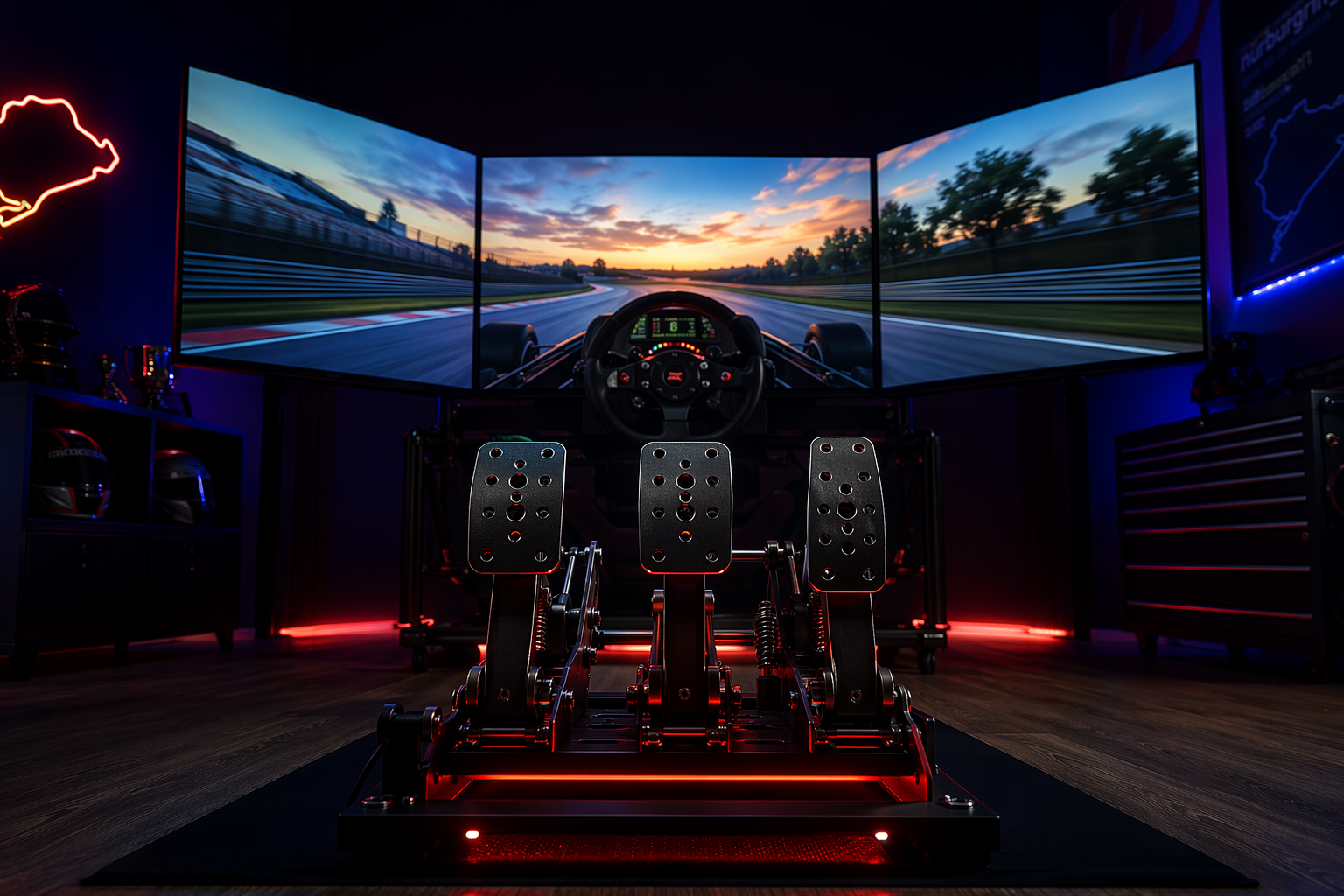
Key Highlights
- Great sim pedals with hydraulic damping improve control, confidence, and consistency in sim racing.
- A quality pedal set helps build muscle memory, especially under braking.
- Load cell pedals measure pressure, which supports more repeatable brake inputs.
- Hydraulic pedals create a more realistic feel, but they cost more and need more care.
- Strong build quality and adjustability matter if you want long-term performance.
- The right choice depends on your budget, skill level, and sim racing setup.
Introduction
Your sim pedals do more than trigger throttle and braking. In a serious sim racing setup, they shape how confidently you attack corners, manage trail braking, and repeat fast laps. That is why choosing the right racing pedals, especially those featuring a load cell sensor, matters so much. If you are building your first rig or planning an upgrade, the best sim pedals can add precision, comfort, and a far more connected feel to your sim racing experience.

Understanding Sim Pedals and Their Impact on Your Racing Setup
Sim pedals convert your foot inputs into throttle, brake, and clutch signals for your racing simulator. Not all pedals respond the same—some measure pedal travel, others measure pressure—affecting how naturally you control braking, hold steady throttle, and develop muscle memory.
High-performance pedals offer precision, consistency, and reliability. Built with premium materials and electronics, they deliver predictable responses lap after lap and provide realistic force feedback. In a well-matched setup, this means less guesswork and a more immersive experience. Next, consider which features matter most when buying sim pedals.
Key Features to Look For When Choosing Sim Pedals
When buying sim pedals, focus on the features that directly affect performance, which are often favoured by professional drivers. The biggest ones are pedal sensitivity, adjustability, pedal type, and build quality. A load cell brake usually gives more precise braking control because it measures force instead of distance.
Pedal Sensitivity and Adjustability Explained
Pedal sensitivity affects how quickly your sim racing pedals react to your input. If the brake pedal feels too soft or too sharp, it becomes harder to brake consistently. Better sensitivity control lets you match the pedal response to your driving style and the kind of car you race most often.
Just as important, pedal adjustability helps you create a setup that feels natural. This matters for beginners learning control and for advanced drivers chasing threshold braking with features such as traction control. A pedal with progressive resistance can also make braking feel more predictable as pressure builds.
Look for adjustment options such as:
- brake pedal response and pressure settings
- pedal position and spacing
- response curve tuning through software tools like SmartControl software or similar calibration tools
Build Quality and Materials for Durability
Build quality has a direct effect on feel, reliability, and long-term durability. A premium pedal set should stay solid under repeated heavy inputs, especially during hard braking. If the pedals flex, wear quickly, or lose consistency, your confidence drops with them, especially when considering various types of sim racing pedals.
That is why serious sim racers pay attention to materials. Strong construction supports repeatable performance and helps pedals respond in a similar way over time. Even smaller details, like a stable base or carbon fibre heel plate, can improve comfort and control.
Useful material choices include:
- metal construction for strength, stiffness, and better durability
- Carbon fibre heel plate options for a lighter, cleaner foot platform with a premium finish
Beginner’s Guide: Getting Started with Sim Pedals in Australia
If you are a beginner, keep your first pedal set simple and dependable. You do not need the most expensive option to enjoy a racing simulator. What you need is a pedal set that is easy to use, consistent underfoot, and suitable for the rest of your sim racing gear.
For many first-time buyers in Australia, entry-level pedals are a sensible starting point. They let you learn braking points, throttle control, and basic racecraft before moving into more advanced hardware.
Essential Equipment You’ll Need for Your Sim Racing Setup
A good starter rig is built around balance. Your pedals should work well with the rest of your sim racing gear, not fight against it. If you plan carefully, you can create a setup that feels stable, practical, and ready to upgrade later.
The core pieces usually include:
- a pedal set with brake and throttle pedals that measure the amount of force applied, plus a clutch if needed
- a wheel and a secure mounting solution, especially if you plan to use a direct drive wheel later
Beyond that, think about accessories that help fit and comfort. Pedal plates, mounts, footrests, and bundles can make installation easier and help your racing simulator feel more complete from day one.
How to Pick the Right Sim Pedals for Your Skill Level
Your skill level should shape your buying decision. A beginner usually benefits from simpler sim racing pedals that are easy to understand and affordable to replace or upgrade. An advanced driver may want stronger braking precision, more tuning options, and a more realistic pedal feel.
A practical way to decide is to match features to how seriously you race. If you are learning the basics, do not overbuy. If you race often and care about lap time consistency, more advanced options, like hall effect pedals, can make sense.
Here is a simple guide:
- beginner: start with a dependable entry-level set of sim racing pedals, often using potentiometer pedals
- advanced: look at load cell or hydraulic systems for better pressure control and realism
Step-by-Step Guide to Selecting the Best Sim Pedals
The easiest way to choose sim pedals is to follow a clear process. Instead of chasing features you may not need, start with your budget, driving goals, and current type of sim racing setup. That keeps your decision practical and avoids expensive mistakes.
This buyer’s guide is built to help you narrow the field quickly when choosing sim pedals. By comparing pedal types, upgrade value, and installation needs, you can move closer to the best sim racing pedals for your rig.
Step 1: Assess Your Budget and Racing Goals
Start by deciding what you want from your sim racing experience. Are you building a first rig, improving consistency, or chasing a higher level of realism? Your answer should guide both budget and feature choices. A casual driver and a competitive racer usually need very different pedal force and tuning options.
A lower budget can still deliver solid results if your expectations are clear. Spending more becomes easier to justify when your racing goals include better braking precision across the full pedal travel, stronger repeatability, or a more realistic brake feel.
| Budget Range | Best Fit | Typical Pedal Type | Main Goal |
| Entry budget | First-time buyer | Potentiometer pedal set | Learn basics and keep costs down |
| Mid-range | Regular sim racer | Load cell pedal set | Improve brake control and muscle memory |
| Premium | Serious enthusiast | Hydraulic pedal set | Maximise realism and pedal force feel |
Step 2: Compare Entry-Level vs. Advanced Sim Pedal Options
Entry-level pedals are usually easier on your wallet and simpler to use. Many rely on potentiometer pedals, which measure travel distance. They work well for learning, but they can wear faster and usually offer less precision than more advanced systems designed for competitive sim racers.
Advanced pedals are designed for drivers who want more control and a closer link to real-world braking habits. A load cell setup measures force, which makes it easier to build a repeatable braking technique. Hydraulic pedals with a hydraulic damper go even further by using fluid pressure to create stronger realism.
The main differences are:
- entry-level pedals: lower cost, simpler setup, beginner-friendly feel
- advanced pedals: load cell or hydraulic pedals, better consistency, more tuning, and greater realism
Step 3: Evaluate Compatibility and Installation Requirements
Before you buy, check compatibility with your platform and mounting hardware. A strong pedal set is only useful if it fits your sim racing setup properly and works with your software environment. That includes physical mounting, simulator support, and available tuning tools.
Installation needs can also vary by design. Some pedals are straightforward, while others include more complex parts and setup considerations, such as those that use a magnetic sensor. If you are considering hydraulic systems, remember that components like a master cylinder may bring added setup and maintenance demands.
Review these points before ordering:
- confirm platform and rig compatibility, plus available calibration support such as SmartControl software
- Check the mounting method, including hardware, and whether the pedal design requires extra installation space or added maintenance.
Conclusion
In conclusion, selecting the right sim pedals can significantly enhance your racing experience and performance. By understanding key features like pedal sensitivity, build quality, and compatibility with your setup, you can make an informed decision that aligns with your racing goals. Remember, whether you are a beginner just starting or an advanced racer seeking the best technology, the right pedals can elevate your skills on the virtual track. Take time to assess your budget, compare options, and consider your skill level to find the perfect match for your needs.
Frequently Asked Questions
How do load cell sim pedals compare to hydraulic sim pedals?
A load cell sim racing pedal measures brake pedal pressure, which helps with consistency and muscle memory. Hydraulic pedals use fluid in a cylinder to create a more realistic feel by generating hydraulic pressure. In most cases, a load cell pedal set is easier to own, while hydraulic pedals deliver higher realism and higher maintenance.
Are there recommended sim pedals for beginners starting out?
Yes. For a beginner in sim racing, a dependable pedal set with entry-level pedals is often the smartest start. Potentiometer pedals are budget-friendly and simple to learn on, whereas Hall sensor pedals may offer more precision. They may not offer the same precision as premium options, but they are a practical first step for building skills.
Is upgrading from basic to premium sim pedals worth it?
For many drivers, yes. Upgrading from basic pedals to premium load cell brake pedal sim pedals can improve confidence, repeatability, and braking control. Better pedal force measurement and pedal sensitivity tuning make a noticeable difference, especially if you race often and want a more reliable sim racing setup.
How should I maintain and care for sim racing pedals?
Keep the sim racing brake pedal and other sim racing pedals clean, mounted securely, and checked regularly for wear. Good maintenance supports durability and a consistent feel. If you use hydraulic systems, monitor hydraulic fluid and related parts carefully. For supported models, use smart control software or similar tools to keep calibration accurate over time.



