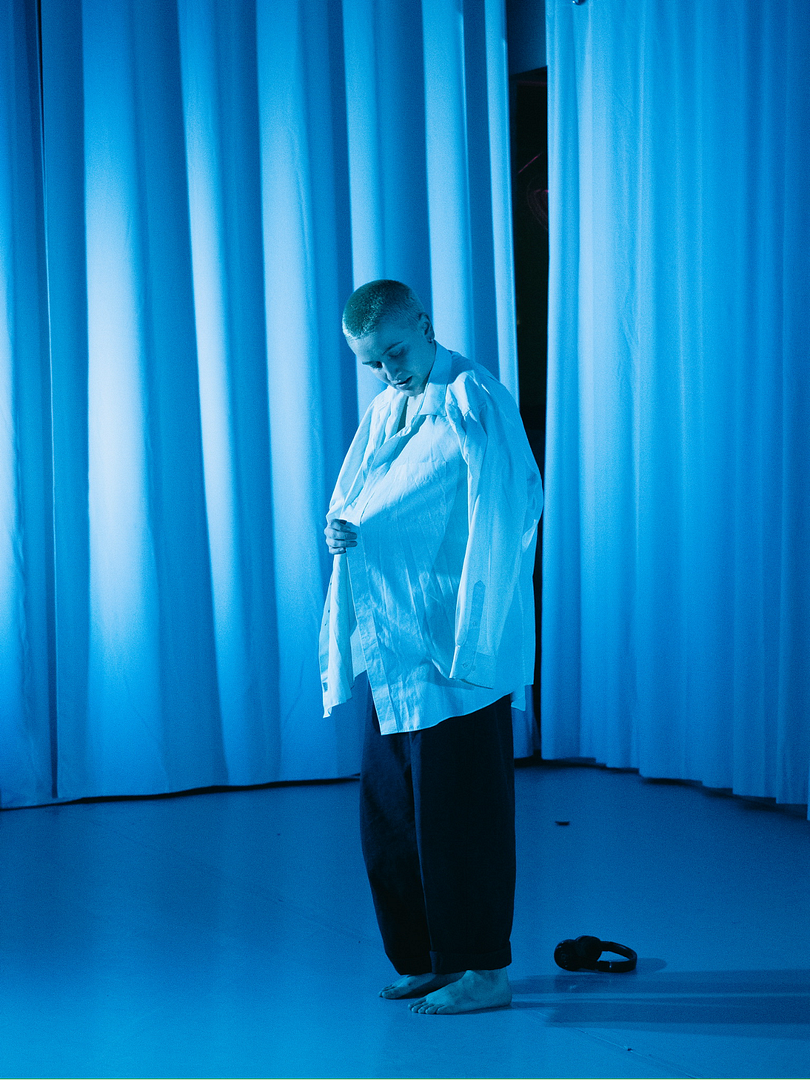
Creature Space dance company in Brooklyn is known for premiering a lot of cutting edge contemporary dance. One notable new work that recently premiered was “A Dreamt Up Draft of Suggestion,” choreographed by Maya Podejma and performed by Lola Jenkins, Chisato Fujii, and Sarah Ferguson. The choreographed dance piece, which challenged audiences to find the familiar within the surreal, draws heavily from the dreamlike and eerie aesthetic of legendary cult filmmaker David Lynch.
For Canadian dance artist Lola Jenkins, the performance marks another step in a career already rich with diverse collaborations. Jenkins, who has performed works by dance industry heavyweights like Sidra Bell, Doug Varone, and Yue Yin, brings a unique physicality to the stage, exploring themes of love, loss, and the balance between the quotidian and the fantastical. In “A Dreamt Up Draft of Suggestion,” this exploration takes on a distinctly Lynchian flavor.
The piece, which runs approximately 23 minutes, is a non-linear exploration of a fractured family relationship. The narrative, or lack thereof, is intentionally disjointed, mirroring the absurdist qualities found in Lynch’s films like Eraserhead or Twin Peaks. The cast of three characters represents a family unit: Jenkins and Ferguson as the adult figures, and Fujii as the child.
“The piece was inspired by the work of legendary cult filmmaker David Lynch, as a lot of Maya’s recent works have been inspired by Lynch,” Jenkins explained. Despite its abstract narrative, the piece resonated deeply with audiences during its three-show run at Creature Space, a venue known for its ability to pack in the local creative crowd and generate significant buzz within the New York dance community. Over one hundred people attended the premiere, and the reception was overwhelmingly positive.
“The piece was really well received,” Jenkins said. “People found the piece quite striking and moving.”
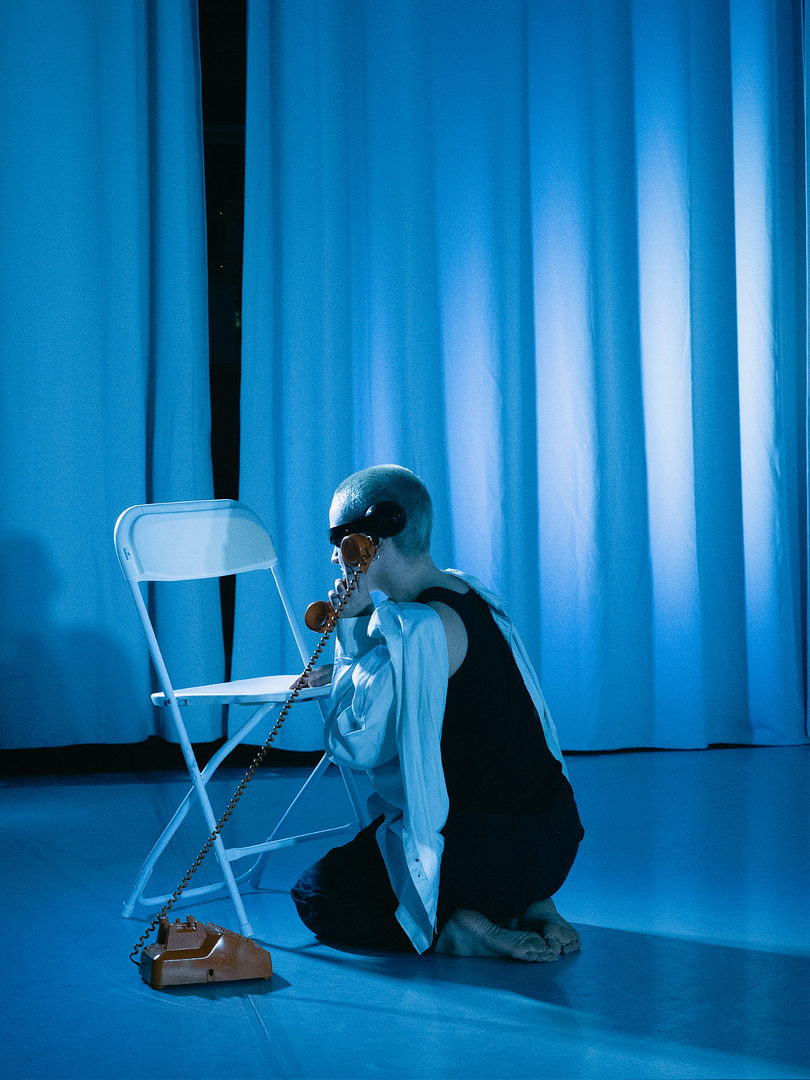
What made the performance so compelling was its ability to ground its fantastical and absurd elements into raw, tangible human emotion expressed through dance. Jenkins highlights two particularly intense scenes that anchored the audience’s experience: one depicting a birth, and another where the child character, Chisato, is sobbing on a phone. “I think even though the piece is non-linear and absurd, people connect to striking, very human emotions in many different contexts,” Jenkins said.
A key element in achieving this connection was the use of props. On stage, a rotary phone, books, hats, and chairs were not merely set dressing but active participants in the storytelling. Jenkins elaborates on Maya Podejma’s intention behind these objects: “Maya likes to use props to take this absurdist, fantastical work and ground it in aspects of reality that are more tangible,” said Jenkins, a recent summa cum laude graduate of SUNY Purchase’s Conservatory of Dance.
However, Podejma also subverts the expected functions of these items, playing with their form and meaning, becoming other things by metaphor. Jenkins described how a corded phone’s long cord could become a tie, a chair could transform into a computer, and a coat could be used to create a pregnancy belly. In a particularly striking visual, rose petals were used to symbolize blood. This playful yet dark manipulation of props reflects the choreographer’s style. “Maya likes to play with humour and darkness,” Jenkins explained. “Sometimes she wants to play with the props for just that purpose, ‘play,’ and then when we find moments to put these moments of play in the greater context of the piece, it gets more meaning.”
The success of the piece was also a testament to the collaborative harmony between the performers. Lola Jenkins, Chisato Fujii, and Sarah Ferguson are not strangers to one another; they are college colleagues who have worked together on previous projects. This pre-existing rapport was invaluable.
“We all met each other while in college and we have worked together on other projects before,” Jenkins said. “This was really helpful since we were all really comfortable collaborating and knew Maya and the way she likes to work.”
Within the piece, their roles were distinct yet interconnected. Jenkins described their character as more of a “patriarchal” figure, self-centered and less supportive of her partner, while Sarah Ferguson’s character was more nurturing, attempting to care for Chisato’s child character. This dynamic created a tense, relatable family portrait, even within the abstract framework.
Jenkins credits the choreographer, Maya Podejma, for fostering an environment that allowed for this kind of creative freedom. “What was so great about collaborating with Maya and the other dancers was that Maya trusted us a lot to make artistic choices within our characters,” Jenkins explained. “Since we all knew each other before the project and have worked together, we all felt comfortable making choices and navigating the landscape Maya was creating.”
This trust led to moments of spontaneous creativity, where even ideas born from jokes could be honed into earnest, meaningful moments within the performance. “I think the greatest thing would be the freedom and surprises that come from that,” Jenkins stated. “Even if some of the ideas came out of ‘jokes,’ we were still able to take them and find a more earnest root, and they could have a place in the piece.”
Photos by Finn Piper
By Margaret Wright
Published February 19, 2026