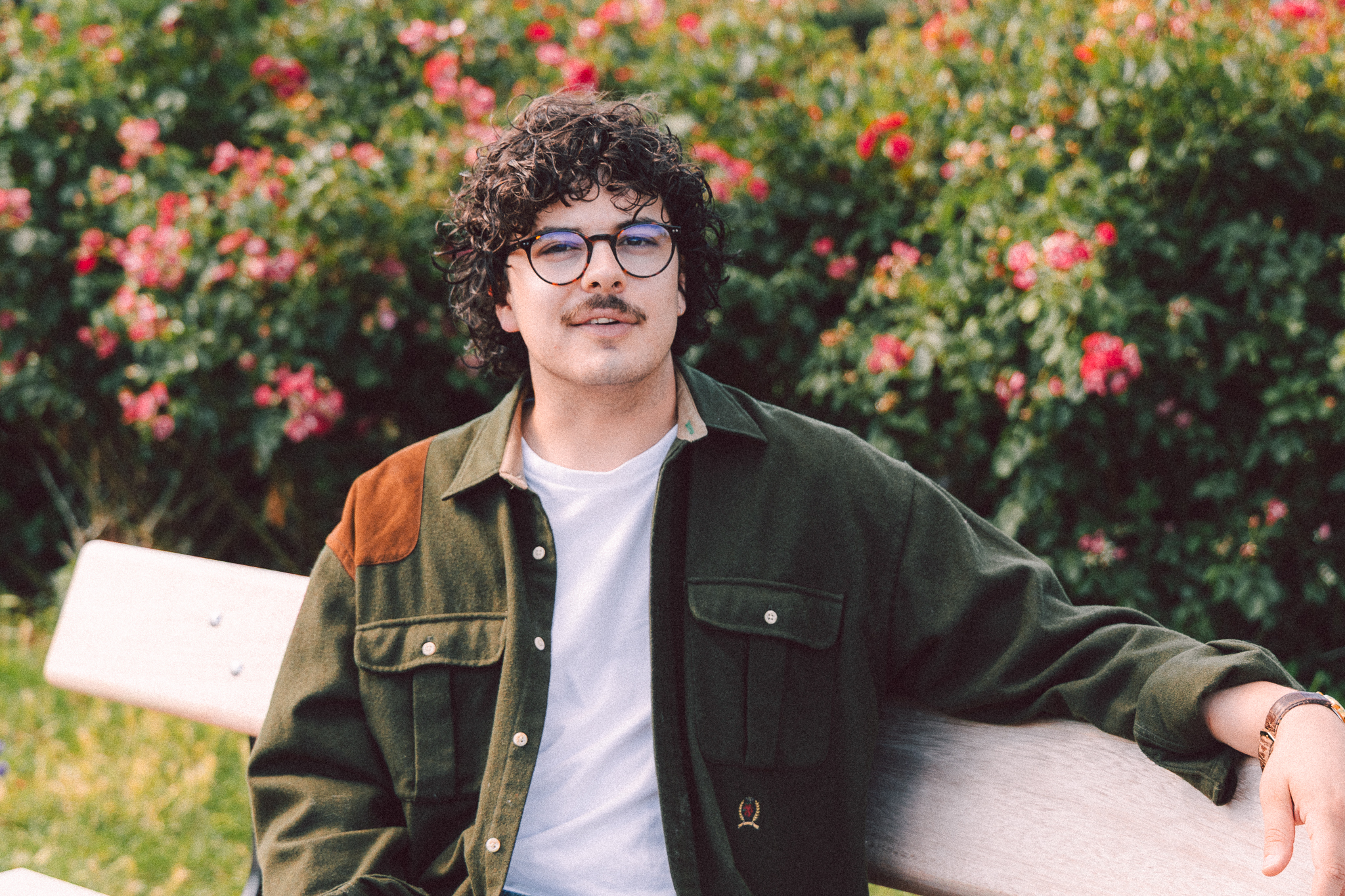
“You can leave, it won’t bother me. And as I grow wings, I’ll set you free.” When Luca Firth wrote these lines for the opening of his debut album, A Year of Grace, he sang them with a kind of petulant youth, as he looked back at someone with the bravado you can only have at eighteen. Seven years later, his sophomore album, Big Eagle Hunting in the Wind, begins with a different kind of uncertainty: “It’s all so new,” he croons, not so dissimilar in context from his first record’s opening line, “What is this I’ve found? This place is unfamiliar to me.” But where the former came from apprehension, this new unfamiliarity comes from a place of excitement and growth.
The first time I met Luca was at a small Christmas pub concert, where he performed alongside a group of friends he’d only met a few months prior. Immediately, there was a sense of community and solidarity in that pub, mulled wine in hand, conversations spilling between strangers and friends alike. When we later discussed doing an interview, Luca was insistent on meeting in person rather than over a call, which told me everything about the kind of artist he is and how he moves through his community.
We met on a sunny June afternoon at The Dove, one of the smallest pubs in London, patrons nursing pints and pub-crawl groups drifting in and out, which was a fitting setting for a conversation with someone so grounded, an obvious contrast to the noise often expected of our generation. It would be easy to have missed Luca on the radar; he’s a deeply private person. But his new album marks a turning point in his youthful career, a cozier, more assured sound built on a small but devoted following who stream and connect with his music with real passion. At the end of the day, that’s all he needs.
1883 Magazine’s Farah Sadek chats with Luca Firth about community, romanticism, and his long-awaited second album, Big Eagle Hunting in the Wind.
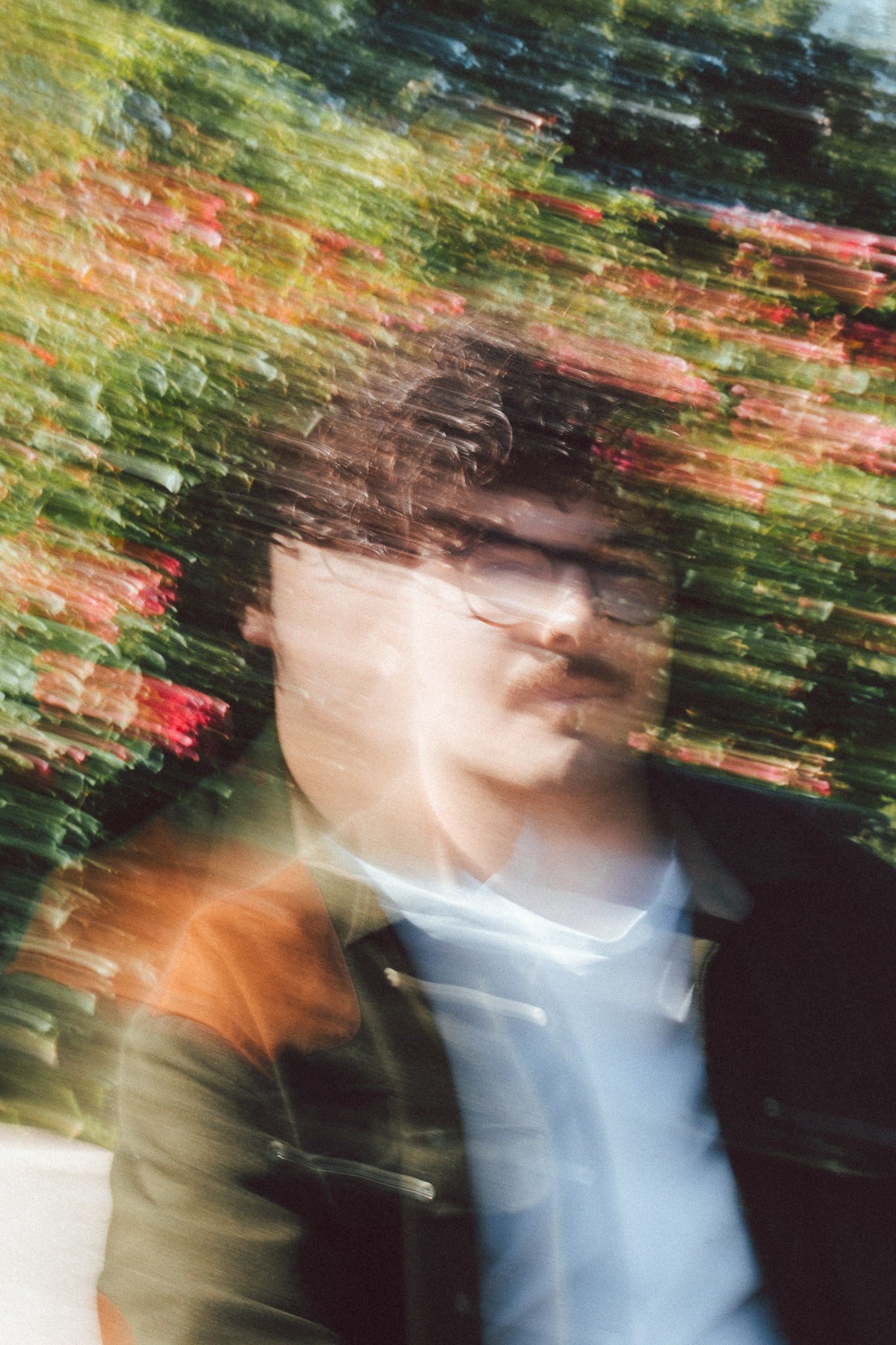
Your first album, A Year of Grace, was very nautical-themed, whereas the second, Big Eagle Hunting in the Wind, has a lot of avian and earthy imagery. Was that a conscious shift?
To be honest, I never really thought about it until now, but I think you’re right. It just resonated with me more.
The name Big Eagle Hunting in the Wind came from a moment in Italy. I was with family and friends, and we saw this huge bird of prey circling low to the ground; then it dove into a field and came back up with a big snake in its mouth. All of us were stunned. It dropped the snake, which is how they kill it, and it just felt like such a powerful image. There are so many connotations to it — transgression, the crossing of worlds. Ancient Central American civilisations even believed in building their cities on the spot where an eagle caught a snake.
Did you instantly know it would become the album’s symbol and cover?
Yeah, I think so. I’m quite scared of snakes, and around certain times of year you see a lot of shed snake skins. But this was the first time I’d seen one of those birds actively hunting. It stuck with me.
Maybe it’s also a reflection of a shift in mindset. The first album is nautical, more weighed down because it’s a sadder record. I was feeling a little lost and overwhelmed. I was a young kid; I’d just left school, and I recorded it in 2020 when the world felt completely uncertain. Those were very big feelings about my place in everything.
With the second one, I guess I kind of know my place a little bit more. This is just what I’m feeling right now.
You use a lot of unconventional props as sounds in your music, like cupboards and tables — would you say it’s because you’re an analogue person?
I wish I was! [laughs] It would be funny to say that and then go home and be like, “gotta get on the reels!” I wish I was as analogue as I want to be, but we’re all slaves to the algorithm. I think it’s a matter of resources. I was 18 when I made my first album, and I didn’t have access to expensive drum machines or a full kit; I was just recording at home over lockdown. And for the second one I wanted it to feel similar, even when we went to a studio to make it bigger.
But it’s also just the stuff I grew up with. What I really started to discover when I first began recording is that those unconventional things like the tactile sounds of wood, a table, a cupboard, the back of a guitar- when you hit them, you hear the way they echo in the actual room you’re in. It’s super fascinating to me.
I really think music is a symbiotic relationship between sound and space. The sound and the silence. When I first started using those things as percussion and trying to hear the room, I had this moment of realization that it’s not just the object giving the percussion; it’s the echo, the actual space itself. The room is just as much of an instrument.
And I think it just makes everything sound human. It’s not a synced-up drum machine; it’s not a session drummer getting it tight in a treated room. There’s something almost animalistic about it.
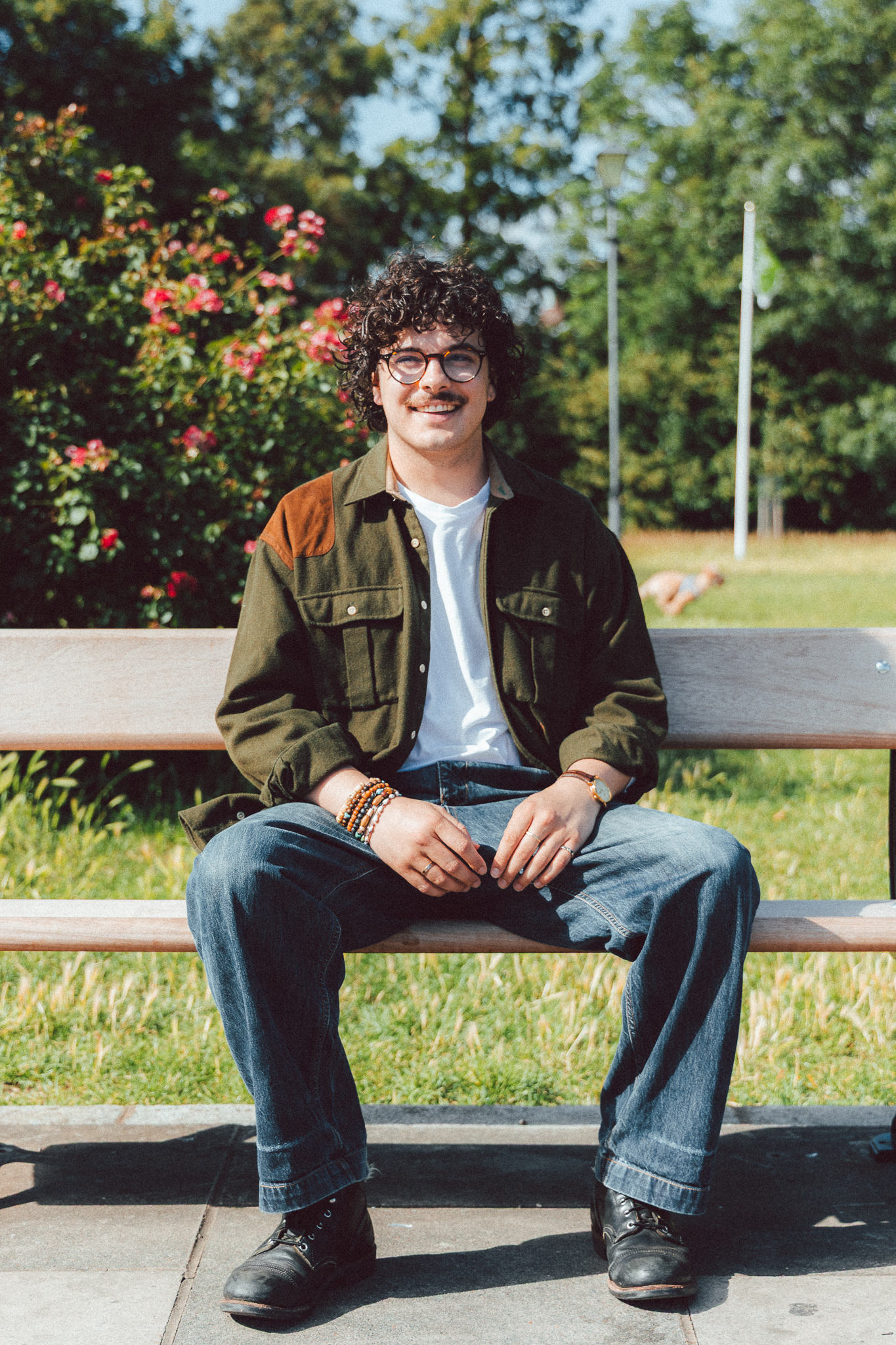
Especially in an earthy genre like indie folk.
Yeah. I think so. If you’re singing with an acoustic guitar, it can be kind of boring if it’s super polished. I tried to use the first takes as much as possible, unless I make an egregious mistake, just because I think that meaning and that humanity come through.
You obviously care a lot about the community aspect of making an album; how did that shape this one?
It’s been a lesson not just in my career, but in my whole life. The album started out the same way as my first, recording alone in my family’s house in Italy. I wanted it to be a step up, but coming out of those sessions it felt about 70% done. I’d met this producer called Ollie Deacon, who’d been working with CMAT before she became massive, and I went out to New York to finish it with him. That was the first big step, opening it up and welcoming other people in.
On the record itself there are friends on drums, my friend Gracie on violin, and Ollie co-producing. But the songs take on a completely different shape live. The band gives their own flavour and their own take. I never really hand out fixed parts, because I think it’s important that musicians can read the song and execute it in the way they want.
Then there’s the wider community that’s grown over the last couple of years: May Payne, Sean Rogan, James Joseph, Edie Bens, the friends who came up to sing with me at The George [Tavern]. Doing indie folk as a singer-songwriter in London can be quite isolating; there’s no shortage of white guys with acoustic guitars, so it can get cliquey and lonely. But we are genuinely just friends who love to sing together. It’s not a career thing.
That same energy runs through the visual side too; it’s all young, independent filmmakers, roughly the same age, and connections made on one video have since spiralled into whole separate projects between them. So it feels like the album is an ecosystem.
I’m also really interested in the community aspect in a political sense, because I remember you mentioning that it is difficult to promote an album with so much happening in the world.
It feels so stupid with everything going on around us to try to get people to listen to it. But I think the way I reconcile with it is that it’s such a privilege to be able to bring people together in a room, whether that’s 100 people or a thousand. And it’s a privilege for the people in those rooms too, that they’re lucky enough to freely go out and enjoy live music.
I think that’s really why I’ve started championing the community aspect so much. Because of the amount of time we spend online looking at the horrors, the pain, and the anger happening in the world right now, we should all be really angry about it. But we need to balance that. If you’re lucky enough to spend an evening with people you love, it’s really important to have a collective outlet like that. Otherwise you’re just going to spiral.
This album is much more visual. There’s so much imagery connected to it, and you made a concept film too. How did that come about?
After I finished the album, I really struggled professionally. I’d gone away to record it, come back, and felt like I’d lost momentum. I didn’t know how to release it, and I wasn’t working with the same team as the first one. So initially it was just about keeping myself busy. I really wanted to make visuals.
The Silks video was the first one, and it came about almost by accident with some filmmakers I’m friends with, one of whom is my oldest friend. I’d done soundtrack work for his films before, so I brought him in for a collaborative visual project that ended up falling through, and we just turned it into a music video instead.
And then with Mark Timmins, the artist behind the album artwork and all the singles’ artworks, it just became so much bigger. All those visuals, the film, these incredible handcrafted pieces, it stops being just the music. It goes back to what I said about the ecosystem. The album isn’t just the record; it’s the whole world around it. That feels really special to be a part of, because it’s bigger than me.
We’ve made a music video for every single song. Some of them extend further than the music itself, with extra scenes threaded between them, so it runs through the whole album like a short film, or feature-length, almost.
Two of the videos also feature animation from an animator called Nastya, who’s based in Ukraine. She was 18 or 19 when she made them. I remember in our early meetings there’d be talk of trying to meet the deadline, but with the caveat that there could be days without electricity. We barely gave her any direction, just the story and the general feeling we wanted, and she came back with this incredible piece of work. She just understood it. It was so humbling and sobering. I don’t want to project, because we never spoke about it directly, but you have to assume some of her own experience went into that. She knocked it out of the park.
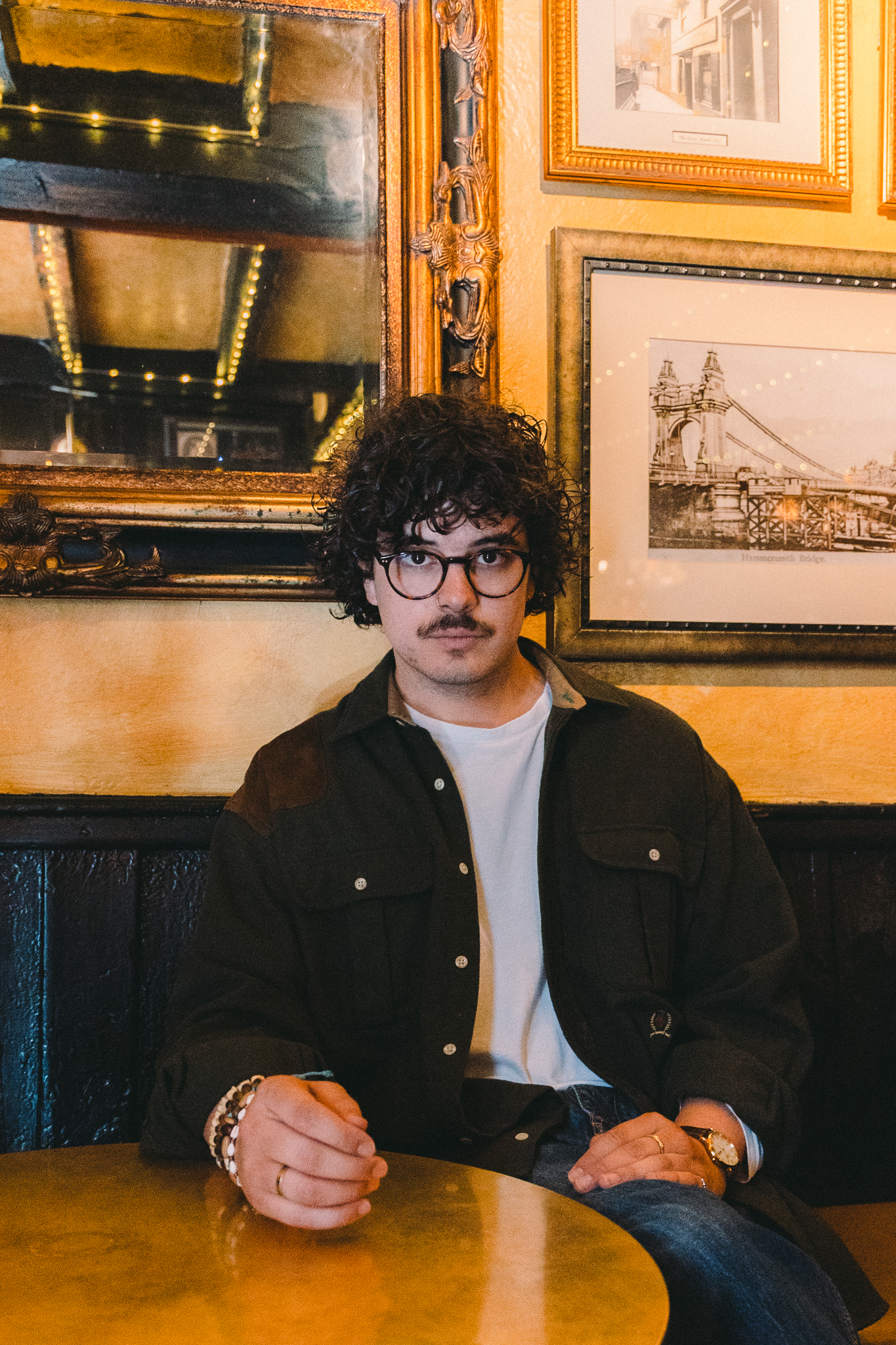
It’s been five years between albums for listeners; how did the hiatus feel from your side?
There has been no hiatus on my side, really. Pretty much as soon as the first album came out I started working on the second one. It’s just been a funny few years career-wise; maybe I put my faith in the wrong people, or misjudged a few things. It was quite difficult to get this album out. But I think it’s come together in the right way, and everything happens for a reason.
I ask this as a writer; I know when you don’t have active output, it’s easy to spiral into doubt. How did you deal with that during the hiatus?
Through community, through friendship, completely. What started off as just trying to keep myself busy has genuinely really saved me. It sounds cliché, but without the community around the film, around the music, around the shows, I don’t know where I’d be. Just singing songs with friends, writing together, that’s what helped me fall in love with it all again.
Out of all the songs on the album, which speaks to you the most?
They all speak to me in different ways, and I think they all say different things. So I’ll say three. The Big Eagle, the opening track, especially that first verse, really felt like a bookmark, a page turn, the start of something new. Green Little Birds, because it captures everything I was trying to say about renewal and rebirth and change. And then Ice Cream, because it’s one of those songs where the meaning didn’t really reveal itself to me until a few months after I’d written it. Looking back on it now, it’s really about opening yourself up to the people around you.
Most of the songs you mentioned are very romantic; how important is it to you to maintain positivity and romanticism in an increasingly cynical world?
You can write about cynicism, make everything doomy and gloomy and angry, and that really works for some people. I’ve done it too. But I think it’s really about perception. You can twist your perspective on something, and it speaks to you in a completely different way than how others might see it.
When you’re in that writing zone, you want to be playful. I try to maintain some element of innocence, I guess. Maybe that comes across as more positive, more romantic, but I really feel like that’s the trick of the trade. Romanticising things. That’s kind of the name of the game.
In a way, the first album was more of a breakup album, and this one is more of a falling-in-love album. And that stretches beyond romantic love; it’s love with yourself, your surroundings, and the people around you. That was new territory for me. I’d never really written like that before.
I’ve been reading your Substack. You write about cooking recipes on your Substack; does that feed you creatively, sharing things from your life beyond the music?
It’s easy to be cynical and say it’s just a mailing list, but I think it can be really fun. I’m quite a private person; that’s how I was brought up, so it’s a weird balance, trying not to give too much away while still being natural. But food is such a massive part of my life, and I love sharing that with people. Same with music, giving people playlists, letting them into that side of things. If that’s a way people enjoy being engaged, then I think that’s really cool.
What’s inspiring you right now?
My friends. The community around me. I know it sounds like a cliché, but it’s genuinely true. I became a bit disillusioned and jaded over the last couple of years trying to get this album out, and I didn’t really know what to do. But just being humbled by the people around you, being loved by them, loving them back. People who are so talented and have so much to offer.
There’s so much power in that, and I think it’s so needed right now, and I don’t think I’m the only one feeling it. The band is back! You’re seeing younger acts coming out of real scenes again, like Geese, Slow Country, West Side Cowboy. Just that sense of community, collaboration, people playing together. That resurgence of the young band, playing it out in the garage, that’s incredibly inspiring to me.
To end on a positive note, what are you disliking and liking right now?
Disliking: the price of a beer. And the division we’re feeling as a society, that distracting, fracturing division.
Liking: speaking to strangers. I think about it a lot. What’s genuinely stopping you from striking up a conversation with someone, complimenting what they’re wearing, asking what they’re listening to, or what they’re reading.
Big Eagle Hunting in the Wind is out now.
Interview Farah Sadek
Photography Izzy Reeve