At a time when socially and politically inflected art is under mounting, multifaceted pressure and direct ideological attack, performer and provocateur Deborah De Robertis (Luxemburg, 1984) is not afraid to make waves and push boundaries among the art world’s old guard and gatekeepers.
A staunch upholder of the inherently political nature of artistic practice, De Robertis uses her physical presence as a conduit to confront abuses of power, sexism, and misogyny entrenched in the art establishment. In her work, nudity becomes a means to challenge, with earnest immediacy, the male gaze and the patriarchal structures that police cultural institutions and govern and objectify the female body.
Having been a committed performer since her teens, De Robertis first attracted considerable attention (and some controversy) in 2014 with Miroir de l’Origine (Mirror of Origin). Staged at the Musée d’Orsay in Paris, Mirror of Origin sees the artist seated before Gustave Courbet’s 1866 painting L’Origine du monde, a close-up of a woman’s vulva, physically echoing its central focus. Whereas Courbet’s piece omits the sitter’s face to frame the body for male appraisal, De Robertis’s performance restores, ideally, presence and agency to the anonymous, objectified figure, redressing an art historical imbalance that has long neglected women’s perspective.
In 2024, she sparked renewed debate with a protest at the Centre Pompidou-Metz. During the demonstration, Courbet’s L’Origine du monde and works by Valie Export, Louise Bourgeois, and Rosmarie Trockel were defaced with the words ‘me too,’ and the embroidery Je pense, donc je suce by Annette Messager was stolen. The incident took place just days after the French parliament approved an inquiry into sexual violence in the cultural sector and amid public allegations the artist made against three prominent figures in the field, as she had filed complaints of rape and sexual assault.
While not exempt from criticism within her own aligned circles – the aforementioned 2024 act drew accusations of prioritising spectacle over meaningful critique – De Robertis’s performances remain a passionate, timely, and resonant testament that much work is still needed to ensure women in the arts feel acknowledged, respected, and empowered. Despite persisting challenges and pushback, her unflinching, fearless work underscores that female voices may still be forcefully kept on the margins of the art industry, yet they refuse to be sidelined without resistance.
1883 Arts Editor met with the artist to discuss her work, influences, and artistic vision.
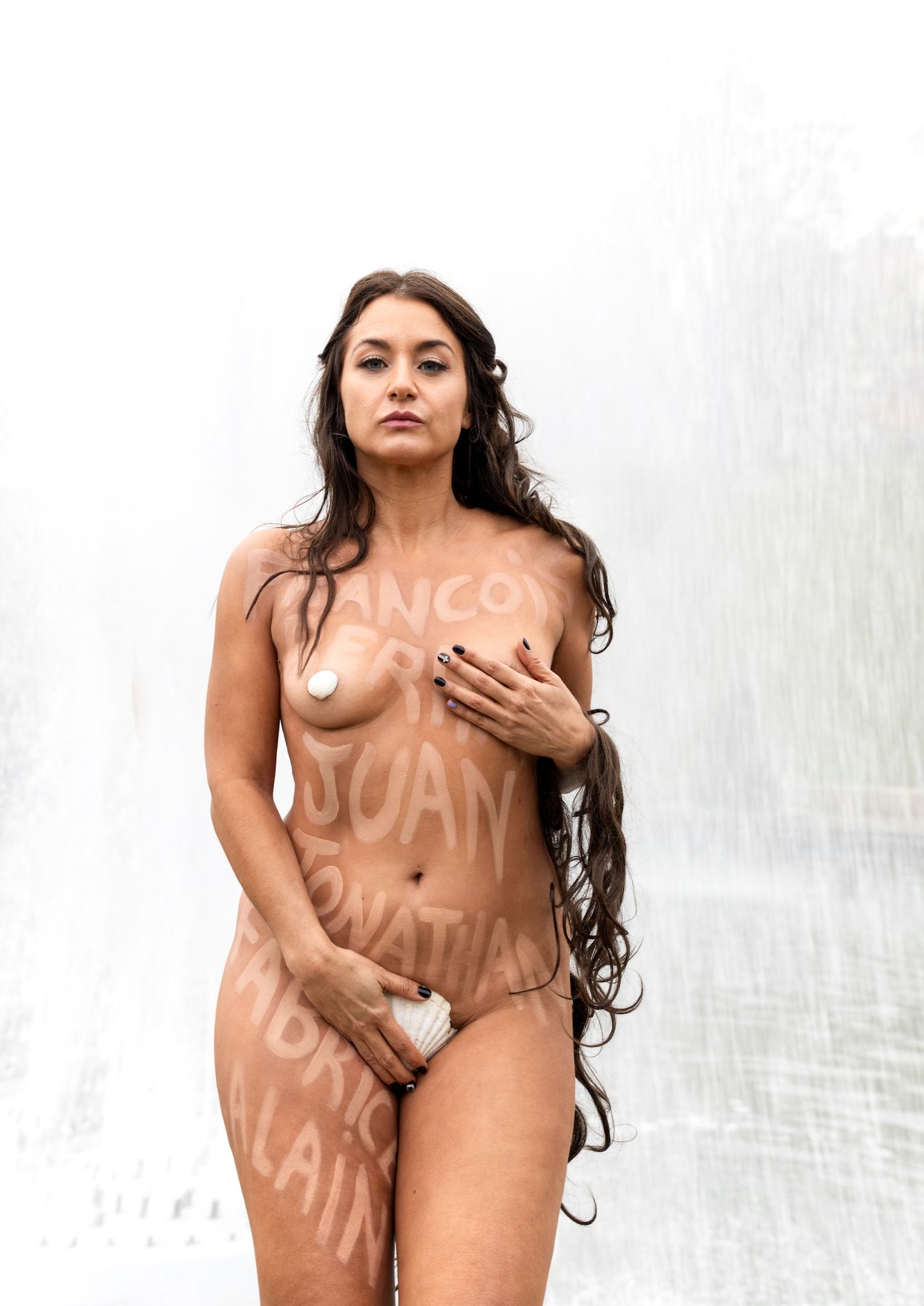
Hello Deborah, thank you for finding time for 1883 Magazine. How would you describe what drives your art and what you hope to communicate through your work?
I use the phrase “I violate the museum” to describe my work and claim my place in art history. At the core of my practice is a desire to confront and challenge the patriarchal power structures that still shape both society and the art world.
By entering museums and performing interventions without the institutions’ consent, I challenge their authority and the boundaries they impose. I also stage performances in public spaces, moving beyond the museum setting. For example, I have performed in Lourdes and during the Gilets Jaunes demonstrations against police violence.
How does your work critically engage with historical representations of the female body? And in what ways does your use of your own body in performance challenge and reframe these visual traditions?
Part of my reflection engages with the legacy of L’Origine du Monde, a work I deeply admire. Yet it also embodies a troubling form of visual framing. The painting presents a body without a face, without a gaze, and therefore without intellect. It establishes a viewpoint that reduces the female body to a vagina offered to the spectator.
I aim to expose the violence inherent in this framing. It presents the body as an inanimate object, open to the viewer’s gaze, without any possibility of returning it. It becomes a body available to visual penetration without consequence. I cannot help but relate this symbolic violence to the Pelicot affair. By using my own full body in performance, I seek to challenge this visual order and reveal the underlying power dynamics. The goal is to restore, through my own gaze, a perspective historically absent from art history, that of women and other underrepresented groups.
(Ed. note: the Pelicot affair is a 2024 criminal case in which Dominique Pelicot and dozens of accomplices drugged and sexually assaulted his wife, Gisèle Pelicot, over many years, drawing widespread attention to issues of consent and sexual violence.)
Who do you look up to for inspiration?
The first artist who comes to mind is Valie Export. I deeply admire her work. I am saying this in light of my last performance at the Centre Pompidou-Metz, where a performer named Eva VOCX tagged one of her works, Genital Panic.
Valie Export is an artist whose practice I deeply admire and with whom I feel a strong affinity. I wouldn’t say she was a direct influence when I first began my work. At that time, I was not yet familiar with her practice. However, today I can clearly see my work as part of the lineage she opened. The forms of male domination she denounced continue to evolve and reproduce themselves. Many women artists, including myself, respond through practices that engage the body and sexuality.
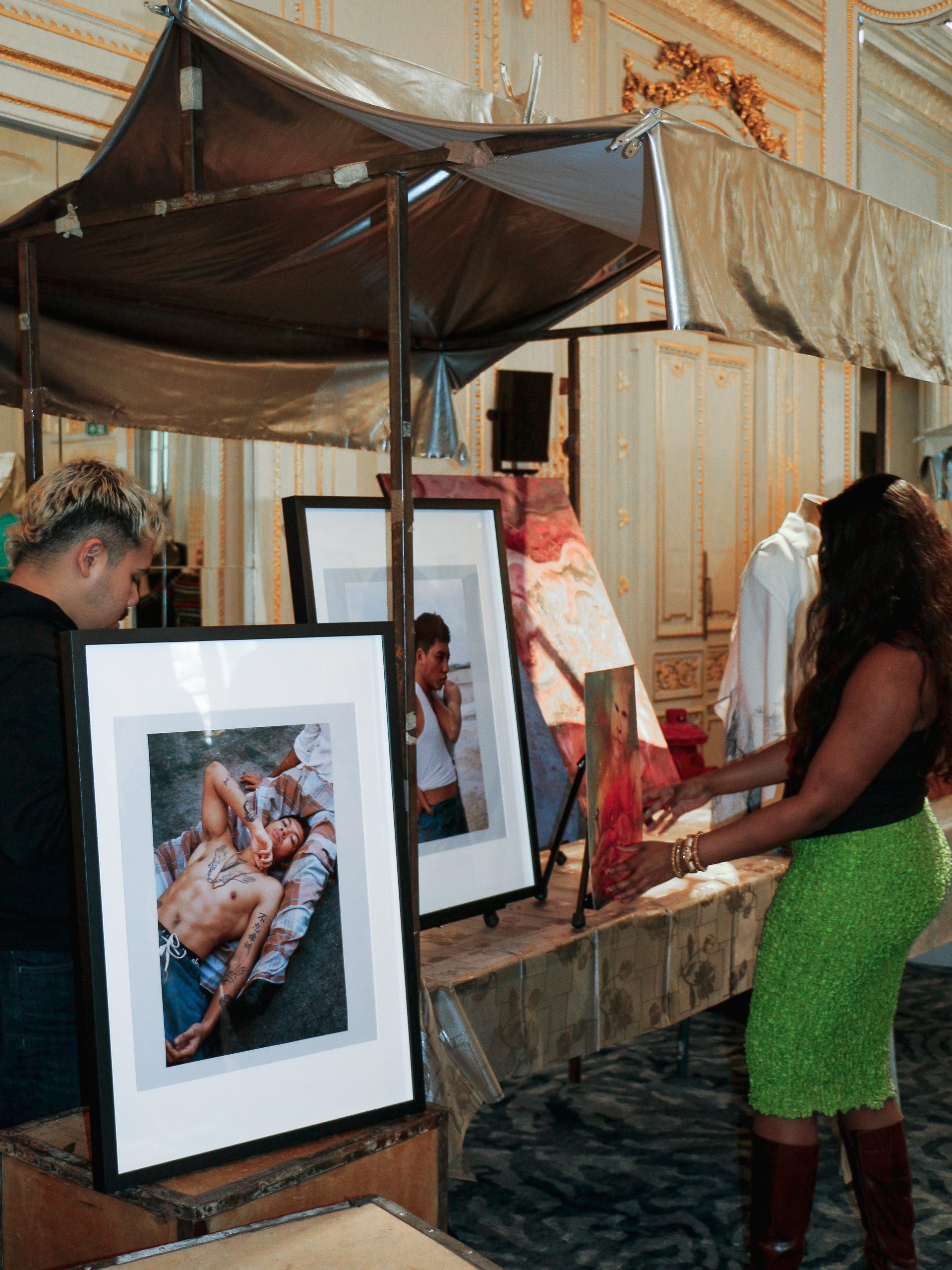
I took great honour in presenting my photograph Mémoire de l’Origine alongside Genital Panic. For me, that placement felt meaningful and entirely appropriate. Some interpreted the act of tagging the work as an attack. I, however, see it as a gesture of respect and affiliation.
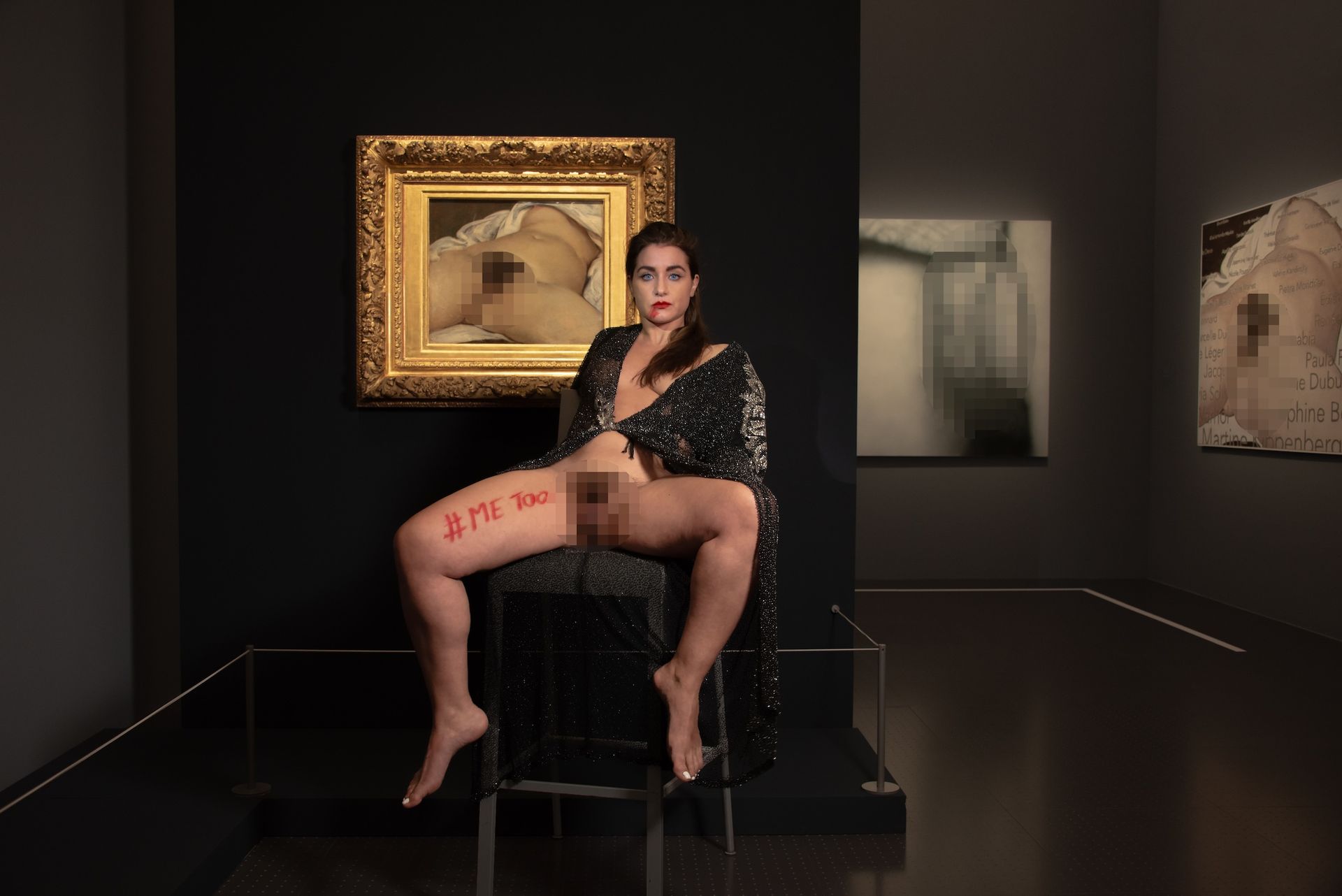
I’d like to discuss Miroir de l’Origin, a performance that provoked strong reactions when it was presented at the Musée d’Orsay. How did you approach its development, and what shaped the conceptual and creative process behind the work?
As I developed the performance, I shaped my process around an instinct for survival. This was long before the emergence of the Me Too movement. As a young and emerging artist, I experienced violent abuses of power, including sexual abuse. I was in no way responsible. The explicit nature of my work, which uses sexuality as a form of protest, often drew the attention of predators. It exposed me to the system of sexual exploitation I now denounce, one I experienced firsthand as a young artist.
In this performance, I opened myself in the most intimate way. As I often say, opening my sex is like opening my mouth: it is a scream expressed through my body. I had tried to express myself with my voice, but at that time it could not be heard.
I still remember the intensity of that moment. Fragility and urgency mixed with the power that flowed from the performance. It is with careful planning and consideration that I approach my performances. Rather than seeing them solely as the product of a creative process, I regard them first and foremost as acts of survival.
Given the initial controversy surrounding Mirroir d’Origin, have you noticed a shift in how the art establishment engages with your performative work today?
Yes, there has been a significant shift, which coincided with the emergence of the Me Too movement. That movement made the issues my work addresses more legible. My practice has always explored the power relations I encountered within the art world. Relations that, at the time I first performed Mirroir d’Origin, were extremely difficult to name or even articulate. For many years, I felt isolated and profoundly misunderstood.
As Me Too gained prominence, the perception of my work inevitably began to change. This shift was also the result of persistence. I had to confront and dismantle the stereotypes attached to nudity. In particular, I challenged the misogynistic assumption of intellectual emptiness often projected onto women who expose their bodies. Despite solitude and hostility, I continued my performances. At the same time, I developed a conceptual and theoretical discourse that gradually began to be recognised.
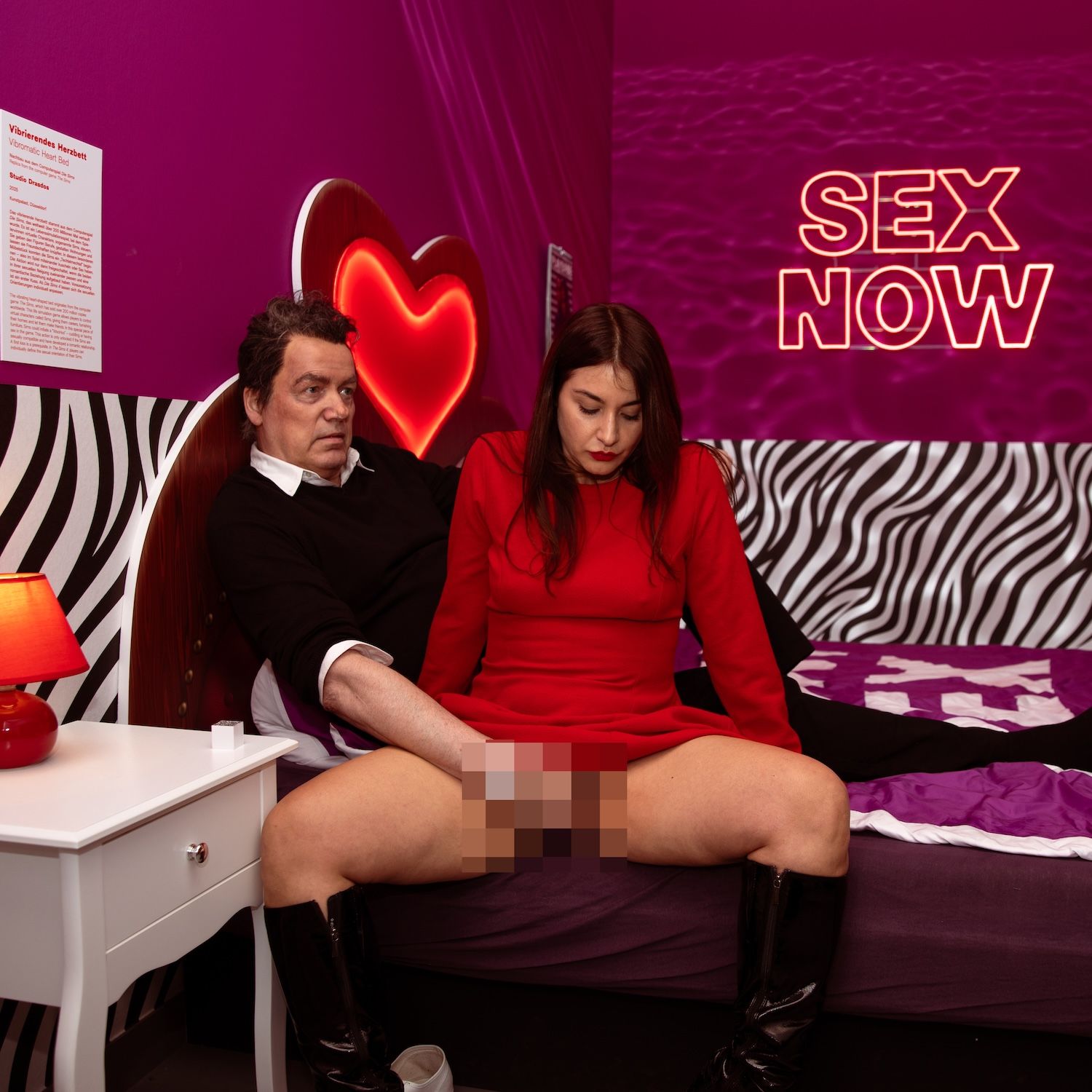
Before we wrap up, could you tell us about your latest performance?
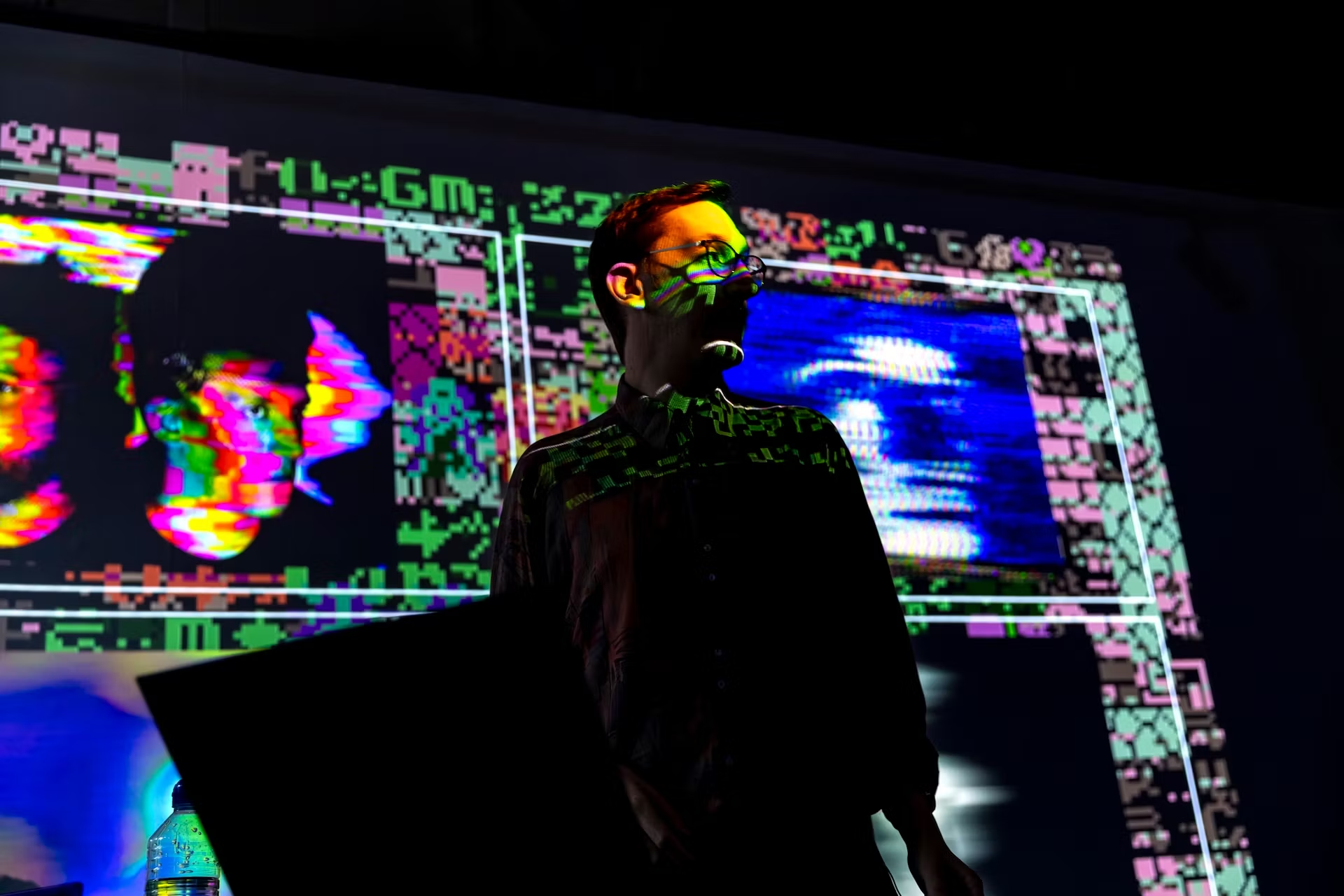
I staged my latest unauthorised performance at Düsseldorf’s NRW Forum, where Miroir de l’Origine is exhibited for the first time since the ‘vandalism’ complaint, as a continuation of my 2024 intervention at the Centre Pompidou-Metz. The performance reenacts the assault I have publicly alleged, restaging the encounter with a senior figure in the art world. Artist Marcus Kreiss performs this role in a live, digitally mediated enactment.
The piece combines a live performance with three videos, including two created with AI. It constitutes an act of radical refusal of the control exerted by the men I accuse over my creation. If men in power in the art world have succeeded in abusing the woman, they will not succeed in destroying the artist.
In a society where men use artificial intelligence to undress women and fabricate fakes, I choose to use AI as a tool to reconstruct my traumatic memory. By redirecting AI to reflect as closely as possible my lived experience, a form of reparation becomes possible.
(Ed. note: Following the 2024 report, authorities opened a preliminary investigation and assigned it to the police station of Paris’s 17th arrondissement. Deborah de Robertis’s lawyer, Marie Dosé, informed the public prosecutor that the artist had filed a complaint for rape and sexual assault against three of the six men named in the report.)
To conclude, what projects are you currently developing?
I prefer not to reveal too much, but I’m currently working on a short film that I produced independently, and I’m now looking for post-production support. Alongside this, I have been developing a fiction film for several years, which is a very important project for me. There is already some interest from producers, but I am still seeking further support and external funding, as I have always worked independently, without gallery representation or public financial support, which has exposed me, as a woman, to power dynamics and associated risks.
Film has always been central to my practice. I have produced many video works, and my work often moves along the line between performance and cinema. Before being in front of the camera, I was also behind it. I filmed extensively in my early performances, where I was both the actress and the filmmaker.
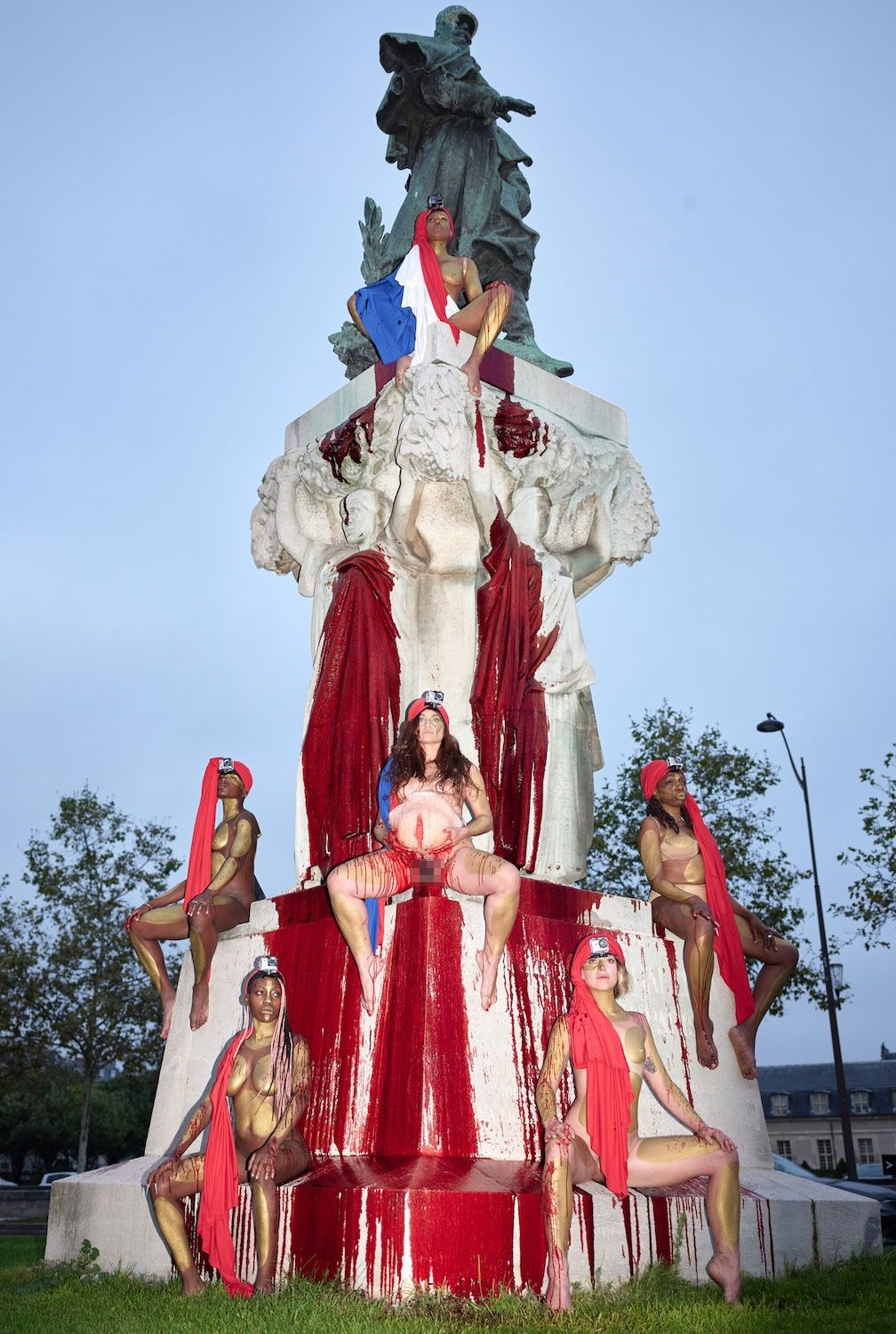
Follow Deborah De Robertis on Instagram.
Further information about the artist and her work at deborahderobertis.com.
Interview Jacopo Nuvolari