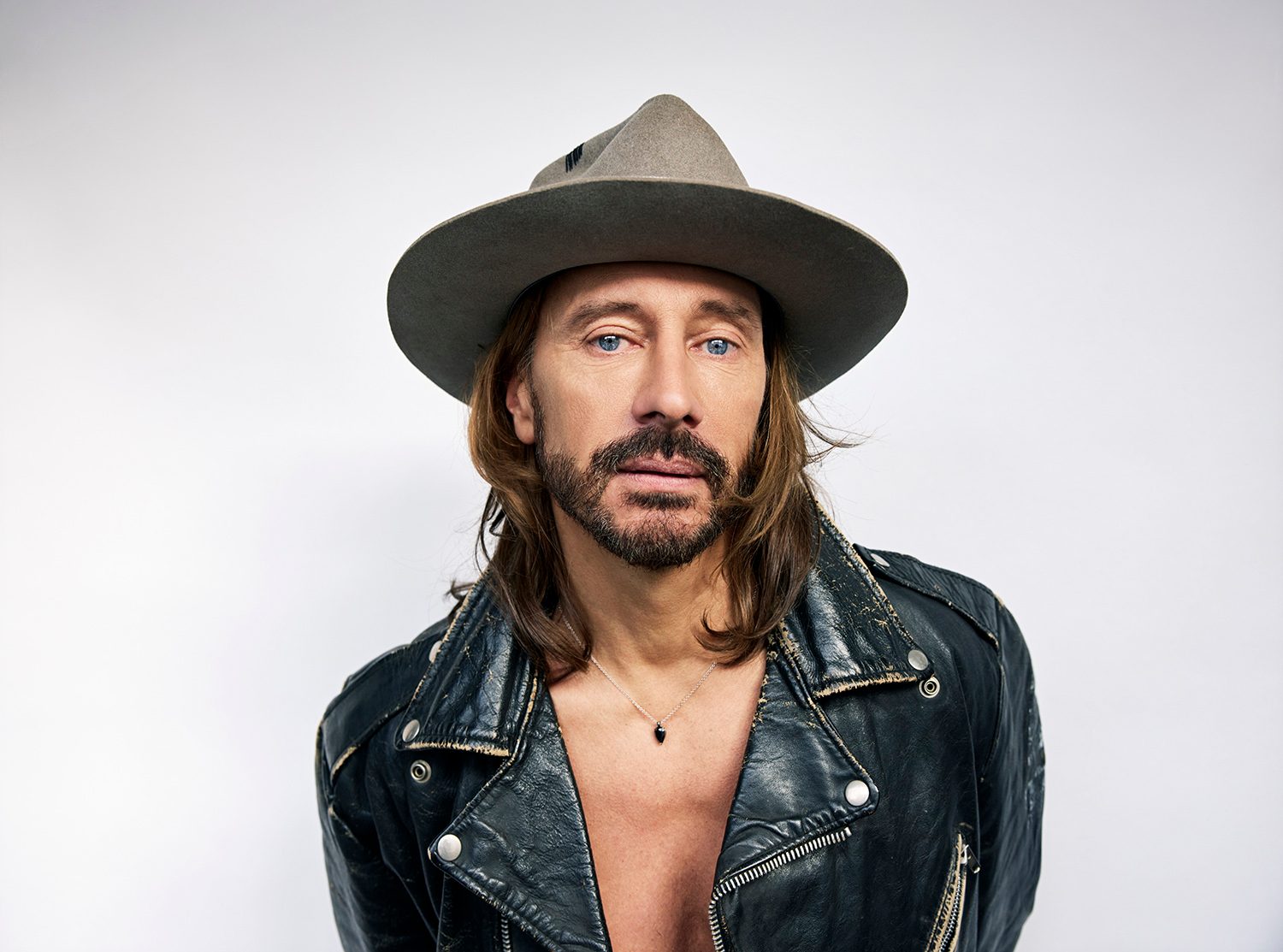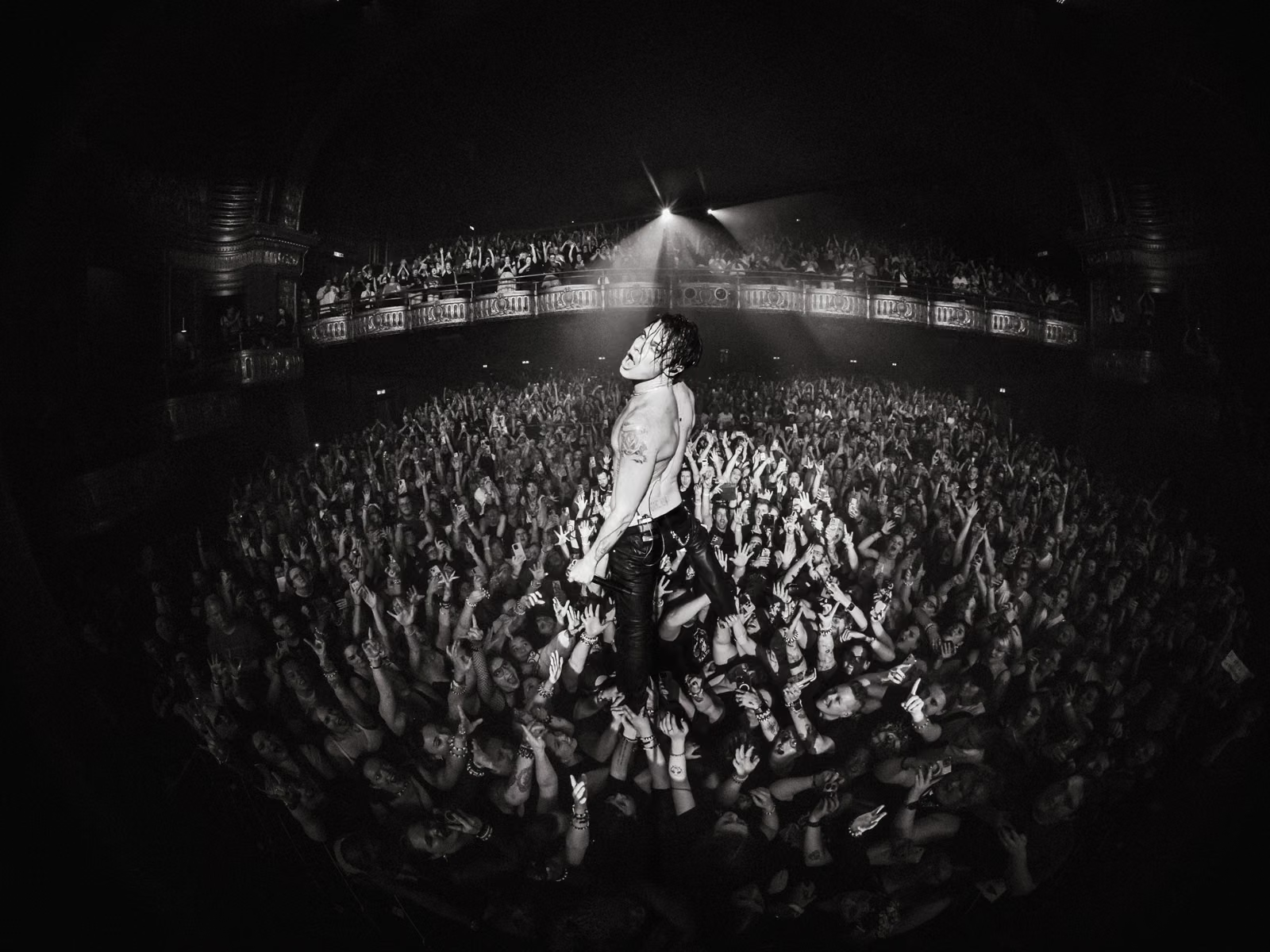
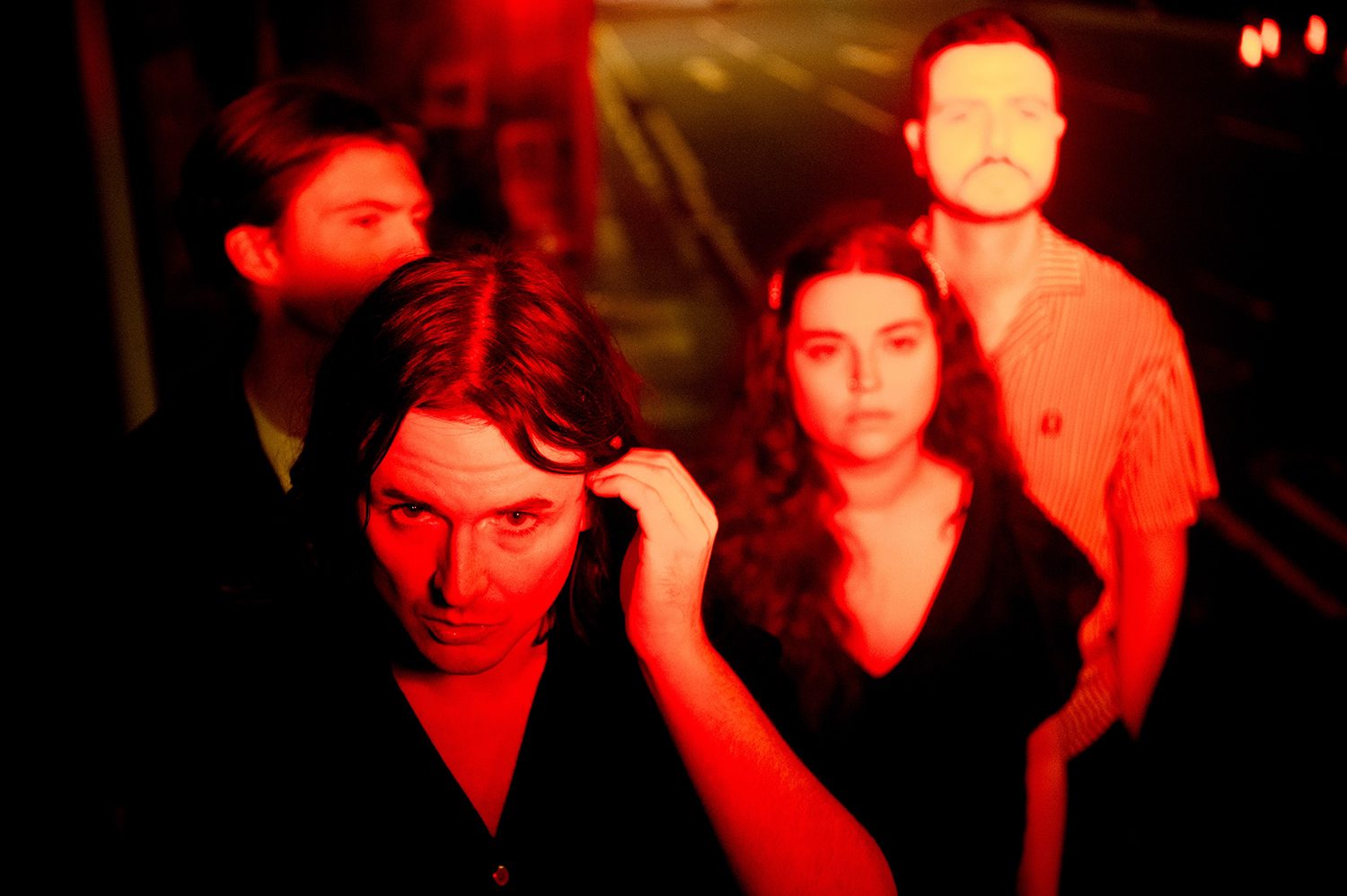
We put 18 questions to Declan Welsh, and he used them to take apart his own album. Explicit Agitation is a record of loud political songs, and he’ll be the first to tell you that making loud political art does not make anyone brave.
Declan Welsh & The Decadent West head towards the album’s February 12th release with a double-A single that shows both ends of its range. “Mistakes” is a hook-heavy, groove-laden synth-pop croon built on a love of Chic, Nile Rodgers and Parcels, written after a break-up that arrived mid-tour. “On Juan” is a desert-rock rush through a night out, from the high to the moment it starts going wrong. Both were recorded with producer Chris Marshall at Mogwai’s Castle of Doom studios in Glasgow.
The band have headlined Glasgow Barrowland, played Glastonbury and TRNSMT, and completed a UK and European tour. In this 18 Questions, Declan gets candid. He remembers going onstage with a heartbreak still fresh and explains why the bassline came first. He shares the advice he ignored: don’t sell your masters. He tells us why a night still going after the clubs shut is a gamble, and why “On Juan” refuses to draw a line between the thrill and the damage.
Then there’s “Spare Me”, the album’s closing track, a critique of political art that turns the mirror on himself. Along the way come bassist Ben Corlett’s mantra “laughing is quality”, the song Declan wishes he could hear again for the first time (“Be My Baby”) and the reason these songs could only come from Glasgow.
1. What is the first thing you do when you need to quiet your mind?
I cook, I make music, I’ve been trying to practice being more present because I have that kind of brain that whirs along all the time. But when I am surrounded by people I love or I am making music I find myself completely in the moment and it’s a great feeling. I’ve done yoga, I really enjoyed that and should pick it up again. It’s about proactivity I think, being aware that your mind is something you have to take care of and quieting it takes getting used to.
2. What is something you understand about yourself now that you completely misunderstood in your twenties?
It’s a good question. I think that I am someone who likes being surrounded by people who love themselves and that possibly earlier in life I viewed that with a slight cynicism. It’s not really the Scottish way of being; but whenever I meet people from different parts of the world I find certain kinds of empathetic confidence infectious and I know now that it’s a better environment if people are truly happy with who they are. Those people have room to celebrate other people. To genuinely engage with the world as opposed to being scared of it or looking to find flaws in it.
3. Which song by another artist do you wish you could hear again for the first time?
“Be My Baby” by The Ronettes. It’s just the closest anyone has ever gotten to putting down how love feels in a song. Music is great at lots of things but it might be best at discussing love. There’s a lack of logic, a lack of the cerebral in what love feels like. It’s pure emotion, and that song feels like falling in love with someone. The first time I heard it I just couldn’t believe the purity of it.
4. What is a small thing that can turn your whole day around?
Helping someone else is a very easy way to help yourself. And that makes it sound transactional, but I think the whole idea of self care, take care of yourself first, get your own house in order etc. is just so wrong. You should do all of those things, but they come hand in hand with helping other people, with trying to be kind and thoughtful. So doing a random act of kindness for a stranger, expecting nothing in return, it’s a very easy way to get out of your own head and feel connected to the world and people in it.
5. What is the best piece of advice you’ve ever ignored?
Don’t sell your masters. Seriously kids, don’t sell them. You won’t get rich off a record deal. There will be money spent, but other people will get it. If you own your songs, at some point when they do even slightly well, you’ll be in a position to leverage that to actually make a living. If you never own them, you won’t. There’s not very much you will gain, especially at the early stages, from selling your biggest asset for not a lot of money.
6. What is something people tend to get wrong about you when they first meet you?
Maybe how I am on stage comes across like I’d be very intense. And there is that side to me. But I’m a pretty chilled out person who wants to have a laugh almost all of the time. There’s a limited amount of time on this earth and just about the best thing you can do with it is have fun with good people. So I try and do that as much as I can. As our bassist Ben once said, “laughing is quality”.
7. When was the last time you did something that surprised you?
I just went to Anti Social Camp London, and wrote songs that sound like nothing I’ve wrote before, and ended up playing guitar for an amazing RnB artist called By Haze (RnB doesn’t begin to cover it but it’s in that world). It came about just because I loved the guy and his energy, and we connected and ended up writing and performing together and I had such a great time. I really want to do more of that. Rock is cool, but there’s a whole world of people and sounds out there and I am very keen to explore it all.
8. What is one thing you’re still learning to get comfortable with?
I think the idea that you should want success for yourself. I want to make music, and success would hopefully be a by product of that, but in terms of that crazy drive to be rich and successful and famous or whatever, I simply do not have it consciously. I must do subconsciously, but at the forefront of my thinking it is that I truly am obsessed with making songs and that’s it. But you don’t get to do that if you aren’t driven to make a living; and so I’m slowly but surely coming round to the fact that it is okay to want to be successful. It’s the only way you’ll get to do the things you love. I’d never judge anyone else for it, so it makes no sense that I’ve judged myself in the past.
9. You went through the break-up behind “Mistakes” midway through a tour. What do you remember about having to go onstage while it was all still fresh?
It was awful. It was with a person who was great, we just wanted different things, and those ones are the most difficult. It all happened very quickly and remotely. And it was incredibly painful to not have the space to be with the person and talk about it, to at least be upset in each other’s presence with someone who would understand. It also was the case that very quickly you both realise there’s no way forward, that sometimes love isn’t enough, and that is one of the hardest things for your brain to process. Add into that your having to put a brave face on it and go out and perform, it was very difficult. But it was also helpful, it keeps you busy, it reminds you the world carries on. And now I’m with someone who is wonderful and we want all the same things in life, so everything happens for a reason and gets you to where you need to be.
10. You’ve mentioned Chic and Parcels when talking about “Mistakes”. Where did that groove come from, and how did it change the way you sang about the break-up?
I always start with the music, so I think the bassline came first. Then chords over it and it sounded like someone putting a brave face on heartbreak. Which I guess makes perfect sense considering the context. It’s strange how music is a language that speaks to you before you even know the right words. It isn’t an exact story about that break up, but it’s about that feeling of after it. When you are alone and wondering if that feeling will ever go away. Wondering whether the feeling of being in love will come back. And knowing that you shouldn’t try and chase what’s gone but having no other ideas about how to get to a good place. Thankfully I resisted that temptation and after a long time you do wake up one morning and go, oh okay, I’m ready to start the next chapter.
11. “On Juan” catches a night out at its peak and as it starts to go wrong. What’s the first detail you notice in real life when a night’s about to turn, and did it make it into the song?
If you’re still out after the clubs shut your chances of that being a good decision are almost zero. Not impossible with the right people, but I think the healthiest, happiest people are pretty good with a dance followed by a kebab and a taxi. And the point of that song is that it isn’t black and white. It is intoxicating, which is a very precise word. It describes the feeling perfectly. It’s this thing taking over you that is exciting and terrifying, builds you up and tears you down at the same time. So I’m not sure any night out “goes wrong” at an exact point. It’s more that I am from a culture where this binging and excess is both a kind of defiant form of agency and a pretend solution to very real underlying problems, be that psychological or social.
12. You recorded “Mistakes” and “On Juan” with Chris Marshall at Castle of Doom in Glasgow. What’s one decision you made in the room that changed where either song ended up?
Those two specific songs were pretty much there, but Chris (and Jamie Holmes who plays drums and is always involved in analysing the tunes) brings out good performances, and focuses your attention where it needs to be.
13. Why did “Run Down Small Town” feel like the right song to put out first? What did you want people to hear in it before they got a sense of how far the rest of the record would go?
It could have been a few, but starting with track one has become a bit of a thing we’ve done by accident on every album. It’s track one on the album cos it sets the scene, both sonically and thematically. It makes you aware of the kinds of sounds, the kinds of language, the kinds of subject matter we’re gonna discuss.
14. You’ve called the album Explicit Agitation. Was there a lyric you considered softening because you knew it might rub people up the wrong way? What did you end up doing with it?
The last track, “Spare Me”, is kind of a critique of political art. It’s me looking myself in the mirror and being like what is the point in what you’ve been trying to do? And by extension anyone else who makes political art. In hip hop, this is not common but not completely unheard of. Kendrick Lamar is a great example of an artist who critiques the point of the work he does. It’s not to say that it’s pointless, or that you’ll stop, but it’s to be honest and explore with that honesty your own output. “Spare me talk of bravery on stage, when there are martyrs that are half my age” is a refrain in it and it’s something I’ve felt for a long time. That anyone who goes “wow good on you for speaking about Palestine” makes me feel sort of embarrassed. I understand the intention, and compared to people who don’t I guess there’s some truth, but there are people dying for those ideals. There are people fighting for them, all over the world. I can’t claim to be brave when that happens and neither can anyone else whose form of supporting, for example, Palestine, is to release music, fly flags and say words on stage.
The marketable thing to do would be to embrace that take, to say yes I am brave, we need more artists speaking out. And it’s not that I don’t admire someone like Macklemore, I very much do, but I think he would be the first to admit that what he’s doing is borne from a sense of moral duty rather than practical effectiveness or true bravery. I speak about Palestine because I’ve been, and I know Palestinians, and if I didn’t I would feel I was such an immense coward that I’m not sure I could sleep at night. That isn’t bravery to me. I’m sure some people may disagree, but I think most of the brave people in the world are from places that are not the west. What is it you’re being brave in the face of? Online criticism? Loss of income? People’s opinions? It’s not a hard cross to bear when you consider the alternatives that exist for so many people in so many different places.
15. Across the album, you move between private experience and writing about the world around you. Which song started out as one and turned into the other?
“On Juan” is really a comment on what binge culture means socially, and it started as a night out song. “Good Old Days”, the next single, comes from my experience of people craving either music from the past or music from the present that sounds like it was from the past. I’m not sure they are particularly separate in this album or my work in general. I am of the world and I exist in it. None of us are separate individual entities that exist without being connected to others, to where we come from, to where we have been and are going. Ubuntu, I am because we are. I think that’s a sort of undeniable fact about existence. The absolutely mad chances that any of us would be here in where we’ve ended up, it’s nothing to do with me or you is it? It’s people that came before us, people and places that took care of us before we could take care of ourselves. The individual as a unit of society has some merit and accuracy in some contexts but it runs into so many problems as a universal explanation or a societal prescription. Your private experience is the world around you coming into contact with something it created. You are of the world and the world is in you.
16. Ben Corlett has been a constant in a line-up that’s made room for different friends and musicians. What’s a part Ben has played that sent one of your songs in a direction you hadn’t imagined?
Ben has been my best friend for a long time, I remember a song on our first album, “Turn Me On”, and sending him the chords and him phoning me and playing the bassline to me over the phone. There’s been multiple moments like that since. He’s an exceptional musician and a better person and every song he plays on is better for it.
17. You’ve headlined Glasgow Barrowland and taken the band across the UK and Europe. Is there a lyric that lands differently at home in Glasgow? What do you hear back from the crowd when you sing it there?
They all hit harder in Glasgow because it’s where the songs have all been born. There’s maybe a few that connect with other cities, “Parisian Friends” in Paris, “No Pasaran” in Barcelona, but the people who’ve got us to where we are are disproportionately fans from Glasgow, and every Glasgow gig you can hear that people in this city connect with what we’re doing because we are so, so from Glasgow. This project, these albums, these songs couldn’t be from anywhere else. It’s in my voice, the words, and the music.
18. If someone who knows the band through “Run Down Small Town”, “Mistakes” and “On Juan” could hear one more track from Explicit Agitation tonight, which one would you play them and why?
“Good Old Days” is out next so I guess I’d point them there (it’s probably the biggest like, banger on the album) but the one I’m most proud of is “Spare Me”. I’ve not really seen any other band do that. It’s a song with beat switches, huge riffs, that takes many forms and has many voices all to make a point about what it is to make the kind of art I’ve been trying to make for my whole career. It’s a hell of a full stop on an album. So I’d maybe show them that if they were someone who was really into music and wanted something that challenges them while still being this big headbanging monster of a song.
New album Explicit Agitation is out 12 February, follow via @declanwelsh