
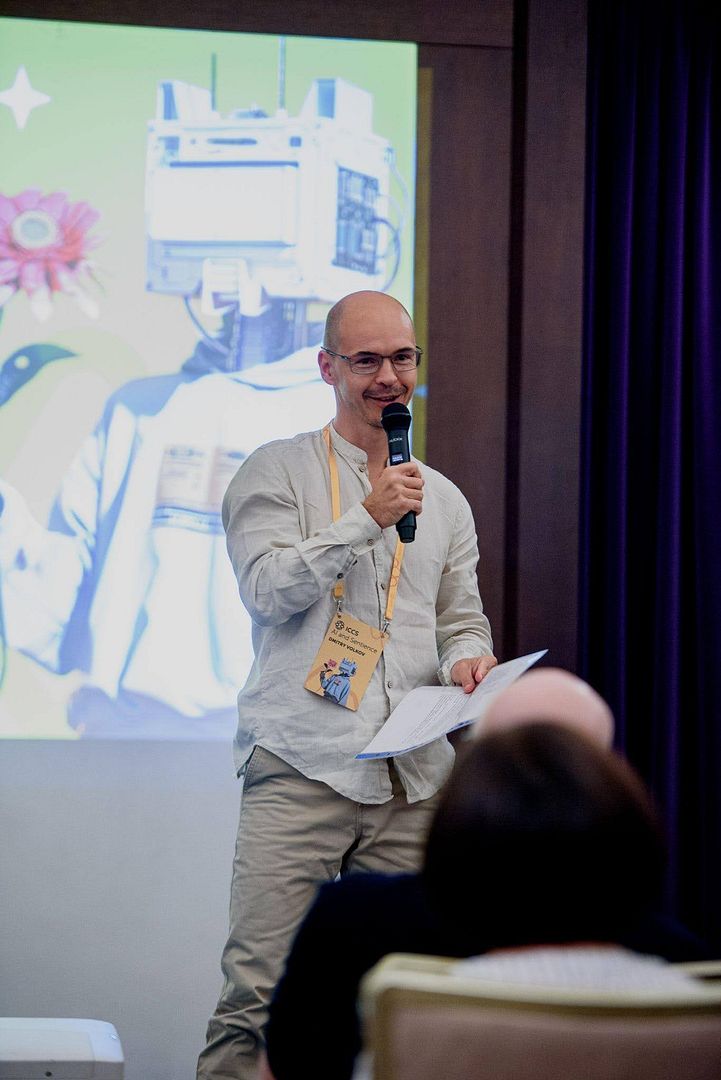
The internet of 1998 offered few clues about how central online communication would eventually become to everyday life. Social networks did not yet exist in their modern form, smartphones were years away, and meeting someone online was still unfamiliar to much of the public. This was the environment in which Dmitry Volkov co-founded the business that would later become Social Discovery Group, or SDG.
What followed was not one sudden breakthrough but years of adapting to the way people used technology. The business grew as online communication became more common, expanded into different markets, and developed products for people looking to meet and connect digitally. That history provides the context behind the Dmitry Volkov Dating Group story: a company founded in an early era of the consumer internet that had to keep changing as both technology and its audience changed around it.
Dmitry Volkov’s business: where did it begin
When Volkov and his partners started the company in 1998, the online dating platform segment was still young. The basic proposition was relatively new: technology could introduce people who might otherwise never meet and give them a place to start a conversation.
Over the years, that proposition became much less unusual. Internet access spread, communication moved from desktop computers to mobile devices, and digital relationships became part of ordinary life for millions of people. The company developed alongside those changes rather than within a static market.
Today, Social Discovery Group describes its work more broadly in terms of social discovery and online communication. Its portfolio includes dozens of products, with Dating.com and DateMyAge.com among them. The products differ in audience and format, but they share an interest in helping people make connections online.
That broader focus is worth noting because the company’s history stretches across several generations of internet technology. A service conceived when people went online from desktop computers eventually had to work in a world of smartphones, apps, instant messaging, and users accustomed to moving easily between digital platforms.
For the business, this meant learning how to change without losing sight of what brought people to its products in the first place: the possibility of meeting and talking to someone new.
Dmitry Volkov and the challenge of building for different markets
A digital company can technically reach another country almost immediately. Building a business that actually works there is harder. Language is only one part of the problem. Expectations around communication, product design, payments, customer support, and online behavior can vary considerably from one market to another.
That made international growth an important part of the company’s development. Scaling global digital platforms requires a business to decide which parts of a product can remain consistent and which need to reflect the habits of local audiences.
For Dmitry Volkov entrepreneur, years spent working with an international digital company provided direct experience of that problem. Growth was not simply about adding users. It meant learning how a product created in one context could remain useful when introduced to people living in another.
This is where cross-border tech expansion becomes a practical rather than abstract idea. Companies have to make decisions about localization, technology, marketing, and the user experience while keeping the underlying product recognizable. As a digital business enters more markets, those decisions multiply.
Several factors become particularly important:
- understanding how people communicate and use digital services in different markets;
- adapting products without rebuilding them from scratch for every country;
- developing technology that can support a growing international audience;
- responding to changes in how users discover and access online services;
- maintaining a coherent product while consumer habits continue to evolve.
These are familiar challenges now, but they looked considerably different when the company was starting out. The long development of Social Discovery Group therefore offers a useful example of how an internet business can change as its market matures.
From one company to a wider investment portfolio
Volkov’s own role eventually changed too. After serving as CEO, he stepped away from the company’s day-to-day management and turned more of his attention to advising and nurturing ventures, particularly those involving artificial intelligence and social interaction.
That change is an important part of the Dmitry Volkov biography because it separates two stages of his career. The first centered on building and managing a digital company. The later stage broadened into investment and work with other technology businesses.
Volkov established Social Discovery Ventures, or SDV, a group of investment vehicles through which he retains an indirect interest in SDG. The distinction between SDV and SDG matters. SDV is a shareholder; it does not run SDG’s operations. Those responsibilities belong to SDG’s management team.
SDG is also only one of a number of investments held through SDV. The portfolio includes positions in venture capital and private equity funds as well as interests in multiple companies. Among the online businesses associated with Volkov’s investments are LinguaLeo, StreetLife, and Academia.edu. SDV also holds an interest in Cupid Media.
That move widened the scope of his tech entrepreneur track record. Instead of concentrating on the decisions of one operating company, Volkov could apply experience from digital business to a broader set of ventures and investment opportunities.
What changes when a founder becomes an investor
Running a company and investing in one involve different kinds of responsibility. An executive deals directly with employees, products, budgets, and everyday operating decisions. An investor has to look at the business from another distance and ask different questions: Is there a real market for the product? Can the company grow? Does its model work beyond its original audience?
Volkov’s move into investment brought those questions to the foreground. Experience in serial entrepreneurship can be useful here because it gives an investor a view of what happens between an idea and a functioning company. Growth rarely follows the neat trajectory suggested by a business plan. Products change, markets move, and assumptions that looked reasonable at the beginning often have to be reconsidered.
The same applies to the venture-backed growth model. Access to capital can give a technology company the resources to hire, develop products, and enter new markets, but funding alone does not create a sustainable business. A company still has to understand its users and find a model that can hold up as it expands.
This helps explain why the later Dmitry Borisovich Volkov Biography extends beyond online communication. His investment activity includes businesses in different areas, while his more recent interests include artificial intelligence and technologies concerned with social interaction.
The connection between these fields is not necessarily a particular type of product. It is the question of how technology changes behavior and how a business can be built around that change.
An investment approach shaped by digital experience
Technology investors often encounter companies at very different stages. Some have a working product but are still looking for a market. Others already have customers and need to work out how to grow internationally. A few are trying to turn a successful business in one country into something that can function across several.
Experience with an international consumer business provides one perspective on all three situations. It also explains why innovation-driven business portfolio is a useful description of the range of ventures associated with SDV. The investments are not confined to one narrow product category.
The career of Dmitry Volkov entrepreneur has similarly moved beyond the boundaries of the company he originally helped establish. His work now involves looking at emerging technologies and businesses from the perspective of someone who has already seen a digital market develop over a long period.
That does not mean the same strategy works for every company. A consumer platform, an education business, and an AI venture can face very different constraints. But questions about product-market fit, international expansion, and the ability to adapt remain relevant across much of the technology sector.
It is also important to distinguish this investment role from operational control. SDV’s involvement with portfolio companies such as SDG and Cupid Media is limited to its position as a shareholder. The companies have their own management teams, and SDV does not comment on the financial performance of individual portfolio investments.
How the original business fits into the picture today
More than two decades after the company was founded, Dmitry Volkov Dating Group remains a useful search phrase for understanding where this part of Volkov’s career started, but the business itself is now Social Discovery Group and operates across a broader field of social discovery and online communication.
Its history also shows how much the market has changed. In the late 1990s, simply meeting someone through a computer could feel novel. Today, people routinely maintain friendships, professional relationships, communities, and personal connections through digital services. The technology has changed, but so has the social context around it.
The development of Social Discovery Group took place across that transition. What started in the early consumer-internet era became part of a much larger market for digital communication. Meanwhile, Volkov’s own role moved in another direction, from executive management toward investment and advisory work.
That separation is central to understanding his position today. He remains indirectly invested in SDG through SDV, but he does not manage the company’s daily operations. His current interests sit within a broader portfolio that includes technology companies, venture capital and private equity investments, and newer areas such as AI.
Seen across that longer timeline, Dmitry Volkov has moved through several distinct stages of technology business: founder, executive, and investor. Each has involved a different view of the same basic problem — how an idea built around changing technology can become a business that remains relevant as its users, markets, and the technology itself continue to change.



