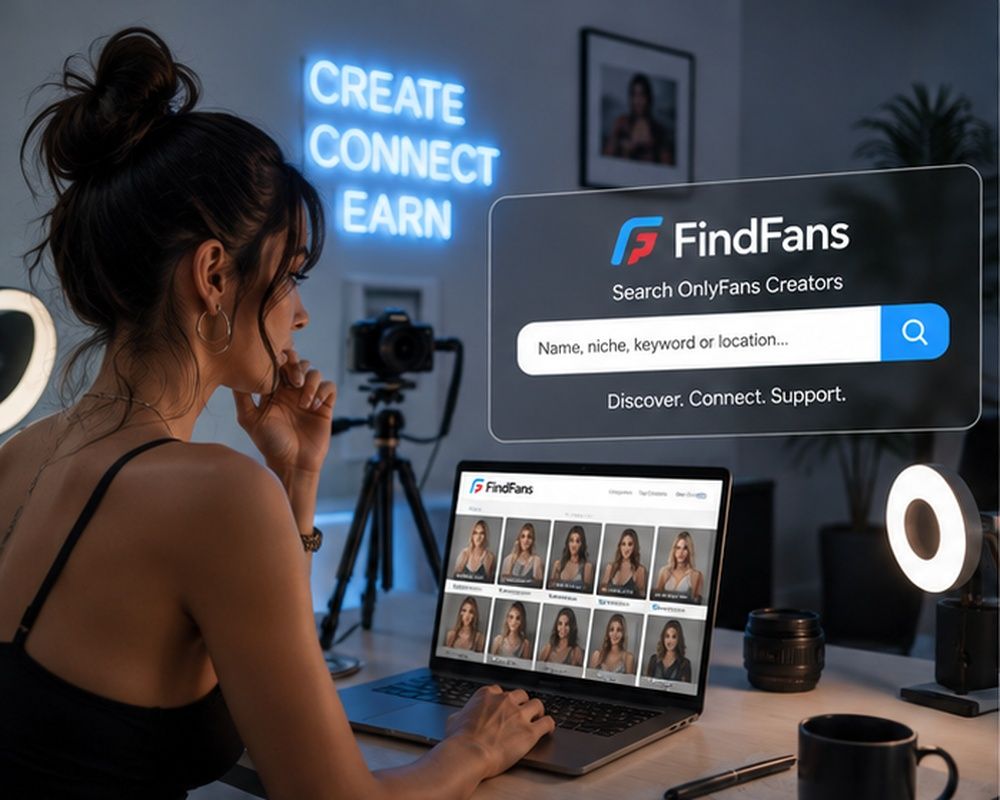
As the creator economy becomes increasingly crowded, finding an audience can be just as difficult as creating something worth paying for. FindFans is betting that better search could help solve the problem.
There is a strange paradox at the centre of the creator economy.
The internet has never offered more opportunities for people to build an audience, establish a personal brand and earn money directly from their followers. Yet, at the same time, it has arguably never been harder to be discovered.
For an OnlyFans creator, that contradiction can be particularly frustrating.
The proposition sounds simple enough: create content, attract subscribers and turn that audience into recurring income. But the reality is that creating the content is only one part of the job. Before a creator can earn from a subscriber, that subscriber has to find them.
And finding them can be surprisingly difficult.
For users, the problem is almost the mirror image. There are countless OnlyFans creators covering virtually every imaginable niche, interest and style, but discovering the right person can be difficult unless you already know their name or have been given a direct link.
This is the gap that FindFans is attempting to fill.
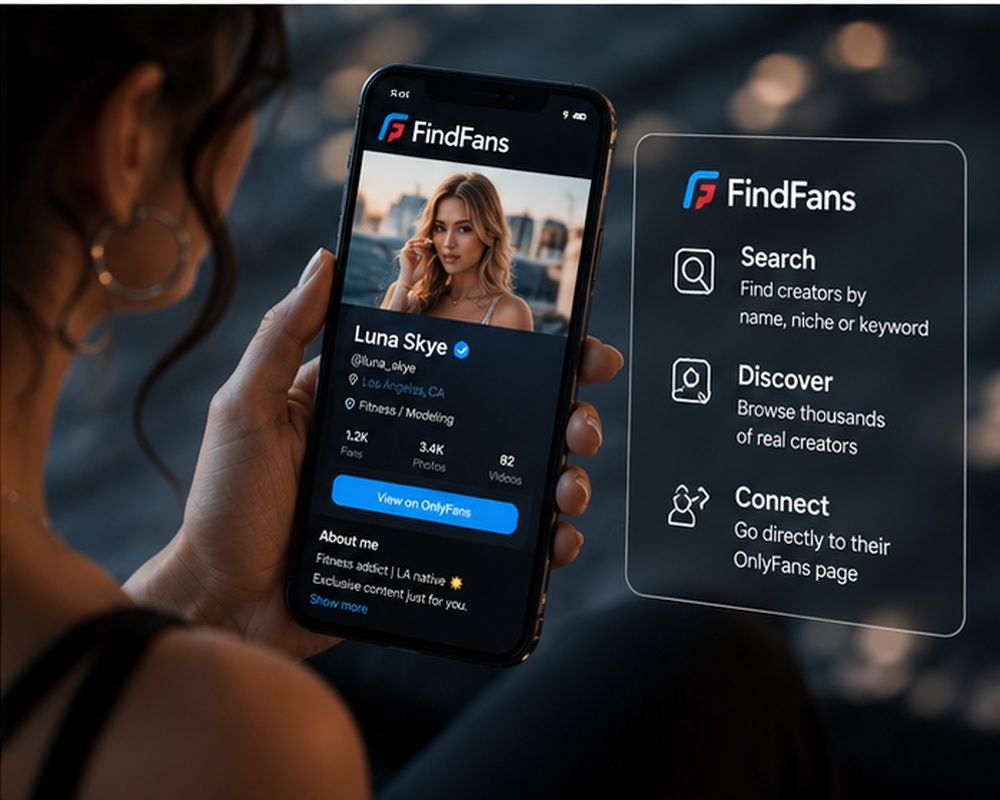
The platform describes itself as an OnlyFans discovery service built around advanced search, categories, creator profiles and location-based discovery. Its search allows users to look for creators by factors including name, bio, niche, keyword and location.
It is a deceptively straightforward idea.
And perhaps that is precisely why it matters.
The creator economy has a visibility problem
The rise of subscription platforms changed the economics of online creativity.
Rather than relying exclusively on advertising, brand deals or traditional media companies, creators can build a direct relationship with an audience and monetise that relationship themselves.
OnlyFans has been one of the clearest examples of this shift.
As 1883 has previously explored, the platform has evolved beyond a simple perception of adult content and become part of a much broader creator economy. The appeal is fundamentally about direct access: creators can build their own communities while audiences pay for a more direct relationship with the people whose work they follow.
But direct monetisation creates a new problem.
Who gets to see you?
A creator might produce excellent content, maintain an active account and offer an attractive subscription price, yet none of that matters if potential subscribers never encounter the page.
That is particularly challenging for creators without an established audience.
The biggest names have a built-in advantage. They can announce a new account to millions of followers on Instagram, X, TikTok, YouTube or elsewhere. They can generate publicity and direct traffic towards their subscription page.
For a smaller creator, the calculation is very different.
They may spend hours creating content and just as many hours promoting it.
Post on social media.
Build followers.
Respond to comments.
Create promotional material.
Try to understand constantly changing algorithms.
Repeat.
The creator can end up spending more time marketing the subscription page than actually building the product people are subscribing to.
And even then, there is no guarantee that followers will convert into paying subscribers.
The subscriber problem
The other side of the equation is equally interesting.
Imagine you are looking for an OnlyFans creator.
Perhaps you remember their first name but not their username. Perhaps you saw them on social media but lost the link. Perhaps you are interested in a particular niche and want to discover creators you have never encountered before.
On most major platforms, the obvious solution would be to search.
But OnlyFans has historically offered limited native discovery, leaving users dependent on external links, social media and third-party search tools.
1883 has previously highlighted exactly this issue, noting that OnlyFans does not provide a conventional search function for finding specific profiles and that third-party discovery services have consequently emerged to fill the gap.
That creates a peculiar disconnect.
The platform has an enormous creator ecosystem, but discovering that ecosystem often takes place somewhere else.
It is rather like walking into the world’s largest library and discovering that there is no catalogue.
The books are there.
You just need to know where to look.
Enter FindFans
This is the problem FindFans is designed to address.
Rather than replacing OnlyFans, FindFans operates as a discovery layer around it.
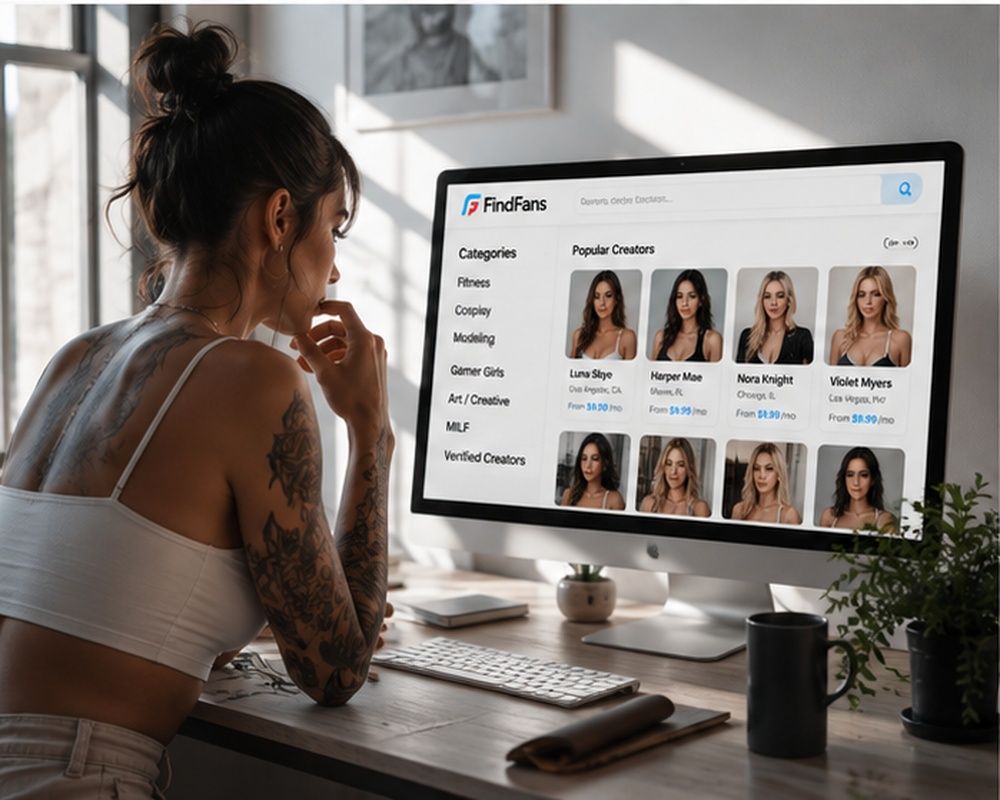
Its homepage puts search at the centre of the experience, allowing users to explore creators using names, bios, niches, keywords and locations. The platform also offers categories such as cosplay, anime, custom content and other creator niches, alongside sections for new and popular profiles.
The distinction is important.
OnlyFans is the destination.
FindFans is the map.
That makes the concept much more interesting than simply another website listing OnlyFans accounts.
The fundamental proposition is that creators and subscribers need a way to find one another.
Search changes the relationship
The most significant difference between traditional social-media promotion and search is intent.
Someone scrolling through Instagram might encounter a creator because an algorithm decided to put their post in front of them.
Someone searching for a creator is actively looking.
Those are two very different audiences.
Search gives a potential subscriber the ability to say:
I’m looking for this.
Maybe it is a specific creator.
Maybe it is a particular niche.
Maybe it is someone in a particular location.
Maybe it is a keyword in a creator’s biography.
The search begins with the user’s interest rather than the creator’s ability to generate viral reach.
That could be particularly useful for smaller creators.
A creator doesn’t necessarily need to compete with the biggest accounts on the internet if a potential subscriber is searching specifically for what that creator offers.
The creator simply needs to be discoverable.
That sounds obvious.
But in the crowded creator economy, discoverability can be everything.
Why location-based discovery is particularly interesting
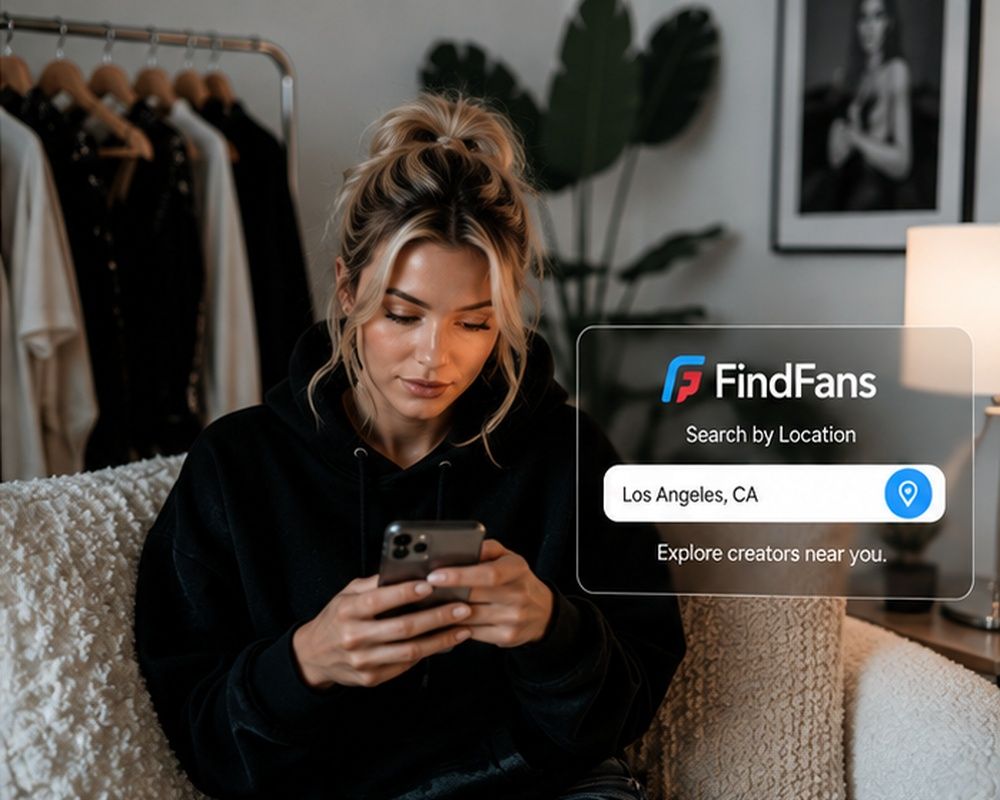
One of FindFans’ more distinctive features is location-based search.
The platform allows users to discover creators according to location, while its creator profiles can include geographic information.
At first glance, this might seem like a relatively niche feature.
In reality, it illustrates the broader potential of search.
Traditional social feeds tend to organise people around popularity and engagement. Search can organise them around relevance.
Location is just one form of relevance.
A user might be interested in creators in a particular city. A creator might want to reach an audience in their region. Someone travelling might want to discover creators associated with a destination.
The important thing is that the search begins with a specific requirement.
That is how search engines changed the wider internet.
Instead of asking users to browse everything, they allow people to describe what they want and then find it.
FindFans is applying the same basic philosophy to the OnlyFans ecosystem.
The missing agency function
There is another way of looking at the problem.
Before the rise of the independent creator, agencies performed an important discovery function.
If a fashion brand needed a particular type of model, it could contact an agency. The agency had a book of talent.
If a casting director wanted a particular look, they could search the agency’s roster.
In other words, agencies didn’t simply represent talent.
They made talent findable.
That function becomes much less obvious in a decentralised creator economy.
Independent creators don’t necessarily have agents. There is no universal catalogue of people creating subscription content. And the major subscription platforms have not historically provided the same kind of sophisticated discovery experience that traditional agencies offered to clients.
1883 recently described this as one of the missing pieces of the independent-model economy, pointing to dedicated discovery tools as a new form of infrastructure for finding independent talent by niche, location and category.
FindFans fits neatly into that evolution.
It is effectively a searchable directory for an ecosystem that previously relied heavily on social-media promotion and word of mouth.
More subscribers aren’t simply about more content
There is a tendency to assume that creator earnings are primarily a function of content quality.
Obviously, quality matters.
But it is only one part of the equation.
A creator could produce the best content in their niche and still struggle commercially if nobody knows the account exists.
The basic economics are straightforward:
No discovery → fewer visitors → fewer potential subscribers → fewer opportunities to earn.
Improving discovery doesn’t guarantee that someone will subscribe.
It shouldn’t.
No search engine can manufacture an audience.
What it can do is remove one barrier between the creator and the person who might actually be interested.
That distinction makes FindFans’ proposition more credible.
It isn’t promising that every creator will suddenly become successful.
It is attempting to make the first step—being found—considerably easier.
The user’s experience matters too
There is also an argument to be made for discovery from the subscriber’s perspective.
The internet has become extraordinarily good at recommendations.
Netflix recommends films.
Spotify recommends music.
Amazon recommends products.
Google helps people find websites.
Social platforms recommend people to follow.
Users are accustomed to being able to enter a broad interest and progressively narrow the results.
Subscription creator platforms are an obvious environment for the same principle.
A user shouldn’t necessarily have to know a creator’s exact username before they can find them.
They might only know that they are looking for a particular type of creator.
Search makes that possible.
FindFans’ current platform reflects this approach, combining keyword and profile search with categories, location-based discovery and individual creator pages.
From “Who is this?” to “Who matches this?”
That distinction might ultimately be FindFans’ biggest contribution.
Traditional social-media discovery is often based on recognition.
“I’ve seen this person before.”
Search-based discovery is different.
“I’m looking for someone like this.”
The second question creates considerably more opportunities for creators.
It means a person does not have to become famous before they become discoverable.
They can be relevant first.
That is an important idea for an industry increasingly built around niche audiences.
The internet doesn’t require everyone to appeal to everyone.
It allows people to find their audience.
But only if the two sides can actually find one another.
FindFans is building around that connection
The platform currently presents detailed creator pages containing information such as subscription price, profile statistics, biography, categories and location where available. Some profiles also allow users to follow through to the creator’s OnlyFans page.
That makes FindFans less like a social network and more like a discovery engine.
And that may be the right approach.
There is little reason for a third-party service to recreate everything OnlyFans already does.
The value is in solving the problem OnlyFans itself doesn’t fully solve.
That also explains why the emergence of multiple OnlyFans discovery services isn’t particularly surprising. 1883 has previously covered a number of search tools developed specifically because users were struggling to find creators through OnlyFans itself.
The market exists because the problem exists.
The question is which services can make discovery useful, simple and reliable.
A potentially important piece of creator infrastructure
The creator economy is entering a more mature phase.
The novelty of being able to monetise an audience has largely disappeared. What remains is the harder question: how do creators build sustainable audiences in an increasingly crowded market?
That makes infrastructure increasingly important.
Analytics help creators understand audiences.
Payment platforms help them monetise.
Social networks help them promote.
Management companies help them build brands.
And discovery platforms can help people find them.
FindFans sits in that final category.
Its success therefore shouldn’t necessarily be measured by whether it becomes another enormous social network.
Its usefulness is more straightforward.
If a user arrives knowing roughly what they want and leaves having found a creator they wouldn’t otherwise have discovered, the platform has done its job.
If a creator gains a potential subscriber who would never have found their profile through conventional social-media promotion, it has done its job again.
That is a much simpler proposition.
And perhaps a more valuable one.
The verdict
The most interesting thing about FindFans isn’t that it has created another place to browse OnlyFans creators.
It is that it has identified a fundamental problem with the ecosystem: discovery is fragmented.
Creators need subscribers to grow their earnings, but getting those subscribers increasingly requires marketing across multiple platforms.
Users want to discover creators, but finding the right account can require knowing the creator’s name, username or external social-media presence beforehand.
Both sides are looking for each other.
Neither side always has an effective way to connect.
FindFans addresses that disconnect with something the wider internet has relied on for decades: search.
Its ability to search by name, bio, niche, keyword and location turns creator discovery from a guessing game into something much more structured.
For creators, that could mean another route to visibility beyond social-media algorithms.
For users, it means a much easier way to explore a vast and increasingly diverse creator ecosystem.
And for OnlyFans itself, it highlights an interesting reality.
The platform may provide the subscription relationship, but there is still an enormous opportunity in helping people discover that relationship in the first place.
The creator economy has become very good at helping people monetise attention.
The next challenge is making sure the right people can find that attention in the first place.