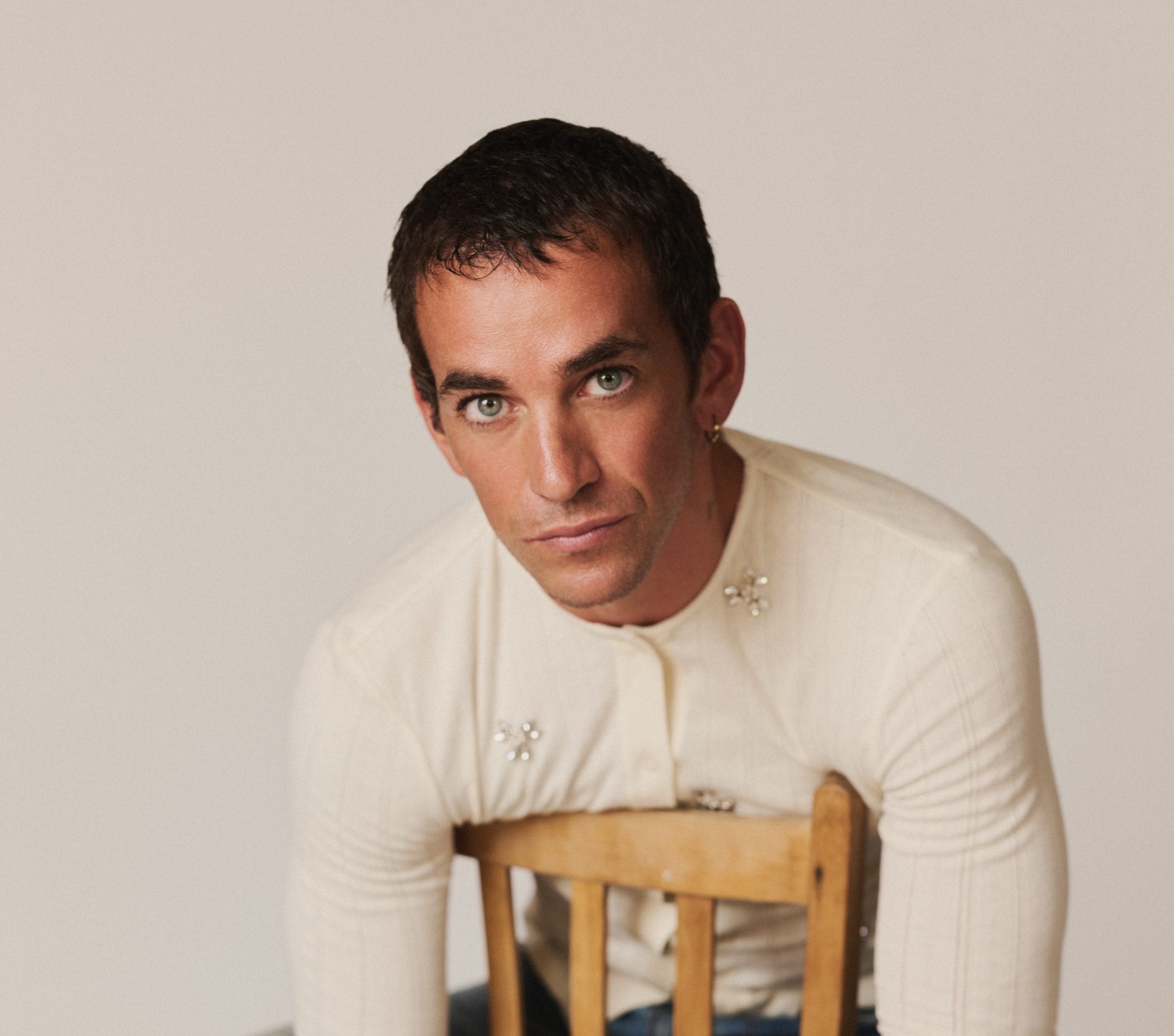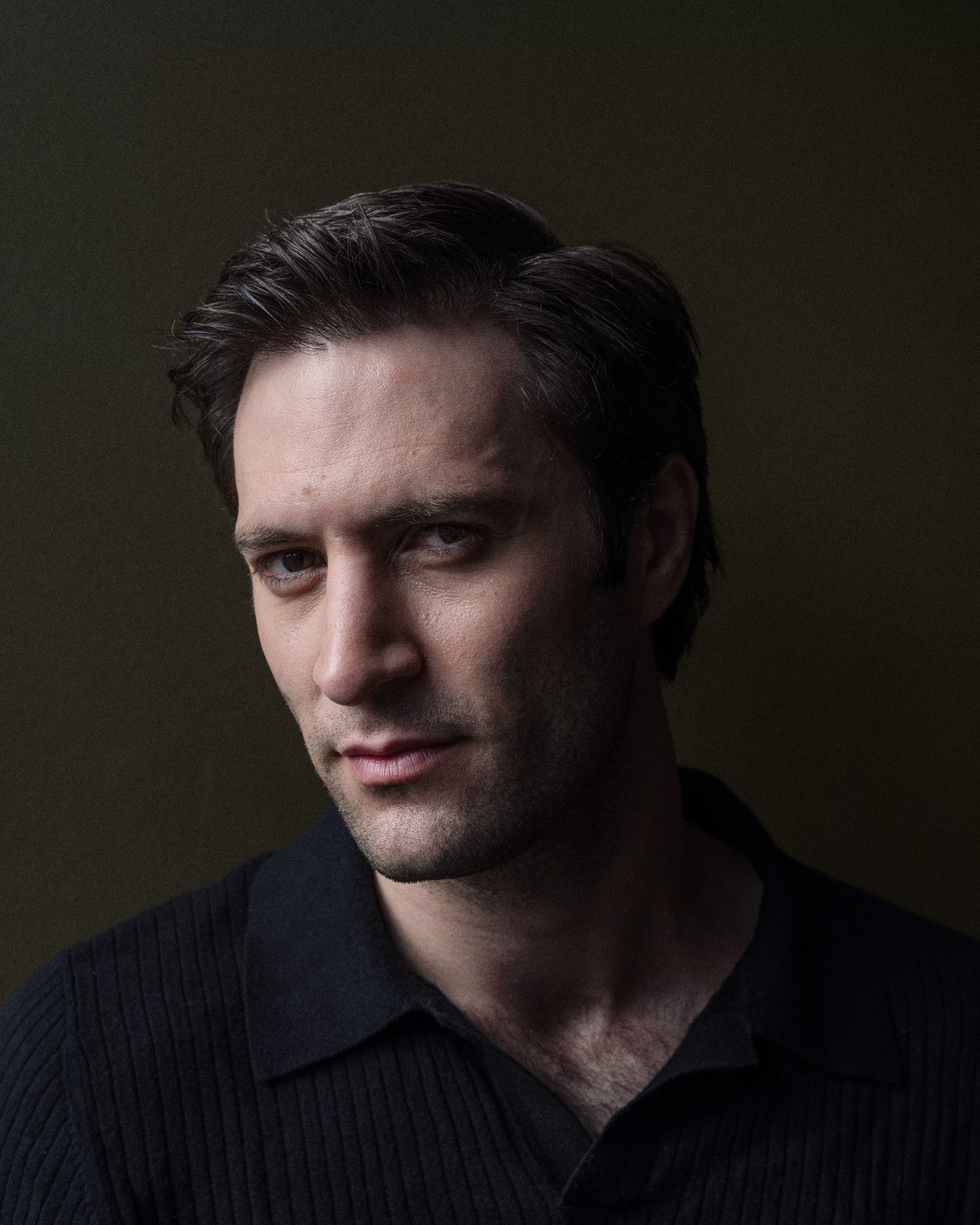
It’s been a few weeks since the London premiere of Prime Video’s newest romantic comedy, The Love Hypothesis — now the platform’s #1 film worldwide — at the BFI, the same night news broke of the National Theatre’s upcoming 2027 season. The two venues sit a few metres apart on the Southbank, separated by medium, connected by art. For Arty Froushan, the breakout star of Almeida’s revival of the American Psycho musical, it was one of the busiest nights of his career: it was in the middle of celebrating one project that the world found out he’d just been cast in Tennessee Williams’s Suddenly Last Summer, alongside Emma Corrin and Harriet Walter.
I tell him that in that moment, he must have been the busiest man in London. He laughs in response.
“I’m glad that illusion is being maintained,” he says. “It kind of closed the loop on The Love Hypothesis and then started a new loop with this amazing play.”
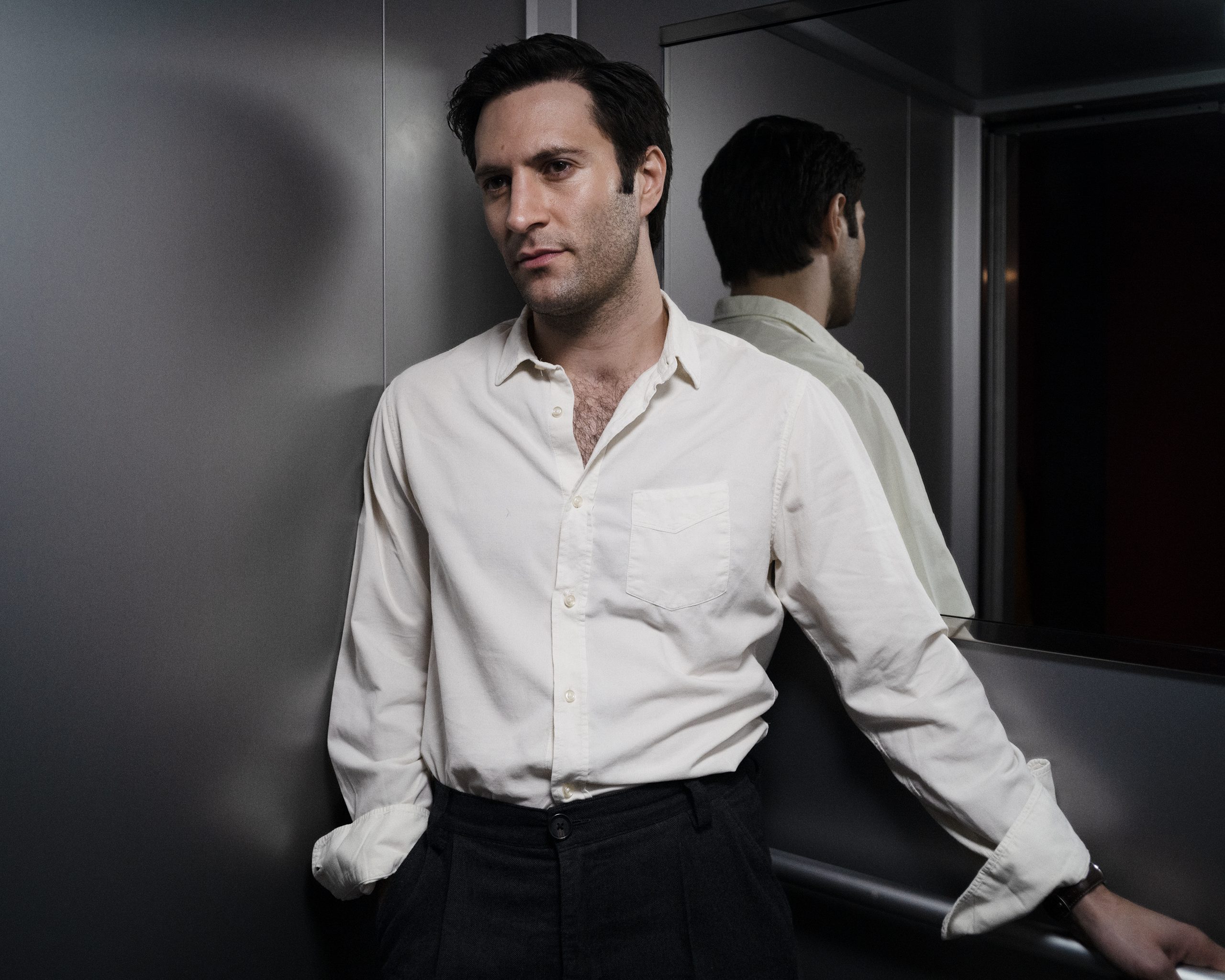
You’ve probably seen Arty somewhere, whether it’s House of the Dragon, Downton Abbey, Daredevil: Born Again, where he plays Buck Cashman, one of the show’s newest characters, the kind Marvel fans love to hate and hate to love. Froushan knows how to play a baddie, and he’s aware that his new role in Prime Video’s latest romcom isn’t so different.
“It’s really exciting to be part of something that people are excited to see,” he says.
“On a personal level, playing a character that people will soon discover is awful — I feel like sometimes people have difficulty distinguishing between the actor and the character, which would actually be a big issue for me, since I play a lot of baddies, so it’ll be interesting to see the response to my character.”
Froushan didn’t originally set out to play Tom Benton. He auditioned for Adam Carlsen, the lead role which eventually went to Tom Bateman, before being steered in a different direction. “They came back to me and said, ‘You’re probably not quite right for Adam, but we’d love to have you as Tom.’”
“At that point, I obviously hadn’t put myself into Tom’s head, so I had to go back and look at the script from a different perspective,” he admits. “But the collaborators on that film — Lili [Reinhart], Claire [Scanlon], Elizabeth [Cantillon], were so helpful in being clear about the vision for that character and his purpose, so they held my hand, which I was grateful for.”
We spoke over coffee after the photoshoot, on the first day of autumn. Froushan had been easy about the whole thing and happy to go wherever the day took us. There’s a version of that same ease in his work: a dormant warmth, waiting for the right role to unleash it. Perhaps his next one, on stage. And deep down, he thinks romcoms are magic.
“I’m a closeted romcom guy,” he says sheepishly. “I absolutely love a romcom, but maybe it’s just one of the last shreds of toxic masculinity in me, refusing to be open about that fact, which is stupid, because romcoms are amazing.”
“I remember seeing My Big Fat Greek Wedding as a kid and thinking, ‘that’s the best thing I’ve ever seen.’ But I’ve been watching some of the important ones with my partner, Eden [Epstein], who’s a bit more well-versed in that world, catching up on them a little.”
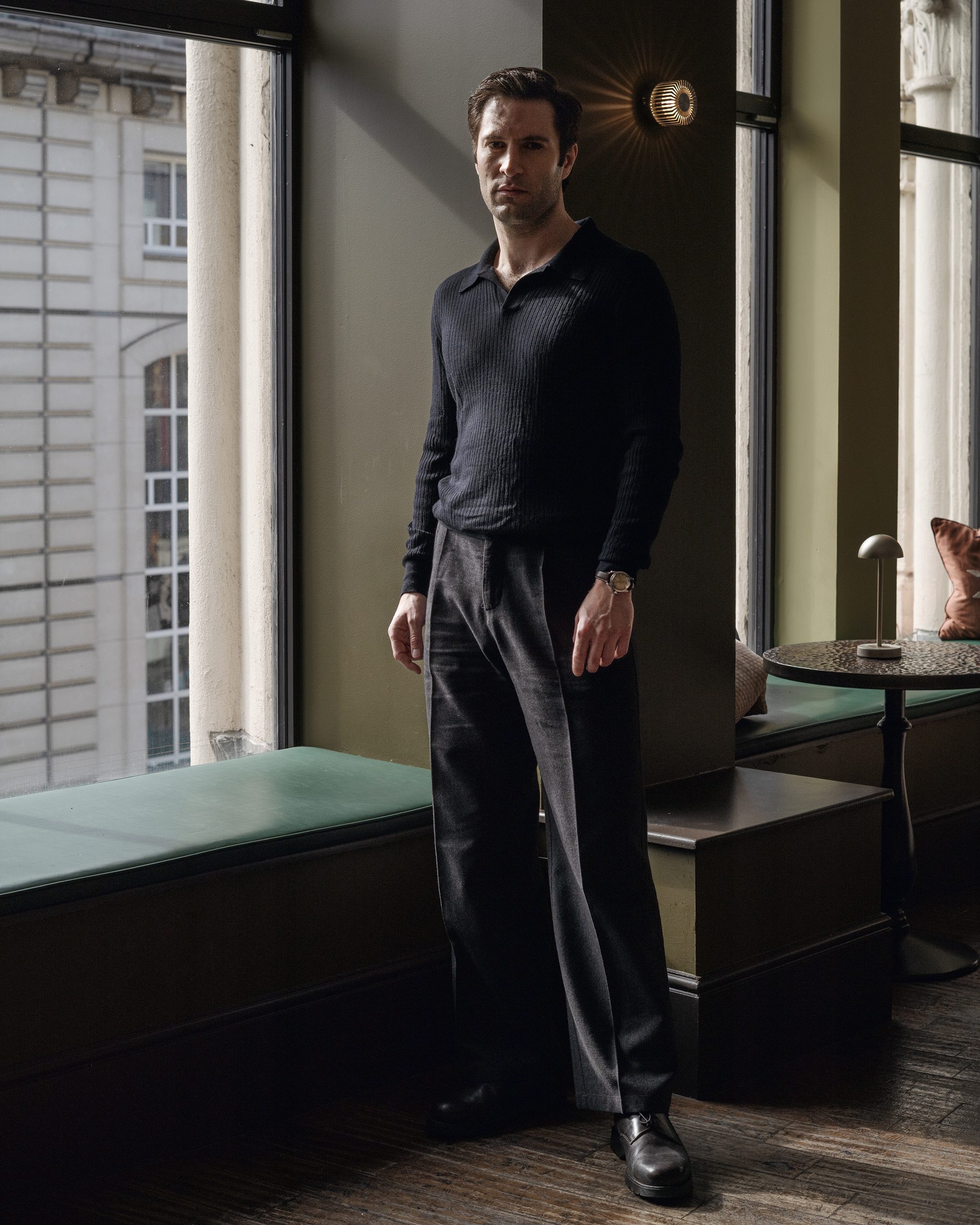
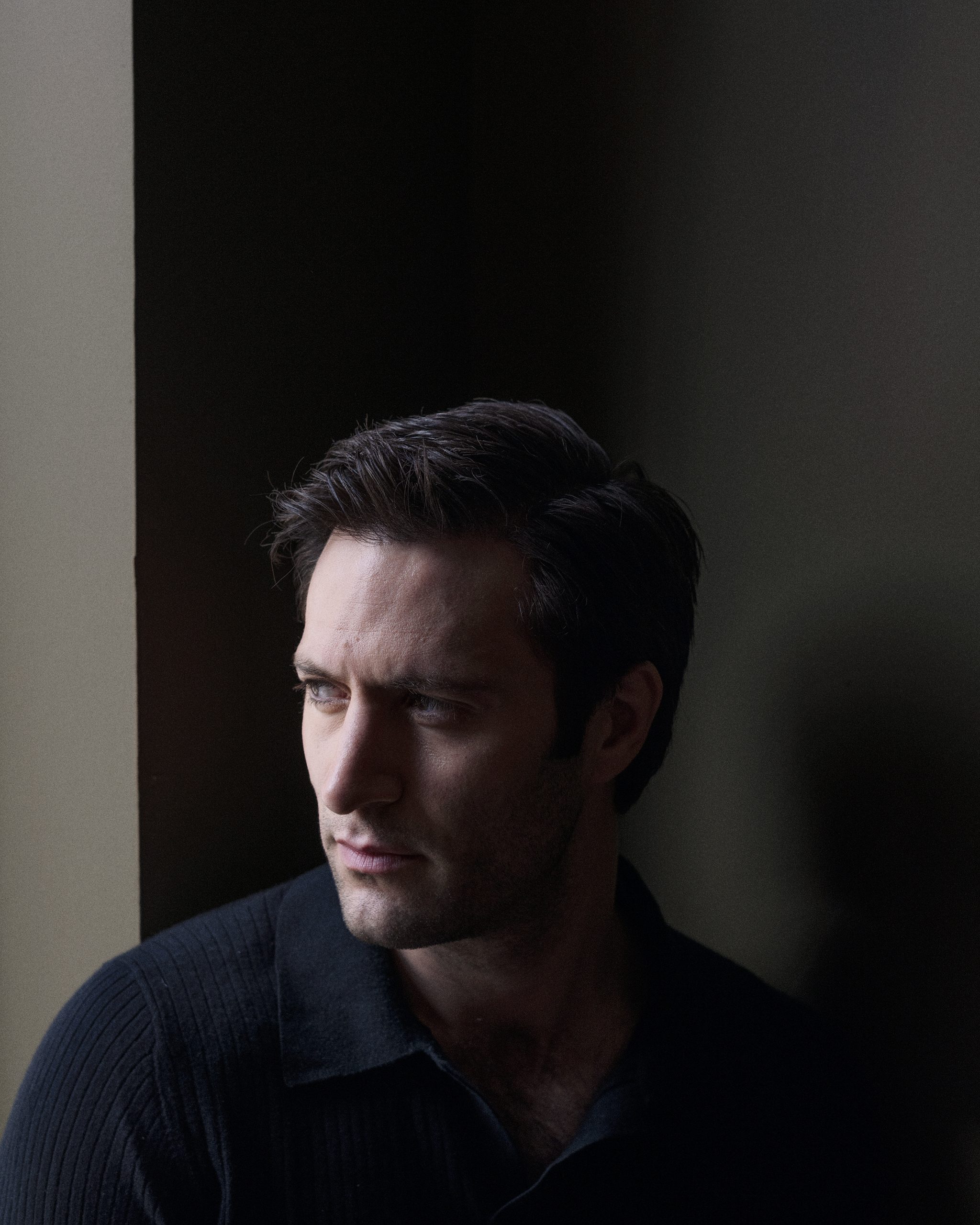
When I ask if he’d ever want to lead one himself, Froushan doesn’t hesitate. “Absolutely,” he says. “I think it encapsulates what we love about acting, speaking on behalf of all actors, which is chemistry. There’s nothing more chemically transactive than being in a romcom or romantic storyline with another actor.”
“Tom and Lily do it so well in this film; they have such natural chemistry. I love that acting is that chemical reaction that happens when you meet another actor, or you just turn up on set that day and create something kind of spontaneous. It’s maybe a test of a true movie star if you can pull off a romcom.”
It’s easy to assume Froushan has been around forever, given the kind of roles he’s done in the last couple of years, but the real turning point, professionally and personally, was when Leopoldstadt transferred to Broadway from the West End in 2022.
“That’s probably where things changed for me,” he says. “New York is one hell of a shot in the arm in terms of inspiration, and it’s so electrifying.” Because he was born in Connecticut, he always thought he’d eventually return to America for work, but the opportunity never quite presented itself until the transfer. It was there he landed Daredevil, and a manager he calls “an absolute wizard.”
Since then, he’s found himself in some of the biggest franchises around: House of the Dragon, Downton Abbey, Daredevil, by “pure chance”.
“I don’t know why or how that’s happened,” he says. “But my experience of it is just putting one foot in front of the other and doing each project as well as I can. Then you zoom out every so often and go, ‘oh, wow, I’m here.’ It’s just a lot of hustling and working and trying to get better at acting. That’s the bottom line.”
Being American by birth and British and Iranian by disposition and blood, moving to New York also meant learning how to move through the industry differently.
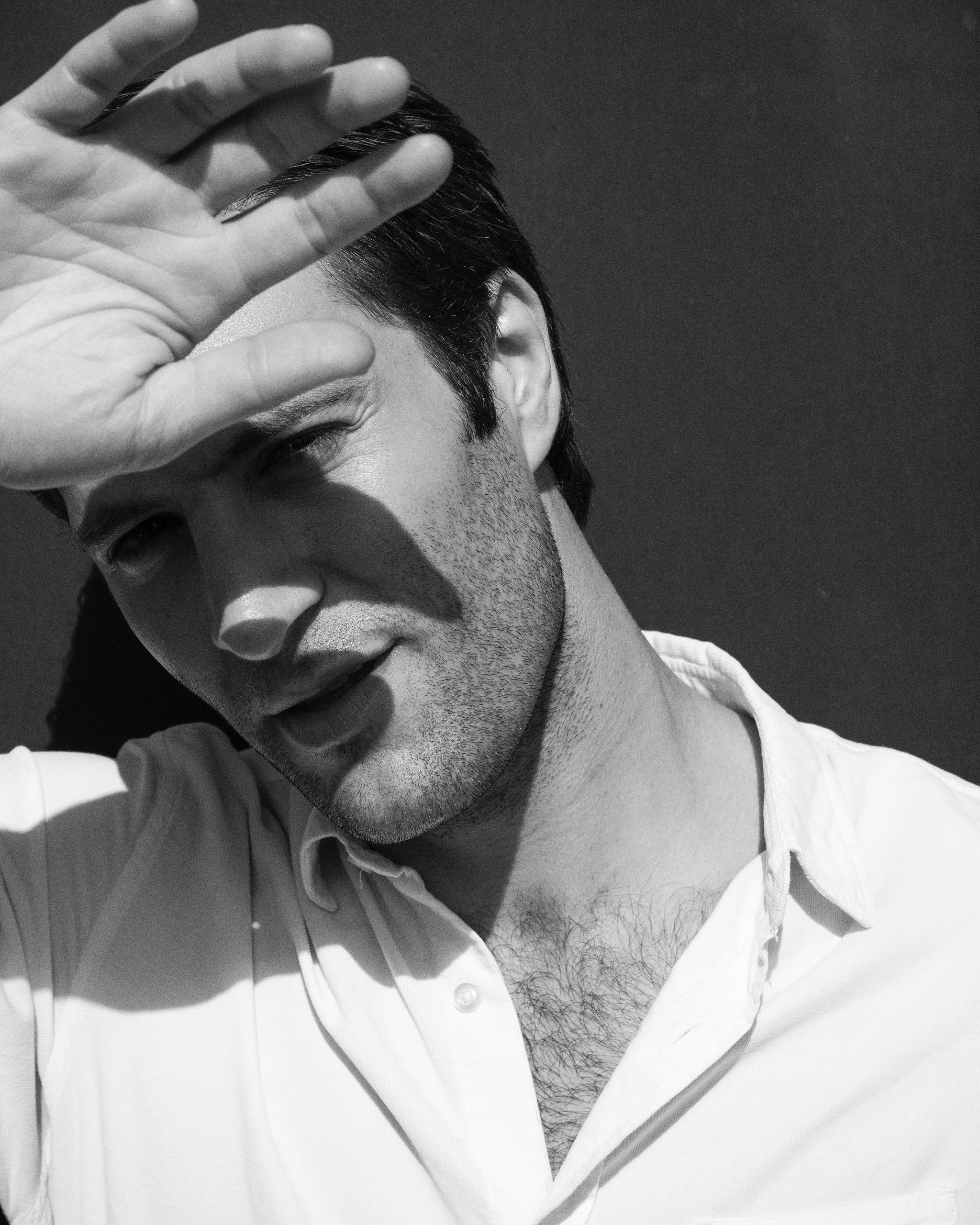
“The cultural difference — trying to meet the Americans halfway by being less relentlessly self-effacing and a bit more confident in just saying, ‘here I am, this is what I do, I think I’m good at it, look at me and listen to me.’”
He added: “As a Brit, I’m so squeamish about doing that. But I think it’s important, especially as someone who has been around a bit and done quite a lot of work. There comes a point where you need to shout a bit louder and make a bit more of a fuss so that people take notice.”
Last year, Froushan returned to the stage in a major way. He first played Wani Ouradi, the closeted Lebanese billionaire heir, in Alan Hollinghurst’s The Line of Beauty at the Almeida, then returned the following year to play the infamous Patrick Bateman in the musical adaptation of American Psycho. The two roles were worlds apart, and used vastly different acting muscles, literally and figuratively.
“[The theatre] is the ultimate gym for an actor,” he says. “It forces you to be in the present every single day. It’s very easy, in theatre and in screen acting, to slip into a pattern or preconceived idea of what the scene or play should be, especially when you’re tired and fatigued and you’ve been doing it for weeks and just want to be on autopilot.”
“The work is to avoid that at all costs and create something completely new each night. It’s just really good practice for an actor to try and meet the play, the story and the character afresh every single night.”
With a play like American Psycho, where he was on stage for almost the entire show, Froushan compares it to meeting someone you’ve never met and having to make them your best friend. The only way out, he says, is through.
“At the beginning of the play, you haven’t won anyone over yet,” he says. “You have the job of charming, seducing, engaging, or horrifying the audience from scratch each night.
“I found that with American Psycho, you have such a direct relationship with the audience, having to win people over and capture their imaginations and focus for that time. It’s kind of a Sisyphean experiment and I love it. There are no shortcuts that work.”
True to his word, Froushan tries not to go back to the source material too much when he’s doing adapted work. As a massive fan of American Psycho, he stopped rewatching it once he landed the lead role. With Suddenly Last Summer coming up, I ask if that’s his general approach.
“I am disciplined about creating my own thing,” he says. “In the audition process, when you have two or three days to prepare something, a good way of keying you into the aesthetic and style of the character is watching the original, but not in its entirety and not studying it too much.”
“It quickly gives you a sketch of what it is, and from there, I can build a character that draws on me rather than on what anyone else has done.”
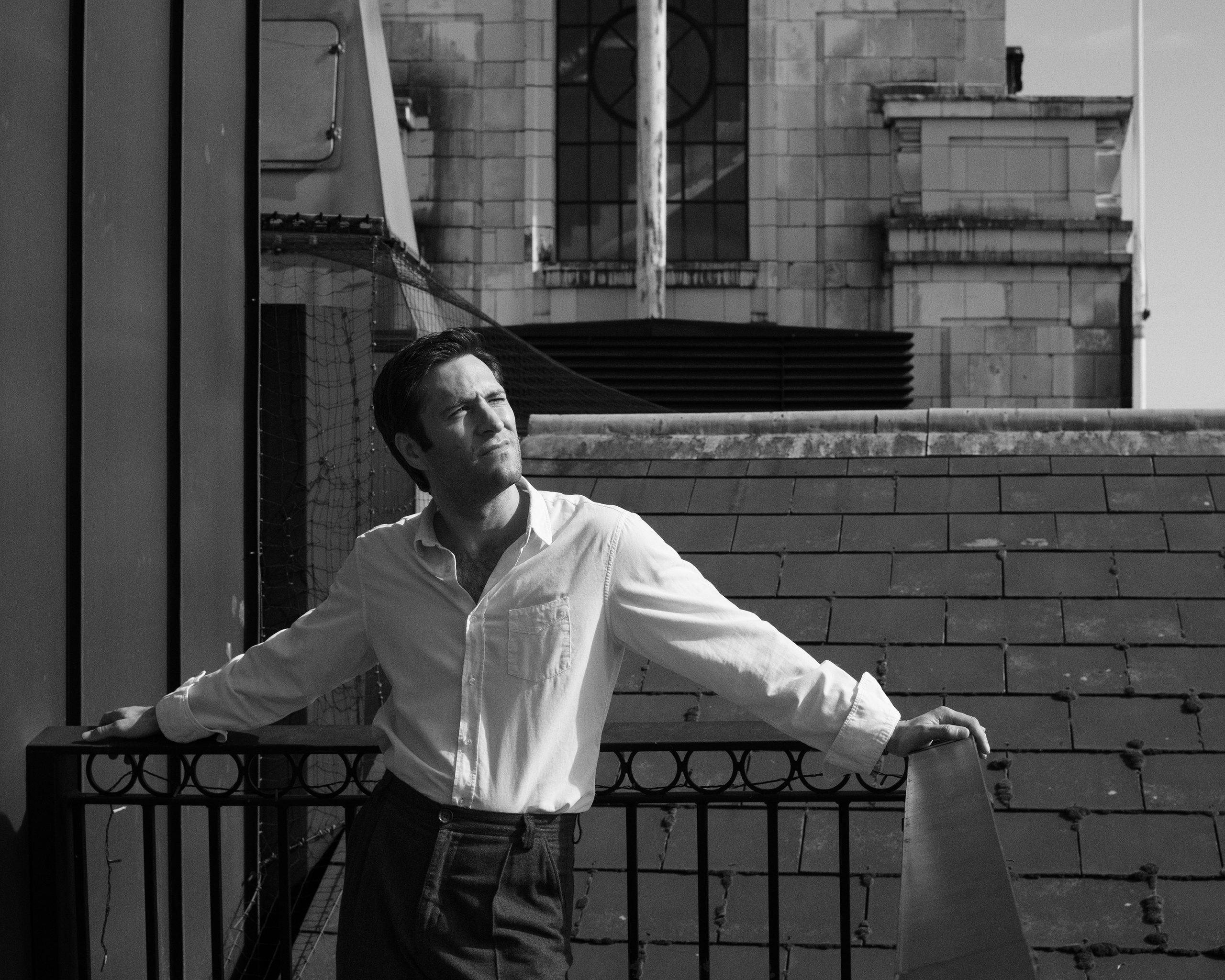
He thinks of acting as both an interpretive and a creative art form. “There are some actors who are creators and some who are interpreters,” he says. “I’d say someone like Nicolas Cage is a creator, because he does something no one else in the world would choose.
“Of course, he’s building off what someone has written in the script, but he’s inventing stuff that’s truly original. Sometimes it’s amazing and sometimes it goes wrong, but I think that’s true artistry, and it takes a lot of courage to do that as an actor.”
Whether he’s interpreting an Ali Hazelwood or a Bret Easton Ellis character, Froushan says it takes a combination of both.
“The easier way is to just interpret and stick to the rules, doing what I think people expect that character to be. It’s harder when you’re doing adaptations, but what I’m trying to do increasingly is be a bit braver in the choices I make as an actor, which takes courage and a bit of madness.
“I’m quite a rational person, so channeling madness doesn’t come that easily to me, but I’m trying to encourage that.”
When insanity comes up, one role of Froushan’s comes to mind: Buck Cashman, Wilson Fisk’s right-hand man in Daredevil: Born Again. It’s a role that’s earned him plenty of attention, and one that comes with more secrecy than most of his career, especially after the character’s violent fate in the season two finale. It’s no secret he’ll be back for season three in some capacity.
“It’s a big shift. The end of season two was a big cliffhanger, and all the characters find themselves in very different situations,” he says. “There’s quite a lot of continuity between seasons one and two, but in season three, things go a bit west. I think that’ll be really refreshing for people to see.”
“And Buck is… different. That’s all I’ll say. I’m excited to see how it goes down because I think it’s really interesting, and a bit darker, if it’s possible to get darker. I’m going to get a shot in the head any moment,” he laughs.
With projects of that caliber, Froushan has spent more time in the public eye, doing press and staying present on social media. As much as he’d like to be more analogue (and he tries, with his beloved point-and-shoot Nikon, which he uses to document his time behind the scenes and curtains) he admits it isn’t easy.
“All this stuff has come more recently in my career,” he says. “I’ve been working for nine years now, and I did some relatively high-profile stuff, but I didn’t have to deal with press, interviews, or public appearances much. I’m grateful I was able to observe that world from the outside for a while and grow up and become a better-adjusted man before entering into it myself.”
Social media, he says, comes with its own complications. “As an actor, there’s an ulterior motive to social media, not just me innocently engaging with it normally,” he admits. “You’re playing this game of smoke and mirrors, trying to alter or enhance people’s perception of you. It’s kind of part of the work, and I’m very selective about when I engage with it. I’ll go for months without it on my phone, and I always feel better for that.”
Even with increasing scrutiny his way, Froushan takes it all in stride, beauty and terror. He enjoys watching how people react to him, to his characters, and to everything that comes with both.
“Part of being an actor and being someone in the public sphere is that you have to surrender your image to the public,” he says.
“People own a part of, or an idea of, you — and that’s part of the fun of being a fan. It doesn’t really have any bearing on my career, but it does give me a better idea of what my presence is on screen, and that’s where most of that fancasting comes from. If you know that’s how people see you, it’s fun to lean into that, but it’s also fun to subvert it.”
It’s the same logic he applies to everything else, theatre, screen, and everything that comes along. He’s not interested in managing a persona.
“I’d much rather my work speak for itself than stand there pointing at it,” he says. “I’ve always wanted my work to do the talking.”
With The Love Hypothesis out now, a third season of Daredevil on the way, and Suddenly Last Summer still ahead, there’s plenty more talking left to do
The Love Hypothesis is out now.
Interview and production Farah Sadek
Photography Dominic Whisson
Grooming Jordan Robertson
Production Assistant Macy Djelal